Serbia is at a crossroads. In a country torn by civil unrest, violence is escalating.

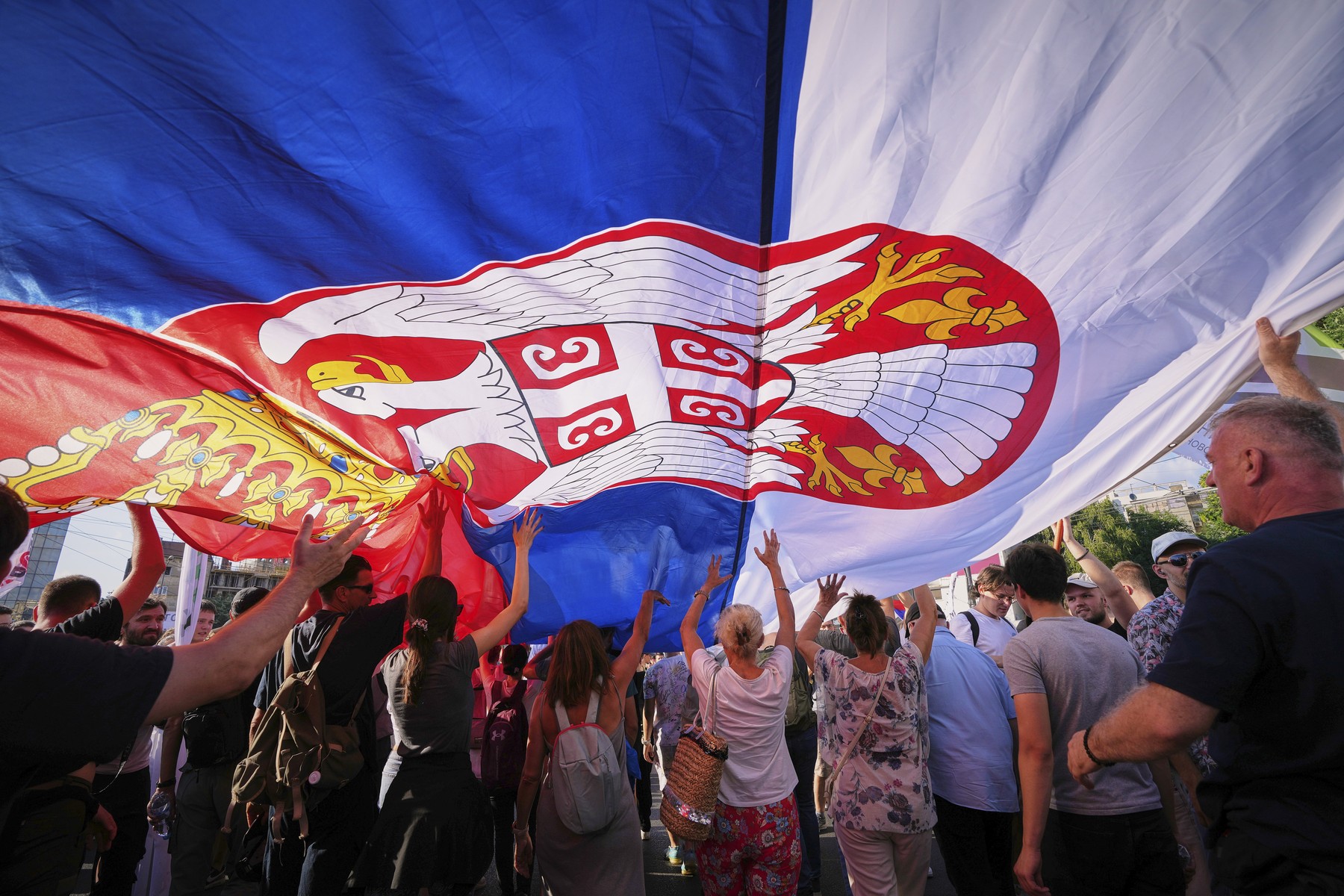
In Serbia, which has been swept by a wave of demonstrations against the local government since last November, the situation is intensifying. The local president, Aleksandar Vučič, rejects calls for early elections and is preparing harsh measures against his opponents. Two words are increasingly being mentioned in this context - civil war.
For several months, massive demonstrations against the government of President Aleksandar Vučić have been taking place in Serbia, attracting hundreds of thousands of people. The main demand of the organizers of the current protests is the restoration of the independence of state institutions and early elections.
Violence in the streets
In recent weeks, the protests have also been marked by violence. The result is dozens of detained and injured people. Serbian police are also being accused of excessive use of force and arbitrary detention of demonstrators.
The situation worsened after groups of government supporters, often masked, attacked the protesters. Videos circulating on the internet show police officers beating unarmed protesters with batons. The police denied the allegations of violence and claim that the protesters attacked the police officers.
Supporters of the current leadership even destroyed a photo exhibition capturing student protests, which was part of the most significant cultural event of the local Slovak minority. This incident was also accompanied by physical clashes and several people were injured. The Slovak government did not stand up for the attacked ones.
In Valjevo, opponents instead set fire to the office of Vučić's Serbian Progressive Party and damaged the city hall and prosecutor's office.
The best defense is an attack?
Vučić meanwhile announced that he is planning tough measures against anti-government demonstrators. In one of his television speeches, he accused them of "pure terrorism" and repeated his claims that months of persistent protests against his government were organized from the West and their aim is to destroy Serbia.
"Our country is in serious danger, all our values, normal life, every individual, has been threatened,"
quoted Vucic television CNN. This autocrat, who has been in power for about 12 years, says it's a sophisticated plan that in the future would eventually put "anarcho-leftist" bodies in charge of the state. However, he didn't present any specific evidence for his claims.
Vučič added that his government therefore needs a few days to prepare a "legal and formal framework" for their response.
"It will be very different from what you have seen so far,"
Vučič was quoted by the Czech News Agency. According to commentators, the Serbian president is determined to use everything available to restore order.
Corruption and Clientelism Serbian Style
Tensions in Serbia have been ongoing since November last year, when a newly renovated concrete shelter at the station in Novi Sad in the north of the country collapsed, killing 16 people. Critics believe it was due to corruption in public procurement.
Vučič faces accusations of suppressing democratic freedoms and allowing the flourishing of organized crime and corruption, which he denies. Serbia maintains strong ties with Russia and China, while formally seeking membership in the European Union.
The Commissioner for Enlargement, Marta Kosová, has also urged the Serbian government due to unrest to ensure that the country returns to the path to European Union membership. She warned that if Serbia does not resolve key issues, its prospects for accession will be threatened.
"What we demand from Serbia in connection with its entry into the EU is almost identical to what the protesters in Serbia are demanding,"
quoted Kosovo Czech News Agency.

According to Kosovo, Vučič promised a media reform and electoral reform during the spring meeting with her and European Commission President Ursula von der Leyen. However, this has not happened to date.
"If Serbia fulfills these promises, then of course it will be possible to move forward and open the cluster,"
Kosová stated in response to the question of whether Serbia could expect the opening of at least one cluster of accession negotiations this year and when it will receive the so-called progress report, which measures the progress of the candidate country in upholding the rule of law.
At the same time, Kosová stated that the EU is also negotiating with civil organizations and added that she asked Vučič to help ensure their involvement in the process of accession to the EU.
"I asked Mr. Vučič to actually not undermine the work of civil organizations, but instead help them get involved in the accession process,"
Kosová announced and added:
"This is a condition and we really hope and wish for Serbia to return to the right path."
As for how one of the successors of the former Yugoslavia will succeed, it remains a question mark. Vučič's warning that he could resort to harsh measures against his own people should not be taken lightly. Autocrats and populists often rightly fear for their seats.
Sources: author's article, ČTK, CNN