Residential construction reports a slump. Interest in new apartments is record-breaking

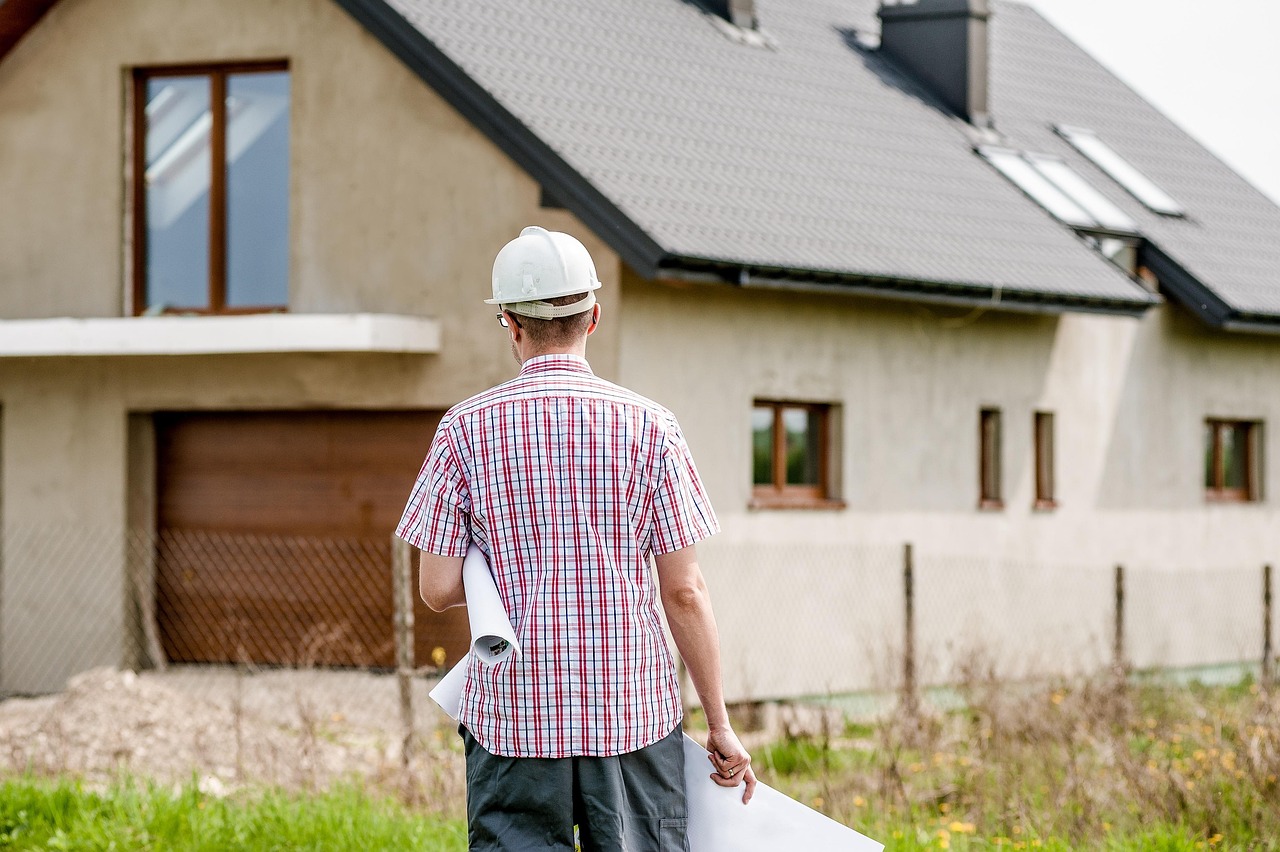
Last year saw the fewest new apartments built since 2017. According to data from the Czech Statistical Office, there were only 30,274, which represents an annual drop of about a fifth. Nevertheless, experts expect residential construction to pick up. The reason is the current record interest in acquiring new housing.
The highest number of new apartments was completed by builders in Prague and the Central Bohemian region. In the capital, there were just under 6,500, and in its surroundings, just under 5 thousand units. Thus, Prague was the only region to record a slight increase in the number of completed apartments, by 79 apartments.
Slow approval
Nevertheless, it is far from sufficient to meet the increased demand. While sales in the metropolis continue to trend upwards and reach the second highest result in the history of market monitoring, the supply of available apartments on the market is gradually decreasing.
This leads to the exhaustion of previously approved projects' resources, and due to issues with granting permissions, new projects aren't being launched in sufficient numbers. According to data from the Czech Statistical Office, over the past 20 years, not once has there been at least 10,000 apartments approved per year.
"The challenges associated with housing development and the complexity of the permitting processes continue to reflect on the limited supply in the market,"
The director of PSN Max Skala evaluated the past twelve months for LP-Life.
"The long-term impotence of the state to get construction permits moving is something everyone is upset about. Public budgets, business and buyers, who due to unnecessary delays pay at least 15 percent more for apartments,"
the founder and head of Central Group Dušan Kunovský wrote to the editorial staff.
Further reasons for the fall
Aside from Prague, the number of completed apartments has decreased. Most significantly in the South Moravian Region, where 3300 apartments were built last year, a year-on-year decline of 37 percent. In the Central Bohemian region, this decline was a quarter. The least number of flats was completed in the Karlovy Vary region, where there were just under 600. In Liberec and Ústí nad Labem, it was just a thousand. This confirms that the cause will not only be in slow permitting.
"The obstacle is the lack of suitable and affordable plots for construction where demand is greatest. And another problem may be the capacities in construction itself, which has been lacking sufficient qualified and auxiliary workers for a long time,"
told the Czech Press Office economist of Banka Creditas, Petr Dufek.
One of the possible ways to mitigate the personnel shortage is to employ foreigners. According to the data from the Union of Entrepreneurs in Construction, the largest proportion of foreign workers in construction are Ukrainians. Out of a total of 415 thousand people working in the field, there are 45 thousand of them, more than a tenth.
Meanwhile, a decrease occurred last year in all categories of housing construction. In the case of family and apartment houses, the decrease was consistently around 20 percent. Only slightly better were extensions, additions and insertions to them. The current system for accepting foreign workers, moreover, according to experts, takes a long time and lacks flexibility.
Great Expectations
The pressure on new residential construction is nonetheless immense. Inflation has stabilized over recent months, alongside a gradual decrease in interest rates. This is reflected in an increased volume of mortgage loans. In the recent period, rules for assessing incomes and applicant debts have also been relaxed, bringing mortgage financing closer to a broader group of people. Thanks to this, banks provided housing loans last year amounting to almost 300 billion crowns!
At the same time, it is expected that there will be a further gradual reduction in interest rates, which could stimulate the entire sector to new growth. Therefore, this year can also be record-breaking in terms of total sales, despite a decrease in the number of completed flats.
New family houses were built on average 45 months last year, according to the Czech Statistical Office, which was five months longer than in 2023. The construction period for flats in apartment buildings has been extended by an average of two and a half months. The size of new flats in family houses has slightly increased to 138.8 square meters of usable floor area and 92.5 square meters of living space. In flats in apartment buildings, the living area has increased on average to 50.2 square meters, but the total usable area has slightly decreased to 64.8 square meters.
The only variable that benefits from the current situation is the price of new housing. Increased demand on the one hand and limited supply on the other are driving up the costs of acquiring new housing. Will this be the case this year as well? Most experts agree, that the residential segment is facing further price increases.
Sources: author's article, ČTK, ČSÚ, own inquiries