Prague ranks among the best European smart cities. However, Vienna, Amsterdam, and Barcelona are still far ahead of it

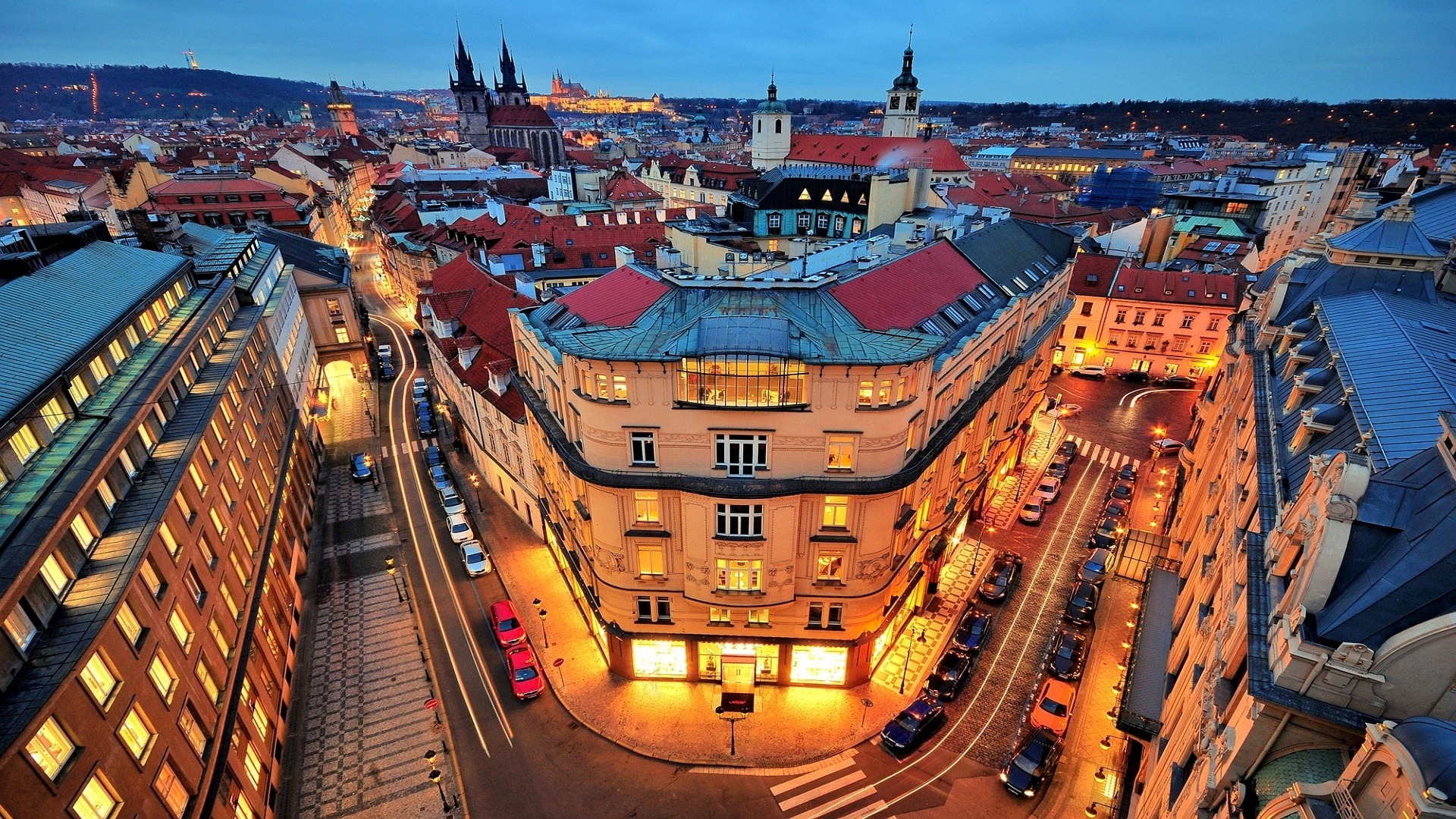
Prague and Brno are increasingly asserting themselves in the area of smart solutions concerning mobility, energy, digitalization of public services, and air quality monitoring. However, compared to European leaders, they still lag behind, as shown by the IMD Smart City Index 2026 ranking.
Many people imagine a Smart City as a city full of sensors, cameras and applications. However, the reality is different. According to experts, these are primarily agglomerations that know how to use data, technology, urbanism and modern management in such a way as to create a more pleasant living environment. Some Czech cities are not afraid to invest in advance in quality and accurate data and tools, thereby gaining an advantage over others.
According to Marek Vernarský from the Regional Policy Department of the Ministry for Regional Development, the citizen and their quality of life are at the core of the Smart Cities concept. Technology, as he claims, then represents only a means and not an end.
"Smart solutions should contribute to better quality public services, more efficient use of resources, better environment, higher security and greater resilience of cities and municipalities to future challenges,"
claims this expert.
Prague stays at the top of the ranking
Our capital city placed 13th out of 148 evaluated cities worldwide in this year's IMD Smart City Index 2026. The result confirms that Prague is among the best-rated cities in Central and Eastern Europe.
"Prague is currently focusing particularly on the development of data-driven decision-making, smart mobility, energy, digitalization of public services and projects supporting the city's climate resilience,"
wrote Luboš Kratochvíl, Chairman of the Board of the municipal company Operátor ICT, to LP-Life.
What can an ordinary person specifically imagine by this? These are, for example, intelligent waste collection systems, use of traffic data in real time, or air quality monitoring. Other projects that work with extensive datasets and analytics also play a significant role.
However, the efforts of our metropolis to change the current system certainly do not end there. Upcoming projects include, for example, Measuring Microclimatic Parameters in Public Spaces or the development of the Cool Oasis Map.
One of the most ambitious projects in recent years is the construction of a digital twin of Prague, a detailed virtual model of the city that combines information about buildings, transport, energy, microclimate, or the movement of residents. Such a system will in the future enable simulation of the impacts of new construction, transport measures, or adaptation projects before their implementation, thanks to which the city will obtain more accurate data for planning and management of public spaces. In addition to buildings, the model also includes roads, urban greenery, lighting, street furniture, and traffic signs. The data is generated, among other things, through aerial mapping and laser scanning.
Brno is also innovating
The South Moravian metropolis builds on strong connections between the city, universities, companies and the research environment. Among the most prominent examples of smart solutions here is the digital platform Brno iD, which has over 915 thousand registered users and allows managing from one account, for example, public transport, waste, resident parking, municipal services or participatory projects. The open data portal Data Brno makes city data, maps and analyses accessible to the public, officials and developers.
"In this sense, Brno is positioning itself as a 'living laboratory' where new approaches are tested in a real environment and subsequently implemented in practice,"
described the situation to the editorial office Filip Poňuchálek, spokesperson for the local magistrate.
Some of our other cities are also trying to improve. For example, in Písek they introduced shared bicycles, a shared electric car and modified the municipal public transport system. In addition, in digital services they are developing a municipal mobile application that contains a unique municipal e-shop where residents can pay local fees.
Other cities remain at the top
Among the biggest winners in the IMD Smart City Index 2026 ranking are Vienna, Amsterdam and Barcelona. What did they do to deserve it?
The city on the Danube, for example, has committed to reducing CO2 from 3.1 tonnes per capita to 1 tonne by 2050. Furthermore, it aims to use up to half of its consumed energy from renewable sources by the same period and to maintain a 50 percent share of its green spaces.
On the streets of Amsterdam, you can also find smart street lighting that responds to pedestrian traffic on the streets. Based on this information, it regulates the lighting and thus reduces its energy consumption. The city has also developed an application that allows parking space owners to rent out their spaces to other drivers for a fee or to check the current occupancy of parking spaces. In addition, it also monitors city traffic and provides real-time recommendations to drivers on which route to choose.
Barcelona then monitors the level of irrigation needs for plants in its parks. This way, city workers receive information about which areas need watering and which don't, saving up to 25 percent of their water supplies annually. In transportation, they use smart traffic lights that optimize the number of green lights on busy routes.
Sources: author's article, own research, Ministry of Regional Development of the Czech Republic, Capital City of Prague, Brno, Wikipedia