Czechia has the highest population in its history to date. The share of foreigners is growing

The number of people living in the Czech Republic at the end of last year rose to the highest post-war level. Almost 11 million inhabitants were living in the country at the observed time. However, the increase was not so much due to birth rates as rather to foreign migration. The government has now stated that it wants Filipinos in the country.
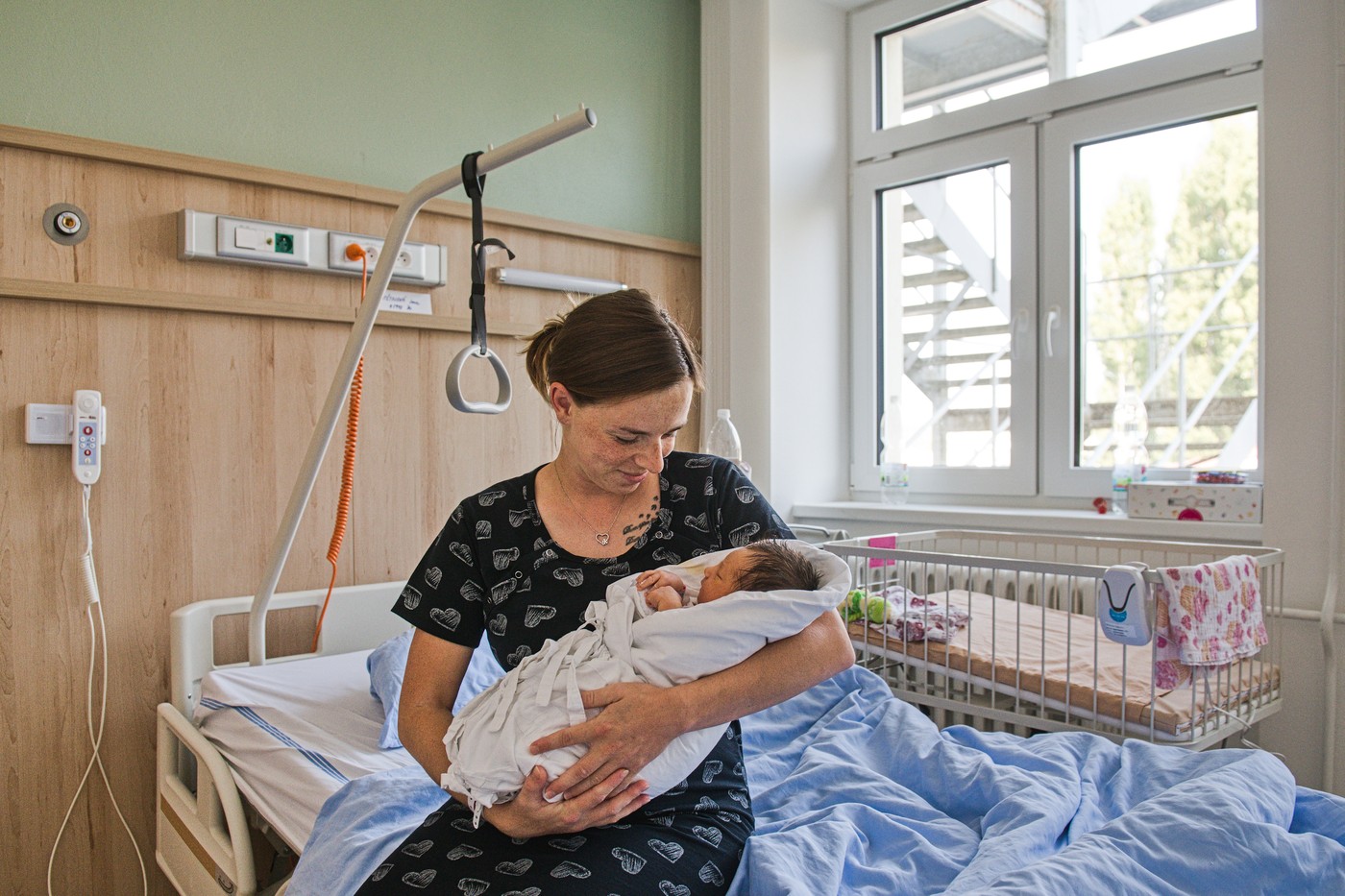
Last year was marked by a continuing decline in the number of live births. 77.6 thousand children were born, which is historically the lowest number. The first six months of this year brought no improvement either, when according to statisticians 36.5 thousand children were born, which is five percent less compared to the previous year.
According to data from the Czech Statistical Office, the birth rate has been declining for the fifth year in a row. The highest decline, both in the number of births and in total fertility, is occurring among second-born children. However, this year's decrease in children is milder than in previous years, when it reached eight to ten percent.
Hand in hand with the described trend, the average number of children born to one woman is also declining, to 1.28 children. In the past, it was often higher. For example, in 1974, during the so-called Husák's children period, it was 2.43 children per woman.

To maintain a stable population without migration, it would be necessary for each woman in the Czech Republic to have at least 2.1 or 2.2 children. The world average is only slightly higher, reaching a value of 2.23. In the European Union, it is only 1.33. Conversely, the highest fertility rate in the world is typical for sub-Saharan Africa. In Chad, this parameter ranges between approximately six to seven children per woman.
Low domestic birth rates are also related to marriages. Until 2019, when 54,870 marriages were registered, their numbers were growing. However, further development was affected by the coronavirus pandemic. Between 2019 and 2020, they decreased by almost one fifth.
We are aging
However, the declining numbers of live births are also a consequence of the decrease in the number of potential mothers, that is, women in the so-called reproductive age between 15 and 49 years. This trend is related on one hand to the entry of demographically weak cohorts from the 1990s and the turn of the millennium into the reproductive period, and on the other hand to the departure of demographically strong cohorts of women from the mid-1970s
One of the few ways to ensure that our country doesn't die out and the functioning of our institutions and companies is maintained is, in such a situation, probably only migration.
Filipinos are supposed to save us
The Czech government, through the Minister of Industry and Trade Karel Havlíček, announced in October that it plans to increase quotas for recruiting foreign workers from the Philippines, in which Czech companies have great interest. Their numbers have grown faster in recent years than any other nationality. While in 2015 barely 600 of them lived here legally, last year it was nearly 15 thousand.
Long-term unfilled positions are suitable for Filipinos, for example, in Czech hospitals.
"We select candidates very carefully. We monitor their education and previous practice, but also how they can apply their knowledge in specific situations and whether they have the prerequisites to manage both language and professional adaptation,"
wrote LP-Life owner and managing director of the personnel consulting company Kasea CZ Gabriela Pchálková.
Healthcare workers from Thomayer University Hospital, for example, personally participate in the selection of medical personnel in the Philippines.
"We went through the candidates' previous experience in detail, the departments where they worked, as well as the medical equipment they can operate. It also included a practical exam, during which they demonstrated, for example, the insertion of a peripheral cannula or catheterization. Thanks to this, we were able to assess not only their knowledge, but also the way they approach solving specific situations,"
summarized the current experience with these workers, paramedic from the Faculty Thomayer Hospital Jakub Škoda.
Ukrainians and Slovaks are the most numerous
By far the most foreigners coming to us so far are from elsewhere. At the end of last year, according to data from the Czech Statistical Office, more than 1.1 million foreigners lived here. More than half of them are Ukrainians. The second largest representation is held by citizens of Slovakia, followed by Vietnamese and Russians. Approximately every 11th child born here last year therefore also did not have Czech citizenship. For comparison: ten years ago it was every 30th child.

Prague dominates the ranking of regions with the highest proportion of foreigners in the population. Roughly, every third inhabitant of the capital city is a migrant. A relatively large representation of foreigners is also in the Pilsen, Hradec Králové and Central Bohemian regions.
Under the current constellation, perhaps only political gamblers can speak out against migration. Every reasonable person understands that we have long since been unable to do without migrants. They contribute to economic growth. Without their arrival, the country would begin to die out. This will also determine how many of us will be together in Czechia one day.
Sources: author's text, Czech Statistical Office, People in Need