Blue blood among Slovak celebrities: Famous families, royal courts and family secrets. Who has noble ancestors?

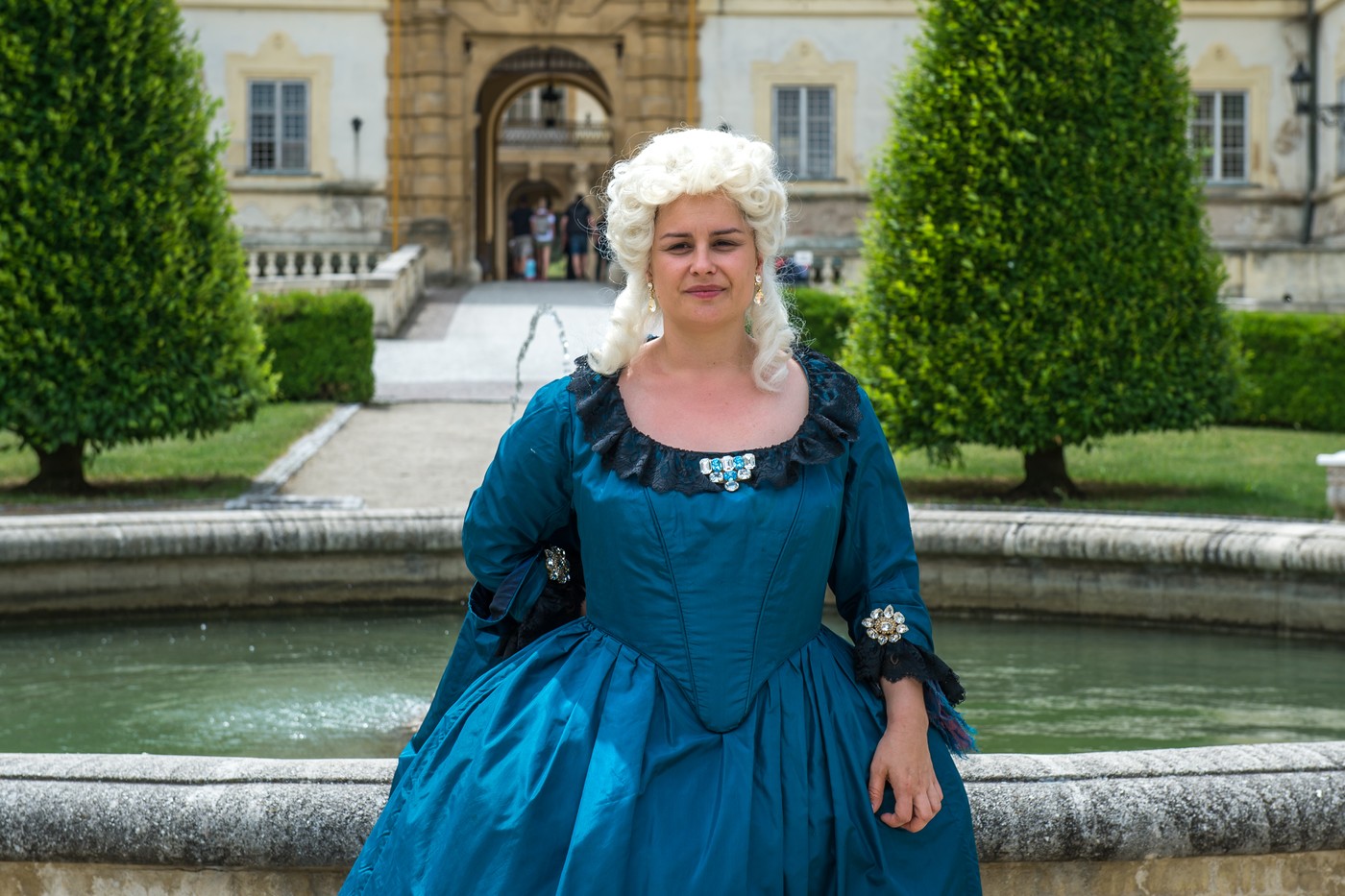
The Slovak showbusiness hides several such fates. While some artists discovered their noble roots only through careful research in family archives, others have significant figures of Slovak culture in their family tree. And then there are also stories in which real historical documents intertwine with family legends.
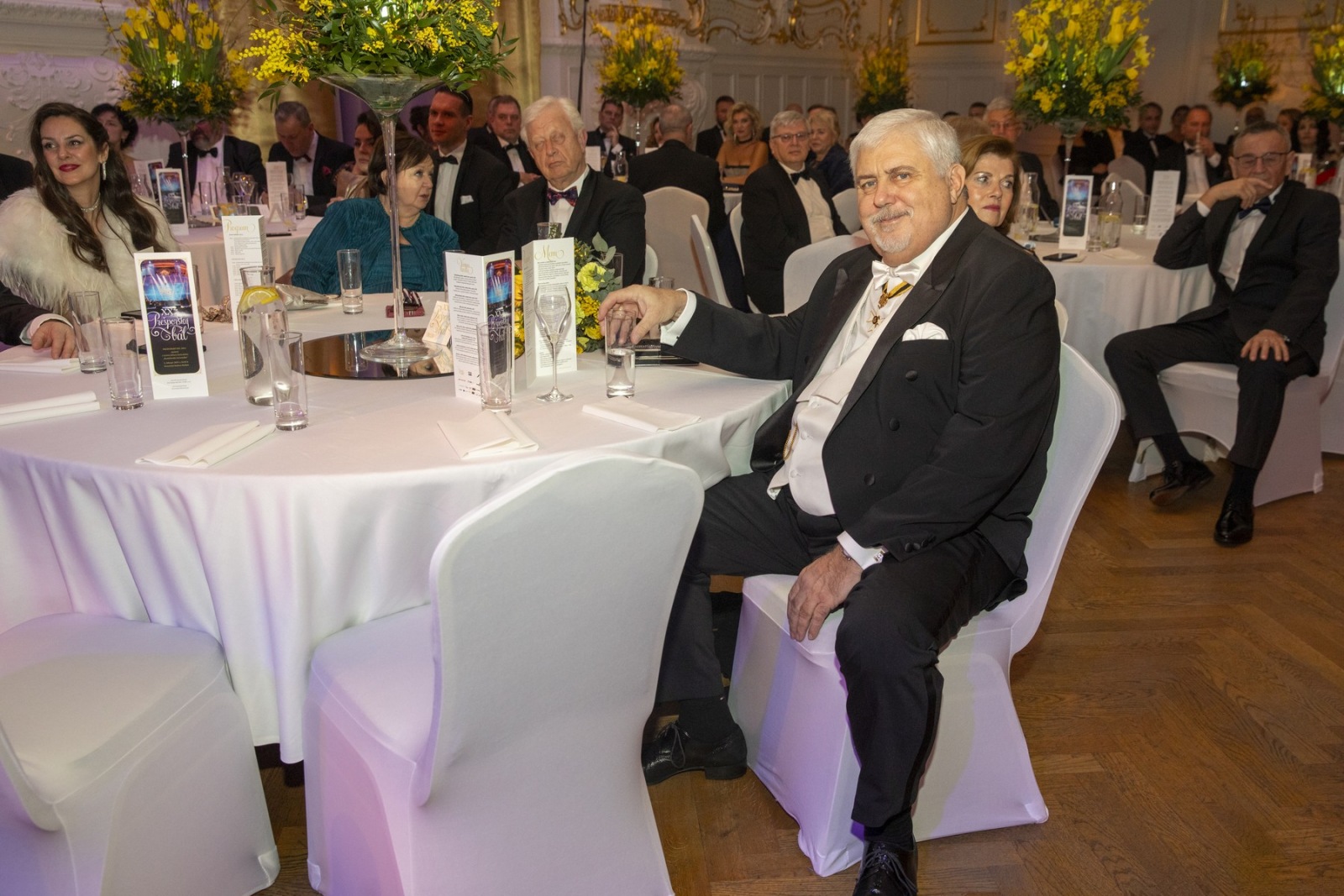
Some famous faces we know from television screens, others from theater stages or concert venues. Their family history, however, can be just as fascinating as their professional life. While some artists discovered noble roots only through careful searching in family archives, others have significant figures of Slovak culture in their family tree. And then there are also stories in which real historical documents intertwine with family legends.
Slovak show business hides several such fates. TV host Oliver Andrásy traced his ancestors back to the 16th century, Iveta Malachovská learned about her family's noble past from her grandfather, and actor Štefan Bučko is said to have an ancestor whose story dates back to the times of Hungarian King Béla IV. Actor Peter Batthyány, in turn, claims roots in a prominent Hungarian aristocratic family. However, interesting stories don't end with noble titles. Actress Petra Polnišová knows a family legend about a musician who was said to have worked at the court of Maria Theresa. Singer Mária Čírová has a family connection in her lineage to composer Eugen Suchoň. And acting legend Božidara Turzonovová proves that nobility and aristocratic bearing don't necessarily have to be connected with noble origins.
Oliver Andrásy: Family Research Revealed Unexpected Noble Roots
Presenter and comedian Oliver Andrásy thought for many years that his surname might have something in common with the well-known noble family of Andrássy. However, the mere similarity of names did not yet mean that there was a family connection between them. The answer came only through more detailed research into family history. When he decided to compile a family tree, he discovered that his grandfather on his father's side came from the Basilides family. According to his own words, his ancestors received a noble title during the reign of Leopold I. It was this discovery that led him to further investigation of family connections, writes Pluska.sk.

"I have partially blue blood, I had a family tree made,"
Andrásy revealed in the past.
Historical research fascinated him so much that while searching for family connections, he reached back to the 16th century. Interestingly, the search for ancestors didn't end just with names and dates for him. Based on the description of a historical coat of arms, he also had his own family crest created. The family past thus became not only an interesting discovery for him, but also a way to better understand the story of his previous generations.
The story of Oliver Andrássy also reminds us that noble roots don't have to remain in family memory for centuries. Sometimes they are only revealed by documents that can connect the present with long-forgotten generations.
Iveta Malachovská: Her Grandfather Revealed a Family Secret
Even the well-known television presenter Iveta Malachovská can boast a family story that reaches deep into the past. Unlike people who only learn about their ancestors from stories, she was helped in her search by her grandfather. He had been interested in family history for many years and systematically recorded individual family members in a family tree. Thanks to his efforts, the presenter learned that her ancestors from the Paškovci family were said to have been elevated to noble status. The family narrative is based on a historical document, which is attributed a connection to the elevation of ancestors to noble status. Publicized information also mentions the year 1479, writes Báječná žena.
However, historical caution is necessary with this data. The available descriptions also mention the name of Leopold I, who ruled only from 1658 to 1705. The year 1479 therefore cannot be linked to his decision without further verification. This is an important detail that would need to be checked directly in the family charter or archival record. The presenter herself does not consider her origin as a reason for superiority. According to her, a noble lineage does not automatically make a person better than others.
"I don't feel like I have something extra or that I'm different from others. I have a noble character and a strong social conscience, but I don't think one needs to be a nobleman for that,"
she expressed in the past.
Her words capture the essence of similar stories. Historical documents can clarify where a family comes from, but a person's character is primarily determined by their deeds.
Štefan Bučko: Ancestor reportedly saved the life of a Hungarian king
The family history of actor and reciter Štefan Bučko is, according to media reports, connected to one of the most significant Hungarian rulers of the Middle Ages. His family line mentions an event that could easily be the subject of a historical film. Bučko's ancestor allegedly received estates and a fiefdom from Hungarian King Béla IV in 1263 as a reward for saving the ruler's life during a hunt.

In the Middle Ages, such royal gifts represented a significant reward. Property and the associated rights could bring the family better social standing and secure its future for entire generations. Béla IV was among the important Hungarian kings of the 13th century. His reign was fundamentally influenced by the Mongol invasion of Hungary in 1241 and 1242, after which the ruler supported the country's reconstruction and the building of fortifications. This is precisely why the period to which Bučko's family story dates is historically exceptionally interesting, writes the portal Život.
However, the actor himself reportedly did not grow up with the feeling that his noble origin should guarantee him a special status. According to his words, this topic was not discussed much in the family. His father was concerned that the children would focus too much on the fame of their ancestors instead of their own values.
"It was talked about very little at home, our father didn't want it at all,"
Bučko stated in the past.
According to him, upbringing was oriented more towards belonging, respect for culture and responsibility. This is, after all, a legacy that has meaning regardless of whether family history begins at the royal court or with an ordinary family.
Peter Batthyány: His surname is associated with a prominent Hungarian family
Actor Peter Batthyány belongs to personalities whose noble past is mentioned in the family name itself. According to his own statements, he comes from his father's side from the Batthyány family, which was among the significant aristocratic families of historical Hungary. His grandmother was said to have come from the Széchényi family, known primarily in Hungarian history. The Batthyány family became famous in Central Europe for its political, military and social influence. Its members held important positions and owned extensive properties. Among the most famous figures is Lajos Batthyány, the first Hungarian Prime Minister during the revolutionary year of 1848. The Széchényi family is associated, for example, with István Széchényi, a significant reformer who contributed to the modernization of Hungary, writes .
Historical context alone, however, does not prove a specific family connection. In genealogical research, it is necessary to distinguish between a person bearing the same surname and their family tree demonstrably leading to a specific aristocratic branch. In Batthyány's case, his origin is stated in the media as part of his family history. The actor has previously expressed that famous ancestors do not represent a reason for personal pride without one's own merits.
"I haven't accomplished anything extraordinary yet to be proud of myself. When everyone around me is proud of me, then I will be satisfied,"
he said.
His attitude is a sympathetic contrast to the notion that a noble name automatically means success. Even if one inherits an interesting family history, one's own worth must be built by oneself.
Petra Polnišová: A family legend connects her to the court of Maria Theresa
For actress Petra Polnišová, the story about her ancestors differs from others. It's not about a confirmed noble lineage, but about a family tale that has an unusual historical twist. Her father allegedly told her that they had a Roma ancestor in the family. And not just any ordinary one, writes the portal Život.
"My father, while he was still alive, insisted that we had a Gypsy ancestor, and that's supposedly where I get so much energy from. But I never really looked into it,"
the actress admitted in the past.
In further storytelling, an even more interesting piece of information emerged. According to family legend, her ancestor was supposed to have been a Roma bandleader at the court of Maria Theresa. A bandleader is the leading musician in a traditional folk or Roma band, who often also takes on the role of soloist. If the family story were confirmed, it would be a connection to the musical environment of the Habsburg court in the 18th century. Maria Theresa ruled from 1740 to 1780 and her court was an important center of political and cultural life. Musicians, composers and performers were part of ceremonial events, social gatherings and court entertainment. Roma musicians had a long tradition in Central Europe and their art won favor even in higher social circles. However, it must be emphasized that the story about Polnišová's ancestor remains a family legend. Without historical documents, it cannot be confirmed whether he actually worked at the ruler's court.
This story gained interesting symbolism in 2017. Petra Polnišová starred in the historical television miniseries Marie Therese, an international co-production of Slovakia, the Czech Republic, Austria and Hungary directed by Robert Dornhelm. She portrayed Countess von Graben in it. The actress thus found herself in a project set in the environment of a monarch to whom the story of her ancestor is also linked according to family tradition. Although it was not a confirmation of the family legend, the coincidence of circumstances is remarkable. The story also reminds Polnišová that the history of nobility and royal courts does not belong exclusively to monarchs and aristocrats. Musicians, artists and other people who took care of cultural life were also part of them.
Mária Čírová: Her Family Tree Includes Composer Eugen Suchoň
Not every interesting family tree must lead to nobility. In the case of singer Mária Čírová, what is particularly remarkable is the connection to a prominent figure in Slovak music. Her family has a kinship tie to composer Eugen Suchoň, author of the opera Krútňava and one of the most significant representatives of Slovak musical modernism.
Čírová also spoke about this family connection in an interview for Rádio Slovensko. Her mother's maiden name was Suchoňová and the famous composer was also a common ancestor of the family. The singer herself explained that Suchoň was not her direct relative in the sense of a close family line, but a more distant relative of her grandfather.
"My mother's maiden name was Suchoňová, so it's her branch,"
explained the singer in an interview for Plus Lekáreň. She added that she and the composer have a common ancestor.
Mária Čírová has been involved in music since childhood. She first sang in public as a four-year-old child when she performed in church at a consecration in her native village. Later she participated in singing competitions, studied at the conservatory, and gained wider attention by winning the Coca-Cola Popstar competition in 2008. Among her well-known songs are Búrka, Unikát, and Na dosah. In addition to singing, she also composes and plays the piano. Eugen Suchoň made his mark in the history of Slovak music primarily with the operas Krútňava and Svätopluk, as well as other orchestral and vocal works. His work is among the fundamental pillars of Slovak classical music. A family connection with such a personality therefore represents an interesting family chapter for Čírová, although it does not in itself explain her artistic talent.
Božidara Turzonovová: She Has No Noble Title, But She Doesn't Lack Nobility
In Božidara Turzonovová's case, the story about aristocracy is a bit different. The prominent actress, who has been one of the distinctive personalities of Slovak theatre and film for decades, is not associated with a proven noble lineage. Nevertheless, she has entered a society that prides itself on aristocratic values. Turzonovová was born in Sofia, Bulgaria. Her mother was Serbian and her father Macedonian. Her parents moved to Slovakia when she was still very young, and it was here that she grew up, studied, and gradually worked her way up to become one of the most prominent actresses of her generation. The family environment shaped her primarily through an emphasis on education, discipline, and social behavior. Her mother attended an imperial girls' gymnasium and instilled in her daughter the rules of decency and deportment. In interviews, Turzonovová also recalled a strict upbringing in which attention was paid to posture, table manners, and respect for social rules. These are precisely the values often associated with the traditional concept of aristocratic upbringing. In the actress's case, however, it was not about the inheritance of a noble title, but about a way of life and cultivated behavior, writes STVR.
The Aristocratic Association of Slovakia accepted her as an honorary member. The reason was said to be her moral values, refinement and approach to life. However, membership in such an organization is not proof of noble origin. Interestingly, the actress herself has repeatedly shown that she does not perceive her identity solely through social status. In an interview for STVR in 2025, she spoke about how her view of herself and of acting had changed during her long career. More important than external impression became for her the understanding of what she wants to convey through her work. Turzonová's story thus brings an important dimension to the topic of blue blood. Aristocratic behavior and noble origin are not the same thing. A person does not need to have counts or barons in their family tree to appear dignified, refined and respectful towards others.
What Does "BLUE BLOOD" Actually Mean?
The term blue blood is traditionally used to denote noble or aristocratic origin. It is not a biological characteristic, but a historical and social designation for families to whom a monarch granted a noble title or who inherited it from their ancestors. In the past, nobility could bring property, social advantages, access to the royal court, or the opportunity to hold important positions. However, the scope of privileges varied according to the period, country, and specific title. Today, such a lineage has primarily historical and genealogical significance. The surname alone is not sufficient to prove kinship, and a family legend is not automatically a historical fact. The most reliable evidence consists of registers, patents of nobility, archival records, and other documents that can connect individual generations. This is precisely why the stories of Slovak celebrities are so interesting. In some cases, they are based on family documents, in others on ancestors' narratives, and sometimes it is more about connections to significant cultural figures than aristocratic origin. They have one thing in common: whether their ancestors moved in royal courts, saved monarchs, devoted themselves to music, or simply passed on their values to subsequent generations, family history can reveal stories that might otherwise never be known.
Source: original text, Žena.sk, Pluska.sk, Život.sk, Báječná žena, STVR, Rádio Slovensko, Plus Lekáreň