Banks are increasing their profits. The whole sector is doing well, it remains stable, says the Czech National Bank.


The net profit of the six largest domestic banks increased by nine percent to 68.8 billion crowns in the first three quarters of this year. According to experts, the increase in profits is due mainly to interest income from loans provided and greater interest in investment from the general public.
During the first nine months, in addition to profit growth, the loan portfolio of banks continued to increase. Consumers continued to choose interest-bearing deposits and moved them into investments or mortgage intake.
"The economy is growing quite strongly, which is also driving the demand for loans from households and businesses. This is improving the key indicator of net interest income for financial houses. The growth of income from fees and commissions, which is related to the increasing interest in investment products such as funds, is also continuing. The risk costs also remain low,"
Tomáš Pfeiler from Cyrrus company described for ČTK the main reasons for the growth of the banking sector.

"In Europe, there is solid profitability, stable macroeconomics and finally decreasing inflation. In our country, this is accompanied by a strong currency, stagnant inflation or better household sentiment,"
J&T's investment strategist Štěpán Hájek explained to LP-Life why financial institutions are thriving both in the Czech Republic and surrounding us.
Who benefited the most?
The net profit of the ČSOB group for the three quarters of the year rose year-on-year by ten percent to 14.9 billion crowns, of Komerční bank by 8.3 percent to 13.6 billion crowns and of Moneta Money Bank by 15.7 percent to 4.9 billion crowns. UniCredit Bank in the Czech Republic and Slovakia reported a net profit of 8.62 billion crowns, which is 2.2 percent more than a year ago. Raiffeisenbank's profit rose year-on-year by 57 percent to 7.84 billion crowns. Only the net profit of Česká spořitelna for the first three quarters fell year on year by two percent to approximately 19 billion crowns.
According to Moneta's financial director, the growth of this bank was contributed to by both loans for companies and investments in the retail sector.
"In the area of investments, the volume of funds our clients invested into funds increased by 35 percent year on year,"
he told our editorial staff.
The six biggest banks will also pay a tax on unexpected extraordinary profits from this year's profits. The so-called windfall tax was approved by the government as a 60 percent tax surcharge for excessive profit. This corresponds to the difference between the tax base and the average costs of the tax base for the last four years increased by 20 percent.
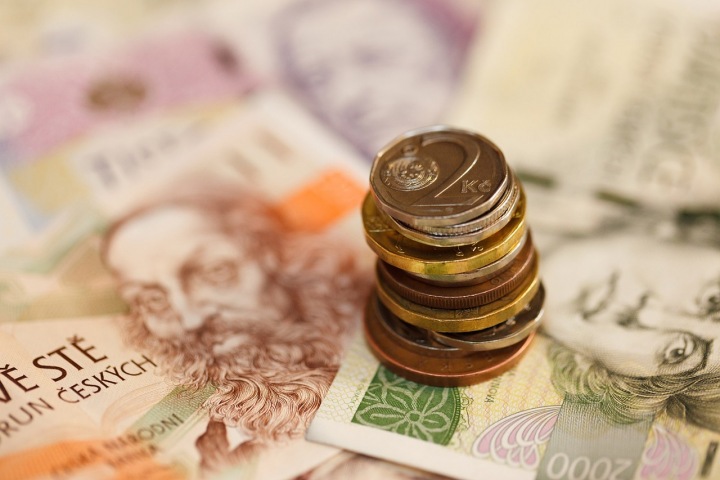
Banks also report an increase in their stock value
The good condition of the banking sector is also reflected in the value of their securities. For example, shares of Erste, which includes Česká spořitelna, have risen by nearly 53 percent this year, shares of Komerční banka by 42 percent, and shares of Moneta by 58 percent, according to stock exchange statistics.
"The fact that bank shares are at their highs is related to their solid profitability and the quality of their loan portfolio. More technical factors also play a role. On the Prague Stock Exchange, we find only a narrow group of companies that are large enough for funds or other larger players to invest in their shares,"
He added further for Pfeiler news agency. According to him, a situation has thus arisen where "a lot of money is chasing a few stocks," resulting in an increase in price.
High competition
Consequently, the total value of domestic banks is also on a growth wave. According to the Czech Elite ranking, which was prepared by the editorial board of Seznam Zprávy with Deloitte Company, this parameter has increased by 34 billion crowns to the current 196 billion in the year-on-year comparison in the case of banks with a majority domestic capital. In addition to the aforementioned Moneta, such subjects, for example, also include Fio Banka, Air Bank, PPF Banka, or Creditas.

Banks and savings banks are increasing their profits and value. And although there are already more than 40 of them on the market, their number continues to grow. For example, Partners bank started its operation last year. Each entity targets a slightly different clientele. While the big players such as Česká spořitelna, ČSOB, or Komerční banka, try to reach the widest range of the Czech public, smaller and younger brands attract customers with a more personal approach, digital services, or lower fees.
The Czech banking sector is stable and healthy. This is evidenced both by the economic results of banks and the growth of their value, as well as by the stress tests of the Czech National Bank, which assess their resilience. The results of these tests are then used to assess the capital position and liquidity of the banking sector under stress. Our central bank publishes them twice a year in the Financial Stability Report.
"The domestic financial sector is very well prepared for risks associated with any potential adverse development. Even in an adverse scenario, there would be no disruption to the stability of the financial system or significant transmission of shocks between its parts,"
stated in this document in June by a member of the Banking Board, Jakub Seidler.
Sources: author's text, own questioning, ČNB, ČTK, Seznam Zprávy