"We will not sell cheaper, it is not worth it," say some gas station owners in response to the government's caps.

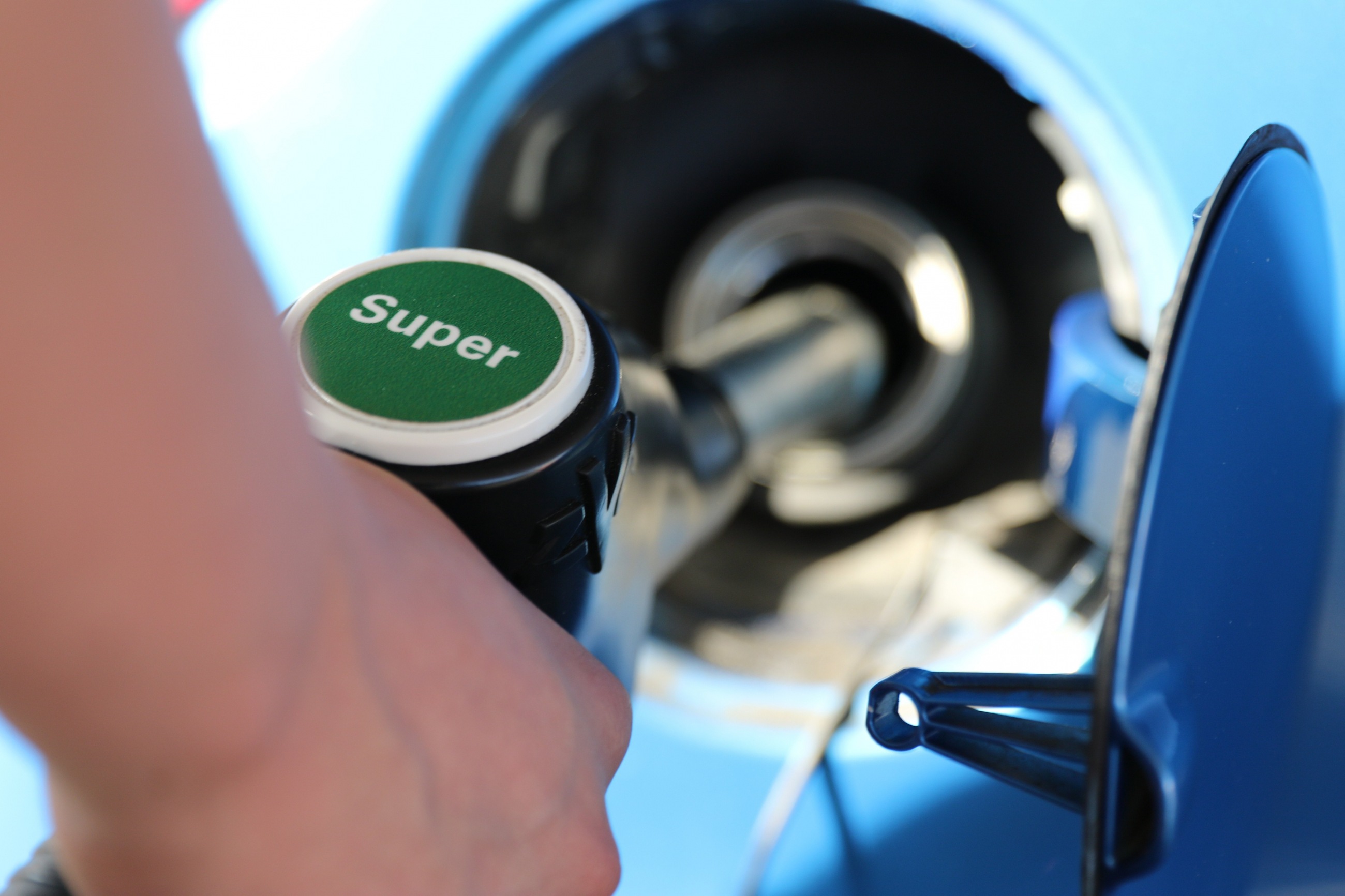
The Czech government, in response to the sharp increase in fuel prices following the outbreak of war in Iran, has approved a draft law that will allow regulating fuel prices through government decree in the future. This is in response to fuel prices rapidly rising after the American and Israeli attack on Iran at the turn of February and March. The rise in fuel prices also contributed to the overall inflation in the Czech Republic, which accelerated to 1.9 percent in March from 1.4 percent in February.
The war in the Middle East has also severely affected Central Europe. Fuel prices in our area have sometimes increased by more than 10 crowns per liter. According to Finance Minister Alena Schillerová, who spoke on April 14 in the Chamber of Deputies, fuel margins on transport routes often reached six to ten crowns per liter. The price increase was also confirmed by statisticians.
"In March, fuel prices had the most significant impact on consumer price developments. Diesel was sold at gas stations for an average of 42 crowns per liter, and Natural 95 gasoline for 38.10 crowns per liter. In the case of Natural 95 gasoline, it was the highest value since July 2024, and in the case of diesel, since November 2022."
stated the head of the consumer price statistics department of the Czech Statistical Office Pavla Šedivá.

Some are closing, others are counting losses
Therefore, from April, Babiš's government has been deciding on the maximum retail price of petrol and diesel for the next day daily, which is causing controversy not only among the public but especially among many fuel providers. Some of them even temporarily closed because of it. This included gas stations in the Znojmo or Břeclav regions. The set price restrictions did not allow them to operate without a loss, as they explained.
"We bought at a certain price and the government set a cap. We won't sell for less, it's not worth it,"
said last week to MF Dnes the director of Znojemská Transport Company, Petr Chadima.
Jaroslav Botek, who operates a small Bot-oil gas station in Těšetice in the Olomouc region, was selling diesel at a loss of up to three crowns for each liter sold in recent days. His total losses are reportedly going into tens of thousands of crowns because of this.
ČTK said that shortly after the attack on Iran, wholesale fuel prices skyrocketed.
"I bought a liter of diesel for 51 crowns because there was a severe shortage on the market. I bought what I could to have full tanks and be able to sell, but it was at a terrible price. Now I'm selling it at a huge loss. However, I have to sell the stocks; I can't just close the gas station and wait to see if prices go back up."
commented the situation Botek.
Prices at pumps are sometimes lower than the government cap
The Ministry of Finance repeatedly urges gas station operators to approach maximum allowable prices only in exceptional cases and to strive to keep price levels below the set threshold. And so far, this has been largely successful.
“The expectation of some observers that fuel prices would hover around the level of the government cap has not materialized. In the past three days, the maximum allowable price for gasoline was 41.95 crowns per liter, whereas the price at the pump averaged 41.38 crowns per liter from Saturday to Monday, thus being almost 60 hellers per liter below the cap. In the case of diesel, the government set a maximum allowable price of 45.90 crowns per liter, but in reality, it was sold for an average of 45.57 crowns per liter, around 30 hellers per liter below the cap,”
written by LP-Life economic analyst Lukáš Kovanda.
The good news is that the Czech Republic currently has enough fuel. Moreover, the finance minister claims that it should not run out in the future either.
The law will allow fuel prices to be regulated through a government decree
The new legislation, which will allow the systemic regulation of fuel prices, is expected to replace the current general policy measure that the government adopted at the beginning of April and is valid until the end of the month. Based on this, the Ministry of Finance set the maximum allowable margin for fuel sellers and temporarily reduced the excise tax on diesel.
"Price regulation will be limited to a maximum of 12 months with the obligation for the government to continuously evaluate its necessity,"
the ministry was quoted by ČTK.

According to the Ministry of Finance, the law will provide the state with a stronger position in deciding fuel prices thanks to the new adjustment, compared to the current price measures by the ministry. At the same time, the government will be more capable of taking action in adopting regulations. The office also states that legal certainty regarding adopted measures will increase.
However, the opposition party ODS considers the measure more of a return to socialist central planning.
"No one can expect citizen democrats to give the green light to further expand government interventions in the market,"
said ODS chairman Martin Kupka. His party would reportedly support, for example, the option of a floating excise tax, but definitely not setting an upper limit on prices.
Sources: own survey, author's article, ČTK, ČSÚ, iDnes.cz