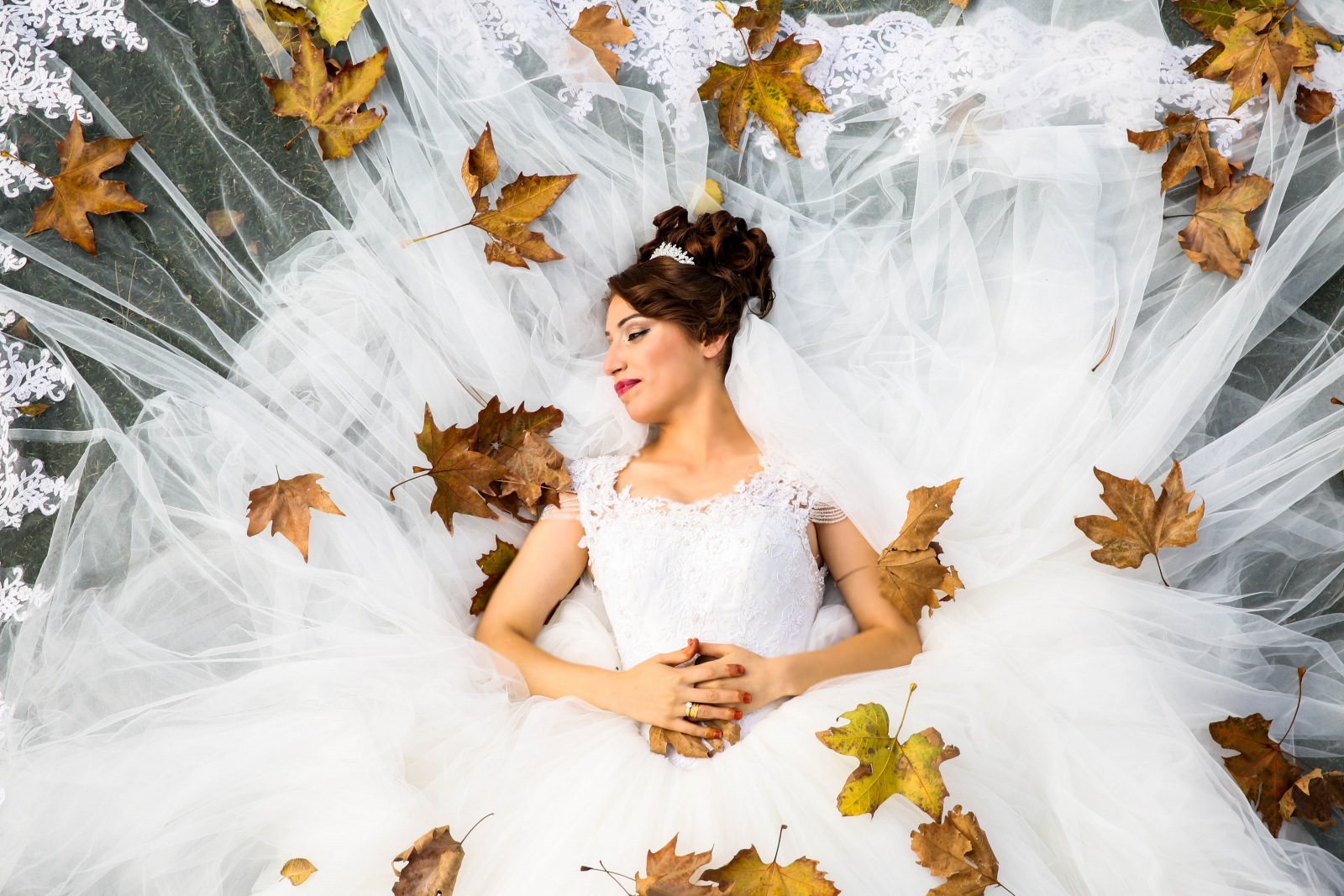
We approach marriage reservedly, research has shown. "Living together" is not such a big deal anymore.


Czechs are not particularly eager to marry. Research has shown that more than two-thirds of us believe that when people live together, they don't necessarily need to plan a wedding. About one in ten is even convinced that marriage is a redundant institution. Nevertheless, more than 40,000 marriages are concluded annually in our country.
“Being in a union with a man is important to me, but I am definitely not rushing into marriage. I don't see why I should change my name and have a stamp for it,”
said twenty-year-old Jana from Mělník to the editorial staff. And she is definitely not alone in being reserved about marriage.
Marriage is no longer a requirement for a modern partnership
According to a survey by the Public Opinion Research Center, it is acceptable for more than two-thirds of us for people to live together without planning to marry. Over three-fifths of respondents also have no problem with the fact that if both parents live with their children in a shared household, it is not necessary for them to be married.

„Statements that present marriage as a necessary condition for parenthood or partnership living received a lower level of agreement. At the same time, these are statements where disagreement clearly outweighed agreement,"
claim the authors of the research from CVVM.
Only 12 percent of respondents agree with the opinion that single people are held in less esteem than married individuals. Nine percent of those surveyed are convinced that divorced individuals have less respect in society.
Divorce itself is no longer as much of a scare as it once was. Four-fifths of the Czech public agree with the statement that if the family doesn't work, divorce is an acceptable solution. Women more frequently expressed agreement with this. A higher level of agreement was particularly noticeable in the age groups of 15 to 19, 30 to 39, and 55 to 64 years.
Financial Security and Satisfaction Speak for Marriage
What do we see as the practical advantages of marriage? Approximately one-third of respondents believe that the main benefit is financial security. A quarter lean towards the opinion that married men and women are generally more satisfied than singles. A similar proportion of respondents agree with the view that children of divorced parents tend to divorce more often. However, for both statements, the shares of those agreeing and disagreeing are practically balanced.
According to the Society for Healthy Parenting, marriage still has its justifications despite other considerations. Only within the marriage can a woman and a man benefit from certain tax, pension, and other advantages. Married couples generally have easier access to loans, including a higher chance of obtaining a mortgage. Thanks to combined incomes, they can better demonstrate their ability to qualify for such a loan.
And if the annual income of the wife does not exceed 68,000 CZK, the husband or wife can claim an annual tax discount of 24,840 CZK. But beware! This is only valid under the condition that both are supporting a child under the age of 3 within a single household.
The widow or widower is also entitled to a widow's or widower's pension. This applies when the deceased was receiving, for example, an old-age or disability pension.
"The advantages and disadvantages of marriage cannot be calculated only in terms of money or rights and obligations, because life in marriage has many other positive consequences. Couples living in marriage separate less often than unmarried ones. Spouses tend to have better health and live longer."
mentions in her book How to Survive a Family Crisis, for example, lawyer Daniela Kovářová.
Even unmarried people can have children, many of us believe
It is often discussed that the main reason for marriage is a common child. Three-quarters of Czech society consider the ideal family model to be one with two children. This is followed by the idea of a family with three children, which was labeled as ideal by just under a fifth of respondents. Two percent of respondents consider one child ideal, while four and five children were equally chosen by one percent of respondents each.

As the ideal age for the birth of the first child, women indicate 25 years, and this is the case for one third of them. With a significant gap, 28 years followed, indicated by 11 percent of respondents. The age of 30 years was marked as ideal by 9 percent of respondents.
However, according to the survey, only 16 percent of respondents are actually convinced that it is very important for the upbringing of children that their parents are in a marital union. And less than one fifth of the respondents agreed with the statement that the main reason for getting married is to have children.
Sources: author's article, CVVM, Society for Healthy Parenting, Daniela Kovářová