The war in the Middle East has shaken the prices of oil and fuels. When will it get better?

The price of oil has increased due to the war between the United States and Israel on one side and Iran on the other. How is the current energy crisis affecting the fuel market? And will the price of gasoline in the Czech Republic quickly return to lower levels?
After moving away from Russian oil, which was transported through the Druzhba pipeline, the commodity is now directed to us via the TAL/IKL pipeline from Trieste, Italy. A large portion of it consists of Brent crude oil. However, this is not the only source through which we ensure independence from Putin's Russia. Another source is American WTI oil, which is increasingly reaching Europe.
The United States is also the largest oil producer in the world. About half of that production is accounted for by Saudi Arabia and Russia. In the case of Canada, China, the United Arab Emirates, and Iran, it is a quarter of American production.
Direct Impact
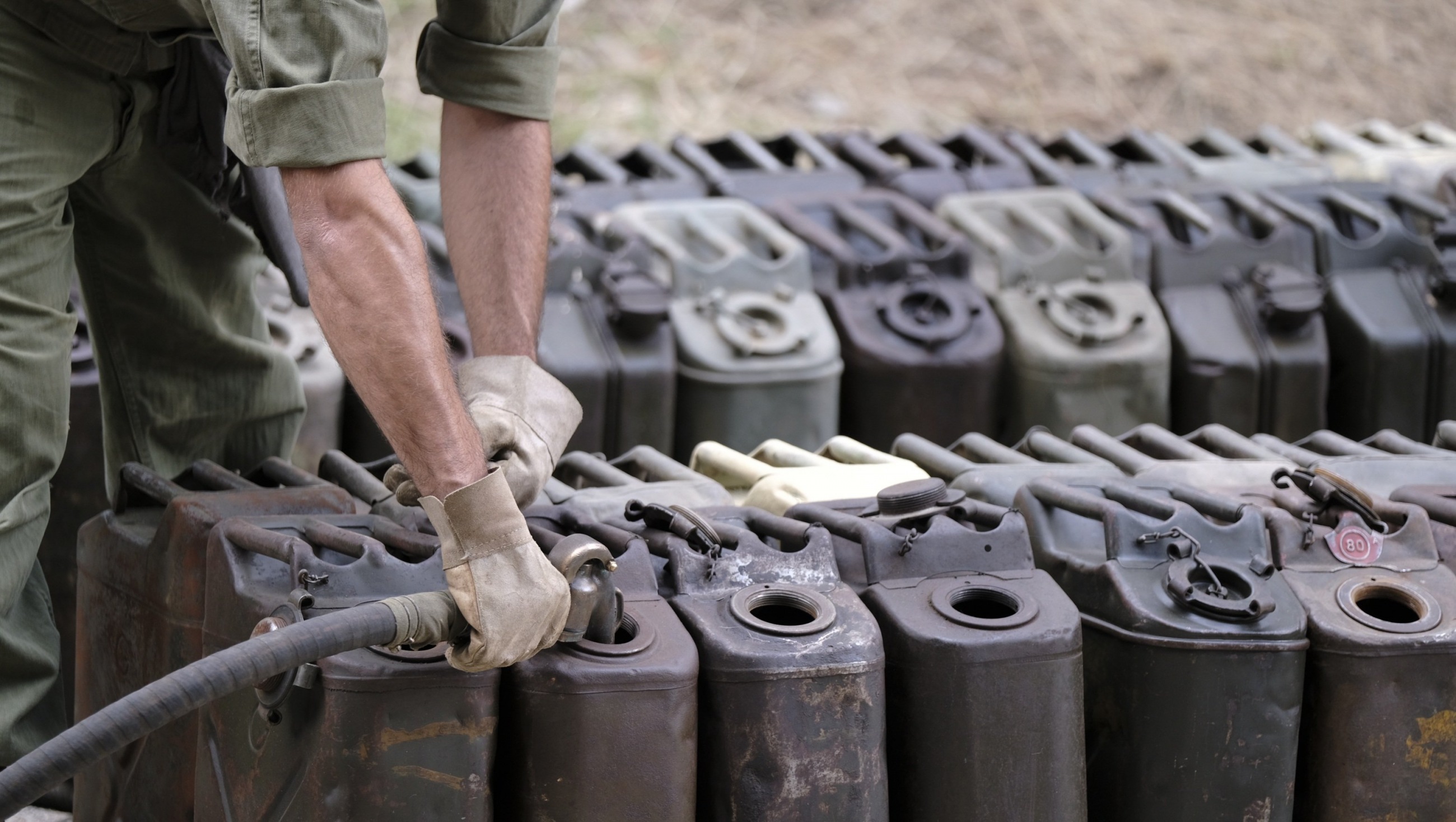
After the United States invaded Iran, the price of oil began to gradually rise. To prevent uncontrolled developments and even greater price shocks, the International Energy Agency released a record 400 million barrels of this commodity from its strategic reserves. To illustrate: this represents roughly one-fifth of the total global emergency reserves. Most of this oil is going to refineries from the United States. Currently, according to the Minister of Industry and Trade Karel Havlíček, the Czech Republic has fuel reserves for approximately 90 days. He claims that this volume is sufficient.

In the crisis so far, Russia has been the main beneficiary, selling its Urals oil at lower prices than other suppliers. The American administration decided to temporarily lift sanctions on it. Until then, Putin's regime was distributing the raw material mainly to China and India. However, during March, its sea oil exports increased to nearly four million barrels per week, the highest since the start of the year. The question remains how the recent attacks by the Ukrainian side, which reportedly damaged about 40 percent of Russia's oil transportation capacity, will impact this.
Thanks to the described steps, a partial replacement of production from the Middle East occurred. After all, Iran alone was producing around 3.3 million barrels per day at that time, which represented about three percent of global production.
Strait of Hormuz
The key issue remains the Strait of Hormuz. It is the most important transport artery of the region, where 16 to 17 million barrels of oil and oil condensate flowed before the war began. Transporting resources through here by tankers is now very dangerous due to the threat of massive disruption of navigation systems, drone attacks, and the laying of naval mines. Tehran also threatens to declare a complete blockade of the strait.
If the Strait of Hormuz were to be closed someday, analysts say the price of oil could short-term shoot above 120 to 150 dollars per barrel. For comparison: the price of Brent crude oil is now hovering around 100 dollars per barrel. Before the war, it was around 90 dollars.
War of Nerves
So what is at stake now? The war of nerves mainly concerns whether American President Donald Trump can negotiate with Iran for the complete opening of the strait. Otherwise, he reportedly threatens to destroy Iranian power plants. The attacked country, however, does not want to back down. Instead, it claims that in such a case, their forces would irreparably damage all energy infrastructure in the area. And that would mean the price of oil would continue to rise.
Experts also point out that even if the war ends soon, it will take at least another twelve months for the markets to return to normal. Repairing the oil infrastructure could take even longer. After the second Gulf War, which took place in 2003, Iraqi production returned to its previous level only after two years.
Increase in food prices and other goods
All of this would mean that other products and services will gradually become more expensive. For example, food prices. According to experts consulted by ČTK, food prices in the Czech Republic could increase by about ten percent. They say the increase in prices will be mainly caused by higher expenses for logistics, fuels, and energy.
For example, agrarian analyst Petr Havel mentioned that the price increase will affect some food products as early as April. According to him, the rise in prices will depend on the length of the conflict.
"The conflict in Iran also threatens global supplies of raw materials for fertilizer production, such as urea or ammonia, so its potential longer duration could ultimately significantly increase food prices in the Czech Republic,"
said earlier by the chief economist of Trinity Bank, Lukáš Kovanda.
The increase in prices due to the war conflict, according to him, will not manifest in consumer end prices as quickly as in the case of fuel.

No significant price drop expected for gasoline
The trend indicates that the price of gasoline will likely not return to the level of around 33 to 35 crowns, as it was just a month ago, this year. Despite the fact that the opposition ODS has already proposed a reduction in excise duty.
"No step is ruled out at this moment, we are monitoring and evaluating the situation very carefully within the entire economic context. However, it is certainly valid that tax policy is like a ferry that cannot respond to daily fluctuations in the stock market,"
stated Alena Schillerová in a press release from the Ministry of Finance.
Anyone who owns a car must therefore be prepared to pay more for fuel in the coming months.
Source: author's article, Ministry of Finance of the Czech Republic, Ministry of Industry and Trade of the Czech Republic, Czech News Agency, iDnes, Novinky.cz