"Today, Czechs often trust Google more than doctors," says doctor Renata Říhová from Bulovka.
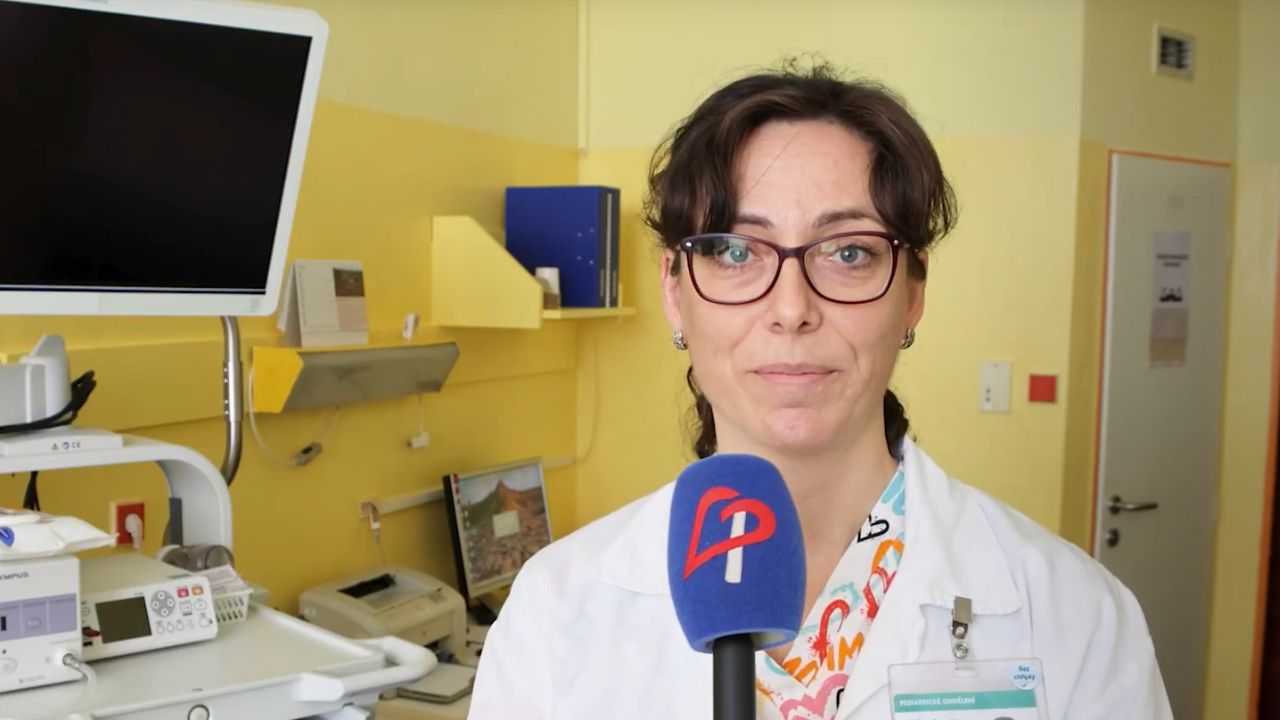
MUDr. Renata Říhová, a doctor from the pediatric pulmonology department at Bulovka University Hospital, met with us directly in the department where she cares for young patients with respiratory diseases every day. In the interview, she describes how pediatric medicine is changing, what doctors are most often dealing with today, and why modern devices like a cough assistant can significantly influence the course of treatment and the quality of life of her patients.
Madam Doctor, tell me, what brought you to medicine and children?
Probably it was the desire to do meaningful work and occasionally help someone. And I probably communicate better with children than with adults, although of course we communicate a lot with parents as well, so it's kind of all-round.
What do you enjoy most about your profession and what, on the contrary, exhausts you the most?
I enjoy working with people, I really enjoy trying to help them. But sometimes there is too much — further duties pile up, there are night shifts and so on. That is of course increasingly exhausting with age.
What does a typical day in your department look like?
We have reporting, patients are handed over, including newly admitted ones. Then I usually have a clinic, or we do bronchoscopies here in the small operating room. In the afternoon I have another clinic, or I do consultations in the ward where our respiratory patients are also located.

What diagnoses or diseases does your department treat most often?
It's a mix of everything - we are pediatric internal medicine, so we take care not only of our pulmonary patients, but also of children with kidney inflammations, lung inflammations, various infections and many neurological diagnoses and the like.
How much does the treatment of small children differ from the treatment of adults?
With small children, we are partially reliant on the parents, on communication with them, and on how they can interpret the difficulties of their child.
And it's often about certain experience, about this “sixth sense” and so on. We cannot always rely on the child to tell us everything themselves.
What do you enjoy most about children as patients? And what have these little patients taught you about life?
Probably honesty. A little child doesn't simulate or dissemble, it simply says: "I'm enjoying it, I'm not enjoying it, it hurts, it doesn't hurt."
Is there a moment when you say to yourself: This is why I do this job?
Probably these are the moments when I feel the trust of the parent or the patient themselves and I truly feel that we've helped or cured. But we also have many chronic patients that we deal with in the long term. All the more important for us is the feedback from the patient - that's the most valuable thing for me.
What, in your opinion, should every good doctor have, apart from expertise?
Apart from expertise, he should definitely be empathetic, patient and able to listen, because the patient often indicates the diagnosis essentially by describing his difficulties. And most importantly, he should not burn out with age - he should maintain these qualities and have some sort of "sixth sense".
What, in your opinion, should every good doctor have, apart from expertise?
Apart from expertise, he should definitely be empathetic, patient and able to listen, because the patient often indicates the diagnosis essentially by describing his difficulties. And most importantly, he should not burn out with age - he should maintain these qualities and have some sort of "sixth sense".
Don't you think that today as a society we tend to expect healthcare to do everything for us, including things that used to be up to parents?
A bit yes. I mainly think that the transmission of experience from generation to generation is disappearing. Families no longer live together with grandmothers, so people often seek advice on the internet or from friends. Then they don't have adequate basic knowledge about the human body and how basic things work.
Do you think that Czech doctors and nurses deserve better financial and social recognition?
I think they do. During the time I have been working, there has been a certain decline. There is also a noticeable financial difference between hospital and private doctors. This job is very demanding and truly deserves better recognition, including financial.
If you had to pick one thing that Czech healthcare should do differently immediately, what would it be?
This is a tough question for an "immediate" reply, it would be a beautiful answer. I think we have a certain reserve in educational or informational campaigns, so that patients do not get lost in a flood of information from Google. It would be great to have one reliable portal where they could find verified and guaranteed information.
The Foundation Fund Our Lungs has announced a public collection for a medical device – a cough assistant – for your children's department. Could you explain what kind of device it is, what it does and who it helps?
Yes. This device primarily helps with coughing and expectoration in children who are unable to effectively cough. It is mainly used in chronically ill children, especially those with neuromuscular diseases, cerebral palsy or other genetic syndromes, which prevent them from having sufficient muscle strength for effective coughing.
Therefore, mucus remains in them, leading to complications in the form of bronchitis and pneumonia. This device gives them hope that every common cold will no longer end in complicated pneumonia.

How specifically would the acquisition of a cough assistant reflect on the care of these patients?
Primarily in this. We would like to use the device in the department for hospitalized patients and at the same time, we could select children who could then apply for the device at home through a specialized center.
What would you say to people who are considering contributing to this device and the collection?
I would tell them that even a small contribution can help in such a basic thing as the ability to cough and get rid of mucus, which is very difficult for some patients, even though it is a reflex we usually do not realize.
So, thank you very much, ma'am, for the pleasant conversation.
Thank you.
Link to the collection
Source: own questioning, editorial office
Fast confession:
Are you more of an optimist or realist?
Who is more afraid, a child or their parent?
Are children braver patients than adults - yes or no?
Do you have a favorite phrase from a child's visit?
Who learns more, patients from you or you from patients?
What bothers you more - a sick child or a hysterical parent?
What is more difficult in medicine, patience or decisiveness?
Do Czechs trust doctors more or Google?
Do Czechs fear doctors more or policemen?
Are men bigger hypochondriacs than women, or is this just a myth?
Is Czech healthcare more ambitious or more exhausted?
Finally – what did you want to be when you were little?
And what would you like to ask me?
That's a complicated question, we'll talk about that later.