Richer than the English king. Liechtenstein's Prince Hans Adam II has his own bank.

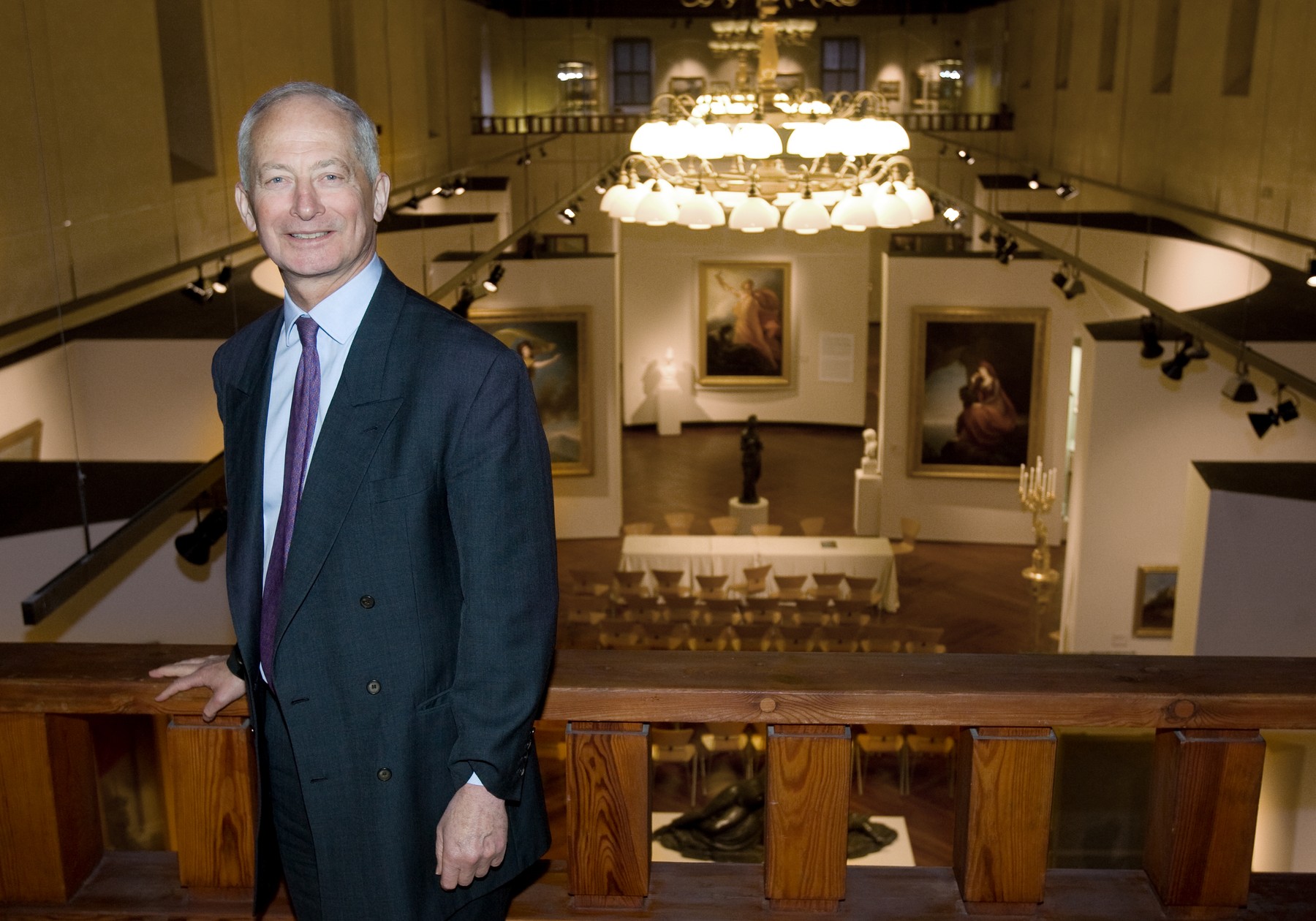
Although Liechtenstein is one of the smallest countries in Europe, it has not even 40,000 inhabitants and is dependent on political connections with Switzerland, the ruling family enjoys extraordinary wealth on a global scale. At present, the basis of their wealth is the ownership of the global bank LGT Group, but in the past, the family had its assets mainly in Moravia, where its members also resided. It is noteworthy that Liechtenstein was the last European country to establish diplomatic relations with the Czech Republic.
The shared history of the Czech Republic and Liechtenstein began to be written a very long time ago. More precisely, the common history of the Liechtensteins and Moravia, where they settled in Mikulov during the reign of Ottokar II. The famous ruler gave them this South Moravian town to start their expansion in this smaller of the two historical Czech lands.
After the Thirty Years' War, the Liechtensteins from their main seat in Valtice, today one of the most visited monuments in our country, controlled not only extensive territories in southern Moravia but also a significant part of northern Moravia and also estates in central Moravia (e.g. Šternberk castle). The domain around Vaduz (today the capital of Liechtenstein) was for the Liechtensteins only a side destination and members of the ruling family were almost exclusively residing in Moravian castles.
Liechtenstein as a libertarian experiment
However, with the end of the Austro-Hungarian Empire, land reform was initiated, leading to the first conflict between Czechoslovakia and Liechtenstein. The fundamental issue was the confiscation of property by Beneš's decrees after World War II and their non-return after the end of Communist totalitarianism. Until 2009, the Czech Republic did not maintain diplomatic relations with the small Alpine country and it was the last state that did not recognize the existence of an independent Czech Republic.
However, the Liechtensteiners would like to at least keep some of their assets back, they are still striving for their return and are embroiled in international legal disputes with the Czech state. If they were to succeed, which is highly unlikely, they would extend their already vast wealth with a number of historical properties and probably also with the remnants of their extraordinary art collection, which are currently being exhibited on these properties.
Members of the princely family have traditionally collected art, and this passion is one of the reasons why they are considered among the world's billionaires. Bloomberg magazine even named the Liechtenstein family as the oldest member of the select society of billionaires, as their wealth has the aforementioned historical roots. However, Liechtenstein's business is not just anchored in the past.
"Prince Hans Adam II of and in Liechtenstein. The absolute ruler from Liechtenstein, who is a member of the Hayek Society from his microstate country, which is a tax haven, conducted a libertarian experiment including the constitutional right of citizens to secede,"
described the current approach to the finances of the ruler of the country, economist Rune Stahl, and placed him among the bizarre figures of the world of economic libertarians.
Liechtenstein's bank manages ten times the wealth of the Czech state
In this context, it is understandable that it is difficult to reconcile with all the confiscations of property that befell the Liechtensteins in Czechoslovakia. At the same time, his person combines political figure with very significant powers towards the running of the state. These also became the subject of a referendum in 2003, where, however, the citizens of the country supported them.
The Prince of Liechtenstein, Duke of Opava and Krnov, as he is still officially titled, is in addition to his political role a significant global entrepreneur. The LGT Group bank is a leading international private banking group. It employs 6,000 people at approximately 20 locations in Europe, America, Asia and the Middle East.
For private and institutional clients, it manages assets worth more than 360 billion Swiss francs. In the conversion, this is about 10 trillion crowns. The Liechtenstein bank therefore manages wealth that is approximately five times greater than the Czech state budget.
No wonder the Prince of Liechtenstein is the richest monarch in Europe, ahead of the monarch of Monaco, but also before the English king, whose wealth is almost ten times smaller according to Forbes.
Sources: author's text, weforum.org, business-standard.com, x.com, forbes.cz