Rents are experiencing a boom. They are thriving not only in the metropolis but also in some regional cities.


The rental housing market is reportedly coming to life across the country according to analysts, most notably in Liberec, Plzeň, and České Budějovice. However, Prague remains at the top of interest. The demand for housing here is so great that each vacant unit is typically occupied within just a few days.
Six out of ten Czechs still live in their own property today, but roughly a quarter choose to rent. The number of renters has been increasing recently in line with the growing interest in this type of housing.
The most frequent inquiries come particularly from young people. Additionally, as revealed by this year's survey by the Ipsos agency, the majority of young people aged 18 to 30 do not believe that the current government will help solve the housing crisis, which strongly affects the so-called Generation Z.
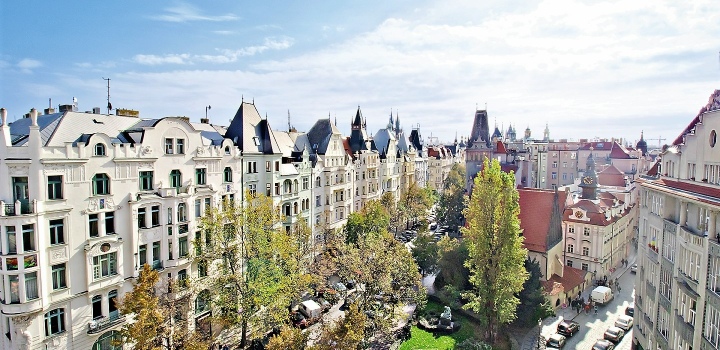
The share of people living in rentals is increasing across generations – not just among the young, but now also among families and middle-aged individuals. Renting is no longer seen as a temporary solution before owning a home. It is becoming a full-fledged alternative.
Rental prices are increasing
All of this naturally affects rental prices. Compared to the end of last year, rents have picked up their growth pace again during the first months of this year. Local factors and the specifics of individual regions are significantly affecting this, noted consulting company Deloitte. Data also confirms that brick apartment buildings still form the basis of the Czech rental market. Higher demand can be observed mainly among the younger generation, for whom it represents a more flexible and cheaper housing option.
The most significant price increase was recorded in Liberec, where prices rose by 8.5 percent quarter-on-quarter to 294 crowns per square meter in the first quarter. Ostrava also saw a significant price increase, with a rise of 4.2 percent to 249 crowns per square meter. Pilsen, Jihlava, and České Budějovice also reported an increase of more than three percent.
On the other hand, rents decreased in Karlovy Vary, where prices fell by 2 percent to 251 crowns per square meter, and Pardubice with a decrease of 1 percent to 304 crowns per square meter. According to Deloitte data, rents did not grow quarter-on-quarter in Olomouc either.
Prague and Brno Remain at the Top
The average rent in our country is significantly influenced by developments in Prague and Brno, which remain the most expensive markets in the Czech Republic. In Brno, rental prices have risen by 1 percent to 396 CZK per square meter. In Prague, rent has increased by 1.5 percent to an average of 466 CZK per square meter.
“In Prague, one can achieve the highest standard of living among all regions, but it's hardest for a person living alone. However, once housing costs are shared, whether through co-living, owning a , or family, the standard of living in Prague rises sharply and the metropolis suddenly moves to the top,”
stated Marcela Hrdá, partner at Moore Czech Republic, for ČTK.
The most expensive areas are traditionally the central parts of the capital city. In the first district, it's 505, in the second 491, and in Prague 7 then 490 CZK per square meter. And where are prices rising the fastest? It's the fifth district, where the rent increased by 2.9 percent quarter-on-quarter to 459 CZK per square meter.
Rent is often a better option
According to the analysis, financing the purchase of one's own housing remained significantly more expensive than paying rent in the first quarter. In Prague and Brno, the mortgage payment for smaller and medium-sized apartments was 50 to 100 percent higher than rent. In Ostrava, the cost of a mortgage is closest to rent, with loans for own housing being only about ten to 30 percent more expensive. In Plzeň and Olomouc, loans for 1+kk apartments are 20 percent more expensive compared to rent. For larger apartments, however, they are almost double in relation to rent.
Despite the high demand for rental housing, a sudden increase in prices cannot be expected in the future. A landlord can only raise rent during the tenancy as allowed by the contract and the civil code. Additionally, landlords must take a rational approach to setting rent. Increasing the rent above the level of comparable rent could lead to frequent changes in tenants and an increase in costs. This is also why rents generally rise in line with the growth of household incomes. It is usually not a matter of tens of percent per year. Moreover, it is encouraging that the supply of rental housing is increasing, which helps mitigate extreme price fluctuations.
Sources: author's article, own inquiry, ČTK, Deloitte