TRANSLATED INTO CZECH, CHECKED: Secret Billionaire Clubs: What Happens Behind Closed Doors of the Elite, You Shouldn't See

Some of them have officially existed for decades, but the true significance and content of their meetings remain shrouded in mystery. And that raises the question: are they merely luxurious "gentlemen's clubs," or places where global decisions are unofficially formed?
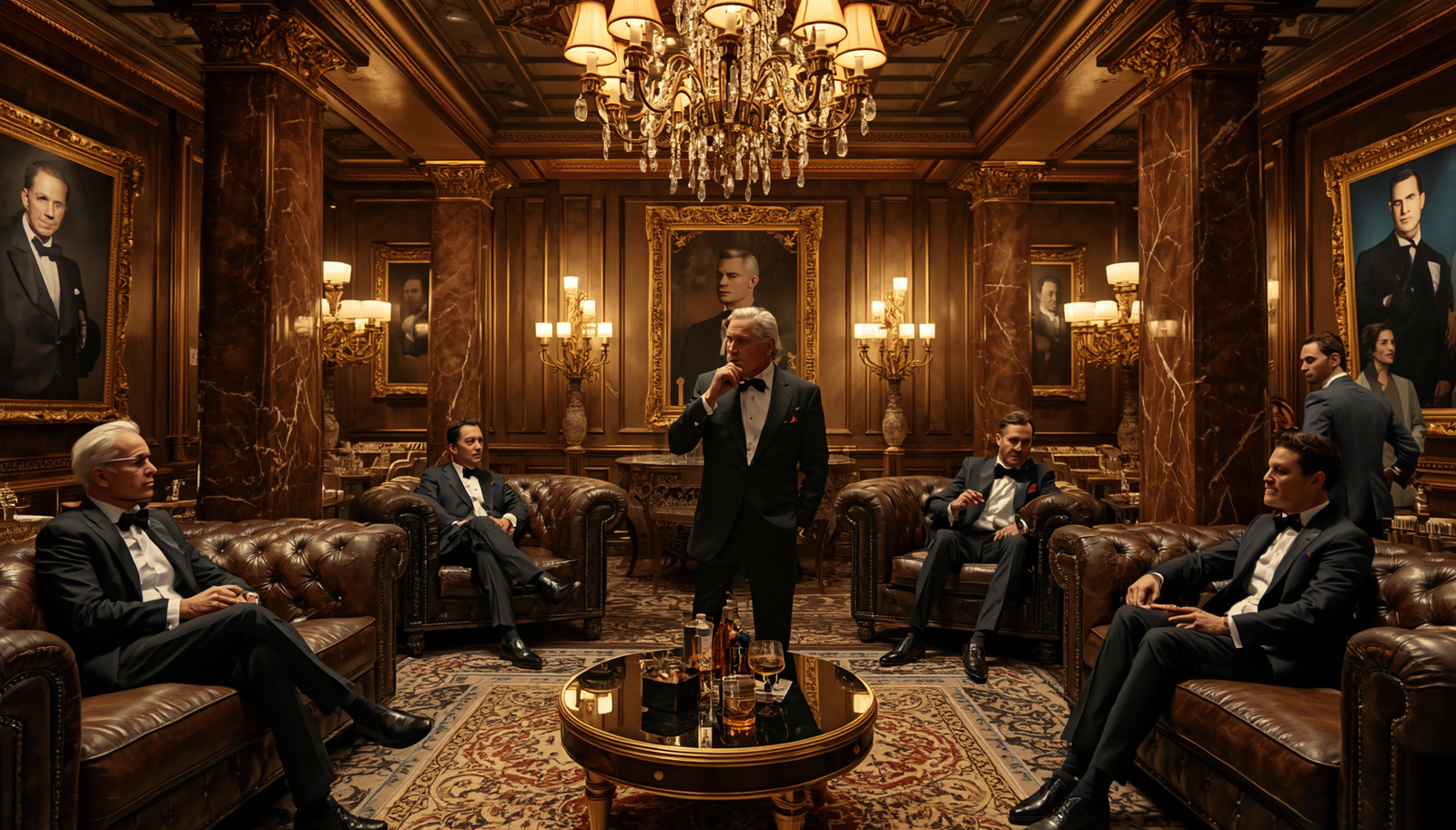
Elite closed societies, whose existence is shrouded in mystery, have been attracting the attention of the public and experts for decades. Questions arise whether true power in the world is held by democratically elected governments and parliaments, or whether influential groups operate behind the scenes, building their positions outside public scrutiny. The United States of America is often associated with the existence of such exclusive clubs, where the most influential people in politics, business, and culture meet.
According to historians, this is not a modern phenomenon. Secret societies existed in ancient civilizations, such as Mesopotamia, later in medieval Europe, and even during periods of totalitarian regimes. Their aim was not only to consolidate their own influence and create closed communities but also to promote specific objectives that could be beneficial, yet just as controversial.
Their aim is to strengthen their position, break away from the mainstream, and create a sense of belonging, but also to advance certain agendas that can be good or harmful. However, we don't know since they are secret organizations,

explains in the document Forbidden History on Prima ZOOM by British historian and writer Matthew Green.
However, since they operate outside of public scrutiny, their actual activities remain a subject of speculation.
These clubs serve several functions. On one hand, they are a place of relaxation where the world's wealthiest individuals can enjoy privacy and anonymity. On the other hand, they provide a space for networking, closing deals, and informal discussions about politics or the global economy. Sociologists speak of the so-called "rich-club phenomenon," referring to the tendency of the most influential individuals to connect with one another and create closed networks of power, writes Arxiv.
Let's take a look at the most famous elite clubs.
Skull and Bones (elite fraternity with an aura of mystery)
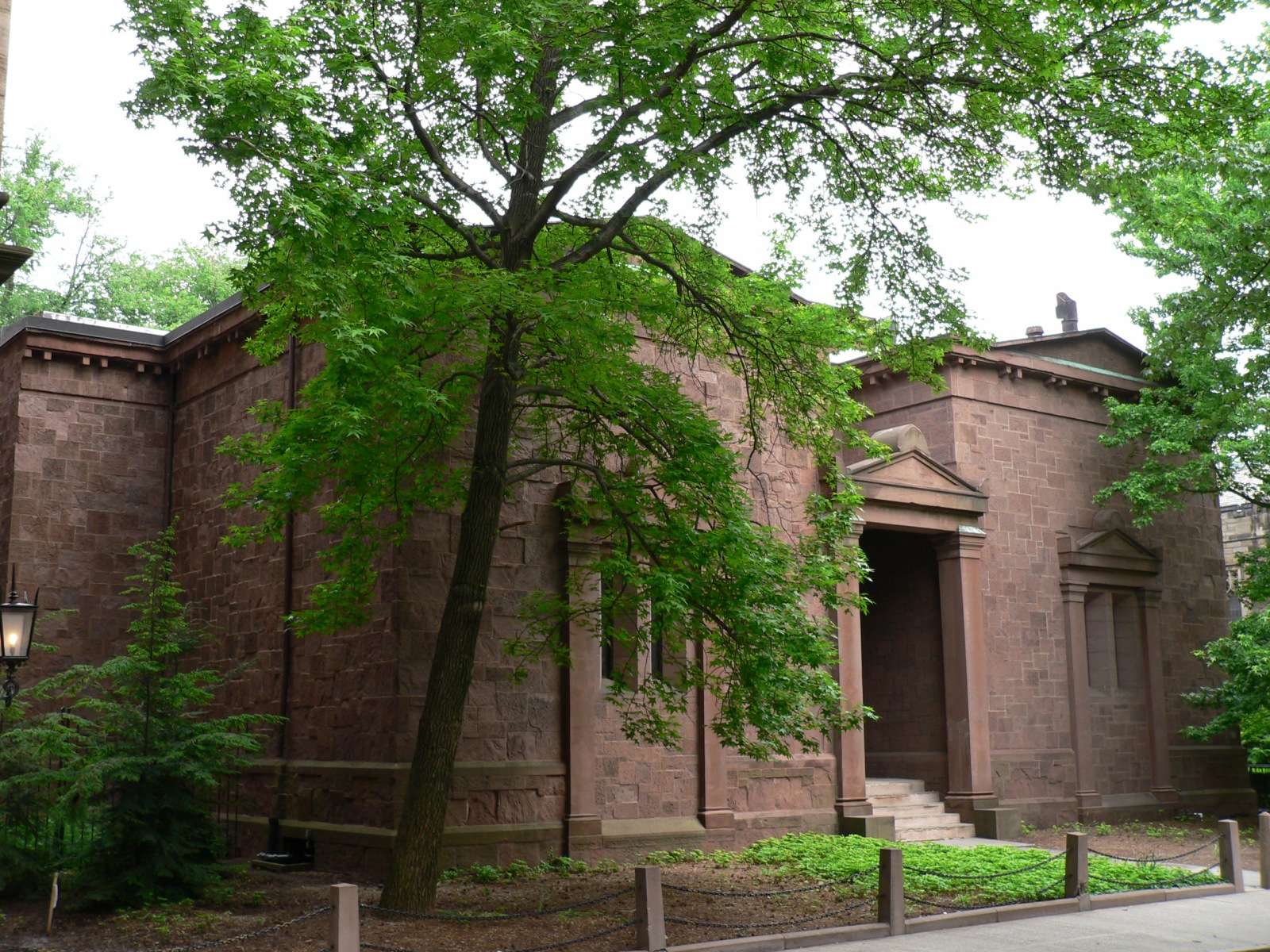
Perhaps the most mythicized is Skull and Bones, which has been active at the prestigious Yale University since 1832. It is an elite group that only a narrow selection of chosen students joins each year. Throughout its existence, it has built a reputation as an exceptionally closed and influential club, whose members refer to themselves as “knights.” It is estimated that only a few thousand people have passed through it over its entire existence, with only a few hundred active members at any given time. Membership is extremely limited, and the selection is made in secrecy. This is why it is often referred to as the “elite of the elite.”
Skull and Bones was established as an elite society for selected senior students. It was founded by William Huntington Russell and Alphonso Taft, and its origin is linked to a period of rivalry among student debating clubs at Yale. From the beginning, it was a closed group that cannot be joined by application - members are "selected" by older members of the society. The organization quickly built a reputation for secrecy. Its members meet in a special building nicknamed "The Tomb," which stands right on the Yale campus. The public does not know exactly what happens at the meetings, which over the years has created numerous myths and conspiracy theories.
This society is also associated with various legends and controversies. There are talks of initiation rituals that take place in enclosed spaces without windows and are meant to resemble dramatic or even morbid scenes. Some claims describe symbolic ceremonies involving coffins or skulls, which further enhance the organization's mystic and dark reputation. Among the most famous stories is the alleged theft of the skull of Native American chief Geronimo, which according to legend, was obtained by Prescott Bush.
Skull and Bones is also associated with influential figures in American politics and business. Among its members are former U.S. Presidents William Howard Taft, George H. W. Bush, and George W. Bush. This is why the organization is often regarded as a symbol of elite networks and informal influence in American society. The connections among members in high places of power lead to speculations that these societies may have a real impact on the country's affairs. Some conspiracy theories even attribute their involvement in major historical events, such as the development of nuclear weapons or the assassination of President John F. Kennedy. However, these claims are not supported by evidence and experts generally dismiss them.
In 2026, Skull and Bones is still active, but its operation has changed significantly compared to historical notions - it has adapted more to the modern university and social environment rather than functioning as a "classic secret power organization," as often depicted by conspiracy theories.
Bohemian Grove (a private world in the forest)
The most famous "mysterious camp" is Bohemian Grove - a vast forest area in California.
It was founded in 1878 and is owned by a private men's club called the Bohemian Club, established in 1872 by a group of male artists, writers, actors, lawyers, and journalists who were all wealthy, had a certain degree of fame, and were interested in art and culture. Since its inception, the club has expanded to include politicians and entrepreneurs, writes the portal Britannica. Every year in mid-July, an annual meeting lasting more than two weeks is organized there, attended by invited members and guests from the fields of politics, business, and art.
The program is surprisingly diverse:
- private concerts and theater performances
- lectures known as "Lakeside Talks"
- informal discussions on politics and economics
- networking among the most influential people in the world
It sounds like a summer festival for billionaires, but the difference is that here, people gather who truly influence global affairs. There is even historical evidence that projects like the development of the atomic bomb were discussed here.
These gatherings have a specific atmosphere. They occur outdoors, often accompanied by light effects, music, and symbolic rituals.
The most famous of these is a ceremony called “Cremation of Care”, during which participants symbolically “burn” the worries of everyday life. The centerpiece of the area is a giant owl statue, which holds special significance for the members.
A traditional (more than 100 years old) musical drama celebrating the short but welcomed escape of members from life’s worries during the summer season,
is written on the page.
It is precisely this ritual that is the source of much controversy. The mysterious atmosphere, costumes, and nighttime performances have led to numerous speculations, ranging from theatrical traditions to extreme conspiracy theories. The reality according to available facts: it is a symbolic, historical ritual with a theatrical nature, conducted for more than 100 years.
The Bohemian Club also brings together significant personalities - from politicians to entrepreneurs to military figures. In the past, its activities were attended by presidents such as Ronald Reagan and Richard Nixon, which again raises questions about the possible connection between informal meetings and official political decisions. Over more than a century, the Bohemian Club has grown to approximately 2,600 members and, according to its website, has a "substantial waiting list." The group has gained the attention of the elite and powerful: The Ronald Reagan Presidential Library is full of correspondence inviting not only Reagan but also key presidential advisors, including Michael Deaver and Edwin Meese, to the summer event at Bohemian Grove. Meese attended at least one such event and sent a thank-you letter to the head of the Colorado Republicans, highlighting the influence that participants had.
Controversies and Conspiracies of the 21st Century
In the 21st century, the Bohemian Club has maintained a reputation as a very exclusive club dominated by white members, who were among the richest and often politically most conservative men in the United States. However, it is coming under increasing scrutiny. Over the years, journalists have repeatedly—though not always successfully—attempted to infiltrate the premises and provide testimony about what actually happens behind its gates. For example, in 2000, Alex Jones, the founder of the Infowars platform known for spreading far-right conspiracy theories, secretly documented the "Cremation of Care" ritual. Many years later, in 2023, the organization ProPublica reported that US Supreme Court Justice Clarence Thomas had been attending Bohemian Grove as a guest for decades. Simultaneously, protests by activists, highlighting in particular the deepening economic inequality and broader social justice issues, have repeatedly taken place at the entrance to the premises.
Bilderberg Group (most exclusive elite meeting)
Among the most well-known and discussed "secret clubs" is the Bilderberg Group, which was established in 1954 as an informal meeting of European and American elites. It was named after the Hotel de Bilderberg in the Netherlands, where the first conference was held. The impetus for organizing the first meeting was the growing wave of anti-American sentiment in Europe, with the aim to promote a more favorable image of the United States and to strengthen mutual relations between the USA and European countries. According to some claims, the project for the introduction of the common European currency - the euro - was informally agreed upon at one of these conferences.
Since its inception, the group has functioned as an annual closed meeting of approximately 120 to 150 participants, regularly including prime ministers, finance ministers, central bank chiefs, CEOs of large corporations, media moguls, and academics, writes Infobae.
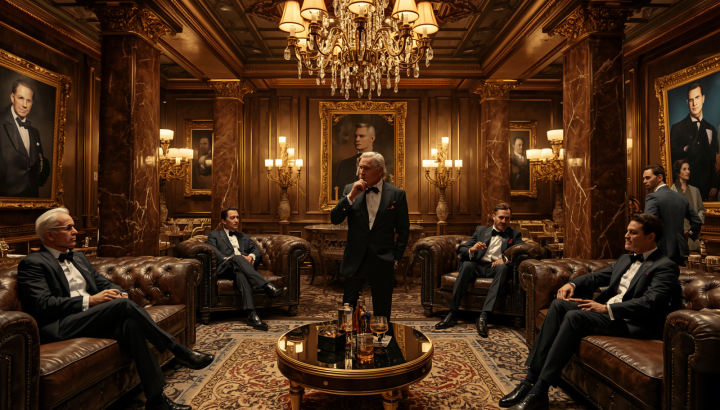
Fun fact: the organization itself has never denied the existence of discussions, but has long refused to disclose them. It is no longer a secret that world elites meet at Bilderberg conferences. However, questions still linger about what exactly they discuss because these pieces of information have been classified for many years. The participants themselves deny claims that they are steering world events or planning a new world order, and they assert that there is no official list of topics. In recent years, more information has appeared on the official website—including dates, venues, topics, and lists of participants—but specific conclusions from the meetings are not known. Participants do not provide statements, which continues to maintain the aura of secrecy around the conferences. The topics involve global economy, geopolitics, technology, defense, and energy.
The Bilderberg meeting took place from April 9th to 12th, 2026 in Washington, and the topics were as follows:
- Artificial Intelligence
- Arctic Security
- China
- Digital Finance
- Energy Diversification
- Europe
- Global Trade
- Middle East
- Russia
- Transatlantic Relations in Defense and Industry
- Ukraine
- USA
- The Future of War
- The West
Meetings take place according to strict rules:
- all discussions are informal and confidential
- the so-called Chatham House Rule applies – participants can use the content of the discussions, but must not reveal the authors of the statements
- there are no official records for the public
The question that interests many people: does Donald Trump belong to these elites?
There is no evidence that he attended Bohemian Grove meetings or was a member of this club. On the contrary, the available information suggests that he was not a regular participant. Interestingly, however, people around him were. For example, his son-in-law Jared Kushner attended a Bilderberg Group meeting when he was an advisor to President Donald Trump from 2017 to 2021, writes CNBC.
The French Minister of Economy Bruno Le Maire, the CEO of Credit Suisse Tidjane Thiam, the Governor of the Bank of England Mark Carney, and former Google CEO Eric Schmidt were present. Significant names such as Total CEO Patrick Pouyanné, NATO Secretary General Jens Stoltenberg, Microsoft CEO Satya Nadella, and former U.S. Secretary of State Henry Kissinger were also expected to attend. Traditionally, approximately one-third of the participants are Americans, with the rest being Europeans. The agenda included topics like Brexit, the ethics of artificial intelligence, the importance of space research, climate change, and sustainability.
The secrecy of the meeting regularly gives rise to numerous conspiracy theories and claims of the existence of a "secret world government." However, the organizers emphasize that the closed format only serves to support a more open discussion without the pressure of the public and the media. According to official information, the costs of the entire event are covered exclusively by private sources. According to a Swiss newspaper, then U.S. Secretary of State Mike Pompeo was also supposed to attend the meeting, although his name was not on the official list. He was supposed to discuss Iran with Swiss Finance Minister Ueli Maurer, as Switzerland represents U.S. interests in Tehran, since there are no official diplomatic relations between the U.S. and Iran.
Why is Bilderberg so controversial?
The main reason for the controversy is the absolute secrecy. Unlike other conferences:
- the media does not have access
- participants are not allowed to publicly comment on the details
- there is no official record of the discussions
This naturally creates room for speculation that it is a place where global strategies are coordinated outside of public oversight. However, the organization repeatedly claims that it is merely a discussion forum without decision-making power.
Are Bilderberg meetings a "government behind the scenes"? This is the most common question associated with the group.
The facts state:
- The group has no powers
- Cannot make binding decisions
- There is no formal government structure
On the other hand:
- People who truly make decisions about the economy and politics of G7 and EU countries meet there
- Discussions can influence the future direction of policies
That's why it's often said that Bilderberg is not a "government behind the scenes," but rather a network of influence away from the public eye.
World Economic Forum (global center of business and politics)
Another key venue is the World Economic Forum, also known as Davos. Unlike Bilderberg, this forum is publicly known and media-covered, but its real power often takes place away from the main panels - in behind-the-scenes meetings.
What makes Davos interesting, however, is not the panels, but the informal meetings. In hotels, at dinners, and in private lounges, connections are made that later turn into business deals or political initiatives.
Davos is essentially a place where global influence "mixes" in an informal atmosphere. Every year, billionaires and CEOs of the largest corporations, presidents and prime ministers, as well as leaders of global institutions meet here. Officially, global issues are discussed, but informal meetings often shape future business and political agreements.
Trilateral Commission (silent network between continents)
The Trilateral Commission is a lesser-known but very important organization that connects elites from North America, Europe, and Asia.
Its aim is to create dialogue between regions and connect economic and political leaders. Membership is strictly by invitation and often includes people who later appear in high state positions or in global institutions.
Interestingly, it is more of a "network of relationships" rather than a classic organization - there is no central power here, but a multitude of interconnected contacts.
Council on Foreign Relations (influence through experts)
Council on Foreign Relations is an American think tank focused on foreign policy and global relations.
At first glance, it appears to be an academic and analytical institution, but in reality, it is a place where former ministers, bankers, diplomats, and experts meet, who often influence the direction of American policy. Its strength is not in "secrecy," but in the fact that its members move between the worlds of politics, media, and business, thus creating strong connections.
How does one become part of the elite?
Entry into these clubs is not about money - it's about power and connections. For example, in the case of the Bohemian Club, a simple rule applies: no one can apply on their own. It's not just about wealth. A billionaire without connections can't get into such a club. Conversely, an influential politician or strategist can be invited even without extreme wealth.
Membership works on the principle of recommendation. An existing member must propose the candidate, who then goes through an approval process. The waiting list can take years. The club has approximately 2,500 members and is known for being extremely selective, writes Britannica.
It is also interesting that for many decades it was a purely male society, which further reinforced its closed nature. In groups like the Bilderberg Group, the process is even more exclusive - participants are directly invited by the organizers, with approximately 120 to 150 people from around the world. There is no application, just selection, writes CNBC.
The key element of these clubs is secrecy. In the case of the Bilderberg, the so-called Chatham House Rule applies - participants can talk about the topics but cannot reveal who said what. In Bohemian Grove, the symbolism of secrecy is represented by a statue of St. John of Nepomuk with a finger on his lips - a clear reference to silence.
The secret clubs of billionaires are not just a legend. They exist, operate, and have a real influence - albeit indirectly. They are not dark underground organizations but rather exclusive circles where those who already hold power in their hands meet. And perhaps that is why they remain so fascinating - because the public never quite knows what truly happens behind those closed doors.
Source: author's text, Britannica, CNBC, Infobae