Fair enough: Dutch elections about breasts were won by liberals with a young leader. In a few years, it could look the same in the Czech Republic.


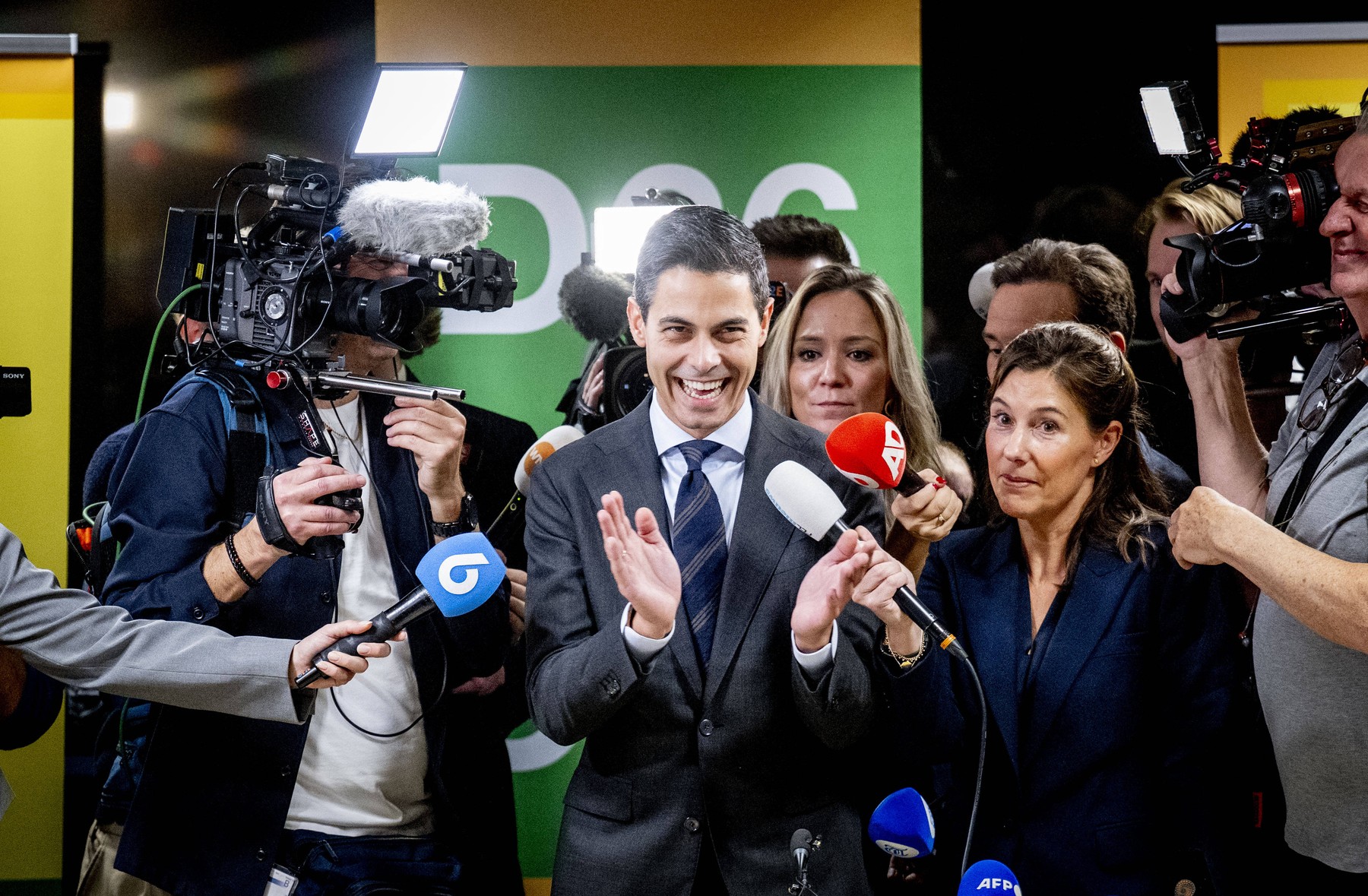
The Dutch elections brought a surprising victory for the liberal party D66, which only beat the anti-immigration party of Geert Wilders, known for his neo-Nazi rhetoric, by a few thousand votes. Admiration for neo-Nazism is not foreign to Czech politicians. Other trends from the Netherlands may also arrive in our subsequent elections.
The election victory was to be contested by two sixties and overexposed faces of Dutch politics. Geert Wilders, who has been a Dutch MP since the mid-90s and won the last election, was to be confronted in a direct duel by former EU Commissioner Frans Timmermans.
The Dutch duel could be compared to a duel between Andrej Babiš and Petr Fiala. Politicians, who represent similar moods in society and all are enjoying the grizzled years lived, even though Wilders hides them with a baroque, bleached, blonde mane.

Although it's no secret that Andrej Babiš rules his party with an iron hand and, according to the movement's statutes, has almost unlimited power in ANO, Wilders is one step ahead in this respect. He is the only member of his PVV party and the party does not allow other people to join.
But when two are fighting, the third one is laughing. This is also proven by the results of the Dutch elections. They turned out the same for the first two in terms of mandates, but according to the latest data (in the Netherlands, results are counted for a very long time), D66 won by a few thousand votes.
Although the Netherlands is also a parliamentary republic, their electoral system has always significantly differed from the Czech one. While in the Czech Republic, the functioning of the Chamber of Deputies was essentially decided by the 5% entry clause, the Dutch entry clause is the number of votes necessary to gain one mandate.
This year, the single-mandate party in the Netherlands will be Volt with one deputy. Although this seemed impossible from a political science perspective, inventive Czech politicians have found a way to copy this Dutch model and even surpass it this year. In fact, this year, two single-mandate parties will sit in the Czech Chamber of Deputies: Tricolor and PRO, which succeeded thanks to the unacknowledged coalition of the SPD.
Even in two-mandate parties, the Czechs are winning 3:2. The Greens, SLK (Liberec branch of STAN) and the Free Party have two deputies each. What else could be transferred from the Netherlands to the Czech Republic in the future?
We have not yet mentioned the leader of the victorious thirty-something party, Rob Jetten. Government negotiations in the Netherlands are very complicated and will surely take many months this time as well (the comparable fragmentation of the Chamber of Deputies in the Czech Republic is obviously not a hindrance to quick agreement on government cooperation), but it is hard to expect that he will not become the prime minister.
Young politicians have also shown their horns in domestic elections. It is not surprising in the Czech Pirate Party, but they have also leapt forward, for example, in the conservative ODS. This phenomenon began to be called a resistance of voters to the previous uncle-ocracy.
"We will meet now after the inaugural meeting with all other young MPs under 30 across the political spectrum ... As young people got into parliament, young assistants got there with them. It may show that politicians under 30 will simply profile here,"
"said in an interview for SeznamZprávy the twenty-seven-year-old elected representative Štěpán Slovák.
Until recently, nobody had heard of him, but it seems that not only he has ambitions for the voice of the young generation to be heard in politics. Czech Republic has already experienced a young prime minister. Stanislav Gross took over the leadership of the government at the age of thirty-five, however his political career ended ignominiously.
The next elections in the Czech Republic may also bring an unexpected result and could be under the baton of young politicians. Andrej Babiš, who has been enjoying stable voter support since 2013, may start to clear the field as his 80th birthday approaches. As was shown at the state awards ceremony, even this lover of early morning rises was overcome by a sleep rhythm.
One thing from the current results of the Dutch elections would be very difficult to transfer to the Czech Republic. Rob Jetten forms a pair with a professional floorball player ten years his junior, which passes through the media scene completely unnoticed. Czech politics is not yet ready for such freethinking of the Dutch cut.
Sources: Author's text, commentary, SeznamZpravy, The Guardian, Rug.nl