Mona Lisa under a coat. The craziest art heists that actually happened
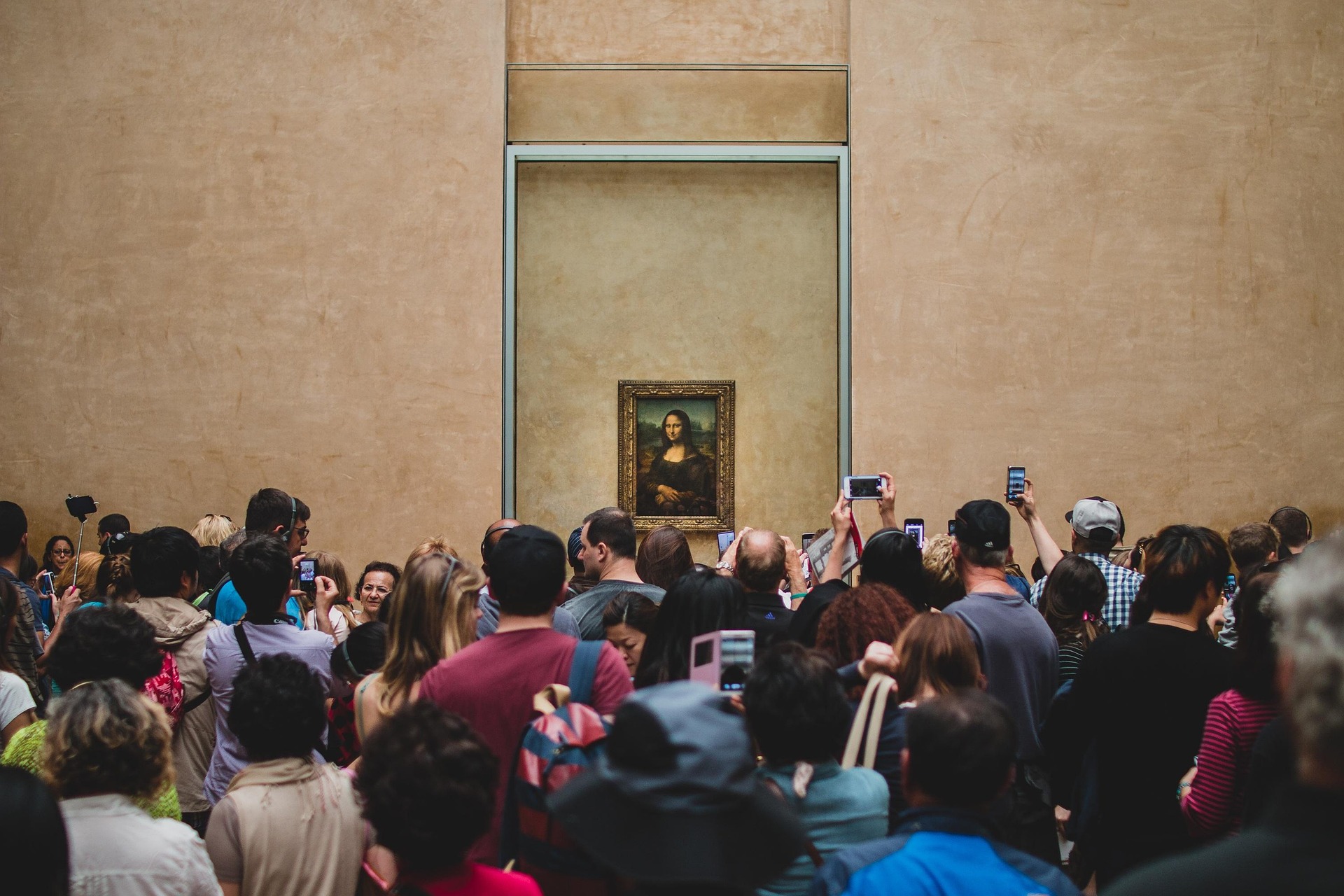
If you wanted to plan a major art heist today, you would have to at least somewhat approach the action and sci-fi movies we so love to watch. Lasers, night vision goggles, elaborate plans and backup scenarios for every situation. Without thorough preparation, you most likely wouldn't get even a step away from the displayed work. But it wasn't always that complicated. In the past, sometimes a work coat, a convincing story, or a good dose of audacity was enough.
When Mona Lisa Was Missing for Two Years
For the greatest art theft of the 20th century, twenty-nine-year-old poor Italian Vincenzo Peruggia needed nothing more than a coat and a good dose of confidence. Police interrogation revealed to us that on August 21, 1911, the Italian went to the Parisian Louvre museum through a side entrance used by employees wearing a white coat, which most wore as work attire. This made him almost invisible. That fateful day, the Louvre was quiet and calm, as it was closed to the public. Peruggia knew this information because he had briefly worked at the museum as a glazier's assistant, and had even been part of the team that installed the glass case for the Mona Lisa painting itself, so it is assumed that he himself knew how to open the box within a few minutes.
He knew that too. When the Salon Carré was empty, Peruggia took the painting. He headed with it to the service staircase, where he disassembled the construction and carefully hid the parts with the students' works that were stored there. It is said that he carried the painting out under his coat, but today we know that due to its dimensions, this was probably not likely. The Italian left through the maintenance door, where he was let through by a plumber who thought he was another worker.

Vincenzo hid the painting in a wooden chest under the bed in his apartment in Paris. He showed it to no one. He didn't even want to tell his mistress what the chest actually concealed. The painting remained hidden like this for a full two years. Until he took the painting by train to Florence. Here he also hid it in his dwelling for some time.
The painting was discovered on December 13, 1913, when Peruggia offered it to antique dealer Alfredo Geri. For this "patriotic service," however, Vincenzo charged half a million lire, which today corresponds to approximately 73.7 million Czech crowns. However, in addition to Geri, police also arrived at the agreed location and arrested Peruggia.
The door was opened for them by the security itself
It was March 18, 1990, and two men dressed as police officers rang the doorbell at the Isabella Stewart Gardner Museum in Boston, United States. They claimed they were responding to a phone call reporting a disturbance. For the security guard, the procedure was completely clear - to let these officers of the law in. They didn't know it would be their fateful mistake that would haunt them for the rest of their lives.
When two unknown men got inside, they quickly overpowered the unsuspecting guards and tied them up in the basement. Then the mice had free rein. During eighty-one minutes they collected thirteen works worth over 500 million dollars. The stolen art included works by Rembrandt, sketches by Degas, and a painting by Vermeer, which is one of only 36 in existence.
But the museum suffered in other ways too. It was designed by its namesake as a work of art itself, where each creation had its precise place in the whole. Today, when you visit the Dutch Room, instead of the Rembrandt and Vermeer that were stolen, you will see empty gilded frames, because the stolen artworks have not been found to this day. But the American FBI is still working on it.
The Scream stolen in broad daylight
When you say art heist, one imagines a nighttime operation under the cover of darkness. The thieves who set out for the Munch Museum in Oslo, Norway in August 2004 went about it in exactly the opposite way.
It was shortly after eleven o'clock in the morning, the museum was full of visitors and everything looked like an ordinary day. Then two masked men with submachine guns burst inside. The staff and visitors had no choice but to watch as the thieves tore two of Munch's most famous works from the walls - The Scream and Madonna. The entire operation took just a few minutes. Then the men jumped into a car and disappeared. The whole country was in shock.
After two years, the police finally managed to find both works and return them to the museum. However, it remains fascinating to this day that someone was able to steal such a famous painting in front of dozens of witnesses.
The French Spider-Man Went for a Picasso
Today's thieves already use all kinds of technologies. However, Frenchman Vjeran Tomic made do with his excellent ability to climb buildings, and so journalists started calling him Spider-Man.

In May 2010, he set his sights on the Museum of Modern Art in Paris. At night, he climbed up to a window, got inside, and began selecting. He took five paintings by famous artists, including Picasso, Matisse, and Modigliani. The value of the loot exceeded one hundred million euros.
However, the strangest part of the story came only after the perpetrators were caught. One of the accomplices claimed that after the media interest erupted, he got scared and destroyed all five paintings. According to his testimony, the masterpieces ended up in a rubbish bin. However, the police never found their remains, and to this day it is uncertain whether he was telling the truth.
Whether the paintings still exist somewhere, or really ended up among the rubbish, remains one of the greatest mysteries in the modern history of art thefts.
They Even Took a Break During Their Escape
In April 2003, thieves broke into the Whitworth Art Gallery and took three valuable works. Among them were works by Vincent van Gogh, Pablo Picasso and Paul Gauguin. The value of the stolen paintings was in the millions of pounds and police immediately launched an extensive search.
However, a few days later, an unexpected twist came. The paintings were found abandoned in a cardboard tube behind disused public toilets near the gallery. Next to them lay a handwritten message.
Its author claimed that it wasn't a theft for money. Allegedly, they only wanted to draw attention to the inadequate security of the gallery. It was never possible to clarify whether this was the real motive of the perpetrators, or just an attempt to divert attention.
The greatest irony is that the theft itself ultimately caused greater damage than a potential sale of the paintings would have. The works were exposed to rain and moisture during their time outside, and the restorers had their work cut out for them.
Only a few works of art can boast that they spent part of their story behind public toilets.
Sources: author's text, fbi.gov, Wikipedia.cz, bostonglobe.com, architecturaldigest.com, lapl.org