I'm taking Mauritanian: The more kilos, the more love. Brides send to fat farms to gain weight before the wedding


What is more interesting than the wedding ceremony itself in Mauritania is what happens before the wedding. The rule applies here, the more, the better, even in the case of weddings. While we are slightly puzzled by the ideal of beauty in the style of the Venus of Věstonice, in Mauritania the ideal of beauty is similar to the prehistoric statue.


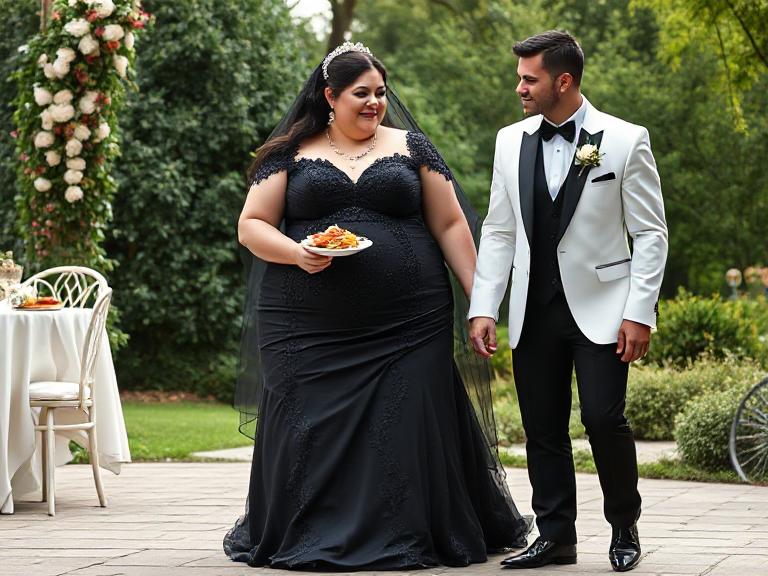
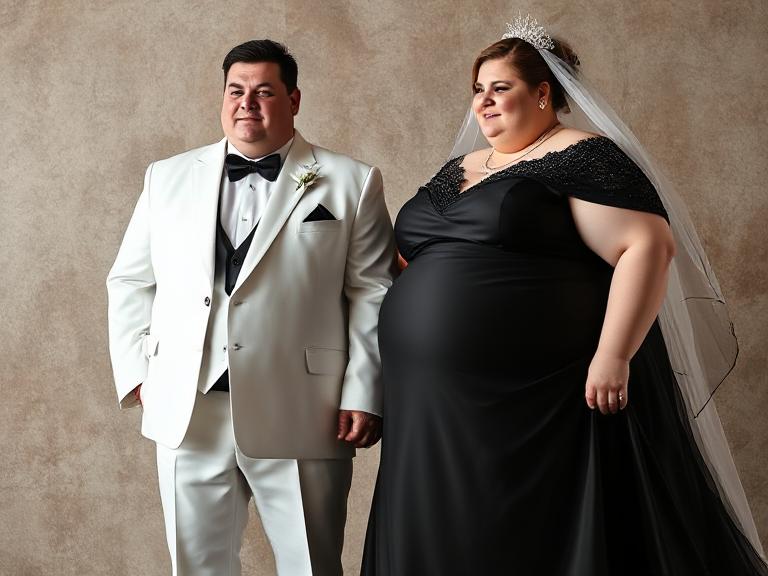
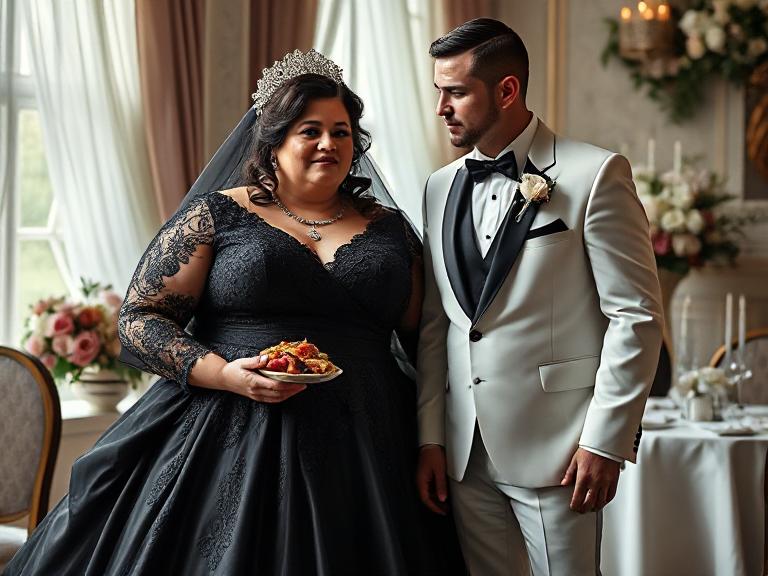


My friend never considered himself an easy romantic, but everything changed when he met Aïsha, a Mauritanian woman who completely enchanted him. She was not a fragile beauty from postcards - Aïsha had a firm figure that radiated confidence and strength, and her presence immediately filled the room with energy. When they first met at his girlfriend's wedding feast, thanks to her laughter and determined look, he suddenly realized that he had met someone completely different, someone who won't let the world just slip away.
From that moment, a game of glances, smiles, and conversations began between them, which seemed too deep to be accidental. Gradually, my friend fell in love - not only with her appearance, but also with her firm character, sense of tradition, and the life she lived with dignity and joy. I believe that in this country, slimness is not considered a beauty ideal. Only women with significantly full shapes, which symbolize wealth and a happy marriage, are considered charming and desirable. That's why future brides in Mauritania undergo stays in so-called "fat farms" before their wedding, where they have to gain as much weight as possible in order to be considered suitable for marriage.
Wedding attire
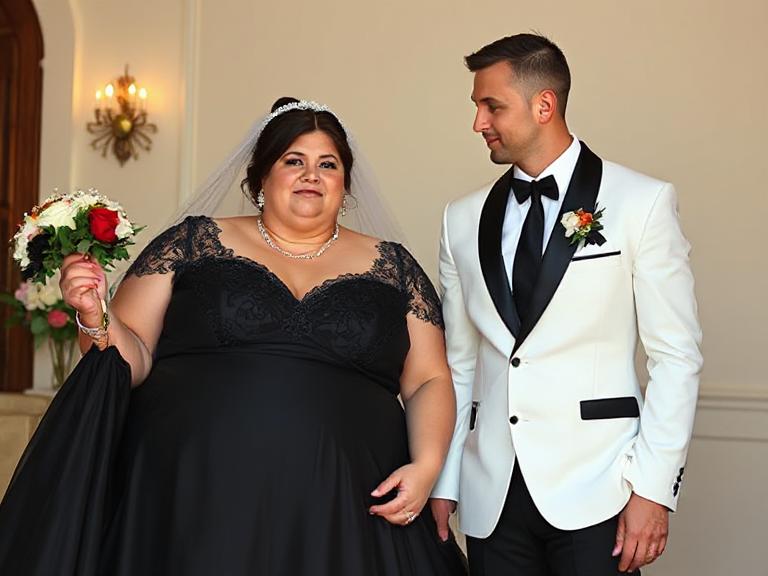
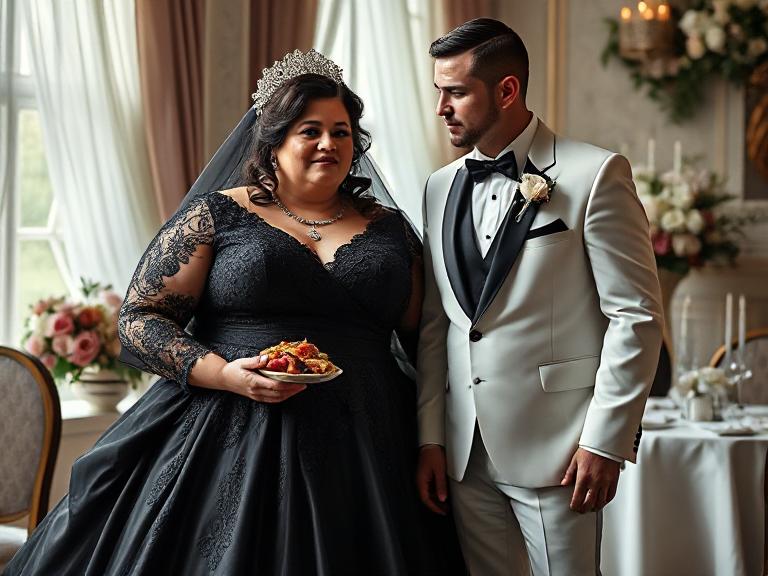
However, a peculiar feature of Mauritanian weddings is a tradition that distinguishes them from the customs of most of the world. While in Europe or Arabian countries brides wear white as a symbol of purity, in Mauritania they marry in black.
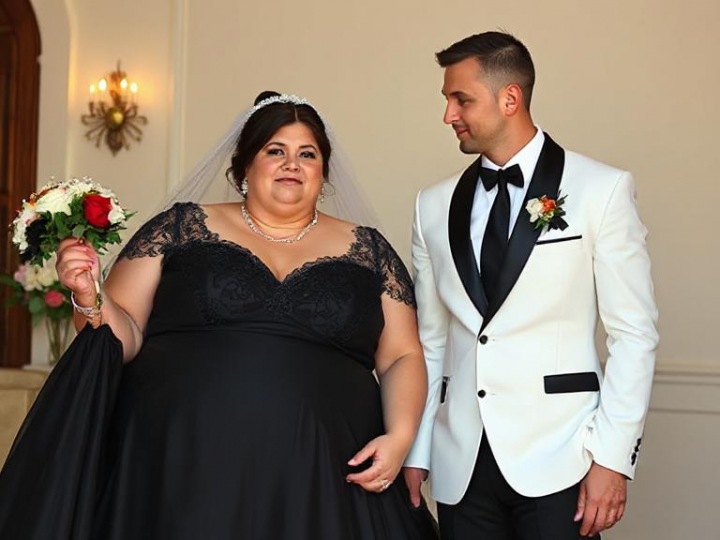
This custom comes from the Bedouin culture. During the wedding, the bride wears a black attire, while the groom wears white.
Black wedding dresses, called lakhel, are richly embroidered high-quality fabrics, the sewing of which often begins only after the birth of a girl. Not to wear it would be considered a violation of tradition. Additionally, brides cover their faces with a black or brown veil scented with traditional fragrance, they decorate their hands and feet with henna and put a shiny decoration in their hair called lerose. The entire look is completed by bracelets, necklaces and earrings. While only black eyeliner was used in the past, today brides use a complete make-up.
This garment has three meanings - aesthetic, health, and religious. The black color emphasizes the paleness of the skin and the whiteness of the teeth, which are a sign of beauty in Mauritania. About the fabric, which is made from natural materials imported from, for example, Mali, local residents claim that it improves the quality of the skin and removes dark spots. The religious dimension of the tradition refers to the prophet Muhammad, who reportedly blessed those who wore black veils.
The groom is wearing a traditional Mauritanian outfit - a white embroidered dara'u (long garment with open sleeves) with a black turban. This boubou, decorated with golden details, is a symbol of social status. The richer the embroidery and the higher the quality of the fabric, the higher the status of the groom's family. Less wealthy men are satisfied with a simple cotton version, while the rich choose a shiny and stiff damask basque.
Under the boubou, men wear sarouel pants, brought to Africa by the Persians. They are light, airy and ideal for a hot climate, often complemented with a leather belt.
The overall attire of the bride and groom reflects the pride in Mauritanian national traditions, cultural heritage, and unique aesthetics.
Girls violently fed before the wedding
More interesting than the wedding ceremony itself in Mauritania is what happens before the wedding. In remote areas of Mauritania, a controversial practice known as leblouh reappears, where young girls are violently fed to gain weight before marriage, as noticed by The Guardian.
According to Aminetou Mint Ely, a women's rights activist, even five-year-old girls are exposed to extreme overeating. If a girl refuses to consume food or liquids, she is forced to swallow, and possibly even vomit.
"In Mauritania, a woman's size symbolizes the place she occupies in her husband's heart."
Mint Ely explains for The Guardian. Girls from rural families are traditionally sent to so-called "fat girl farms", where older women or relatives are fed large amounts of wheat porridge, camel milk, and butter to achieve the desired obesity. This process is often accompanied by physical punishment to enlarge the body faster.
Another practice of Leblouh includes a gentle form of torture called Zayar, during which two sticks are jabbed into the sides of the toes. If the child refuses to eat or drink, an older woman squeezes the sticks, causing great pain. Successful weight gain can result in a twelve-year-old girl weighing 80 kg. "If she vomits, she has to eat it. At fifteen, she'll look like she's in her thirties," adds M'baye.
Historians say this tradition originated in the pre-colonial era when all white Mauritanian Arabs were nomads. The richer the man, the less work his wife had - preference was given to her sitting in the tent all day while her black slaves performed the household duties. Ancient Berber squares celebrate tebtath (stretch marks) as jewelry. Even today, lekhwassar (fat around the waist) is considered an aesthetic value and girls sent to gain weight gain the status of mbelha. They are taught to sit in the lotus position, speak softly, use cutlery, and emulate the exemplary life of the Prophet Muhammad's wives. The fertilization of girls is also practiced outside of Mauritania - in northern Mali and rural Nigeria, in areas controlled by Almoravids in the 11th century, as well as in the state of Kalabar in Nigeria and northern Cameroon.
Some Mauritanians claim that modern upbringing and Western influences have gradually changed the ideal of beauty - girls play sports and follow television fashion trends, so extreme weight gain becomes a relic for most of society. However, activists Ely and Fatimata M'baye point out that the problem persists: some adult women try to maintain their weight with hormones or drugs, sometimes leading to fatal cases.
"We do it for their own good... How are these poor and repulsive girls going to find a husband?"
"says Elhacen, a woman who makes a living by violently feeding young girls, as stated by hir.harvard.edu. She describes her work with pride:
"I'm very strict... I beat the girls or torture them by putting a stick between their fingers. I isolate them and tell them that skinny women are less valuable."
This kind of childish cruelty is the result of extreme Mauritanian beauty standards, which celebrate obese bodies. According to Elhacen, the role of a woman is "to give birth to children and to be a soft and full bed for her man". Additionally, she receives income for stretch marks, which are considered the highest reward for a woman trying to gain weight.

This vice called gavage means "feeding ducks foie gras" in French. This process dehumanizes girls and women and deeply reaches into culture. In the past, the Mauritanians of Moorish origin, who make up two thirds of the country's population (3.1 million), considered female obesity to be a symbol of status - a thin woman meant that her husband could not afford to feed her. Girls from wealthier families were therefore overfed to make them more attractive to potential grooms. One Moorish proverb even says: "A woman takes up as much space in a man's heart as she does in his bed." This directly ties weight to attractiveness, promoting extreme practices.
Forced feeding and early marriage
This extreme is clearly seen in the abuse of little girls. Girls who are five years old are sent to "farms for chubby girls", where they are forced to consume high-calorie foods such as millet and camel milk. Forced feeding often takes place at home under the supervision of the mother. Activist Lemrabott Brahim explains that it is precisely the relationships between the mother and the daughter that keep leblouh alive and are "deeply rooted in the minds and hearts of Mauritanian mothers, especially in remote rural areas".
Girls can consume up to 16,000 calories each day, including five litres of milk. Older women or relatives use brutal methods to force the girls to eat: the zayar technique involves the girl's thumb being inserted between two sticks and squeezed if she resists. Other practices include pulling the ear, pinching the thigh, bending fingers backwards or forcing the girl to drink her own vomit. Girls are also threatened with beatings if they do not finish eating. According to a 2013 study, more than 61% of the force-fed girls said they had been beaten during this process, and nearly a third (29%) had fingers broken to make them eat. Some operators of forced feeding have even switched from camel's milk to chemical substances designed to fatten animals, making leblouh even more dangerous.
In the 2018 Unreported World document, reporter Sahar Zand watched this process in person. Girls are fattened up during the rainy season, when there is plenty of food, with the aim of gaining around seven kilograms. According to Zand, approximately 25% of Mauritanian women suffer from leblouh, but in remote rural areas, this percentage can reach up to 75% because women there have no escape or distraction.
Zand states:
"In this society, the greatest power for women is to be beautiful, and to be beautiful, she must be fat."
This idea can be paraphrased:
"In this society, a woman's greatest power is to get married, and to get married, she must be fat."
A 2013 study proves that leblouh directly supports early marriages because large and fattened girls appear physically mature. According to law, a Mauritanian woman must be 18 to marry, but often younger girls marry and almost a third of girls aged 15-19 get married before reaching adulthood. Many of these girls marry older men, which threatens their physical and mental health.
Long-term health consequences
Even after marriage, women suffer from extreme beauty standards. Dr. Mohammed Ould Madene mentions a patient who was 14 years old and her heart nearly failed under the pressure of her body. Risks include diabetes, heart disease, high blood pressure, cholesterol, stroke, osteoarthritis, poor mental state, reduced mobility, sleep apnea, and cancer. In 2016, 18.5% of Mauritanian women were obese, while only 6.6% of men were.
In the context of the COVID-19 pandemic, this is particularly dangerous - obese people are at a higher risk of hospitalization, artificial respiration, and death. With a low number of doctors (0.18 doctors per 1000 inhabitants), obese Mauritanians are extremely vulnerable. One 26-year-old woman describes: "I am always tired, I wheeze when walking. I would like to be slimmer to be more dynamic... I would like to wear jeans and high heels. I want to diet, but I'm afraid that men won't want me anymore."
Drug abuse and the black market
Many women take drugs and illegal substances to gain weight faster – from contraception to corticosteroids to hormones used to fatten animals. These substances are easily available and poorly regulated. Reporter Zand noted that these markets are open and public. Some girls even died from steroids and others still use them.
Divorce is usually not considered something positive, except in situations where it is an escape from a toxic marriage
However, the view in some parts of the world is different. In Mauritania, a small Arab country in northwest Africa, women often celebrate divorce, which is in stark contrast to most of the Middle East and North Africa, where divorced women are unfairly perceived as unsuccessful because they have not fulfilled the traditional family structure. Furthermore, divorced women in Mauritania are often considered more attractive and have a higher chance of remarrying than a woman who has never been married.
In Mauritania, divorce is common and often celebrated. Women organize grand celebrations and parties with friends and family to celebrate their newly acquired freedom with music, dance and feast. These celebrations are not only social events, but also a public declaration that women are available for marriage again. Divorce is perceived as an opportunity to start over and show that a marital split is not a disgrace.
This unusual approach reflects the matriarchal culture of Mauritania, where women have significant autonomy and independence. The strong social position of women is rooted in deeply ingrained matriarchal traditions of the Sanhaja Berbers and Hilalian Arabs - two tribes from which the majority of Mauritanians are descended.
Mauritanian women are independent, determined, confident, and courageous. They play a significant role in Saharan society and the country can be considered a modern matriarchy. They are well represented in decision-making centres - from deputies, leaders of political parties and leaders of civil organizations to high-ranking officials or military officers, which is a stark contrast to neighbouring countries.
The "divorce market" in Mauritania is a metaphor for a space where freshly divorced women can re-establish themselves and are considered suitable for a new marriage. The literal market is a place where women sell furniture and things related to their previous marriage. The increasing divorce rate in the country has created the concept of "marital career", where women marry multiple times in a lifetime. Experienced women from previous marriages are often considered better candidates than young unmarried women, giving them the power to initiate divorce if their needs are not met.
Islamic law, which governs marriage and divorce in Mauritania, includes the provision of "khul", which allows a woman to request a divorce in exchange for compensation to her husband, usually in the form of a wedding gift. This legal framework provides women with considerable freedom to end a marriage, a level of autonomy that many Arab countries could follow. Celebrating women post-divorce is far better than shaming them. The culture of shame, prevalent in many parts of the region, is one of the reasons why women remain in violent relationships - so as not to be condemned by family and neighbors. The Mauritanian approach shows that divorce can be an opportunity for a new beginning, and the world can learn a lot from this.
Source: author's text, milleworld.com, observers.france24.com, danddclothing.com, theguardian.com