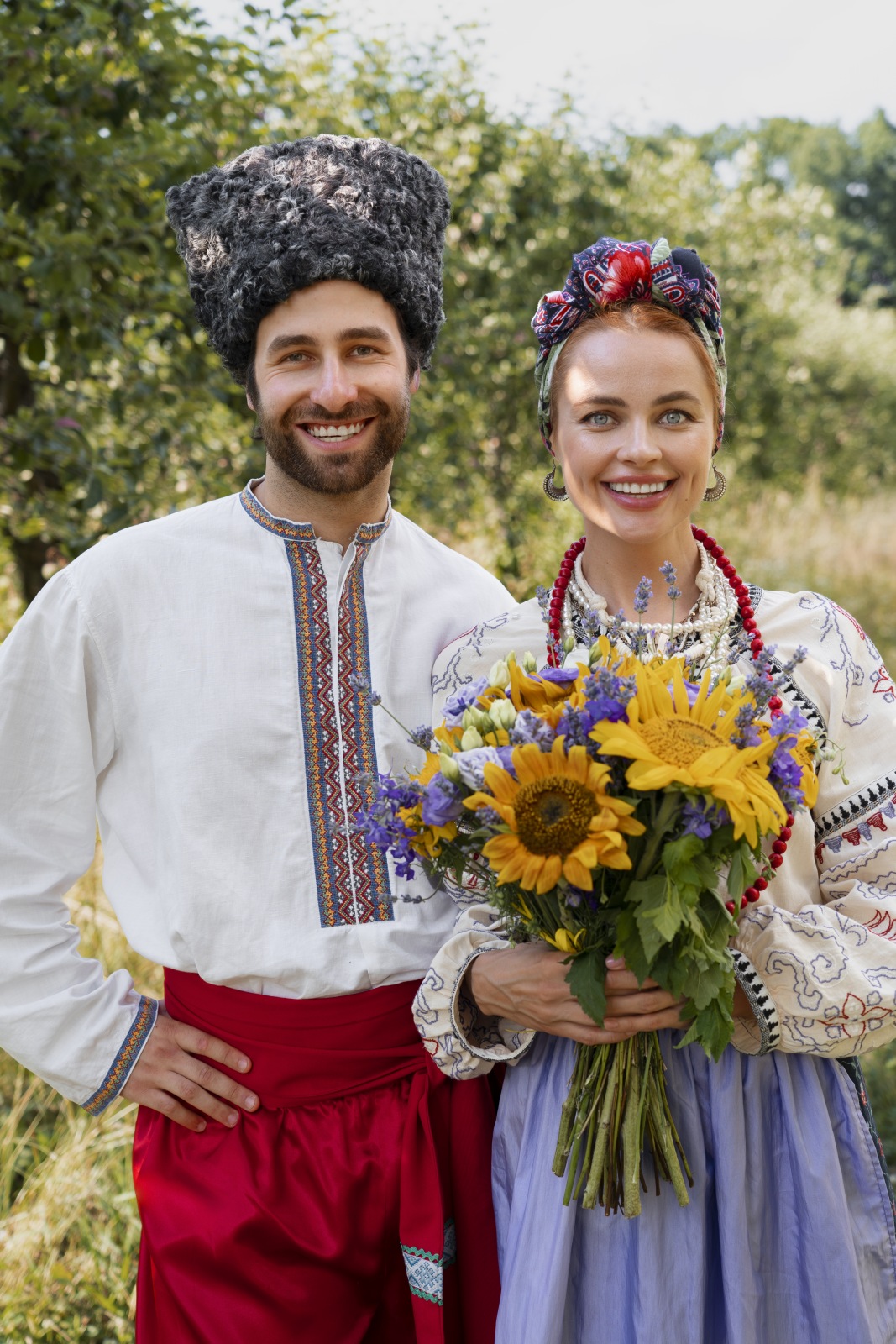
I'm taking a Belarusian: The bride's hair is going to the mother, the groom examines the nails and jewelry



Belarusian weddings to this day are characterized by rich traditions, which have their roots in ancient times. For example, before the ceremony, the groom's father combs the bride's hair, thereby showing his acceptance into the family. The ceremony itself is official and is attended by a state official, who verifies the marriage. After signing, the newlyweds receive a marriage certificate and their first steps lead directly to the feast, where a great celebration full of gifts, music, and dance begins.
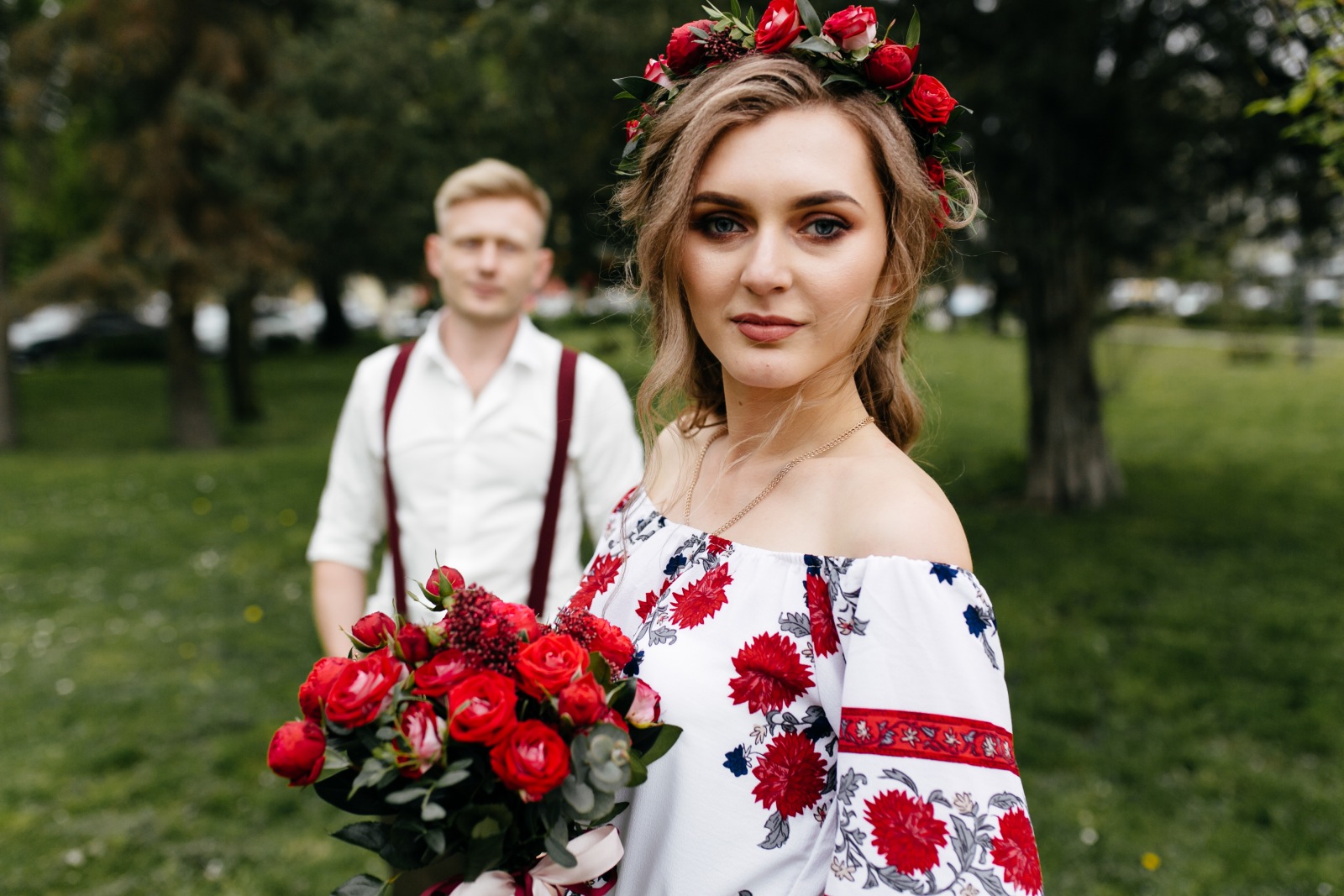

In Belarus, Russian and Polish are predominantly spoken, with a smaller proportion of Ukrainians and Jews. Despite this diversity, the country has preserved strong family and traditional values. It was not so long ago that the bride's virginity was seen as a necessary condition for marriage.
Preparations and role of families
A Belarusian bride is beautiful simply because she is seductive and is a perfect example of true charm. Their wedding story often begins long before the ceremony. In the past, it was common for Belarusian girls to weave fabrics and keep the first woven piece as a symbolic dowry for their future husband. This step indicated that the bride is capable of taking care of the household.

An important part of the tradition is the bride's age itself, according to which the eldest daughter in the family gets married first, followed by the younger one, and so on. If the younger sister got married before the older one, it would be considered a great disgrace for the family.
The wedding traditionally takes place in the homes of both families and includes a lavish feast and many toasts in honor of the newlyweds.
During the ceremony, the bride's hair is cut and handed over to her mother as a sign of leaving the family.
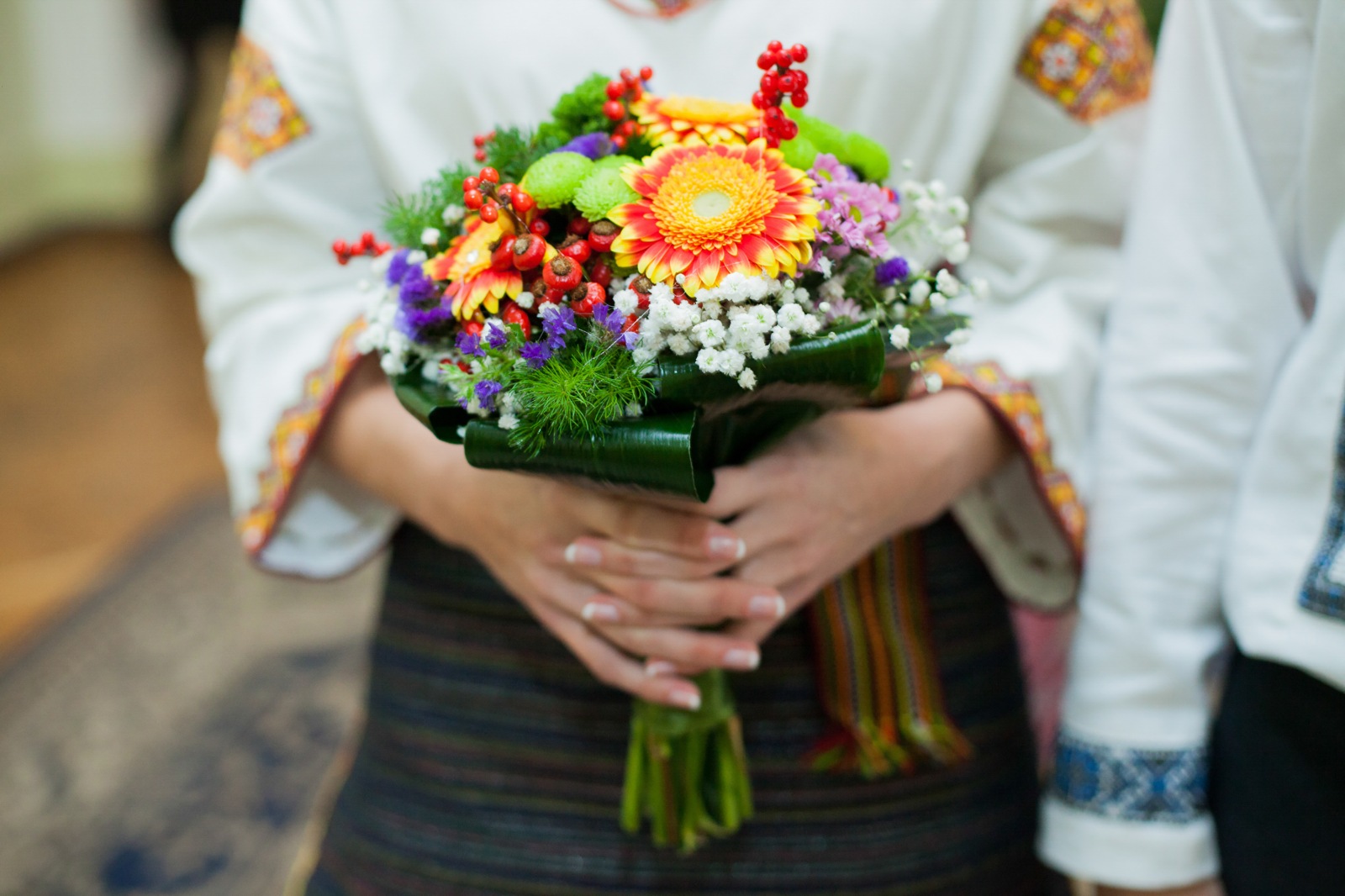
The groom's father has an unusual role. He checks the jewelry or even the nail polish, symbolizing his responsibility for the bride. The entire ceremony ends with a kiss and a hug - as a confirmation of love and the union of two people. This ritual is one of the oldest in the world.
First, wedding cakes are exchanged
The wedding ceremony in Belarus begins with an extraordinary gesture - the exchange of wedding cakes. Similarly, as in other cultures, sweet pastries in the context of a Belarusian wedding are a symbol of abundance and fertility.
At the same time, the bride's family gives the bride a white hat, which represents purity and a new beginning, while the groom brings a red rose. These customs have a long history in the country and have also become a way to introduce foreign guests to the beauties of Belarusian culture.
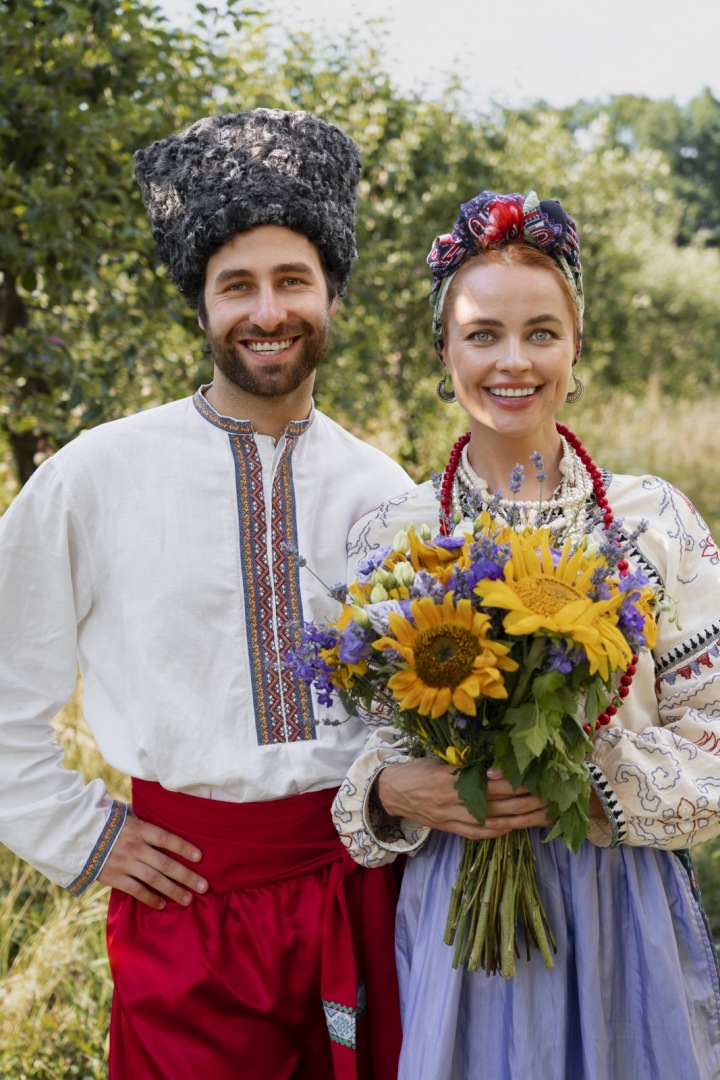
Belarusian weddings are literally intertwined with traditions. In addition to hats and flowers, in some areas, wedding attire is prepared directly in the bride's family. She, along with her relatives, sews not only her own dress but also dresses for the bridesmaids. The symbolism of gifts goes even further - the groom gets a red and white hat from the bride's family as a sign that he accepts his new role as a husband. Couples also give each other gifts, and among the most significant is the traditional ceremonial towel. This represents a solid foundation of marriage and the certainty of a home they will build together.
An important role is also played by the so-called hand towel - a specially embroidered wedding towel. The bride and groom exchange it as a symbol of unity and shared future. The red towel is meant to express their new joint life, family harmony and inseparable bond. This ritual is one of the most beautiful and poignant moments of the entire wedding.
An unusual but very effective custom is also the exchange of the veil. After the ceremony, it will be taken over by the groom's family and brought to the young woman's house, as if symbolically protecting her new home. The entire ceremony is accompanied by songs and dances, especially involving the groom's mother. Among the festive rituals is also the exchange of ice cream cups - a sweet gesture expressing freshness and joy from a new beginning.
Feasting and entertainment
Cakes, bread, and cookies always have their significance at a wedding table. In addition to cakes, rye bread is also served as a symbol of stability and long life. Traditionally, the parents of newlyweds also exchange rings, thus supporting the union of both families. Although sometimes weddings in Belarus were arranged marriages, love and mutual agreement are at the forefront today. Nevertheless, the custom is maintained that both families meet before the ceremony itself and jointly agree on the course of the celebration.
The so-called tamada plays a key role at the feast - a cheerful and charismatic moderator who entertains guests, introduces various toasts and organizes games and competitions. He is the guarantee that no one will be bored and that the celebration will have a good pace.
Wedding rituals
Playful rituals include, for example, throwing a veil at unmarried girls. The one who catches it, according to the superstition, will get married first. Another popular custom is a visit to the pottery workshop where the newlyweds jointly create a ceramic object as a symbol of the permanence of their relationship. A richly decorated cake is served at the table, which sometimes replaces the classic cake elsewhere. These rituals are deeply rooted in Belarusian culture, but more and more often are adopted by couples from abroad who want to liven up their wedding with non-traditional elements. The portal Acondicionamientos.com. reports. The groom also gives a new ring to the bride's mother and financially contributes to the father who attended the wedding as an escort. In some regions, the betrothed also exchange cups of ice cream - as a symbol of a sweet marriage.
As for the appearance, brides used to wear richly embroidered dresses full of floral and bird motifs, decorated with gold buttons and intricate embroidery. Today, most women choose white lace dresses, but folkloric elements often do not lack at modern weddings. An interesting feature is also the tradition of bridesmaids.

In the past, they wore the same dresses as the bride to confuse evil forces that could threaten her happiness. Today they dress differently, but the significance of unity and closeness of sisters and friends has been preserved. Men who choose a Belarusian bride can expect a partner who is not only beautiful but also determined and firm in her values.
Being the wife of a Belarusian man means that you will spend all the important holidays together.
Kaliady (Christmas)
Kaliady, Belarusian Christmas, combines Christian and pre-Christian traditions. They begin on January 6 (Christmas Eve) and last until January 19, culminating in the feast of the Epiphany. One of the most typical features of the Kaliady is kaljadavanne, the traditional singing of carols. Groups of people, often in costumes or masks, go from house to house, sing carols, and perform short sketches. They are usually accompanied by the character of a "goat", which symbolizes fertility and prosperity. In return, they receive small gifts and delicacies from the hosts.
Maslenitsa (Butter Week)
Maslenitsa, also known as butter or pancake week, is a joyous celebration of the end of winter and the arrival of spring. It takes place in the last week before the Great Lent according to the Orthodox calendar. The main part is the preparation and consumption of blini (i.e., pancakes, popular also in Russia), which symbolize the sun and warmth of the coming spring. During the week, various activities take place: sledding, snow fights, or burning the "Maslenitsa scarecrow" of straw, which represents winter.
Radunitsa (Day of Ancestors)
Radunitsa, also known as the Day of Ancestors, is a holiday in memory of the deceased. It takes place on the second Tuesday after Easter and mainly involves visiting cemeteries. On this day, not only do people mourn, but they also celebrate the lives of those who have left. Families gather, bring traditional foods, and remember their ancestors. It is believed that the spirits of the deceased visit the living on this day and during their visit, offerings are "presented" to them.
Belarusian hospitality and traditional clothing
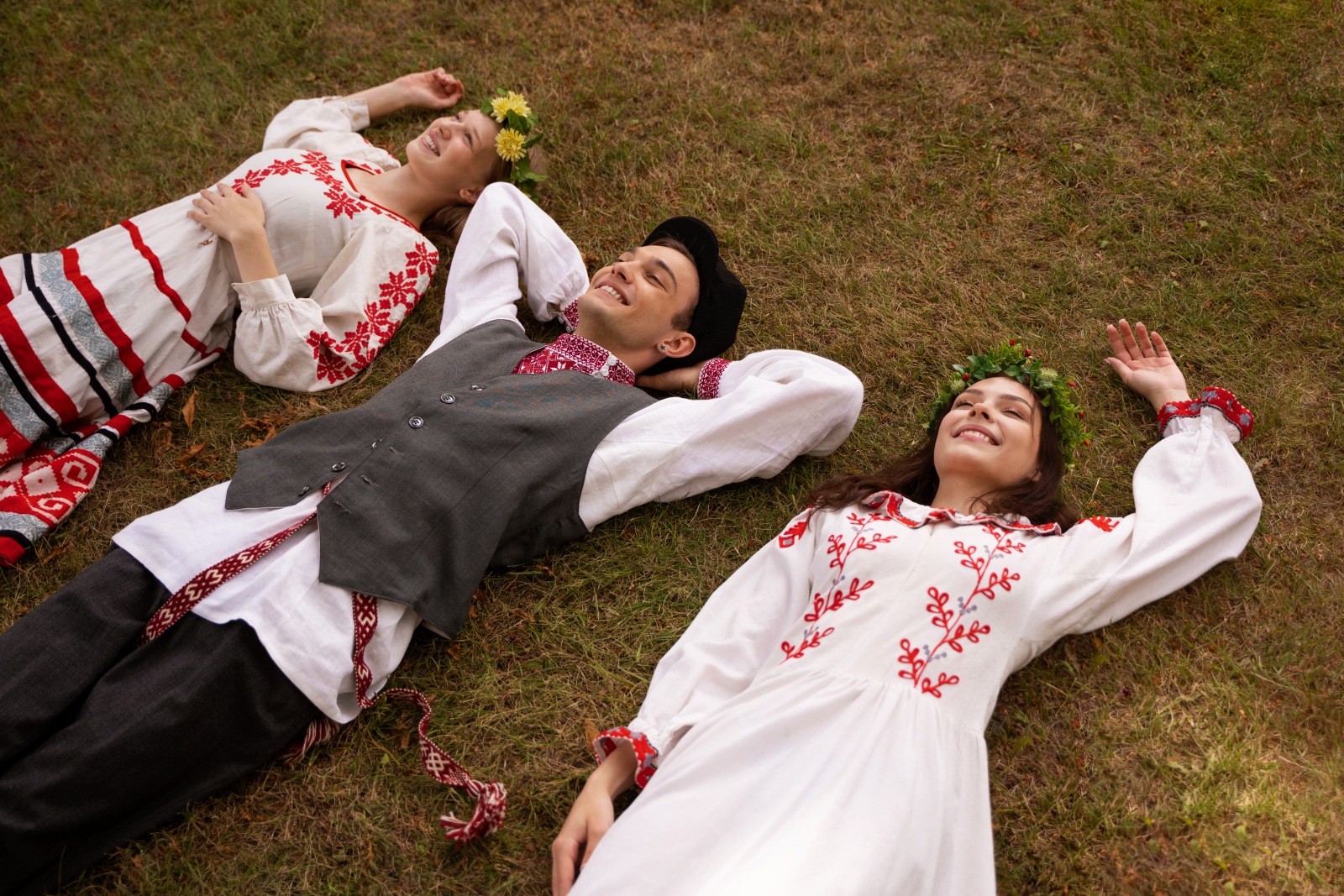
Belarusian hospitality is legendary. In the home, guests are a welcome change of everyday life and it is expected that they will taste local specialties. The ability to establish personal relationships is also important. The traditional Belarusian dress, vyshyvanka, is a cultural symbol of the country with rich embroidery, often carrying symbolism of nature, but also fertility and protection. It is worn especially on the mentioned ceremonial occasions.
Getting to know Belarusian traditions and participating in them can enrich your experiences and make it easier for you to fit into the collective when visiting or staying in the country. These customs, from ancient pagan rituals to Christian holidays, provide an opportunity to glimpse into the rich Belarusian culture. Respect and sincere interest are key to creating unforgettable experiences and deep relationships with your hosts.
Whether you're jumping over fires at Kupalle, tasting blini during Maslenitsa, or participating in the festive meal at Pascha, these traditions offer a unique and enriching way to get to know Belarus and its inhabitants.
Source: author's text, witkowskiwiniarskirunning.pl, sijm.it, chronopub.ma, mbmphotography.com, talkpal.ai, acondicionamientos.com.ar, witkowskiwiniarskirunning.pl