I'm Getting Divorced from a Japanese Man: The End of Marriage is a Ceremony During Which a Bouquet is Thrown Among Those Present

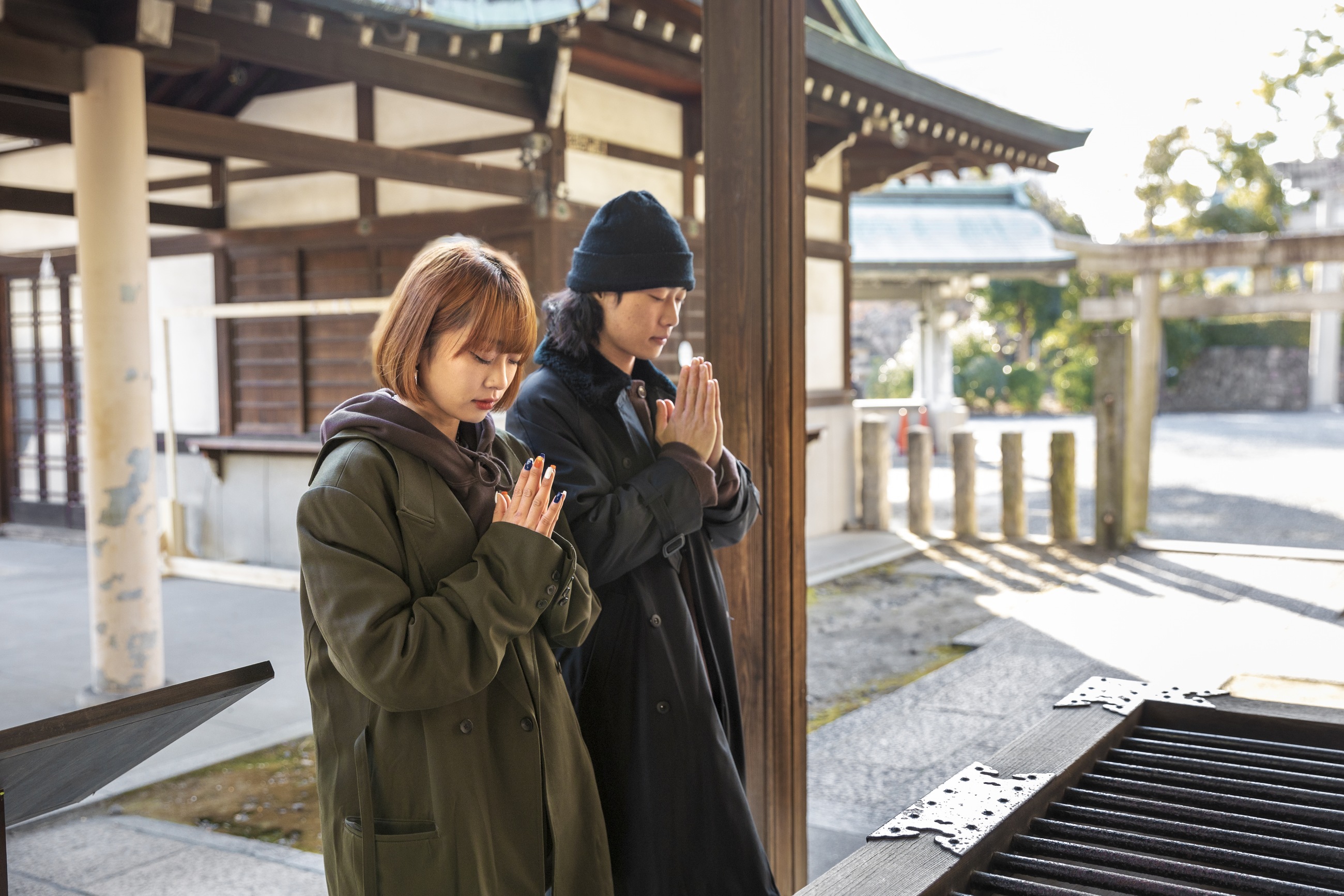
When two people get married, they can expect rings, a ceremonial ceremony and a feast. But in Japan, they came up with the idea that divorce deserves a similar full stop. Some couples therefore say goodbye in front of family and friends and destroy their wedding rings together. However, even more remarkable stories are offered by Japan's past.
Marriage is where it all begins, divorce is where it ends. While the first event is celebrated in grand style, the second usually takes place behind closed doors. But why, actually? That's exactly the question young Japanese people apparently asked themselves, and divorce agencies have begun to thrive in their country. So you can have the same glory from the end of a marriage as at the moment when you stand at the altar.
And the interest is certainly not small. At the end, a bouquet is thrown and whoever catches it, according to Japanese traditions, will have a happy divorce. Who knows what happens to someone who isn't planning the end of their marriage at all. But behind this unusual ritual stands a man who always found divorces a bit sad. "Since childhood, it bothered me that there exists a wedding ceremony, but no divorce ceremony. I felt there should be a positive farewell ceremony where the couple would confirm their determination to start a new life. I started organizing divorce ceremonies two years ago," said Hiroki Terai, owner of the first divorce agency in Japan, which was founded in 2009. One of the biggest hits on offer is the possibility of destroying wedding rings with a hammer. This is especially appreciated by those who are very angry at their other half. While at a wedding, putting them on represents the union of two people, here their joint crushing symbolizes the end of the bond.

A Court May Not Be Needed for Divorce
When you and your husband are in agreement and both want to divorce, the entire process can be a relatively simple matter. There is what is called kyōgi rikon, or divorce by mutual consent. In such a case, the spouses do not need to go through the classic court proceedings but submit an application on a form that must include the signatures of two adult witnesses. And if the notification is properly filled out, both spouses do not even have to bring it in person. It can be delivered to the office by just one of them. Divorce by mutual consent then takes effect upon notification, which is a much simpler method than what we know from Czech courts. However, if the spouses cannot agree on the divorce, everything becomes complicated. Additional steps then come into play and the dispute goes before a family court. There, serious reasons for why the marriage is ending must be proven. And it must be said that divorce in Japan, despite numerous innovations, is still not among matters that society would simply wave its hand at.
On the contrary, it's a social failure. And so it pays off if you have an "ace" up your sleeve. For example, a lover who doesn't have to be entirely real.
You can hire a professional
In Japan, a useful but rather bizarre service can work wonders. It's called wakaresaseya and its goal is to ensure that a certain relationship falls apart. And often in very original ways that can resemble almost a script for a Hollywood film.
In such a case, the client can hire an agency to find out all available information about their partner. Who they meet with, who they encounter at work. And then, as if by chance, an attractive man or woman appears in their life. The meeting usually takes place in a bar, park, or on the way from work at a local store. It's important to know where the person in question likes to go and goes often. The hired person's task is then to gain their trust and, in the best possible case, seduce them. Sometimes agencies prepare similar operations for entire months.
And it doesn't have to be just a case where the relationship is supposed to break up after a planned romance. Sometimes people use such agencies to lure away the lover or mistress of a married partner. They fall in love with someone else and the problem is solved.
However, such a business is not without blemish. A great deal of attention was drawn to the case of Takeshi Kuwabara, who worked as a professional "relationship wrecker". He was supposed to start a relationship with Rie Isohata after her husband ordered the service. However, the pretend relationship turned into a real one, and when Isohata discovered the truth, she wanted to end the relationship. But Kuwabara did not accept this and killed her in 2009. A year later, he was convicted of her murder.
A Major Change Came in 2026
When it comes to divorce, the Japanese also deal with child custody. Until recently, this had fairly clear rules - after divorce, only one parent decided about the child. And the other lost their rights through the divorce. It's no wonder the system was heavily criticized, but it only received amendments this year. Now parents can participate in joint custody, and if they can't agree, the court will help.
This is not about alternating custody as we know it from Czech law. It mainly concerns questions regarding upbringing, education, and property.
Refuge in Temples
However, Japanese law has always undergone turbulent development, and apparently a few more adjustments await it. But even now it represents a major shift towards European values. For example, in the past women had almost no option to end a marriage. They fled to temples called enkiri-dera, which provided them with asylum.
The most famous of these was the Buddhist temple Tōkeiji in Kamakura from the thirteenth century. If a woman spent a predetermined period of time there and followed all the rules, she gained the right to leave the marriage. This peculiar system functioned until the nineteenth century, when reform came. Perhaps such a refuge would be welcomed by some women even today.
Source: ČT24, houterasu.or.jp, moj.go.jp, The Economist