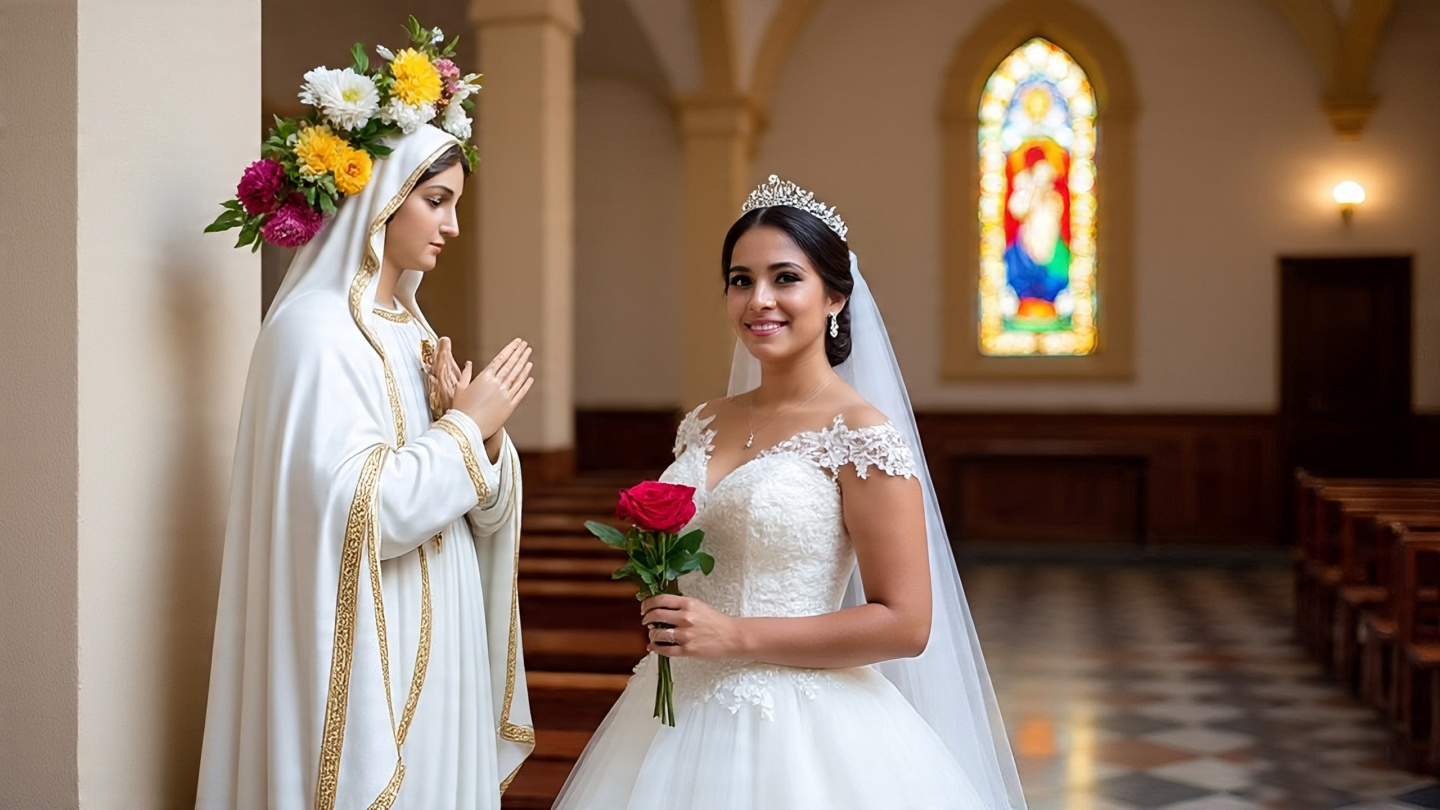
I take Nicaraguans: Brides place a rose in front of the Virgin Mary



Romantic stories often arise in the most unexpected moments. A young traveler from the Czech Republic came to Nicaragua with a desire to explore the historic streets, colorful markets, and authentic life of the locals. He, a charismatic architect from Granada, randomly met her while walking through the city center and offered to show her corners that tourists often overlook. Their first conversations, initially filled with small questions and smiles, soon turned into long evening walks along the lake, where laughter mixed with the sound of water and the scent of flowers from nearby gardens.

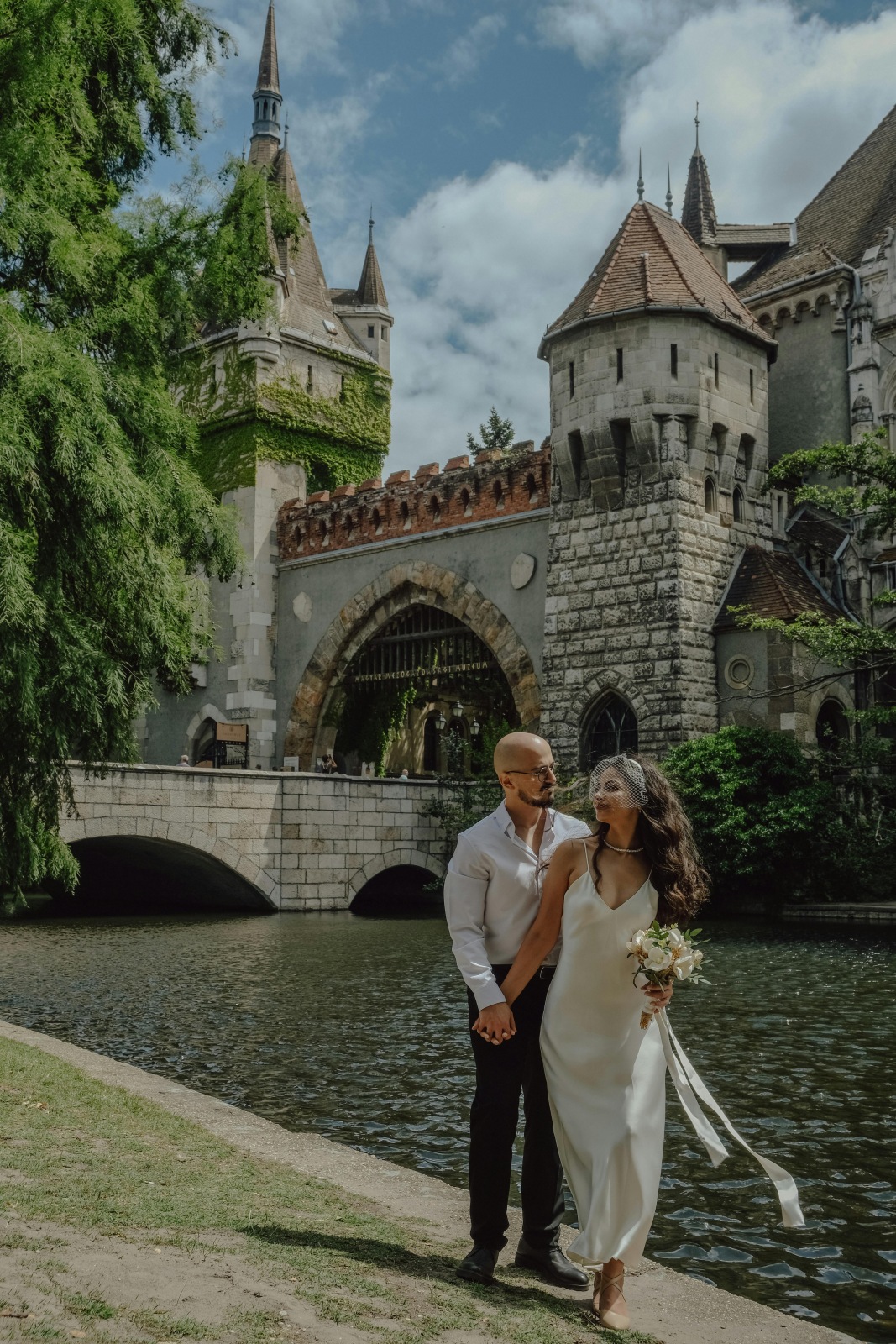

The love between them naturally grew, and when the time came to propose, they didn't forget about the traditional "pedida de mano" - a formal request for parents' consent, which in Nicaragua is a key step to closing a marriage. The family dinner brought two cultures, two worlds and two families together, symbolically starting a new life full of love, support and common traditions.
Nicaraguan weddings are like a colorful tapestry, where every detail - from joyful parades to quiet blessings - carries the story of the country, history and family ties. The Grand Salon Reception Hall reports. From the moment the bride enters the wedding hall, she feels like a part of a work of art. Every corner is decorated with hand-made flower arrangements, colourful ribbons harmonize with the traditional decoration and music fills the space with a sense of joy. Even the simple smile of parents, their looks and quiet words of support become part of this rich tapestry. Everything here is connected - love, tradition and community, all creating an unforgettable atmosphere together.
The Importance of Family at Nicaraguan Weddings
In Nicaragua, a wedding isn't just about two people. It's a union of two families, merging into one large community. From the first planning meetings, parents, aunts, uncles or grandparents are present to provide advice and experience. They help choose the ceremony location, decoration, traditional food and even music to reflect the values and beliefs of both families. It's these collective preparations that strengthen the bonds between families. It's not just about practical decisions. It's also an opportunity for the younger members of the family to learn traditions from the older ones, and for the older ones to feel involved in the newlyweds' life. This process creates a sense of unity and belonging that persists even after the wedding day has ended. The family plays an invaluable role at the wedding itself.
Role of the Wedding Party
A wedding feast in Nicaragua is more than just a group of friends or relatives standing by the side of the groom and bride. "Padrinos", godparents or close friends, have a special role during the ceremony - they support the couple, help coordinate guests and lend significant ritual elements to the entire day.
Maids of honor or witnesses often accompany the bride during preparations. They are a pillar of support and a source of joy that radiates to all guests. At the same time, it should be mentioned that Nicaragua is a country with a profound Catholic heritage, which is clearly reflected in the form of wedding celebrations. The Catholic Church plays an important role not only in faith but also in culture, education, organizations and state administration. Many educational institutions are directly managed by Catholic organizations, which underlines the importance of this tradition for everyday life.
"Pedida de Mano" - a marriage proposal
One of the strongest and most impressive pre-wedding customs is the "pedida de mano". The groom and his parents visit the bride's family to officially ask for her hand in marriage. This ritual is not just a formality. It's a show of respect to the family and proof that marriage is a common commitment that is supported by the entire community. After the family's approval, a small celebration follows, symbolizing the union of two worlds and families.
The Catholic faith plays a major role in Nicaraguan weddings. Couples often attend a pre-wedding mass, where they receive blessings from the priest and contemplate the spiritual depth of the marital bond. This moment is not only preparation for the ceremony, but also spiritual enrichment that helps spouses reflect on the meaning and seriousness of their commitment.
Wedding Day
Given that most Nicaraguans are Catholics, most couples who decide to get married follow Catholic traditions during the ceremony. Just like in other countries, newlyweds can choose between the ceremony alone or a ceremony combined with a Mass. The Mass is very popular because Nicaraguans are social and jovial people who enjoy celebrations and believe that the Mass provides the couple with additional blessings.
Catholic guests entering the church often dip the tips of their fingers of the right hand into blessed water and make the sign of the cross before sitting down. Guests who are not Catholics do not need to follow this participation. When everyone is seated, the bride enters the church and takes her place beside the groom. The priest greets the couple and the present guests, and gives the opening prayer. This is followed by readings from the Bible and other prayers, during which guests may stand or kneel according to local customs. Selected readings come from both the Old and New Testament and a gospel reading is also included.
After the readings, the priest gives a sermon focusing on the principles of marriage. The newlyweds then exchange marital vows and rings. The engagement ring is usually given to the groom by the witness who takes it to the priest for a blessing, and then the ring is returned to the groom, who puts it on the bride's finger. Brides also often use this moment to pay tribute to the Virgin Mary and lay roses before her statue. Some brides also use pearl jewelry as talismans for good luck. One of the traditional and fun parts of the celebration is the dance, which is part of Nicaraguan heritage and adds energy and joy to the wedding.

After the exchange of rings, the prayer of the believers follows and after it mass with the Eucharistic liturgy. Guests can bring a gift to the altar in the form of wine and bread, which the priest will bless during the wedding blessing. Holy communion is served, which all baptized Catholics participate in. At the end of the ceremony, the priest introduces the newlyweds, who are celebrated with applause, and then they leave the church together.
Family Feast
The feast is the heart of a Nicaraguan wedding. The tables are full of traditional dishes, often prepared by the family members themselves, with each dish carrying a story from history and culture. There are toasts, dance performances or small blessings. It is a time when families meet, remember past generations, share stories and celebrate the start of a new chapter in the newlyweds' lives. The feast is not only a celebration of the love of the spouses, but also a celebration of everything that the family stands for - traditions, unique tastes, and values that are passed on.
The wedding feast can last until the early hours, often until two in the morning.

Music and Dance
The core of every celebration is music and dance. From traditional rhythms of salsa and merengue to modern songs - every guest will find their moment on the dance floor. The first dance belongs to the newlyweds, and then the floor is opened for lively group dances, in which all generations meet and the couple's joy is transferred to all those present.
Another very popular element of Nicaraguan weddings is the "jicaro" dance, in which the newlyweds dance behind a handkerchief or a special ribbon and the guests bring them gifts. Some weddings are held in grand style, often on the shore of Lake Managua, and can be organized as mass celebrations of hundreds of couples - such a tradition often takes place on Valentine's Day and is often supported by local cultural and media organizations.
Although most Nicaraguans are Catholics, the country also knows Protestant and evangelical communities, which play an important role in the lives of many inhabitants. Weddings in Nicaragua require proof of single status, age, and a valid passport. If one of the couple is from abroad, a civil ceremony is required before the religious ceremony, which is considered necessary in some Latin American countries.
Modern couples also add playful elements to the feast - colorful hats, masks or multicolored accessories. The guests are enthusiastically using them, adding humor, comfort and dynamism to the celebration and creating a party atmosphere where tradition blends with modern elements.
Although the reception honors traditional customs, the newlyweds enrich it with their personal style and creative ideas. This creates a unique combination of old and new, which reflects the unique personality of the couple and at the same time respects cultural heritage.
Dresses
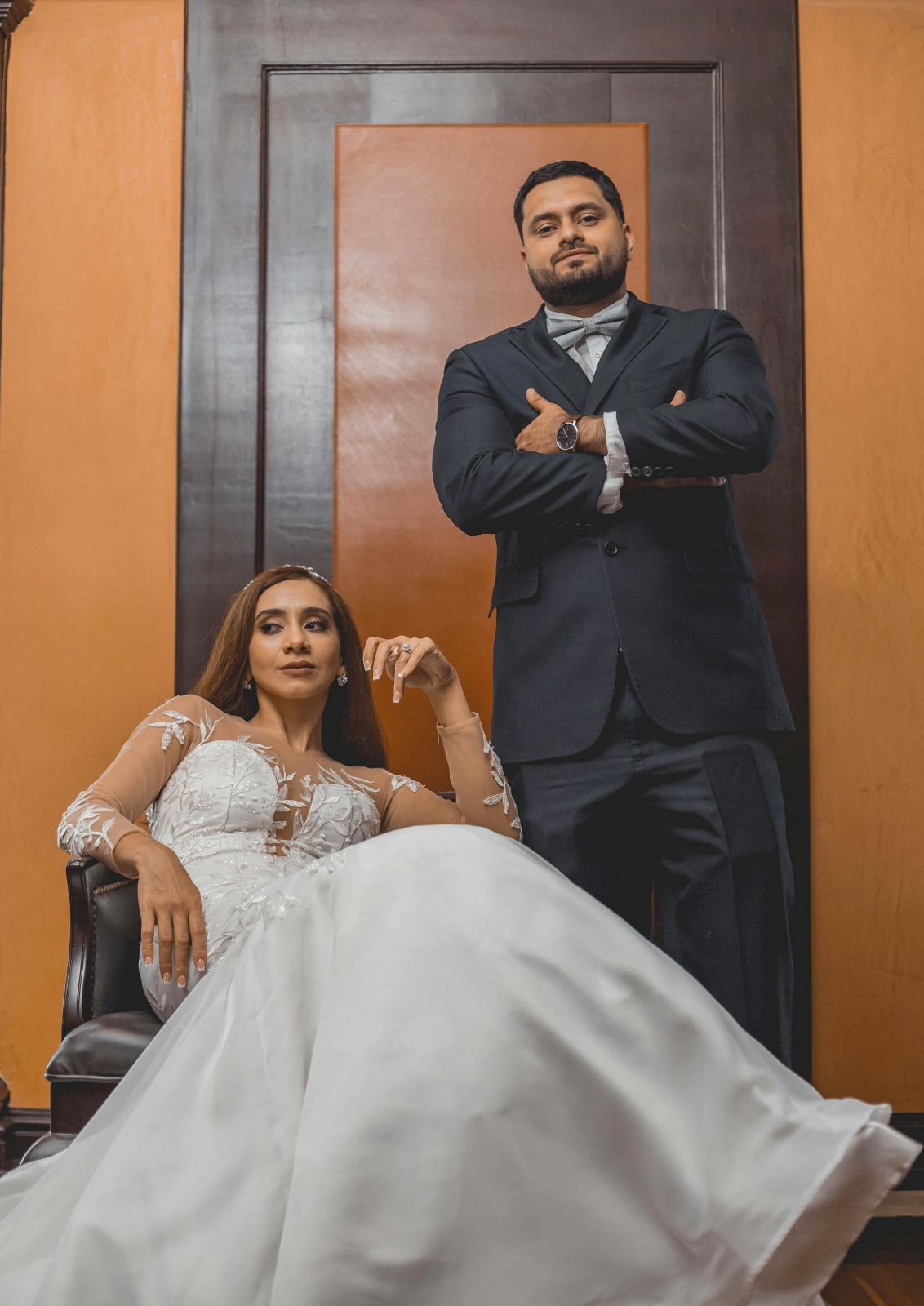
Wedding customs in Nicaragua resemble customs in other Latin American countries, but they are strongly based on the Catholic faith. Brides and grooms usually choose classic white dresses, which can be supplemented with colorful jewelry or pendants symbolizing joy and celebration. Traditional undergarments can be adorned with three frills, representing love, happiness, and prosperity. Brides often wear pearl jewelry, which is considered a symbol of wealth and good life energy.
Groom's Attire
The groom usually wears a classic suit in black or gray color with a white shirt. The traditional guayabera, a light embroidered shirt, adds a cultural touch to the outfit and refers to the roots and history of Nicaragua. Embroideries, colors and traditional materials create a bridge between the past and the present and allow the couple to combines modern style with heritage and maintain the authenticity of the wedding.
Unique Nicaraguan Customs
"Arras" and "Lazo"
During the ceremony, the groom gives the bride thirteen gold coins as a symbol of his faithfulness, dedication, and commitment to her. Traditionally, he also gently spits on the bride's head and chest as a sign of wishing all the good and happiness in their shared life. The couple then exchanges wedding rings and a traditional wedding song is sung. After the ceremony, the newlyweds often engage in the first dance to a favorite traditional tune, also known as "el cepo" - a dance with a ribbon or loop symbolizing the unity of the couple.
Family dinner
The family feast after the ceremony is more than just food. It is a moment when the union of two families, mutual respect, traditions and memories that are passed on are celebrated. Traditional meals, rich flavors and grandparents' storytelling create an unforgettable atmosphere.
Father-daughter dance
The father and daughter dance is one of the most emotional moments. The father symbolically hands over his daughter into the hands of her future husband, which is a moment full of emotions, nostalgia and pride.
The lifestyle of the local people is very similar to life in Mexico. They attach great importance to preserving traditions, respect for elders and strong patriotism. Traditions are most visible at Christmas - offices and public institutions are usually closed from the end of December to mid-January, a similar approach is also followed during the Easter holidays.
Traditions and modern weddings
Modern Nicaraguan weddings maintain the church ceremony, but often supplement it with a civil ceremony. This creates a unique combination that merges the legal and spiritual aspects of marriage, giving the couple flexibility in organizing the ceremony. Even with modern decoration and music, traditional elements - foods, rituals and symbols that recall history and heritage are preserved. These elements help newlyweds feel a connection to their roots while living in a modern style.
A Nicaraguan wedding is much more than a one-day celebration. It's an intensive experience that connects the spiritual, familial, and social aspects of a couple's life. Every ritual, movement, dance, or word has its meaning, which is passed on. Even modern couples, who bring in new elements and ideas, try to respect the legacy their ancestors left them. This unique balance between tradition and personal style makes a Nicaraguan wedding an unforgettable event for both the couple and all the attending guests.
Source: author's text, grandsalonreceptionhall.com, nicaragua.com, mccareco.com