I enjoy working as an architect, not politics. The Czech Republic owes to architecture, says Marek Tichý
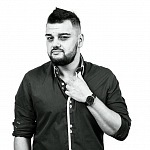

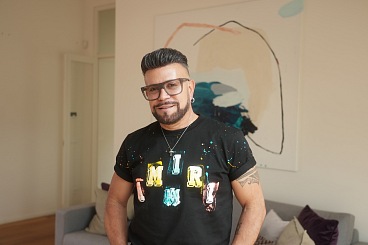
Currently, Marek Tichý is among the most significant domestic architects. He has received numerous awards and his architectural office is working on large projects. As he once admitted, the most challenging project for him was the reconstruction of the former Intercontinental hotel, now known as Fairmont. It was here that we met and discussed everything possible. Where he gets his inspiration, how the hotel reconstruction went, when he decided to become an architect, whether he has encountered any bizarre requests from clients, or how architects are actually paid.

We are currently in the Fairmont hotel. You contributed to its extensive reconstruction, which cost 4 billion crowns. The hotel is considered one of the most luxurious in Prague. For example, Michael Jackson stayed here. What feelings did you have when you breathed new life into it and stepped into its bowels for the first time after the reconstruction was completed?
When we came here before the reconstruction, the hotel, as many people remember it, was literally provincial. The faded glory was so forgotten that no one remembered that it was once a dream of our parents to have a wedding or graduation here. The hotel had become something that the public had almost forgotten, and our main effort and ambition was to return it to the cultural map not only of Prague, but also of Central Europe. The hotel was originally intended as a showcase of Czechoslovak culture, art and architecture. We recognized that the potential is still there, and we are glad that it has returned to the cultural map of Europe, at least in the hospitality segment.
Have you stayed in the hotel yourself? Are you tempted?
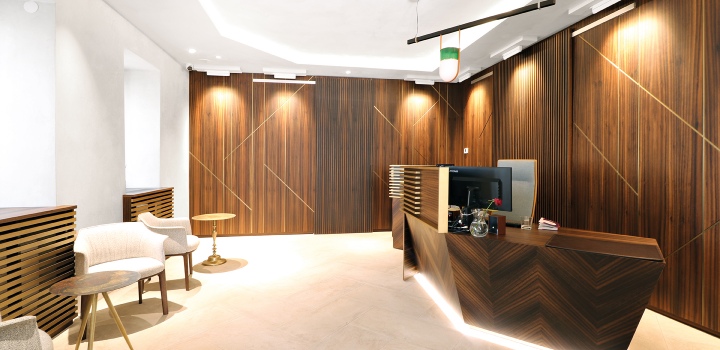
Of course, I have slept here many times, because we also work at night to set up lighting scenes. For example, there are about 10,000 light sources in hundreds of scenes that change throughout the day and evening to enhance the architecture's character. As architects, we had to design and set all this up, so we had to work it off. You will understand that we have spent several nights here. As I mentioned, the reconstruction took 4 years, which is a very short time for such a project.
How do you explain that it was accomplished in such a short period of time?
In fact, it took almost 5 years in the end, to be precise, but even so, that is an extremely short period of time. In my opinion, it was managed thanks to a great implementation team. We were lucky that we had just completed a large conversion of the Palace of Electric Companies in Holešovice for one significant Prague company. We then practically transferred the entire Metrostav implementation team, we just crossed the river and started working on the reconstruction of the former Intercontinental, now Fairmont, the next day. There were about 200 people who were already coordinated, knew each other, had the right chemistry and the ability to work together on large projects. This gave us a huge head start and enabled us to handle the reconstruction in such a short period of time.
When you work on such a project, you surely create a personal relationship with it. Which part of the Fairmont hotel is your favorite?
Definitely yes. Simply because the project took us 16 hours a day for five years, it became part of our life. One has to sacrifice a lot and therefore inevitably forms a close personal bond. And it's not just about me. I'm speaking for a team of 100 people who worked on the project with me. It involves many people and families.
It would be difficult for me to choose a specific part of the hotel that is most interesting to me. Perhaps I feel most connected to the new spaces we have created: the large modern art gallery Kodl on the waterfront, the restaurant directed towards Dvořák's embankment Greenhouse, the conference extensions and of course the entire conversion of the public space, which from originally forgotten place, I believe, made an attractive part of the city.
Where do you actually get your inspiration from, if we disregard architecture itself? What inspires you?
I am inspired by history, stories of the place, and stories of Prague. Knowledge of Prague itself is also important. We are an office that lives here, works here, and observes these places over the long term. I am also inspired by our attempts to give old or worn-out places with a rich past a new face, a new image. This attracts and entertains us. When these places come back to life, people return to them, discover new possibilities, new potential, a new wave of inspiration – and this is something that drives us forward.
Some people believe that every place or space has its specific energy. Do you feel the same? When you enter somewhere, does it evoke certain emotions in you?
Yes, it does. This project, already as it was conceived in the 60s, was a big generational statement. Czechoslovak architects and visual artists were then trying to shout out that Czechoslovakia had not disappeared behind the iron curtain, that we are still a significant country with a fantastic and rich cultural history and that we have something to offer.
For example, it was accomplished then by the New Wave of Czechoslovak cinema and the same was striven for by architects and artists. This hotel was supposed to be a manifestation of their work. We liked this story very much - the power of that generational statement inspired us. We tried to build on that through collaboration with a new generation of contemporary visual artists. We created a large interdisciplinary team and wanted the experiences of architecture to exceed the building itself, for people to encounter art, light, gastronomy, public space, and greenery here. We wanted it to be an experience that they would truly remember.
I must say, I was actually surprised – as soon as I walked in, I was immediately offered free water. I felt a certain, let's say, luxury. What would you say to the original architect of the Fairmont hotel, if you were to meet him? It was, I believe, Mr. Karel Filsák, am I saying that right? What would you tell him?
It was Karel Felsák, but along with many other authors, and we even had the opportunity to personally meet many of them here. Of course, they occasionally return, look around, and if not them, then their children or grandchildren. Many of them appreciate it and are happy that the hotel has returned to where their fathers and grandfathers wanted it to be. In the 90s, the hotel was severely devastated, forgotten and the original idea of a generational testimony disappeared in the incoming normalization.
I firmly believe that we have revived their vision and moved it to the 21st century thanks to the new layer we have added to it. I would therefore like to tell him that we highly appreciate his work, draw from it, respect it and are not afraid to push it a bit further.
Luxury can be shiny and flamboyant, but also calm and quiet. How did you approach luxury in this project?
We strive to make luxury not be flamboyant, to be an immediate experience. Something that will amaze you, but won't surprise you, something that will welcome you, something that will be friendly and pleasant even for users. We are glad that Fairmont has also taken this idea of ours and continues to melt it into the idea of hospitality service. It is no coincidence that Fairmont was chosen to operate this hotel. When the owners were choosing the hotel operator, they chose Fairmont because they operate iconic hotels like the Savoy in London or the Plaza in New York worldwide. He leaves them his face and provides only the top service, which complements the architecture and does not surprise. It complements the genius loci of the place. You can enjoy visiting the gallery on the ground floor of the hotel, the restaurant, or to stay. Go to the pool or enjoy the lower square and walk to the river. The hotel service will always welcome you, whether you come for 5 minutes or stay here for a week.
Are you interested in the whole conversation? Watch the video.