How the elections are counted: the counting system is not random, it is guarded by a clever double check

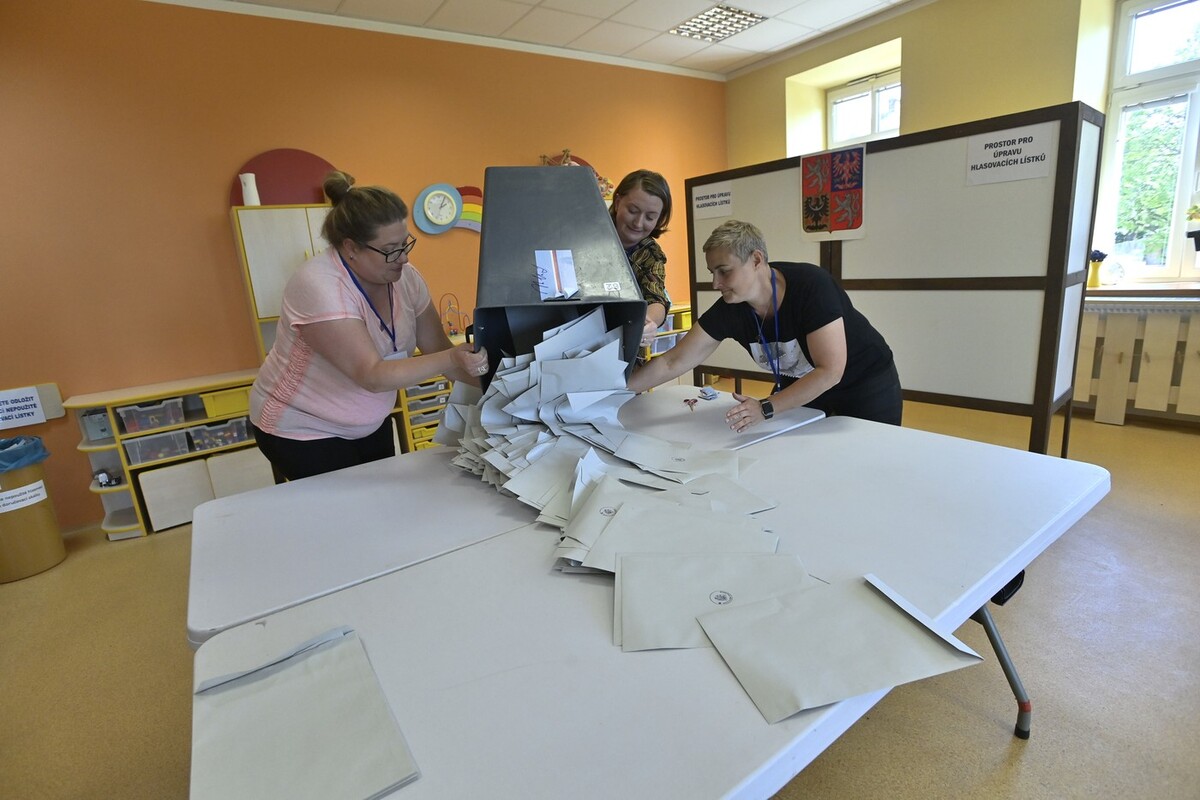
The weekend is marked by elections to the Chamber of Deputies. However, millions of votes must be correctly recorded and counted. For this purpose, there is a clever system that has several control mechanisms. Even so, there are always a few invalid votes, and sometimes votes are recalculated and the election result is corrected.
We still don't know exactly how many people will participate in this year's most significant elections (the Parliament is the bearer of state power sovereignty according to the Constitution, and the Chamber is its most important part), but there is no doubt that adding up millions of voting slips is a job.
Last year, the list of voters contained 8,275,752 people and this number will not change much this year. The previous elections attracted a significant proportion of voters to express themselves directly at the ballot boxes. Over 65% of them cast their vote. A similarly high election turnout is expected this year as well. For example, the last pre-election survey by Ipsos agency estimated the election turnout even at 66%.

However, some of the votes submitted are not counted anyway, as they are not valid. Last year, this was the case for 0.68 %, in the language of exact numbers this was 36,794 votes. The reason why a vote is not counted can be that two ballot papers are inserted into the envelope, or the ballot paper is so damaged that it cannot be recognized as valid. An empty envelope without a ticket also falls into this category.
Elections, however, proceed according to exact rules and any distortion by any form of manipulation with ballot papers can only be achieved very difficultly. The first instance that prevents this in the Czech Republic are the election commissions themselves. Individual parties can delegate their representatives to them and also make full use of this possibility. Therefore, the representative of one party naturally does not want someone to take votes away from his party, and therefore it is easiest for all members of the commission when they try to count the votes as correctly as possible.
This so-called civil control is not the only mechanism that oversees the correctness of elections. The Czech Statistical Office (ČSÚ) receives records of counted votes and presents the results almost in real time on the internet.
"We publish the data received from our collection points almost immediately on the presentation website volby.cz, which is however completely separate from the actual processing and serves the role of a virtual online bulletin board,"
explains Eva Krumpová, the 1st Vice-Chairperson of the Czech Statistical Office.
The online publication of data then allows for easy verification of whether there was publication of such information in a specific district that was checked by individual members of the electoral commissions. They can at any time lodge a protest against the election result based on this check.
Nor do the staff of the CSO then have access to submitted and archived voting slips. Their viewing is possible only within the framework of a judicial review or check. The mentioned mechanism is not just some theoretical matter, but it is also used in practice.
"In the past, based on data published on the volby.cz website, incorrect accounting of preferential votes in the Central Bohemian region was revealed, which eventually led to Martin Kupka gaining a parliamentary seat there,"
Jan Cieslar, spokesman for the Czech Statistical Office, reminded LP-Life.cz that the current Minister of Transport took his seat in Parliament in this way.
The goings-on in the polling station do not have to be monitored only by nominated commissioners. Representatives of the media, as well as ordinary citizens, can act as observers in the polling station. Permission from the State Electoral Commission is needed for this, which can be requested at any time after the election is announced.
The observer cannot interfere with the committee's work, but besides observing, they can also record the proceedings in the polling room and the work of the commissioners. Fortunately, in the Czech Republic, this right does not result in almost comedic videos documenting election manipulations, as we know from some countries east of our borders.
Sources: author's text, own questioning, CZSO, portal.gov.cz, novinky.cz, X