The future Czech astronaut Svoboda has completed basic training for a space mission. Will he follow in the footsteps of Vladimír Remek?

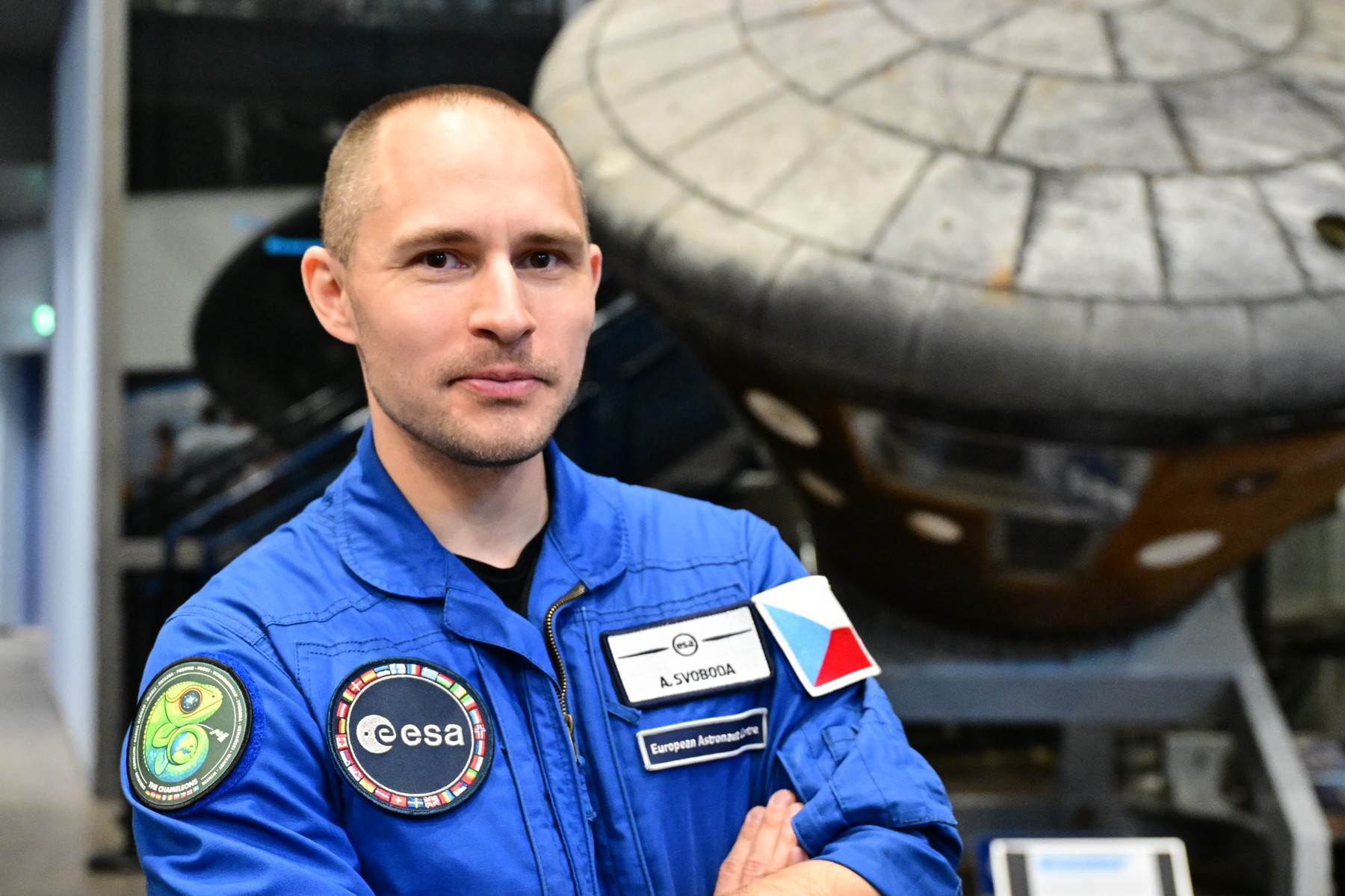
Czechia is once again preparing for space. Half a century after the flight of cosmonaut Vladimír Remek, Aleš Svoboda has completed basic training for a mission to the International Space Station (ISS). Everything is thus moving towards this reserve astronaut's ability to embark on a national mission as early as next year.
The only Czech who has been in space so far became Vladimír Remek in 1978. He was on the Soviet station Saljut 6 as part of the Intercosmos program for space cooperation among socialist states.
During his week-long stay, he assisted the main crew of the spacecraft with their program. He also conducted several television reports. Remek thus became the 87th person to fly into space and the first from a country other than the Soviet Union or the United States.
Czech Path to Space
Military pilot Aleš Svoboda could now follow in the footsteps of Remek's success, having excelled in the selection process of the European Space Agency four years ago. He stood out among almost 22,600 people in the astronaut selection!
Thanks to this, the Czech Path to Space program was launched, aiming to accomplish a new flight within the next five years. Subsequently, the then Minister of Transport, Martin Kupka, signed a memorandum of understanding with the American companies Axiom Space and Vast Space.
Svoboda then, along with four other colleagues, began training in the German center in Cologne and some other European locations, which included courses in the basics of aerodynamics, orbital mechanics, orbit maneuvering, and the operation of individual ISS systems, including training in taking photos and videos from the station's deck.
"The basic training gave me a solid overview not only of the context of orbital missions but also of how the ISS functions. From the station systems, through robotics, the basics of spacewalks, to orbital mechanics and orbit maneuvering. It's an important foundation for the next phase of training, which will be focused on a specific mission to the ISS, about which the Czech Republic is currently negotiating, and which must first be confirmed,"
said ČTK Svoboda.
According to Václav Kobera, Director of the Department of New Technologies at the Ministry of Industry and Trade and the Czech Space Agency at the Ministry of Industry and Trade, this training represents a long-term investment in human capital, science, and technology.
“Each of these experiments went through a rigorous selection process and has a clear scientific and application potential – it's not just about prestige, but about tangible benefits for Czech research, industry, and future technological development. This project also creates space for the involvement of Czech institutions in top international programs and opens up new opportunities for further collaboration,”
stated Kobera.
Two-billion State Support
Therefore, in May last year, the government of Petr Fiala also approved a proposal on the basis of which we would finance space missions up to two billion crowns. Somewhat surprisingly for many, this step is also followed by Andrej Babiš's team.
"The preparation of a military pilot for a space mission confirms that the Czech Republic has top experts capable of succeeding in the most demanding international projects. Training in the Czech Army also provides a solid foundation for astronaut preparation and at the same time shows how these skills can be further developed in the environment of space missions, where advanced technologies, precise preparation, and interdisciplinary cooperation come together,"
Commented in the May press release on Aleš Svoboda's mission preparations by the current Minister of Defense Jaromír Zůna.
However, it is far from decided whether Svoboda will actually go to space. Currently, the main team consists of two women and three men who are agency employees. Another 12, including our astronaut, remain in the reserve team for now.

The Little Mole, Neruda, Ginz, and Dvořák
And even if the Czech effort ultimately doesn't succeed, we can still say that besides the former communist Member of the European Parliament, we managed to draw attention to our country in orbit with other "achievements" as well.
American astronaut Andrew J. Feustel repeatedly took a plush Little Mole figure into space with him. Why? His wife has Moravian ancestry; her mother came from Znojmo. On one occasion, he also didn't forget a collection of poems by Jan Neruda, "Cosmic Songs."
And that's not all. Israeli astronaut Ilan Ramon had with him aboard the space shuttle Columbia a picture of Petr Ginz, a boy of partial Jewish origin who was interned in the Terezín ghetto in 1942, where he became famous for creating the magazine Vedem.
On a symbolic level, the Czech composer Antonín Dvořák also reached space, as his Symphony No. 9, the New World Symphony, was played in the spacesuit of the first man to set foot on the Moon in 1969, Neil Armstrong.
Sources: Ministry of Defense of the Czech Republic, ČTK, Wikipedia