Fair enough: The Zelensky-Putin meeting is going according to plan. Once again, no one saw Putin.


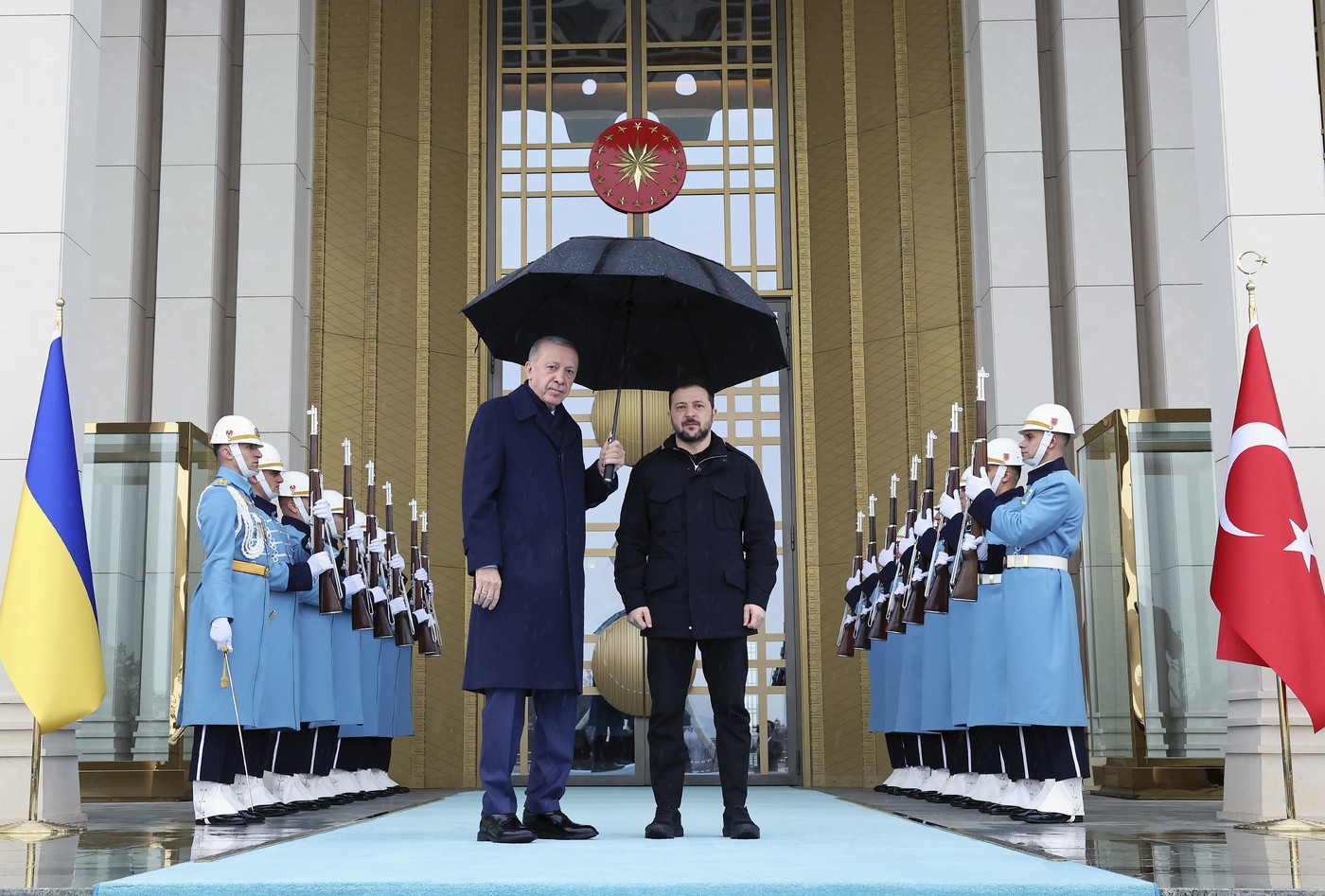
Turkish negotiations appear to be a major breakthrough towards a ceasefire in Ukraine. The only catch is that it is quite clear in advance that there will be no immediate ceasefire following these talks. It's simply a diplomatic game by Russia with the Donald Trump administration. Russia wants to keep the government of the most powerful country in the world on its side, but even the Americans are not blind to the piling up of the dead on both sides of the barricade.
This most terrifying impact of the Ukrainian war in the form of hundreds of thousands of human lives wasted is often spoken about by Donald Trump. He initiated the peace talks with the conclusion that for a negotiator of Trump's format, it will not be a problem to quickly end the war.
However, the only path to this goal was the betrayal of Ukraine in the form of ending military aid. The US would then have to force similar steps on other Ukrainian allies. The war with Russia would then lose its value and the Russians would dictate the terms. However, Trump tried to apply this recipe without direct betrayal.

Russian diplomatic school in practice
Russia may currently be dictating the terms, but Ukraine refuses to accept them. Its military resistance is something that Russia cannot break, and in addition, European leaders plan to further support the country due to fears of growing Russian aggression towards it.
The aforementioned negotiations hit a critical crossroads of the entire operation. Everyone would like peace, but the one who unleashed the war with his invasion doesn't have it. It's logical. Putin sent troops to Ukraine for some reason and he doesn't want to give up on that. That sometimes words like peace or negotiations come out of his mouth? That's understandable, it's about the classic Russian diplomatic school, as presented by the satirical series Kosmo from 2016.
Russians simply persistently say the opposite at the diplomatic level of what they really want. What does such an approach look like in practice? Socialist Czechoslovakia also applied it. The country was shrouded in flags with peace slogans, the army was "peaceful", but in the 1980s it received about 20 % of GDP. Neither recently reached 2 %, nor planned 3 % nor 5 % currently demanded by US secretary of state Rubio.
With that tiny percentage, the greedy Czech opposition represented for example by Alena Schillerová (ANO) rightfully evokes the feeling that the national budget is wasting tens of billions on armament. In times of peace, the army has been saved on, so Schillerová is heading in the right direction, there's just reverse causality here.
Who will break the vicious circle of Russian nonsense?
The socialist arming in tenfold quantity compared to today was not peaceful, but warlike. After all, the Cold War was going on. That's how it simply communicates following the model of Russian diplomatic school. When Russia calls for talks in Turkey and someone actually goes there, they start explaining why they can't there. It's simple, they never wanted to be there.
"Zelensky has arrived in Turkey for talks, Putin has stayed at home. Many of my Czech colleagues are blushing (even more) when they talk about the need for peace and negotiation, and they are angry with Ukraine for fighting for itself. After yesterday, they should perhaps give them credit. Who really wants peace, it's clear,"
also explains this paradox on X MEP Luděk Niedermayer (TOP 09).
Just the blushing is probably a bit misleading. Just look at the rhetoric of arguing Russophiles. Putin will not deal with Zelensky if he does not recognize him. The circle of paradoxes is complete. I will come up with a negotiation with someone with whom I will not negotiate.
Secondary advisers sent by Russia can't agree on anything, so nothing can be agreed upon here either. If a ceasefire agreement were reached, it would certainly be violated soon, as we have already seen several times in the past. The only option is to break the vicious circle of Russian communication paradoxes. By what means can it probably be achieved?
Sources: original text, commentary, x.com, novinky.cz