Fair and square: The fight over the Czech Republic's national debt. A display case in which a time bomb is ticking


Although the amount of the state budget surplus is an inconceivably gigantic figure in hundreds of billions for the vast majority of people, citizens assign it foremost importance. However, debt management has its pitfalls. So far, Czech governments across all parties have been aware of this and have been very restrained in international comparison. Because with debts, interest must also be paid and that is where a ticking time bomb is hidden.
The national debt of the Czech Republic has currently climbed to 3.5 trillion crowns, plus some small amounts in the form of low tens of billions. These amounts are hard for the average person to imagine, so it might seem that the state, thanks to the abstract debt, can generate money as it pleases.
Would this way be backing the idea of the Czech person about having a right from the state to a wide range of services "in price"? The state is committed to free healthcare, education, social security in maternity or material distress and last but not least, a prosperous pension. The popular hand stretching towards the state treasury does not shy away from the world of entrepreneurs who are greedily looking at a wide range of subsidies or compensations.

The most important thing is to reduce the national debt and subsidize the price of carrots
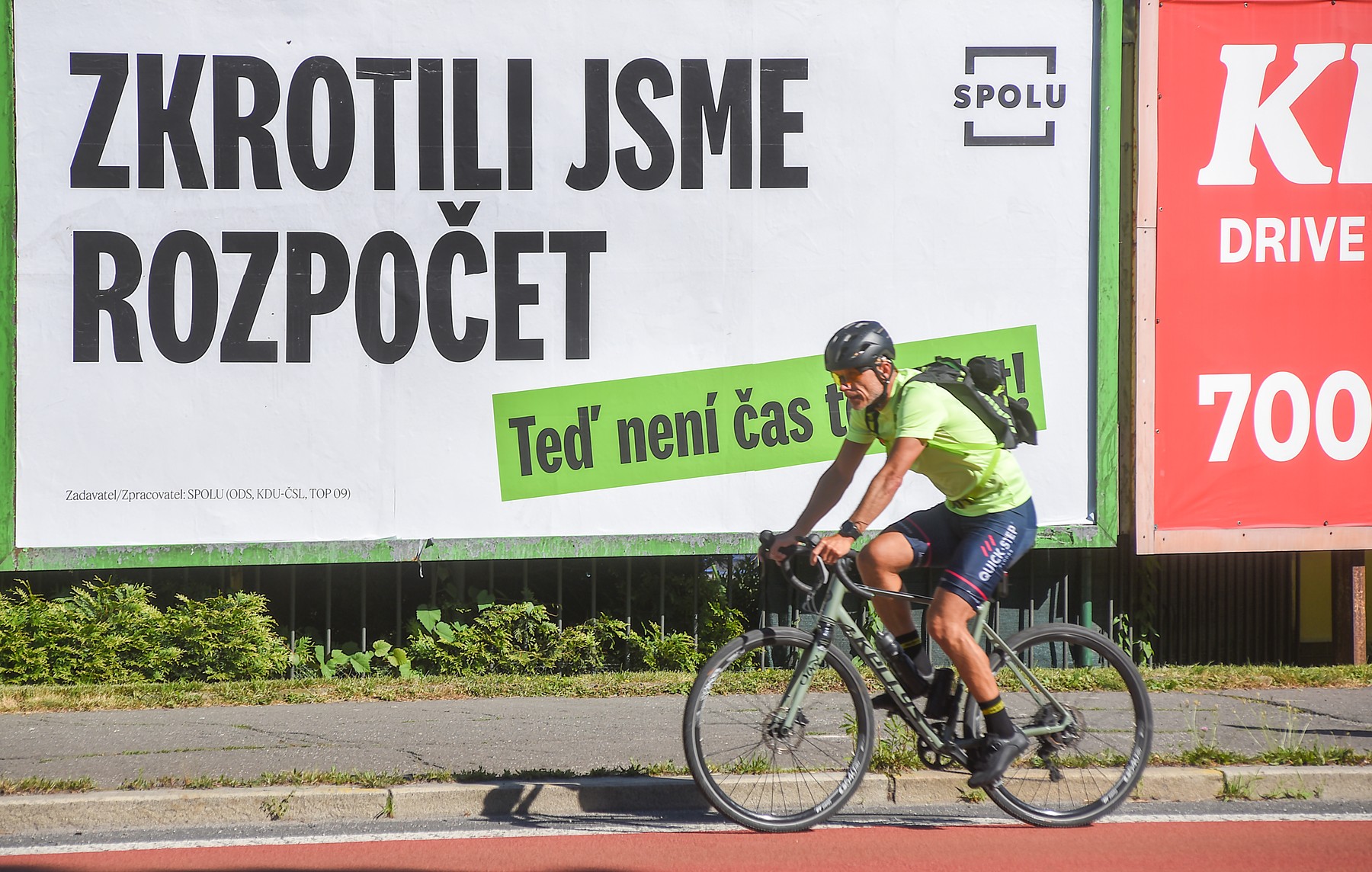
Even the outgoing government of "budget responsibility" did not dare to face the stated concept cut into a number of debatable services paid by the state. Although its consolidation exceeded 100 billion of state deficit, which really is not a little, it did not dare to abolish the state contribution to building savings, tax relief for the wife, or to make a draught in the payments of health insurance companies for freely available medicines.
They thought it was too audacious. It might seem like the Czech citizen is a notorious debtor, who loves to spend money he didn't earn. However, according to a sociological survey by STEM, the opposite is true. For Czechs, the most important issue towards elected politicians is reducing the national debt.
"What should the upcoming government focus on first, according to the Czechs? 95% debt reduction. People elect the guys who waste everywhere and his colleague who would subsidize even the price of carrots and at the same time they want a lower debt! The disconnection from reality is magical,"
Political analyst Michal Sirový noticed a paradox in the results of the mentioned survey.
Everyone understands that having debts is not completely okay, but quite possibly the view under the lid, which would say why life with debts is burdensome, is lost in the steam above the pot. The reason is simple. If someone borrowed money and his only obligation was to return it in the original (nominal) amount sometime in the future, indeed indebtedness would be a paradise. But as is known, interests must be paid from debts.
For example, a family loan for a property can do without a precisely quantified interest rate. Parents invest in their children from an early age with the expectation that their investment will return in something other than money. Like any investment, this calculation with emotions and morality may not always work out.
The state also has its creditors, but they are not burdened with similar emotions. They have different metrics for their loans, which are not always entirely rational, according to which they assess whether to lend to the state, however, one criterion in them is completely bulletproof. They want to earn on interest.
The state must therefore be able to repay interest and thus generate profit from borrowed money. In the 2025 budget, the amount for servicing the Czech national debt is estimated at a beautiful and round 100 billion.
Considering the tax for past years, it's not a small sum. However, in European comparison, the Czech Republic is among the responsible economies. In the context of the current debate about the budget disruption of the outgoing government, we can recall that the Czech Republic has one of the best budgets according to Eurostat metrics.
And so the new government offers to reward its voters with gifts and debt, moving to the opposite side of the spectrum of European countries' budgets. France, for example, operates with debt several times greater in relation to GDP.
But the Czech Republic is not France. The French are the only European country with their own nuclear program, whether it be weapons or nuclear power plant construction, and their military program is almost independent of the USA compared to all other NATO countries. All of this guarantees that loans won't get lost somewhere, and interest will continue to be paid off.
None of the above will ever be owned by the Czech Republic. However, one thing that could help them gain confidence in loans is the Euro. The example of collapsing Greece showed that Eurozone countries are capable of guaranteeing debt repayment to some extent.
It does not appear that the new government is planning to pad its flirtation with increasing debt with this instrument. Simply put, notions of a world of debt are full of paradoxes in this country.
Sources: idnes, X, ČRO, Ministry of Finance