The death of Jana Brejchová sparked discussions about a funeral with state honors. The idea was proposed by the Motorists, but the family of the famous actress was against it.

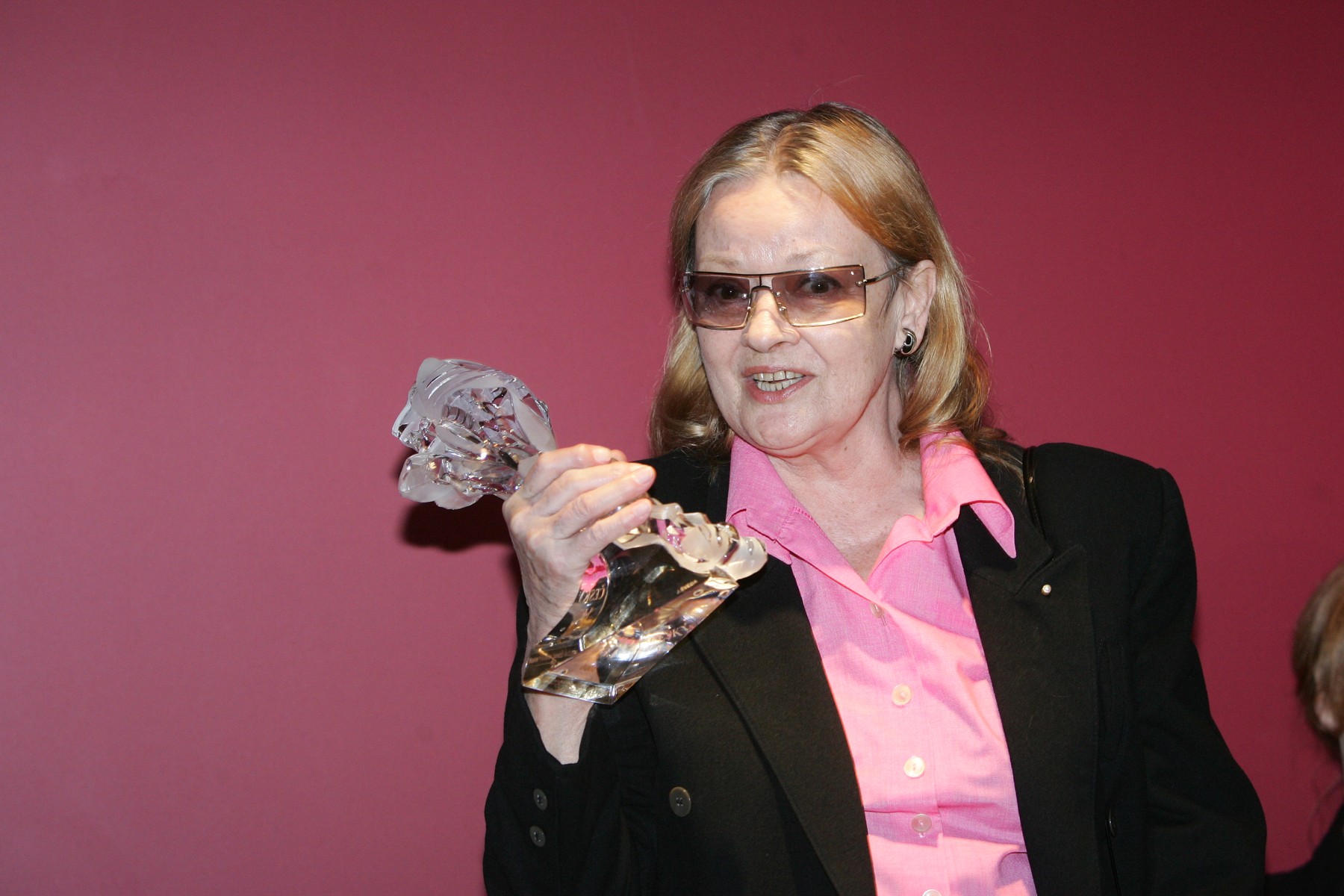
After Jana Brejchová passed away over the weekend following a long illness, Ministers of Culture Oto Klempíř and Sports Boris Šťastný proposed organizing a state funeral for the deceased legendary actress. Did the politicians genuinely want to honor the famous name or just draw attention to themselves? Despite this, the late actress's daughter Tereza Brodská eventually stated that the public farewell, organized by the family, would take place on February 17th at the Lucerna Cinema in Prague.
In recent weeks, Motorists themselves have been the target of criticism, particularly due to their attempts to push Filip Turek into the government. This led to the public revelation of SMS communication between their leader Petr Macinka and the advisor to President Petr Pavel, Petr Kolář. Another blow to their representatives came after a massive demonstration, organized under the auspices of Million Moments for Democracy at the beginning of February in the center of the capital city.
This all naturally affects the sentiment of voters who initially saw the party as a hopeful force that would breathe new life into the stagnant waters of the domestic political scene. The result, however, is more disappointment and disillusionment. Motorists are currently showing themselves to be novices who simply aren't cut out for high-level politics. The latest polls on voting preferences indicate that this party would barely make it into parliament. According to a survey by the Kantar agency, they would receive exactly 5 percent of the vote.
And at this moment, the ministers from the Motorists proposed to the government to arrange a funeral with state honors for the late domestic acting legend Jana Brejchová.
A Star is Born
Jana Brejchová undoubtedly belonged to those artists who have left an indelible mark on our cultural history. At the age of thirteen, she was discovered by director Ladislav Helge when he was looking for a girl for the film "Lead Bread." She quickly became one of the most cast actresses, not only working in our country but also in Germany, Austria, and Hungary.
She performed in more than a hundred feature and TV films, for which she also received numerous awards. At the age of 20, she received a prestigious award at the international festival in Locarno for her role in Krejčík's drama Higher Principle.
“Jana Brejchová is our only true film star,"
said Jan Werich about her.
For a supporting role in her last film, Hřebejk's Beauty in Trouble, the Czech Lion was awarded to her in 2007. Three years later, she received another Czech Lion for her long-term artistic contribution to Czech cinema. In 2004, the then President Václav Klaus awarded her a medal for merit in the field of culture and arts.
Private Life
At the same time, she frequently appeared on the covers of both domestic and international magazines, which focused on her acting career as well as her private life.
At the age of seventeen, she married the then up-and-coming director Miloš Forman. However, they stayed together for only three years. She was then married for a year to German actor Ulrich Thein. Her third marriage was to fellow actor Vlastimil Brodský, and the marriage, during which their daughter Tereza was born, lasted 18 years. Afterward, she lived with Jaromír Hanzlík for over a decade and in the early 1990s, she became close to Jiří Zahajský, with whom she lived until his death in 2007.
Daughter Tereza Brodská wrote a book about her mother four years ago. In it, she recalls the actress's beginnings in front of the camera, international success, and also looks into her life off the film set. She based it on their joint conversations over photographs taken during filming and in private.
This was already at a time when Brejchová was in a long-term care facility. She was bedridden there and required constant care. The culprit was Parkinson's disease, which causes patients to gradually become unable to control or manage their movements. Common symptoms also include tremors and speech disorders.
“Mom may be bedridden, but she still keeps up with current events. She loves to read and watch television,”
her daughter spoke optimistically about her on the radio Frekvence 1. Even then, it was only a matter of time how long she would still enjoy the world from her bed. Ultimately, Friday, February 6th, became fateful for her when she passed away at the age of 86.
Political Game or Genuine Interest?
Just a few days later, Ministers of Culture Oto Klempíř and of Sports Boris Šťastný rushed with an initiative aimed at organizing a funeral with state honors. It is not yet clear whether this will actually occur. Such a funeral requires the consent of Jana Brejchová's family. This immediately sparked a discussion on whether the actress would have even wanted such a grand commemoration of her life.
The last person to be buried with state honors was former foreign minister and former chancellor of President Václav Havel, Karel Schwarzenberg. This took place at the end of 2023. Before him, in the autumn of 2019, it was singer Karel Gott.
A similar funeral was discussed for athlete Emil Zátopek in 2000. Ten years ago, the government planned to hold a funeral with state honors for gymnast Věra Čáslavská. However, their families always refused.
According to former castle ceremonial officer Jindřich Forejt, a hallmark of a funeral with state honors is the presence of the state flag or the participation of soldiers. As shown in the examples of the funerals of Karel Gott or Karel Schwarzenberg, it is largely a social event, which can sometimes overshadow the solemn nature. However, as it later turned out, the actress's family prefers a more civil form of the event: the family decided to organize it independently.
Filip Schauer, director of Lucerna Cinema, told ČTK that it will not be a ceremony. Therefore, placing the coffin in the cinema is not planned.
„It should be a memorial event for the public in honor of Ms. Jana Brejchová,"
stated Schauer. The large hall of the Lucerna cinema will serve for the public farewell.
Jana Brejchová will certainly be remembered as an actress who managed to captivate millions of people. Regardless of the current status of political parties, such as Motorists for Themselves.
Sources: author's article, ČTK, Frekvence 1, Wikipedia