To be fair: The world is asking President Pavel about Russian attacks. He's only partly right


The confirmation of a Russian attack in Leipzig is shocking in its own way. Russian state terrorism in European states is nothing new. Russians killed in the Czech town of Vrbětice and countries like Poland also have their experience with this kind of aggression. However, daring to carry out a similar action in the most powerful country in Western Europe is something else entirely.
Both Czechia and Poland are former satellite vassals of the Soviet Union. While this is quite distant history, it is only from our perspective. For the Russians themselves, this is still their sphere of influence and our state should still be subordinate to decision-making in Moscow. Vladimir Putin regularly reminds us of this fact in his speeches.
Anyone who has ever talked to someone in Moscow, for example, has certainly had this issue come up in a friendly spirit with the locals. Residents of Western European states are in a different situation. The Russians are justifiably afraid of them. There is simple logic to it. These are richer and more powerful states in all parameters except nuclear arsenal.
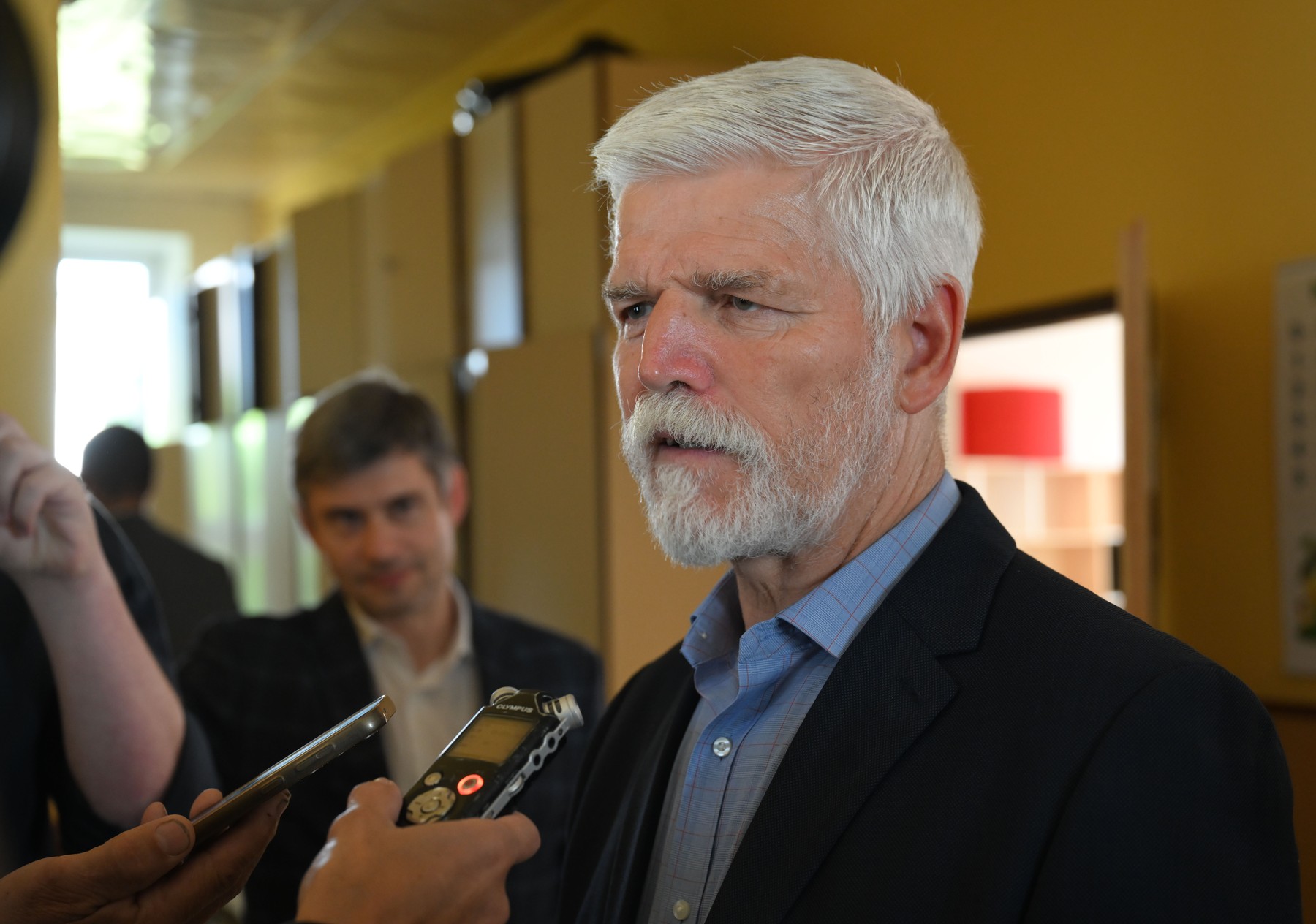
Pavel spoke about the Russian threat with CNN star
The attack in Leipzig is thus at a higher level of Russian aggression than the one in Vrbětice, although looking at old maps, the mentioned pattern of Russian subordination gets slightly corrected. Leipzig is part of the former GDR, that is, the former Russian occupation zone of today's Germany.
Perhaps that's why CNN approached the Czech president and retired general Petr Pavel. The interview with him was conducted by none other than Christiane Amanpour, undoubtedly the biggest personality of this famous American television network. Like a Václav Moravec on steroids from CNN.
What is happening in Germany is also of interest to Americans. Although in km2 our western neighbor doesn't take up much space on the world globe, in terms of numbers it is the largest economy right after the USA and China. Amanpour thus directly asked whether NATO shouldn't now show its teeth, as Pavel had recommended in the past.
"If Putin wants to disrupt the unity of NATO and the EU by escalating aggression against Ukraine, he will only achieve the exact opposite. NATO countries are even more united and even more determined to defend their territories and determined to spend more on defense,"
Pavel replied, as Christiane Amanpour reminds on her X profile.
It's hard to disagree with that. Although it is often said that the revival of NATO's defense capabilities is the work of President Trump, it is merely a temporal correlation with his term, and the cause is Russia's blatant aggression toward NATO. And these comments are based only on obsequious attempts to ingratiate themselves with the capricious American president.
However, isn't such conduct by the Russians a bit paradoxical? Unfortunately not. Pavel correctly points to NATO unity and the increase in defense spending, which will "deter" direct Russian aggression, but there is a cunning Russian Trojan horse in the whole operation, if we borrow a comparison to the mythical story from ancient Greece that has been revived in cinemas today.
The Russians Know Well What They Are Doing
The Russians know well whom they ruled over in Central and Eastern Europe in the past. Not everyone here is like President Pavel and does not stand firmly against Russian aggression, whether directly conducted in Ukraine, or covertly orchestrated in the form of terrorist attacks from Vrbětice to Leipzig.
There are people here who are more interested in their seaside holidays, the price of butter in the supermarket, and generally the state of their full stomach. After all, the president's conflict with the current government has precisely these two poles. Perhaps that's why representatives of the American television network wanted to speak with him.
The paradox outlined by President Pavel has its explanation in looking at the map and the calendar. Leipzig is a city in the federal state of Saxony, near the border with the federal state of Saxony-Anhalt, where federal elections are approaching on September 20th and it is precisely here, according to polls, that AfD is heading for victory.
A party whose politicians took money from Russia in the past, riding on the wings of Ostalgie (a term for nostalgia for the times of East Germany) may for the first time in history gain the position of state premier. Supporters then swear that it's time to think about their German bellies and not spend money on some Ukraine.
Certainly, if the German (Czech, Polish or other) government invests billions in its security, it cannot forward them to their pensions, social benefits, healthcare and other achievements of the welfare state that established itself in Europe after World War II to prevent extremists similar to Hitler's Nazis from coming to power.
In a few weeks we will see whether Putin's bomb in Leipzig will strengthen the ranks of his fifth columns across European parties after he lost his most faithful vassal Viktor Orbán in Hungary, or conversely strengthen unity against Russian aggression, which President Pavel somewhat solitarily reminds us of from the Czech Republic.
Sources: author's text, commentary, Novinky.cz, X, irozhlas.cz, HN.cz