The battle for Czech Television and Radio enters a new phase. The Minister of Culture is up next.

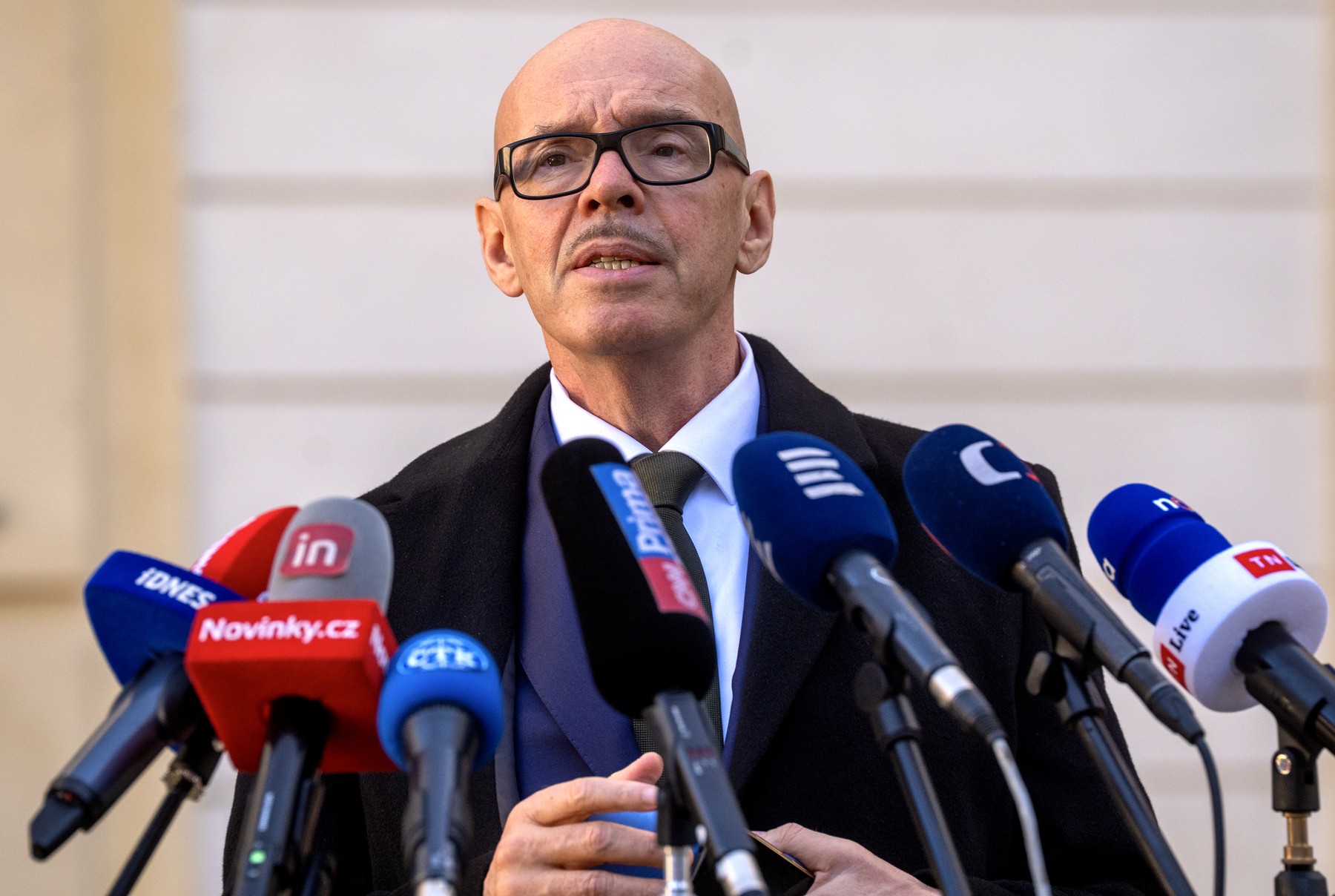
The Speaker of the Chamber of Deputies, Tomio Okamura, promised in the second half of March to submit a proposal for exemptions from radio and television fees for people over 75 and companies by the next day. Although nothing specific has happened since then, pressure on Czech Television and Czech Radio from politicians is mounting. The Minister of Culture has not yet come up with any specific solution on how their funding should be secured in the future, but his planned meetings with the directors of both public media may provide more insight.
The current government cabinet, consisting of representatives from ANO, SPD, and Motorists, has promised to abolish fees for public service media in its program statement. They justify this by reducing the burden on citizens and businesses. They want to implement these changes from next year. Experts consider the existing method of financing through fees the best possible way to maintain editorial independence.
Severe impacts
If the coalition parties propose exempting seniors over 75, those under 26 without support, the disabled, and all companies from paying license fees, and additionally abolish the inflation clause that ensures automatic fee increases, Czech Radio would lose approximately 850 million annually and Czech Television even 2.1 billion crowns. At least that's what their directors say. What would this specifically mean for them?
At the radio, for example, the share of regional inputs would be significantly reduced because they would be affiliated with the station Dvojka. Out of a total of 1300, they would be forced to lay off 400 to 500 employees.
Czech Television, through the mouth of director Hynek Chudárek, does not want to specify yet what all they would have to cancel if the parliamentary proposal of the coalition parties passed. However, they claim that original productions would suffer, meaning entertainment and dramatic productions, for example. According to him, all citizens already see that the television has a lot of rerun programs, especially on the channel ČT1.
For this year, the revenue from television fees was planned at 6.73 billion crowns, which is 990 million more than last year. On the other hand, the external costs that Czech Television must incur for the production and acquisition of programs are set to increase to 2.85 billion crowns, which is about 400 million more than last year. The channels expected to contribute the most to this are ČT Sport, which will broadcast, for example, World Cup football matches, and also the main channel. In both cases, the expenditure share is above 20 percent. For ČT 24, it's 14 percent, while ČT 2 and ČT Déčko each account for five percent, and ČT art around three percent.
The Minister Enters the Game
One of the reasons cited by the Minister of Culture, Ota Klempíř, for why the license fees should be abolished is last year's survey by the agency Kantar, which indicates that approximately 60 percent of respondents would welcome their replacement with direct payments from the state budget. However, at the same time, half of the population admits that funding from the state budget may lead to a threat to media independence.
As another reason, he mentioned savings that would bring people about 2500 crowns annually. In this context, however, he neglected to add that the operation of both media would still have to be funded from the state budget, that is, from public tax contributions.
“We will definitely present a new model and definition of public service media to both experts and the general public. But as long as there is no agreement within the coalition group on the final solution, any debate, whether expert or political, is actually pointless,”
declared Klempíř in February.
Apparently, after public criticism, the minister finally proposed that a meeting with the heads of television and radio should take place. However, the question remains how these discussions will translate into practice, as the main say lies with the legislators.
In this context, a comparison with foreign countries is interesting. The closest to our system is Germany, where the amount of license fees is set by an independent commission consisting of representatives from all 16 federal states. In Finland, citizens pay a tax amounting to 2.5 percent of their income, capped at 160 euros, which is roughly four thousand crowns annually. France abolished the fees four years ago. Since then, the public broadcasters there have been funded from the state budget.
Parliamentary Opposition Wants to Block the Change
The parliamentary opposition has already stated that they want to discuss the entire topic at an extraordinary session of the Chamber of Deputies, which will have to be convened by its chairman Tomio Okamura at their request.
"We will certainly strive to ensure that such botched proposals do not pass, so that public media do not come under the budgetary reins of the current government. This is a path to the east,"
He quoted the chairman of the STAN movement Vít Rakušan on the proposal of some members of parliament to change the way the Czech Television and Czech Radio are financed, ČTK.
The Czech Television Council strongly objected to the claim that the television's management is not under control and that it has enough reserves to maintain the current level of production if income returns to the 2024 level before fee increases proposed by the government coalition. Only Pavel Matocha and Luboš Veselý, who are ending their mandate and seeking re-election, voted against this resolution. The operation of public media has certainly become an issue that divides not only our political scene but also the public.
Sources: authored article, Mediaguru, Seznam Zprávy, iDnes.cz, ČTK