The base interest rate remains at 3.5 percent until February, agreed the councilors of the central bank

The Board of the Czech National Bank left nothing to chance at its pre-Christmas meeting, which was also the last of the year. The base interest rate remains at 3.5 percent. That is, at the level set at the beginning of May.
The council's meeting was attended this time by six out of seven members, Vice Governor Eva Zamrazilova excused herself from it. Otherwise, everything was as usual, as some council members and analysts had previously announced. The base interest rate has thus been holding at 3.5 percent for several months. All present voted in favor.
Inflation is still the biggest danger
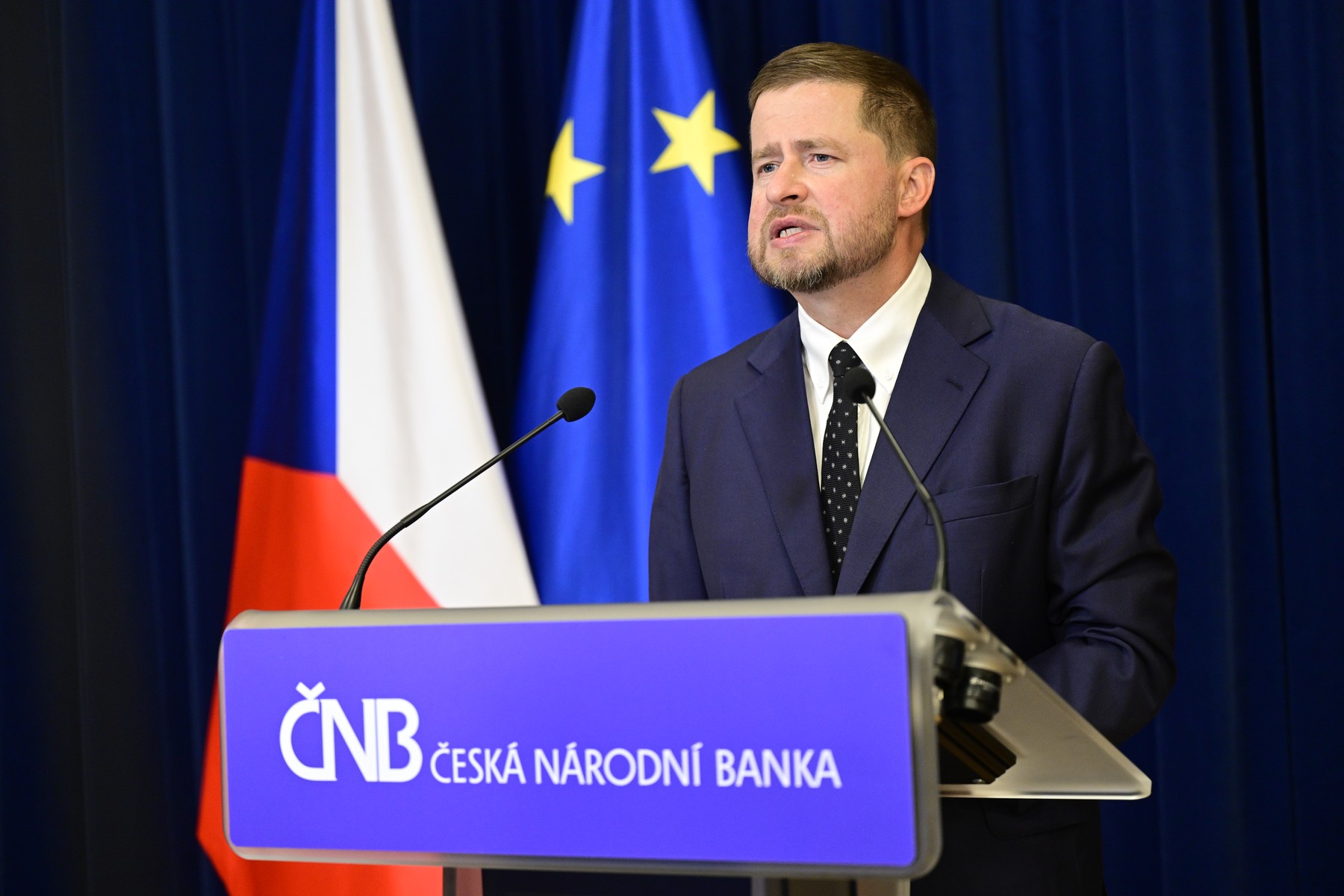
"There is still a need to maintain relatively strict monetary policy. We register great tension in the labor market, wages are also growing at an increased pace,"
He said at a press conference after a meeting of the board of governors Aleš Michl.

This is also agreed by, for example, the chief economist of Investika Vít Hradil.
"Consumer inflation remains in some areas, primarily in services, elevated, and the Czech economy is gradually picking up, mainly thanks to increasing household consumption. In the opposite direction, however, the relatively strong exchange rate of the Czech koruna and the continued slightly restrictive setting of interest rates have an effect. These two effects are currently approximately in balance, and an adjustment of the monetary policy setting does not seem to be necessary,"
Hradil stated for the Czech News Agency.
Year-on-year inflation slowed down to 2.1 percent in November from 2.5 percent in October.
"Even though inflation has come close to the two percent target, the Czech National Bank is still unhappy with the rapid growth of service prices and at the same time prices of flats in the real estate market,"
Bank Creditas's chief economist, Petr Dufek, evaluated the current situation.
The transfer of fees for renewable energy sources from consumers to the state, decided by the new government, will also affect the development of inflation next year. According to analysts, this could cause inflation to fall below the two percent target.
"However, this may not be enough for further monetary policy easing. According to us, this one-time and temporary anti-inflationary administrative effect will gradually be dampened by pro-inflationary effects of a more expansive fiscal policy,"
Analyst Jaromír Gec of Komercni Banka thinks so.
Rate developments disadvantage exporters
Another factor influencing the December decision of bankers is the exchange rate of the koruna. Because it has strengthened significantly this year, it helps to curb inflation, but at the same time harms our export, which gets more expensive. The koruna reacted to the announcement of the council's decision by strengthening against the US dollar by 0.1 percent, trading at 20.75 shortly after the announcement. The koruna virtually didn't move against the euro and is trading at a level of 24.37 korunas per euro.
The uncertainty surrounding the further development of the price level is in any case one of the reasons why it is not yet possible to say more definitively where the trend will go. In addition, other factors also contribute. Concerns are raised, for example, by the weaker performance of some eurozone economies.
Rates are unlikely to decrease
And what can be expected in terms of interest rate developments in the coming period? Experts are not completely in agreement on this yet.
"Interest rates in the Czech Republic are likely to rise rather than fall. But expecting them to increase as early as next year may be premature,"
said board member Jan Kubíček to Bloomberg even before the meeting.
"The rhetoric of the Czech National Bank reaffirms our belief that rates will remain at the current level of 3.50 percent at least for the majority of next year. The central bank, however, continues to communicate that it can adequately increase or decrease rates if necessary, in connection with the evaluation of new macroeconomic data,"
J&T economist Adam Ruschka said for LP-Life.
We will be able to see where the development will be heading in February. At the beginning of the month, the bank's board will again decide on the interest rates for bank deposits and loans.
"At future meetings, the Bank Board will build on the evaluation of newly available data and their implications for the inflation outlook. Considerations about interest rate settings will particularly be influenced by the evaluation of the persistence of the low inflation environment, crown exchange rate development, the impact of fiscal policy on the economy, analyses of labor market tensions and changes in domestic and foreign demand,"
The central bank presented this outlook in its current statement.
Higher interest rates bring more expensive loans for investments and operation for companies and more expensive loans for housing for households. However, with higher interest rates, the appreciation of deposits in accounts increases.
Sources: author's article, own questioning, Czech National Bank, Czech News Agency, Bloomberg