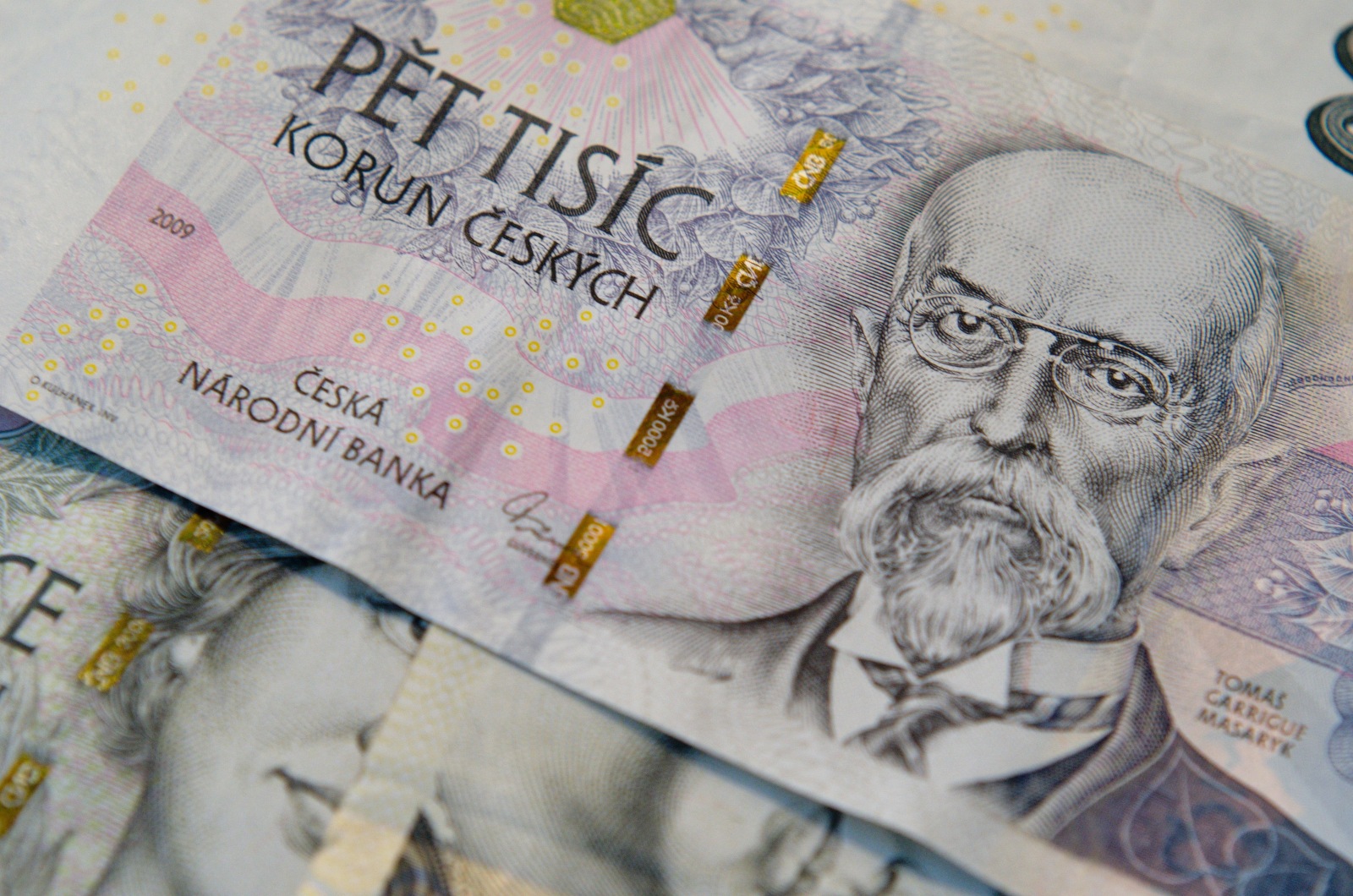
Babiš's cabinet is heading towards increasing the national debt. The central bank has already worsened the estimate for this year's public finance deficit.

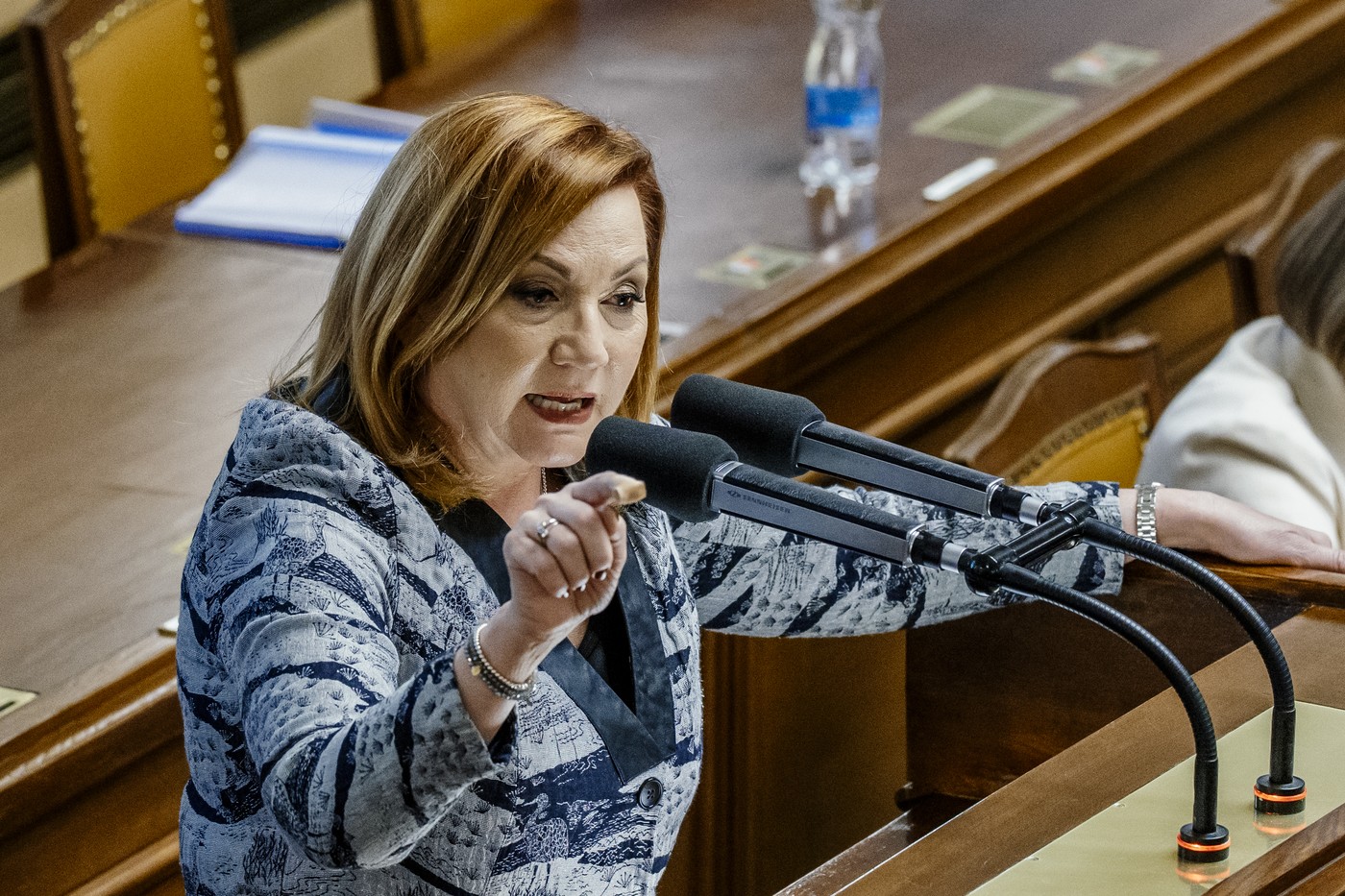
The controversial amendment relaxing budgetary rules in the Czech Republic is heading to the Senate. Economists and opposition politicians criticize the bill because, according to them, it will lead to further national debt increase. There is a potential deepening of the deficit by tens of billions of crowns. Finance Minister Alena Schillerová is receiving negative labeling as "Dlužena" on social media and other discussions because of this.
In addition to extending the period during which defense expenditures exceeding two percent of the gross domestic product will not be included in the approved expenditure budget frameworks, the government newly proposed that state budget expenditures on strategic infrastructure projects under the linear law could be increased. The state could simultaneously finance the construction of new nuclear sources in the future through loans provided from off-budget accounts.
Critics point out that it would be a complete mockery if Andrej Babiš's cabinet, after the budget is returned by the Chamber of Deputies, would not have to adhere to legal limits and could thus propose a budget with a higher deficit.
Risk of Violating Fiscal Rules
For example, according to the Center for Public Finance at Charles University, the described trend will lead to a violation of EU fiscal rules and the government's commitments to keep budget deficits below three percent of GDP.

Finance Minister Alena Schillerová therefore plans to meet with European Commissioner for Economy Valdis Dombrovskis at the beginning of June to discuss changes to the government's plan aimed at ensuring the sustainability of public finances, known as the fiscal-structural plan of the Czech Republic.
All of this comes at a time when the current state budget deficit is increasing. In April alone, it deepened by 78.5 billion crowns compared to the end of March, reaching 106.1 billion crowns.
Raiffeisenbank analyst Tereza Krček has already warned that it is uncertain whether the planned deficit of 310 billion crowns for this year can be achieved.
"The preliminary estimate of GDP for the first quarter of 2026 pointed to weaker quarterly growth of the Czech economy. This was significantly below the finance ministry's prediction, on which state budget revenues are estimated,"
an expert informed the Czech News Agency.
The Czech National Bank in its new forecast has already worsened the estimate of this year's public finance deficit to 2.7 percent of the gross domestic product. The previous forecast from February expected a deficit of 2.5 percent of GDP. Next year, the deficit is expected to further increase to 3.1 percent. For comparison: while in 2024 the deficit was two percent of the gross domestic product, which was the lowest level since the COVID-19 pandemic, last year's deficit was 2.1 percent of GDP.
„We take seriously the fact that in the latest forecast the Czech National Bank itself says it does not believe the government will be able to keep the deficit under the magic three percent. The central bank says it will be over,“
said Mojmír Hampl, chairman of the National Budget Council, to Czech Television.
The head of the advisory body also calculated that in the case of a three percent deficit in public finances, the government could propose a deficit of 356 billion next year, which is 46 billion more than this year.
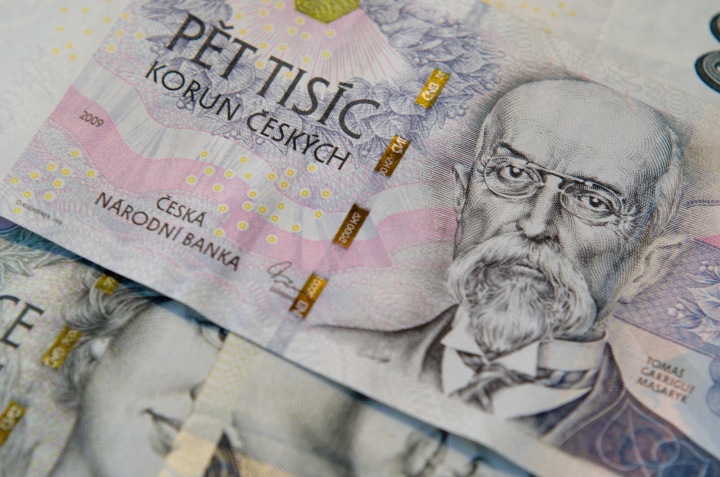
Consuming the future
The National Budget Council points out that over the past 20 years, investments have accounted for only a tenth of government spending. Babiš's cabinet is no exception in this regard.
Other experts generally claim that the main reason for indebtedness is not investments, but ordinary expenses. More than 700 billion crowns are spent on pensions and social benefits. When you add the costs of education and healthcare to that, you reach an amount that represents 96 percent of all state revenues.

If the new ministers want to fulfill the pre-election promises of the ANO movement, expenses will continue to grow. The blame lies in the tendency to increase pensions, the valorization of payments for state-insured persons, the growth of salaries for state employees, and efforts to reduce taxes and restore various tax reliefs.
The debt of the government sector is expected to increase to 45.7 percent of the gross domestic product this year, up from last year's 44.3 percent of GDP, according to the central bank. Next year, it is expected to reach 47.2 percent. However, it should be noted that the burden does not lie solely with Andrej Babiš's government. The partial spending can also be attributed to the previous government. The debt in relation to the economy's performance has been consistently rising since 2020, with only stagnation in 2023.
As for what state finances will look like in the next period, it is still not entirely clear. The government must present the proposal for the state budget for 2027 to parliament by the end of September. In October, MPs will then begin discussing this key government proposal.
Sources: author's article, ČTK, ČT, Seznam Zprávy