Why Karlín: Because light, plane and everything worth it


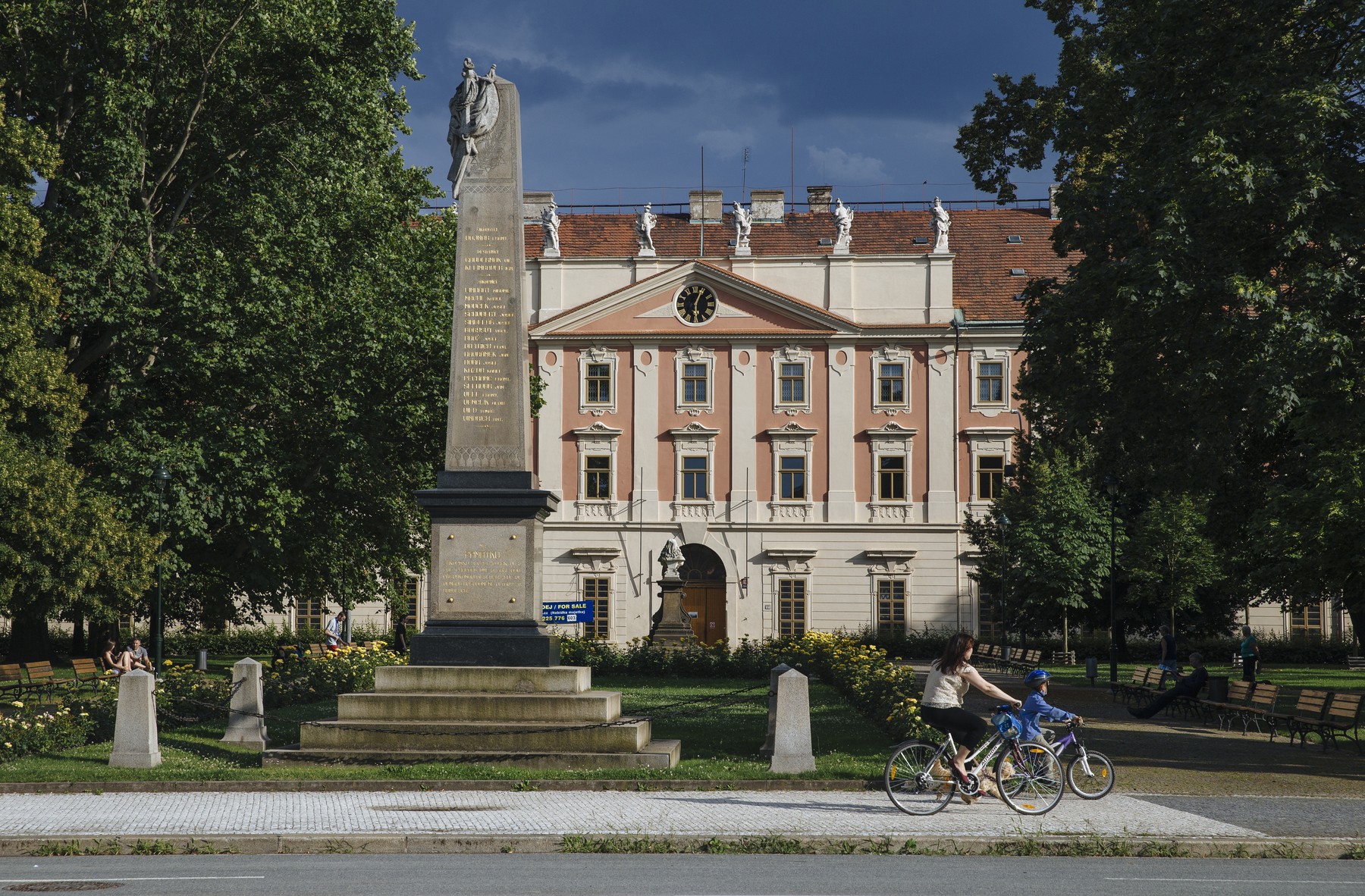
Once elegant Karlín gradually transformed into an industrial area, and subsequently into a neglected district, which paradoxically helped the flood to grow and transform into a prestigious address. It has a lot behind it and even more ahead. That is why the locals will not give up on this part of Prague.
Dark Shadows Combined with The Bronx or a Hint of the Past
"It has a strange taste, the air is like mercury, it smells beautiful," sang in the song Karlín, Ivan Hlas. This hit was known by everyone back then. But it was the 90s and the Prague district sung by Hlas looked completely different. The artist himself described it in the program How the Hit was Made as a "strange Prague agglomeration" shrouded in a dose of mystery. He captured it exactly, this image accompanied Karlín for many years.
"I grew up in places where Žižkov and Vinohrady intersect, and if I have any part of Prague associated with a wild youth, it's Karlín. The best techno party I experienced, I believe, was somewhere where Palác Karlín is now. When I walk through Karlín with my children today, they do not believe me that I was scared to walk here at night before. Me, a two-meter-tall man, but anyone who remembers it will recall, simply a combination of Stínadla and Bronx topped off with a horror tunnel,"
Petr D. describes his impressions of Karlín before the floods for LP-Life.cz
When elegance gives way to progress
No wonder, at the end of the 20th century, Karlín was among the somewhat more rugged-looking parts of Prague. Its first wave of glory was already behind it. The original elegant character, representative buildings, and parks and groves had to gradually give way to industry in the 19th century. Karlín began to slowly change into a significant industrial Prague suburb, where the Czech Edison František Křižík also moved his electrotechnical factory from Pilsen. He set up a power station there and illuminated Karlín with his electric arc lamps, which gave the location an unmistakable charm. Urban development then continued until the first half of the 20th century when there was practically nowhere to build. Karlín gained that specific face, a lot of new inhabitants, but it was slowly but surely deteriorating. In the second half of the 20th century, there were fewer interventions and modifications, but some historical buildings obstructed progress. Thus, the unique architectural gem, the neo-renaissance Prague-Těšnov station, disappeared from the border of New Town and Karlín in 1985.
"My grandmother, born in Karlín, never forgave this to the communists, she was convinced that no highway was worth it for this beautiful station to get carried away. The blast took place on Saturday, I remember sleeping at her place that day, I remember her crying as she was making me breakfast,”
says Jana Z. for LP-Life.cz
Apocalypse as a chance for a better tomorrow
And it wasn't the last time tears flowed for this area. All the original poetry of Karlín was washed away by the great flood in 2002.
"At that time I was volunteering in Karlín. Among all this despair, I imagined what this place would look like when everything was fixed. Honestly, the fact that there will be so many office buildings, luxury apartments and cultural activities here never occurred to me in my dreams. In the end, I live here and do not regret it, during the week, when everyone goes to work, there is a bit of hustle and bustle, but the weekends are quieter, we go out with my wife on the bike path and we lack nothing,"
describes for LP-Life.cz Daniel H.
That a flood can also bring something positive, also appreciates with thanks Naďa C.
"My boyfriend has been wanting to move to Letná for a long time. He kept arguing with all those hipster coffee shops and restaurants, that I like it, but I insisted on my own. We will live in Karlín. I don't know, I can't describe it, but I think this part of Prague has not only good coffee but also a soul,"
says for LP-Life.cz.
She likes the current modern concept, but at the same time appreciates that the past is not forgotten in Karlín.
"I've had the honor of tripping over Stolpersteine,"
she refers to a project, about which Praha8.cz informs. These paving stones with a brass surface, which are embedded in the pavement in front of the houses of victims of the Nazi regime, have now also appeared in Karlín.
Come and get your Karlin
Pedestrians can admire it, and there are plenty of them in Karlin, because the conditions are excellent for it. Both metro lines B and C are within reach, trams are available everywhere, with the city center just around the corner. And it's good to walk here. Another local resident is also convinced of this.
"Why did I choose Karlin as a place to live? It might sound a bit superficial, but... it's flat there. I come from Liberec and it's all hills. I've always loved high heels, but try wearing them when you're constantly running up and down, it's hard on the feet. Then I got a chance to work in Prague, right in Karlin, and during my first walk around the office, I knew that I wanted to live here as well. I can walk to work and the time and nerve savings are significant,"
intended for LP-Life.cz by Alice P.
Source: author's text, own questioning, Praha8.cz, youtube.com