TRANSLATED INTO ENGLISH, CHECK: The past of a Slovak politician's mother raises a number of questions. Doubts arise about plagiarism, document manipulation, and a controversial loan.


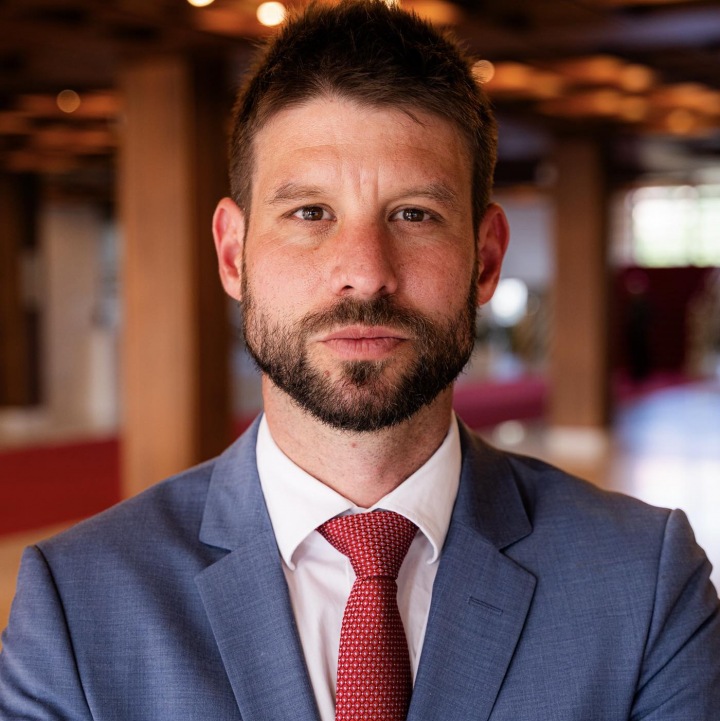
This dispute has gained prominence not only due to questions related to the drawing of public subsidies but also due to connections to family relations, specifically to her son, Slovak politician Michal Šimečka (Progressive Slovakia), who is among the leaders of the opposition.
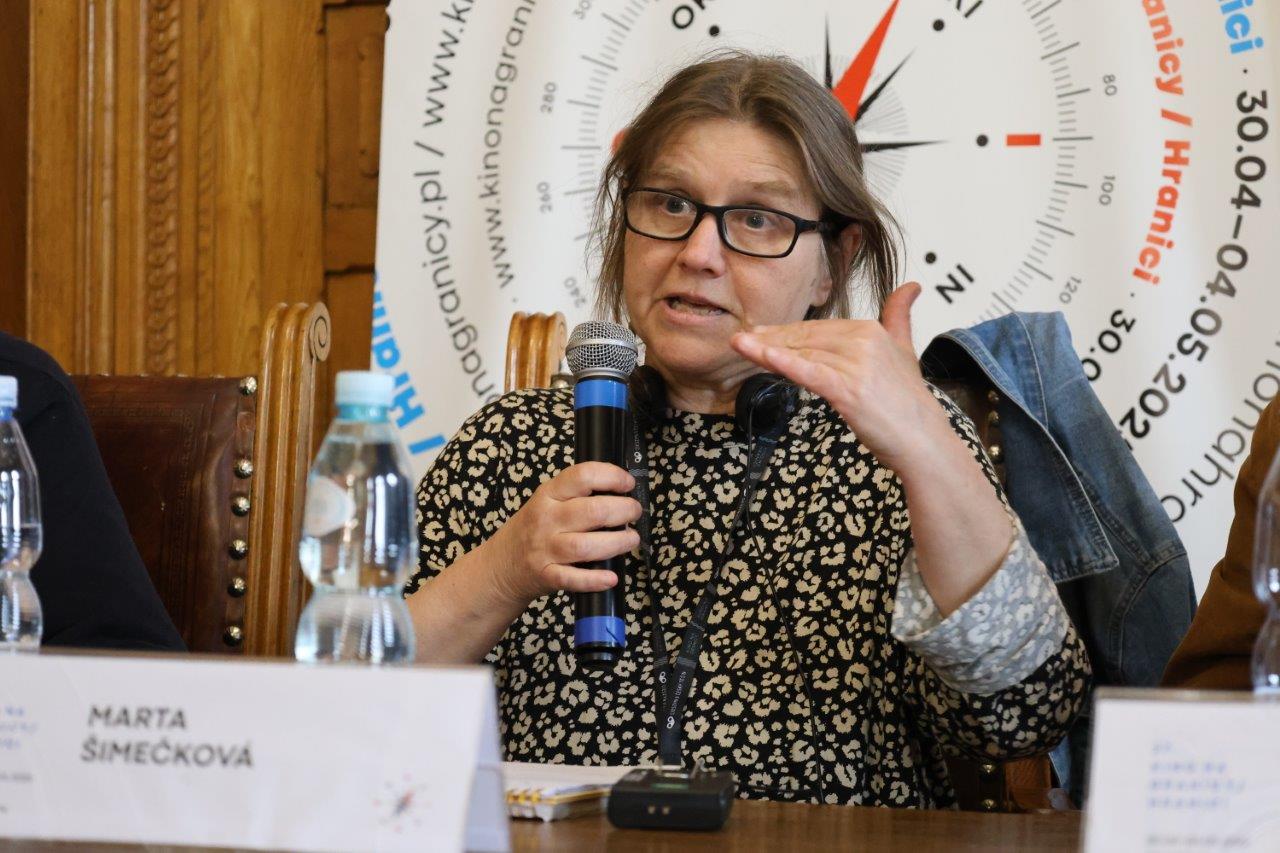
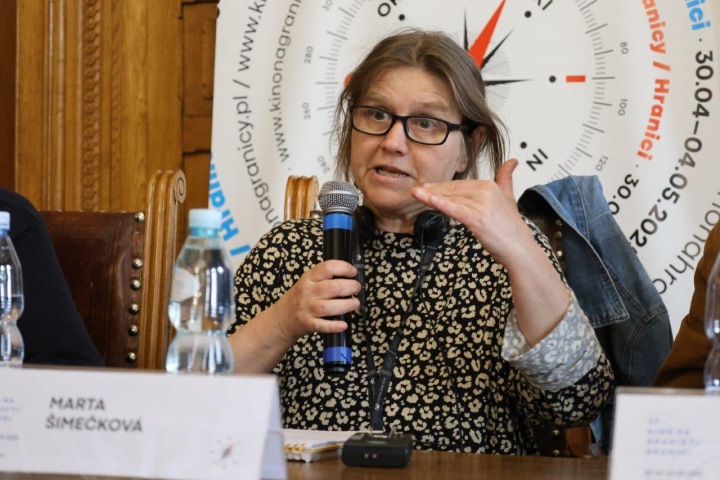
The origin of the case is connected with the operation of the civic association Project Forum and the Central European Forum organizations. After Marta Šimečková published a part of the accounting documents herself, the discussion intensified even more, reports TA3.
In response to the accusations, Šimečková explained the functioning of the association and denied having any personal financial gain from its activities. She claimed that on the contrary, the operation of the projects burdened her financially and repeatedly put her in debt.
According to her statements, the expenses associated with organizing the Central European Forum regularly exceeded the income from public sources. The difference was supposed to be financed from personal savings and private resources of collaborators. She also admitted that there were administrative errors in accounting, where some invoices were used in multiple settlements, even though there were other legitimate expenses.

As she stated, it was not a case of duplicate payments, but rather an error in processing grant administration. She described it by saying that the same invoices were retroactively included in multiple settlements, which, according to her, did not lead to unauthorized use of funds.
The same invoices were retroactively included in multiple settlements, even though there were enough other legitimate expenses that should have been listed instead. This did not lead to duplicate payments, but it is an accounting error in grant settlements that should not have occurred,
stated Šimečková.
Loan between the Šimečkas and new suspicions
Another aspect of the case emerged after a loan of approximately 5,200 euros between Marta Šimečková and her son Michal Šimečka came under scrutiny. This financial relationship became the subject of public discussion, especially after a hypothesis emerged that the loan might have been repaid from public funds.
According to legal experts, it's not just about the existence of the loan itself, but primarily about the way the money was subsequently used in an organization operating mainly on grants, subsidies, and donations, writes the website Zastavmekorupciu.sk. The website also notes that the monitoring of Project Forum was likely illegal by the authorities (see below).
The whole story began in December 2019. According to available email communication, Marta Šimečková then asked her son, a newly elected member of the European Parliament, for financial assistance. According to her, the organization Projekt Fórum found itself in a transitional period without sufficient cash and needed to bridge the time until the arrival of grant funds. Shortly after, an amount of 5,200 euros appeared in the association's account with a note that it was a grant-tied loan.
The acceptance of a loan by a non-profit organization is not automatically problematic. Such entities can accept financial assistance if they use it for legally permitted purposes, that is, for activities of public interest. However, documents show that Projekt Fórum worked with several similar transfers, with more of them labeled as loans and also concerning financial transfers between the organization's account and Andrea Puková's account.
The situation took another turn in March 2021, when Projekt Fórum received 50,000 euros from a grant by the Ministry of Culture of the Slovak Republic as part of a scheme to mitigate the effects of the pandemic. On the same day, an amount of 25,000 euros left the organization's account, which, according to the note, was intended for businessman Eduard Maták. He explained that he repeatedly lent money to the organization to bridge the period until grants arrived, and it was help based on a long-standing personal relationship with Marta Šimečková. However, after media coverage, Maták adjusted his original statement. He stated that the mentioned 25,000 euros did not come directly from Projekt Fórum on that day. Instead, he received 20,000 euros from Andrea Puková's private account with a note about loan repayment. According to him, this discrepancy creates the impression that the funds first left the organization's account to a private account and only then were partially used to settle the debt.
In June 2021, another transfer followed, in which Project Forum sent 5,000 euros to Michal Šimečka without any explanatory description. Šimečka confirmed that there was no formal loan agreement between him and his mother and the entire agreement was supposed to be based solely on email communication. Similar transfers labeled as loans reportedly appeared repeatedly in the organization, and these were amounts in the thousands of euros.
Organizations funded by grants are supposed to use the money only for the purposes for which they were allocated. If grant or subsidy funds were used, for instance, to repay private or bridging loans, it could raise suspicions of subsidy fraud or damage to the financial interests of the European Union.
The Forum Project did have other income sources - from donors, foundations, local governments, or Norwegian funds - but the situation is complicated by the fact that, according to the organization's lawyer, Matúš Harkabus, the association had multiple accounts where money from different sources was mixed. There was no separate account maintained exclusively for public grants, which may significantly complicate proving which funds were used to settle specific obligations.
The lawyer for the Stop Corruption Foundation points out that if the organization's funds were used for private purposes, it could constitute embezzlement. In such a case, the court might appoint a guardian for the Forum Project to temporarily represent the organization.

The entire case also involves a dispute with the European Commission. More than 113,000 euros are being recovered from the Fórum Project through an executor in connection with an older project, Mirrors of Europe, carried out from 2010 to 2012. According to the commission's statement, the organization failed to meet several obligations, including submitting a complete final report. The question remains whether Marta Šimečková's defense will hold.
Expansion of the Case to State Institutions
In the next phase, the case expanded to suspicions involving actions of state authorities. Information surfaced in political and public spaces that the Criminal Office of the Financial Administration had been working with accounts and invoices linked to the Forum Project.
These claims sparked a discussion about whether there might have been an overreach of authority and whether state control mechanisms were utilized in a political context as well.
This is related to information about the alleged existence of an internal file on Marta Šimečková titled "Smotánka." Although its content is not publicly known, the mere existence was interpreted as a sign of a longer-term interest of state authorities in her activities, writes Štandard.sk.
Marta Šimečková, along with her colleague Andrea Puková, responded to some public statements by filing a criminal complaint, particularly in relation to claims of "parasitism" made by Smer. At the same time, sharp remarks from Michal Šimečka himself entered the public discussion, as he commented on the situation emotionally and denied any accusations. He described the case as politically motivated, claiming that the goal was to weaken his position in the opposition.
The fact that they would use it against me was clear. That's why they opened it up. (…) There is a strong suspicion that it was politically ordered. If they thought that after something like this I would give up or that it would intimidate or tire me, they are mistaken. I now have a fresh mandate from the PS congress, and of course, I will continue with it,
stated Michal Šimečka.
The PS leader consistently rejected all doubts about the association's management and commented on the situation expressively, referring to his mother as a "mess" in the context of her administrative and organizational approach.
The Role of Accounting and Initial Major Discrepancies
The next part of the case focused on accounting and bank statements. Marta Šimečková mentioned that upon a review of the documents, discrepancies were found between the bank statements presented by collaborator Andrea Puková and the original statements obtained directly from the bank. It should be noted that Andrea Puková is a long-time project manager of the Forum Project and was responsible for the accounting.
When assembling the documents, a professional accountant pointed out to me that the account statements my colleague submitted in the grant reports do not match the original statements I recently obtained directly from the bank. I'm sorry about this, I was not aware, although as the statutory representative I should have been checking it,
says Marta Šimečková.
The findings revealed discrepancies in amounts, transaction descriptions, and the recipients of payments themselves. In some cases, different versions of the same operations appeared, including cash withdrawals and transfers.
How it happened that more invoices ended up in more billing, I assume it was mainly due to the total overload of my colleague during this period and her complicated financial situation. That is my assumption, I am not looking for other possible causes,
Šimečková expressed.
Financing through a third person
"I did not have my own account for several years because Tatra Bank canceled it due to frequent and repeated executions. Therefore, supposedly my invoices went to Andrea Puková's account, from which she made payments on my behalf," the interrogation record states.
She acknowledges that she was formally responsible for overseeing the association's financial management, but she also adds that she did not adequately engage with this agenda in practice. The most serious findings in the entire case concern the bank statements of the civic association Projekt Fórum, which Marta Šimečková published along with the interrogation record. The documents contain two different versions of the statements - one comes directly from the bank, and the other was supposed to be provided by her colleague Andrea Puková. Comparing both sets of data revealed extensive discrepancies affecting the amounts of payments, their recipients, and the transactions themselves, with differences appearing, for example, in hotel service payments, purchases, or cash withdrawals.
The published data also suggest that Puková may have transferred approximately 233,000 euros from the association's account to her personal account between 2020 and 2022. Of this amount, approximately 151,000 euros were covered by invoices, but the remaining amount, estimated at around 82,000 euros, was allegedly paid without proper documentation. The largest amount of funds went to her account in 2021, when it was approximately 127,000 euros. Some of these transactions may also be related to the repayment of funds since Puková reportedly provided loans to the association totaling approximately 22,000 euros by the end of 2020.
To make the project successful, I needed to fully focus on its content. She took over this part of the work, i.e., handling payments, contact with the accountant, financial statements, and I was rather grateful to her for that. I would also emphasize that neither I nor my colleague were qualified for this work, i.e., the financial part,
is stated in the record.
Šimečková portrays herself more as a person who focused on the content aspect of the projects and left financial management to her collaborators. However, according to legal opinions, this approach represents a fundamental problem, as the statutory representative has a duty to act with professional care and ensure proper oversight of the financial management.
I was fully absorbed in the content aspect of the project and concerned with making sure the forum could be financially sustained. I didn't have the capacity for administration and payments, even though that is part of the duties of a statutory representative. I don't absolve myself of my responsibilities and am prepared to bear the legal consequences for all failures,
she added.
The case also involves witness statements to the investigator, where Marta Šimečková states that the association's accounting was reconstructed during a certain period because the original documents were said to have been lost following a break-in at the office. However, according to available information, there is no clear record of this event being reported, which again raises doubts about the credibility of the entire explanation. In this context, further claims have emerged concerning missing accounting records. Part of the documentation, especially for the years 2018 and 2019, which are also under police investigation for suspected subsidy fraud, reportedly disappeared. The losses allegedly occurred after unknown perpetrators broke into the project office in August 2020, taking not only computers but also binders with accounting records. Marta Šimečková also notes that it is unclear whether some of these documents could be in the possession of an external accountant who worked for the association, with whom communication has been long problematic, as she describes her as "ill" and "uncommunicative."
Alterations to Bank Statements
The investigation also focused on possible alterations to bank statements, which were supposed to be used for the settlement of the Central European Forum event with state institutions. The investigator asked Šimečková whether there could have been any modifications to them before being presented to the ministries of culture and justice, to which she claimed that she encountered such information only afterward and once again referred to her colleague. In connection with these suspicions, there are also claims that some changes in the statements could have been made by Puková, which was reported to Šimečková by the new accountant during the retrospective reconstruction of the association's accounts.
I was surprised by it and I can't explain it. Some modifications were made by Ms. Puková,
she added.
Šimečková herself repeatedly emphasized during the interrogation that she has a limited overview of the financial functioning of the organization she has led for many years, and in matters of management, she mainly referred to Andrea Puková as the person responsible for practical financial operations.
A comparison of bank statements presented to state institutions with later published versions points to possible alterations to their content. Differences between individual documents suggest that the data may have been modified subsequently, with discrepancies in amounts, missing cash operations, and different recipient identifications in some transactions. The statements used in the accounts for the years 2020 to 2022 reveal inconsistencies that alter the overall picture of the association's financial flows.
One specific example is the payment from June 5, 2020, when an amount of approximately 21,000 euros was credited to the association's account as an advance payment from the Brussels organization managing the Norwegian grants. However, in the documents used for settlement, this transaction was only partially recorded, as they show an amount of approximately 10,000 euros, creating a significant discrepancy compared to the actual bank record. Interestingly, in the note for this operation, the original figure was retained, which may indicate an additional intervention in the document, likely through editing the original statement. On the same day, there was a significant cash withdrawal of approximately 10,000 euros directly from the Project Forum account. According to available data, this transaction was carried out by Andrea Puková, and it is an operation that is standardly accurately recorded in banking systems, including the identification of the person who made the withdrawal, as proof of identity is required when withdrawing at the branch. These circumstances together create another layer of questions regarding the accuracy and integrity of the association's financial documentation.
Into the picture of the entire case also enter broader doubts about whether the claim of complete ignorance can stand, if the statutory representative herself admits to long-term neglect of financial agenda control. In legal practice, it is emphasized that relying on another person is only possible in the case of qualified and transparent cooperation, which critics argue was not fulfilled in this case.
Lacked Qualification
The testimonies also indicate that even the individuals who were supposed to manage the accounting might not have possessed the necessary qualifications, which further increases the level of risk and responsibility.
Questions are also arising regarding uncertainties in tax obligations, as well as in connection with invoicing of fees for the statutory representative herself, which reached significant amounts but were not always adequately explained. From the interrogation record, it also appears that the civic association has long failed to fulfill its legal administrative obligations, as it did not submit financial statements and irregularly or not at all filed tax returns. The investigator pointed out that the last return was filed in 2021, and in the following four years, this obligation was not fulfilled. In response, the statutory representative admitted that this is a serious error that she regrets.
I am very sorry and regret that we did not fulfill this obligation,
responded the statutory representative of the association.
The police were also interested in the billing of services between Šimečková as a sole trader and the association itself. In 2021, she allegedly issued six invoices totaling approximately 15,000 euros for dramaturgical activities, even though her trade license only listed interpretation activities. She did not address this discrepancy directly and referred to her colleague. Available bank statements also show that her income from the association between 2020 and 2022 reached approximately 63,000 euros.
The Dark Side and Plagiarism
Apart from the often-mentioned Project Forum, an older, for many still unknown case related to Marta Šimečková's work in the media is coming to the forefront. In addition to current suspicions, a more than two-decade-old case is being reopened, which dates back to the period when Šimečková and Puková worked in the cultural section of the daily newspaper Denník SME. Their collaboration dates back to the beginning of the new millennium, when the editorial team was led by Martin Milan Šimečka. In 2004, doubts arose about articles published under the name Edwin Grassmeier, who was a completely unknown and unverifiable person to the public, writes the portal Topky.sk.
These texts were remarkably similar to materials from the German magazine Der Spiegel, which raised suspicions of unauthorized content appropriation. Media monitoring highlighted discrepancies, pointing out recurring similarities between published articles. The situation resulted in an apology from the editorial management and the departure of Puková from the newspaper. At the time, the entire incident was labeled as an unintentional failure.
However, the controversies did not end there. The author's identity remained unclear and additional efforts to locate them yielded no definitive results. There were claims that it was a specific person from Germany who had sent an apologetic email to the editorial team, but the authenticity of this information was questioned. Nonetheless, both editors insisted that the author exists.
The situation escalated to the point where the publishing house's management attempted to verify his existence abroad through a journalist, but without success. Eventually, it turned out that the author was likely fictional, which led to personnel changes in the editorial team. However, questions remained unanswered—especially those regarding the fees for the published texts and their actual recipient.
The writer donated 999 euros to the progressives, then received 1000 euros from the foundation
The Pravda portal also highlighted another interesting financial connection involving writer Michal Hvorecký and the political movement Progressive Slovakia. The focus is on the timing and total correspondence between his financial donation to the party and the subsequent fee he received for participating in a public event organized by individuals connected to Project Forum, writes the portal Pravda.sk.
Available data suggests that Hvorecký contributed 999 euros to the progressives in mid-January 2020, just before the parliamentary elections held at the end of February that year. During that period, political entities were intensely mobilizing resources for the campaign. Later, still within the same year, the writer appeared as a guest at the Central European Forum, where he spoke as a speaker. Recently published accounting documents indicate that Hvorecký was paid a fee of 1000 euros for his appearance, in November 2020. The difference between the donated and received amount is minimal, raising questions about the randomness of the entire situation.
An interesting fact is that Hvorecký is a regular participant of the Central European Forum, but according to available data, this was the only instance when he financially supported Progressive Slovakia as a private individual.
Source: author's text, Zastavmekorupciu.sk, Pravda.sk, Topky.sk, ta3.sk, Standard.sk