TRANSLATED TO ENGLISH, CHECK: Luxury Replaced by Tents and Ruins: This Is What Weddings Look Like in Gaza Today


War, destroyed houses, refugee camps, and constant fear of further attacks. Even in such conditions, the residents of the Gaza Strip strive to maintain traditions, family life, and faith in the future. One of the strongest symbols of this effort in recent years has been the mass weddings held among ruins, tents, and damaged city streets. Such events hold exceptional significance in Palestinian society.
For many couples, a traditional wedding would be financially impossible, as the war has deprived thousands of families of their homes and savings. Humanitarian organizations and charitable foundations have begun organizing collective ceremonies for dozens to hundreds of couples at once. Besides providing practical help, these ceremonies also carry a strong symbolic message - that life continues despite tragedies.
December 2025: 54 Couples Say "I Do" Amidst the Ruins of Khan Younis
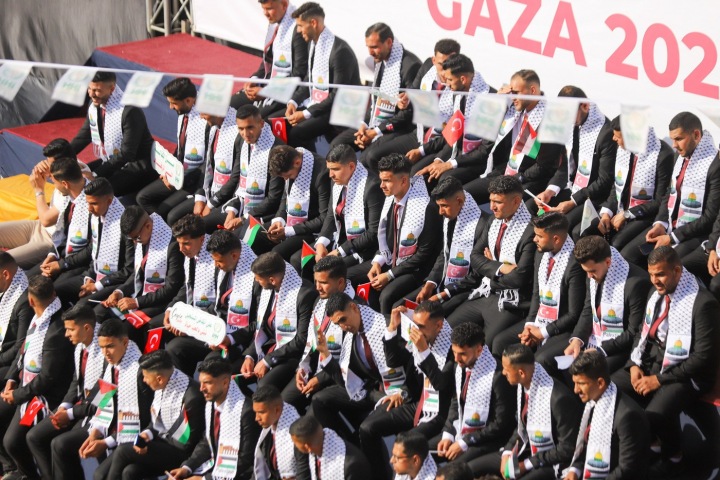
One of the first major post-war mass weddings was held on December 2, 2025, in the city of Khan Younis in southern Gaza. The ceremony was attended by 54 couples and supported by the United Arab Emirates humanitarian initiative known as “Gallant Knight 3.” The wedding took place directly among the ruins of destroyed buildings in the Hamad City area. Although the newlyweds were surrounded by the ruins of war-damaged homes, the atmosphere was filled with music, Palestinian flags, and traditional folkloric dances. Many people even climbed onto the collapsed buildings for a better view of the celebration, reports ABC.
The brides wore traditional Palestinian dresses with folkloric motifs, and the grooms wore suits complemented by keffiyehs. At that time, the newlyweds spoke openly about how their greatest dream was no longer a luxurious life, but a simple tent, safety, and the opportunity to start a family. One of the grooms told AP News that his dream is "to find a place where they can live together."
"Before the war, I was engaged and we lived in a house, and now I will be living in a tent amidst the destruction and pain we live in," said 17-year-old bride Adeem Eid.
This wedding also had strong symbolism. The organizers chose exactly 54 couples as a reminder of the 54th anniversary of the founding of the United Arab Emirates. The event was called "Thawb Al-Farah," meaning "Robe of Joy," writes The Times of India.
April 2026: 150 newlyweds filled Deir al-Balah
Another massive wedding ceremony took place on April 24, 2026, in the town of Deir al-Balah in the central part of the Gaza Strip. According to media reports, approximately 150 couples said "I do" here. The event was once again supported by the United Arab Emirates as part of the Al-Fares Al-Shahem humanitarian initiative. Long convoys of cars decorated with flowers drove through the town, drums and traditional Palestinian music resonated through the streets. The newlyweds walked through crowds of people waving Palestinian flags and celebrating with them. Photos from the event showed brides in richly decorated dresses and grooms with keffiyehs around their necks, writes Reuters.com.
Many Palestinians perceived this event as proof that life in Gaza continues despite the war. The organizers helped couples not only with the wedding itself but also financially — providing clothing, basic household equipment, and support to start their life together.
April 2026: Charity Wedding for 300 Brides and Grooms
On the same day, a larger charity celebration for 300 brides and grooms took place near the Al-Aqsa Martyrs Hospital. The event attracted thousands of people from across central Gaza.
According to foreign media, nearly two thousand couples registered for the participation draw. Many young Palestinians cannot afford their own wedding or housing due to the war. Mass weddings have thus become the only option to start married life. The atmosphere resembled traditional Palestinian celebrations - there were dabke dances, folk music groups, and large communal feasts. Volunteers, neighbors, and entire families got involved in the organization. For many Gaza residents, it was a rare moment of joy after months of bombing and uncertainty, writes The New Arab.
May 2026: Turkish organization IHH organized a wedding for 50 couples
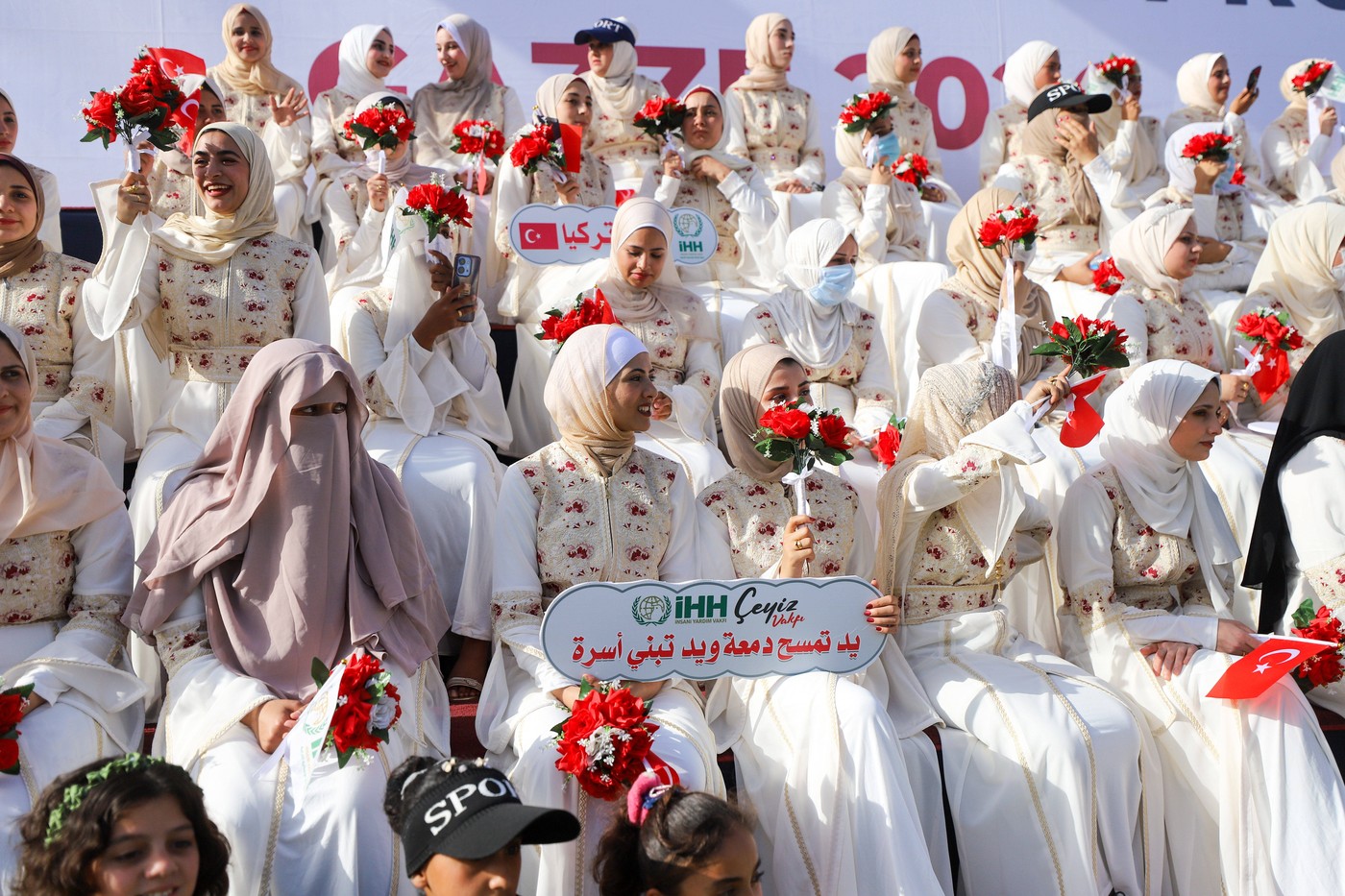
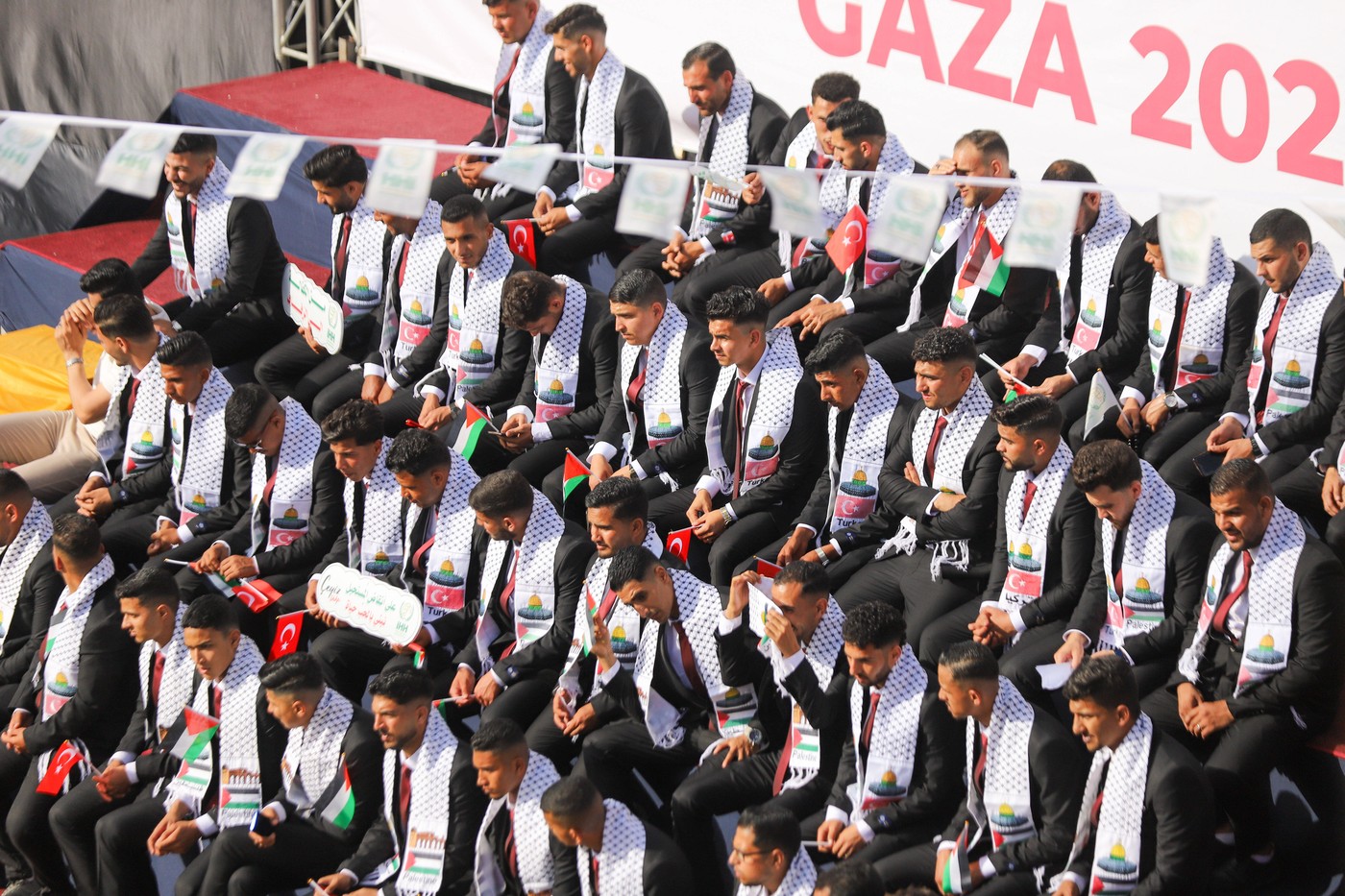
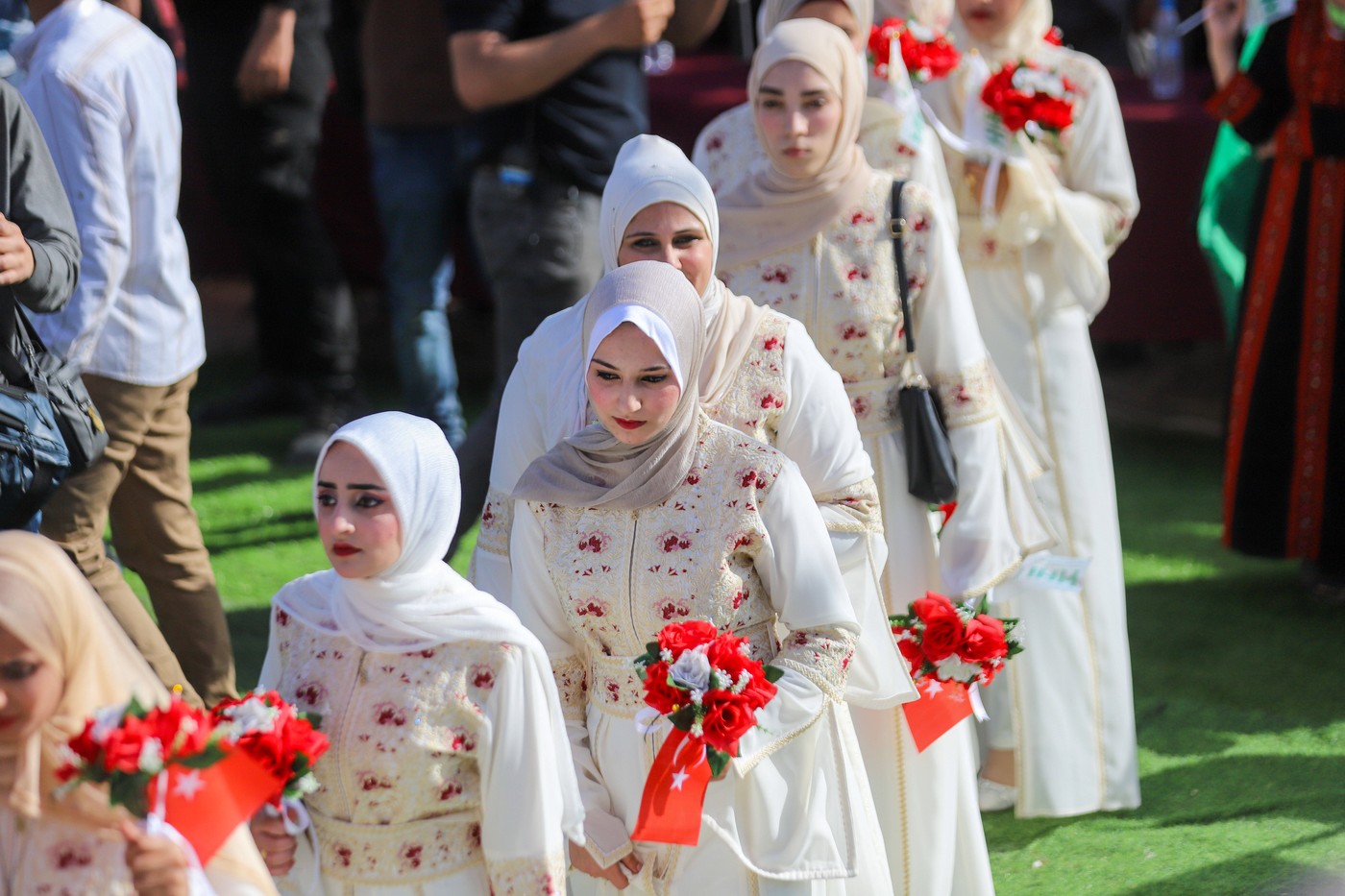
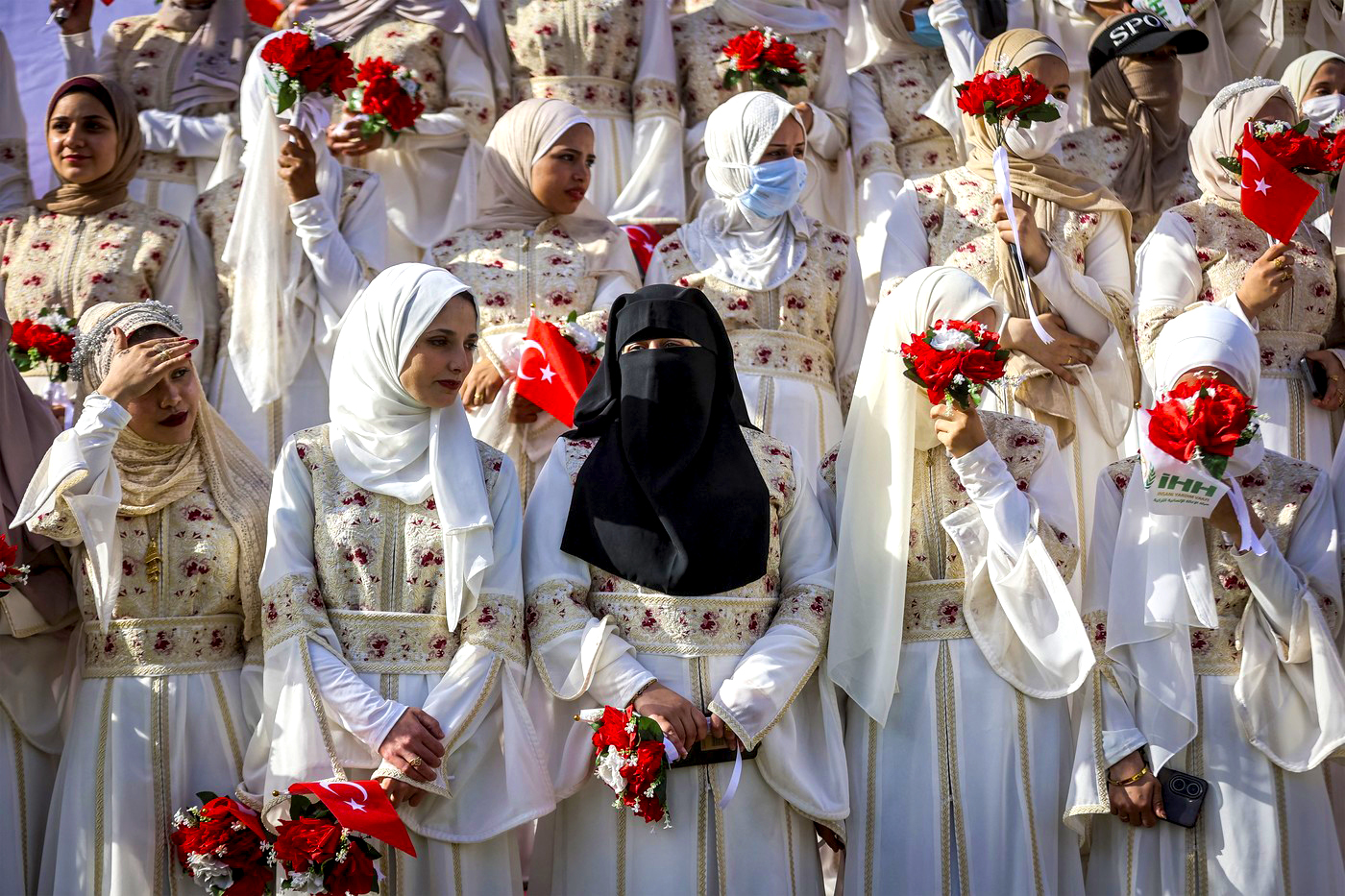
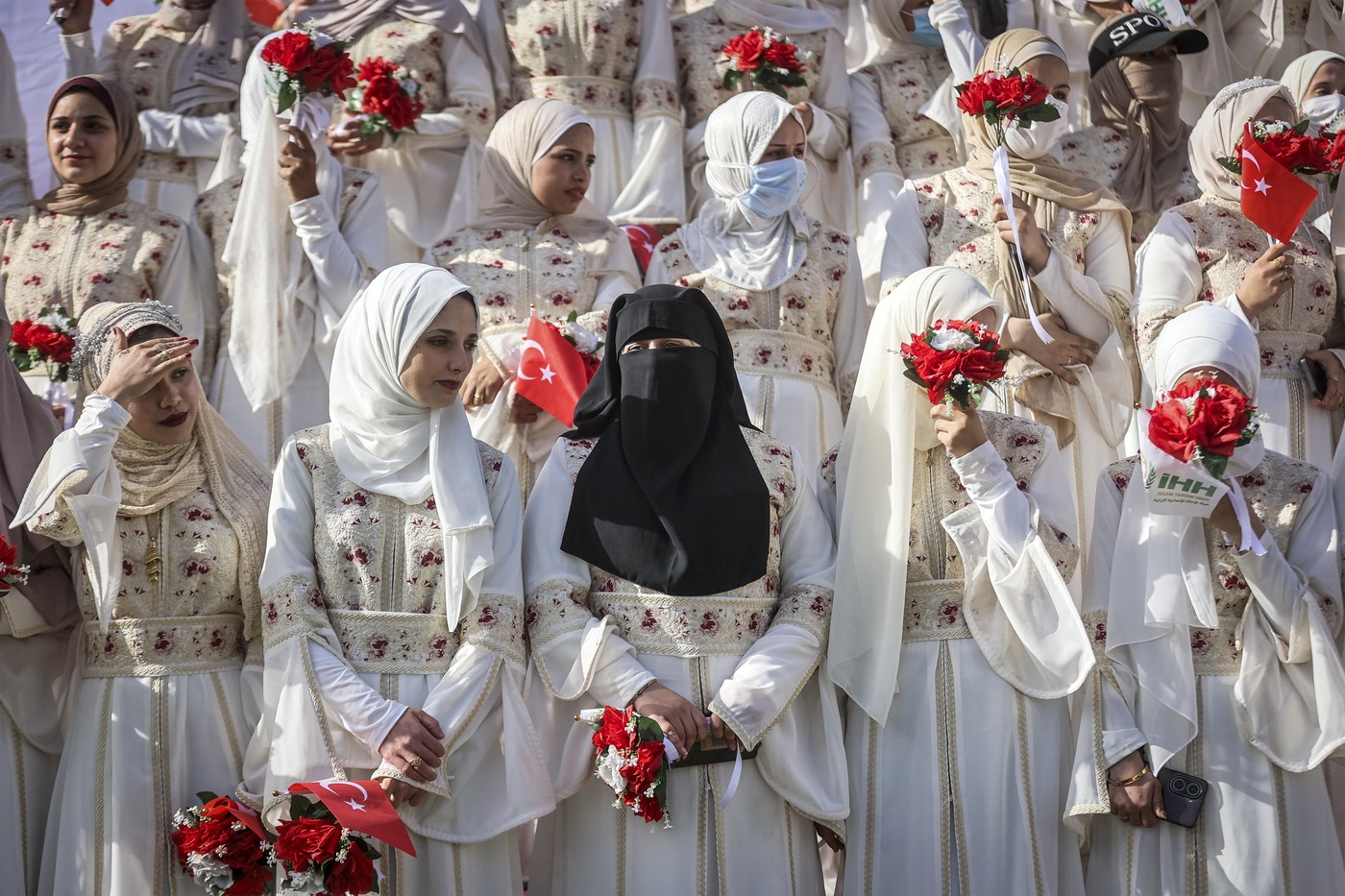
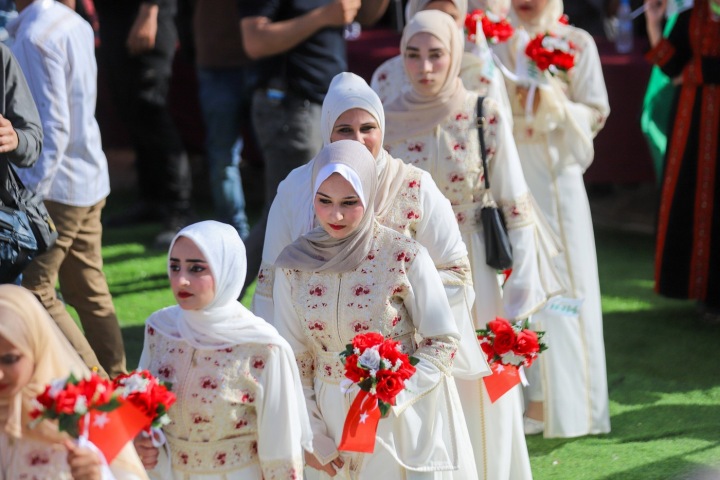
The wedding day in Gaza, despite challenging conditions, was not devoid of emotions and traditions. Another large mass wedding took place on May 11, 2026, in Gaza City. The Turkish humanitarian organization IHH organized a mass wedding in Gaza for fifty Palestinian couples. The streets were filled with hundreds of guests, traditional music played, the dabke was danced, and Palestinian and Turkish flags waved over the crowd. The atmosphere was intended by the organizers to bring at least a fleeting sense of normalcy to the city. For many families, it was one of the few moments they could forget about daily stress, worries, and uncertainty. The brides themselves offered an exceptionally poignant scene. Dozens of young women walked through the ruins of the city in traditional Palestinian dresses richly adorned with colorful embroidery. They held red wedding bouquets in their hands and walked with their grooms through the tents and destroyed buildings of Gaza, marked by war. It was the contrast between the festive atmosphere and the bombed-out surroundings that evoked strong emotions, writes Reuters.
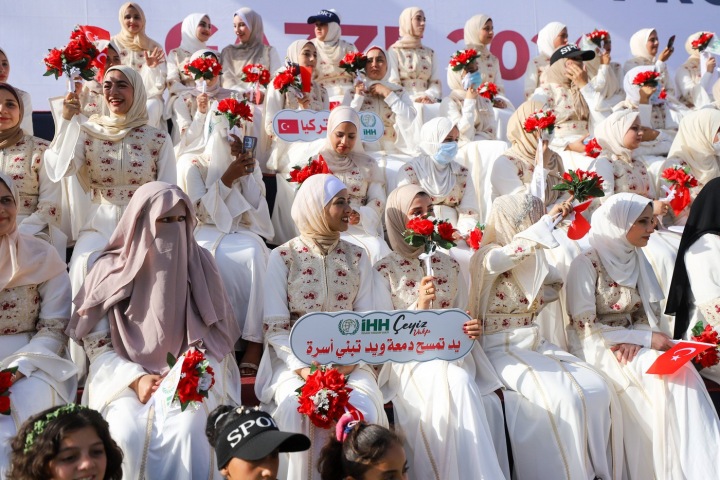
Popular songs played from speakers on the square and thousands of people came to watch the wedding ceremony, which took place against the backdrop of buildings damaged by Israeli attacks during the recent years of conflict. Guests clapped, smiled, and entire groups of dancers joined in the rhythm of the traditional Arabic dance dabke. The atmosphere was complemented by typical women's celebrations of joy - loud ululations, which are part of significant family events in the Arab world.
One of the newlyweds was also Palestinian Ali Mosbeh, who admitted that he still couldn't believe his wedding actually took place. He recalled sitting in a tent when his phone rang, informing him that he was among the fifty selected grooms. At first, he considered the news unrealistic and was in complete shock. The war has destroyed the future plans of many young people in Gaza, including weddings and starting families.
For his bride, Huda al-Kahlout, the wedding under these circumstances was something she couldn't have imagined until recently. The young couple admitted that the high costs of the wedding were one of the main obstacles for them delaying the marriage for a long time. In the Gaza Strip, today, many families struggle to provide basic life needs, making a wedding a luxury that many people cannot afford.
Mass weddings in Gaza began to be organized more frequently after the ceasefire between Israel and Hamas came into effect in October. Humanitarian organizations are trying to at least symbolically help young couples start a new life. The grooms wore traditional Palestinian keffiyehs adorned with the logo of a Turkish organization during the ceremony, while the brides' bouquets featured small Turkish flags as a symbol of solidarity and support.
Palestinian keffiyehs are traditional Arab scarves worn on the head or around the neck. In Arabic, they are called "keffiyeh" or "kufiya." In Palestine, they have become not only a practical part of clothing but also a powerful symbol of Palestinian identity, resistance, and solidarity. The typical Palestinian keffiyeh features a black-and-white pattern. Originally, it was worn mainly by farmers and Bedouins as protection against the sun, sand, and dust. Over time, it became a political and cultural symbol for Palestinians. Yasser Arafat, who wore it almost constantly, made it famous worldwide. The patterns on the keffiyeh hold symbolic meanings. The mesh pattern can represent fishing nets and a connection to the sea, the strong black lines signify trade routes, and olive leaves refer to Palestinian tradition and land.
Today, the keffiyeh is worn not only in Palestine but all over the world. For many people, it represents a symbol of support for Palestinians, while for others it is a fashion accessory or part of cultural identity. At Palestinian weddings, it is often worn by grooms or male guests as an expression of pride in their heritage and traditions.
Palestinian Weddings Last Several Days
Palestinian weddings never just last one evening. They are grand family events full of symbolism, traditions, and emotions, often celebrated over several days, sometimes even a whole week. Although many customs have changed over the years, especially among Palestinians living abroad, a large part of the traditions have been preserved to this day and are passed down from generation to generation, writes the portal Middle East Eye.
Tulbeh: Official Marriage Proposal
One of the most important traditions is the so-called "tulbeh," which is the official request for the bride's hand in marriage. The groom's family visits the family of the future bride, and an elder member of the family formally asks for her hand. The response is usually given by a respected elder member of the bride's family. The entire ceremony is typically intimate, takes place at home, and includes traditional tea, coffee, and sweets typical of the Middle East.
Sahra: Night Celebrations Full of Music and Dance
Between the engagement and the actual wedding, there are additional celebrations known as "sahra." These are evening family gatherings full of music, food, and dance, often lasting until the early hours of the morning. Some families celebrate together, while others separately, but loud music, laughter, and communal dining are never missing.
For Europeans, the tradition of publicly shaving the groom might be a surprise. During the celebrations, the family seats him in front of the guests, covers his face with foam, and ceremoniously shaves him. The guests sing and cheer him on. The tradition symbolizes the groom's preparation for a new life and reflects the necessity for him to look perfect on the wedding day.
Henna Evening: A Symbol of Female Bonding
Henna is one of the most deeply rooted traditions of Palestinian weddings and remains a custom that has not been displaced by changing times. In Gaza, few can imagine a wedding without the celebrations that precede it one or two days in advance. There is usually a separate evening dedicated to the groom, attended by young men and friends, while the bride has her own celebration among women, girls, and close relatives. One of the most powerful moments for many Palestinian brides is the henna evening, during which their hands are adorned with intricate henna patterns. This plant has been well-known in Palestine for generations. Its dried leaves are used not only as a natural hair dye but also for creating delicate patterns on hands and feet. Its distinctive scent is also associated by Palestinians with weddings, tradition, and family celebrations, writes The Rover.
During the henna evening, old folk songs, drums, and traditional expressions of female joy are often heard. One of the most well-known wedding songs poetically describes the groom as a young gazelle, for whom henna is being prepared on the hands. Such texts are not meant literally but symbolically express beauty, love, and the celebration of a new life chapter.
The atmosphere is enhanced by the groom's mother, who carries a tray with henna adorned with rosemary, roses, and other flowers. The entire space is filled with a typical scent, which many Palestinian women associate with childhood, family, and wedding memories.
At henna celebrations, traditional Palestinian embroidered dresses - thobes - are also present. Each region of Palestine has its own patterns and ornaments, which means the clothing reflects the family's origin and local traditions. The most distinctive are usually the bride's dresses, richly adorned with colorful embroidery and considered symbols of Palestinian cultural heritage.
The henna evening in Palestine is passed down from generation to generation and holds immense emotional significance for many families. It's not just an ordinary pre-wedding celebration, but a moment when traditions, family customs, and shared memories are passed on. The evening also includes traditional dishes like knafeh or saqamiya, served to the family, neighbors, and guests. Shared dining further strengthens family and community bonds.
A Feast That Can Feed a Whole Town
Palestinian weddings are also known for their enormous amounts of food. Locals say that a true wedding should easily feed a whole small town. A very popular dish is mansaf - rice with lamb served with traditional fermented yogurt called jameed. Another symbolic dish is fattah or qidra, a meal made of rice, chickpeas, and meat flavored with cinnamon, cardamom, garlic, or cloves. Qidra is prepared in large clay pots, and once cooked, the pot is dramatically broken so the aroma of the food can spread among the guests.
Tatreez: Embroidery with a Family Story
Traditional Palestinian embroidery, tatreez, also plays an important role. The bride's richly decorated dresses are often created months or even years before the wedding. The embroideries symbolize the city or region the family comes from, and many patterns carry specific meanings. Dresses often include coins, jewelry, or luxurious fabrics and are crafted by women from the family, writes UNESCO.
Zaffe and Dabke: Music That Unites Whole Families
Perhaps the most distinctive part of a Palestinian wedding is the zaffe - a wedding procession full of musicians, singers, and dancers who accompany the newlyweds. In the past, this was how the groom would move towards the bride or the couple would head to the mosque or church; today, the zaffe often marks the entrance of the newlyweds into the wedding hall. During the procession, songs celebrating love, family, and Palestine itself and its cultural heritage are played. The energetic dabke is also present, where guests hold hands and form circles or lines. Each region has its own dance steps and style. Men often perform the sahjih dance, where a singer recites verses celebrating the groom, and other guests respond rhythmically.
The typical female sound of zaghrouta - a loud ululation expressing joy and blessing - echoes throughout the wedding. In some areas, women also dance with burning candles, which they pass to each other as a symbol of light, happiness, and the bride's new life path.
Frad: Family Gathering After the Wedding
However, the traditions do not end after the wedding. About a week after the ceremony, there is a communal dinner called frad, during which the bride visits her family as a married woman. Both families meet, feast together again, and strengthen new family bonds. In such a reality, weddings in Palestine have an even stronger emotional significance. They are not just a celebration of the love between two people, but often also a symbol that life continues despite the loss of homes, families, or a sense of security. Palestinian weddings are traditionally grand, full of music, dance, and gatherings of a wide extended family. Family plays an exceptionally strong role here, and marriage is seen as the union of two large communities.
Life in Gaza has been affected by a dramatic war situation for many months. The conflict in the Middle East sharply escalated after the attack by the militant Hamas movement on Israeli territory on October 7, 2023. Subsequently, Israel declared a state of war and launched a large-scale military operation in the Gaza Strip to weaken Hamas. Since then, the region has become the scene of one of the largest humanitarian crises in recent years. The situation further intensified during the year 2025. Although a six-week ceasefire was agreed upon in January, brokered by international negotiators including teams of former U.S. President Joe Biden and President Donald Trump, the fighting did not completely stop. Shortly after the announcement of the agreement, airstrikes continued and more casualties were reported. Tensions rose again in March 2025 when the Israeli army launched extensive attacks with the aim of forcing Hamas to release the remaining hostages. Later, in October 2025, the first phase of another ceasefire between Israel and Hamas was signed. The agreement included the release of live Israeli hostages through the International Committee of the Red Cross and the gradual handover of the bodies of victims on both sides of the conflict, reports Reuters.
The humanitarian situation in Gaza was deteriorating dramatically. International organizations were warning of food shortages, the collapse of healthcare, and the spread of infectious diseases. In the summer of 2025, serious warnings of famine began to appear. Aid to the area was coming in only limited amounts, and humanitarian organizations claimed that the volume of supplies was far from meeting the needs of more than two million residents.
An investigative committee supported by the United Nations was also examining possible violations of international law and highlighting the catastrophic conditions in which civilians were living. Amnesty International repeatedly called for the protection of the civilian population and the provision of humanitarian aid.
For a European woman, a relationship with a Palestinian can be a significant cultural change. In many families, traditional values are still deeply rooted, with respect for parents, religion, and family customs being important. Palestinian men are often described as very family-oriented partners who emphasize closeness, care for the family, and shared life. A mass wedding in Gaza was not just charitable assistance. In a city marked by war, it represented a rare moment of joy and proof that even amidst fear and destruction, people still want to hold on to dreams of the future, family, and normal life. Palestinians view their weddings not just as a celebration of two individuals, but as a way to preserve identity, traditions, music, family, and culture even in times when the world around them is changing.
Source: author's text, Reuters, The New Arab, The Times of India, The Rover, UNESCO, ABC, Middle East Eye