TRANSLATE: I'm marrying a Bangladeshi: Newlyweds are dressed in yellow and guests smear turmeric paste on their bodies


The relationship between a Czech and a Bangladeshi often begins abroad - at university, at work or while traveling. Initially, it may be an attraction to the exotic, but it quickly becomes apparent that it's about more than just different foods and language. Communication, family expectations, religion, and views on marriage - all of these can vary. Many Slovak women say that they had to get used to strong family ties in Bangladeshi culture, where parents and relatives play an important role in the individual's life.

While in Europe it is customary for a couple to plan a wedding according to their preferences, in Bangladesh it often works differently. The groom's and bride's family have a significant say. Even if it's a so-called "love marriage", it has to be approved by the family. In case of an international wedding, a lot of communication, documents, and respect for the rules of both countries is usually required.
The wedding ceremony in Bangladesh is typically Muslim, but the country also has a Hindu minority, so traditions can vary. If it's a Muslim wedding, it consists of several main days:
Gaye Holud
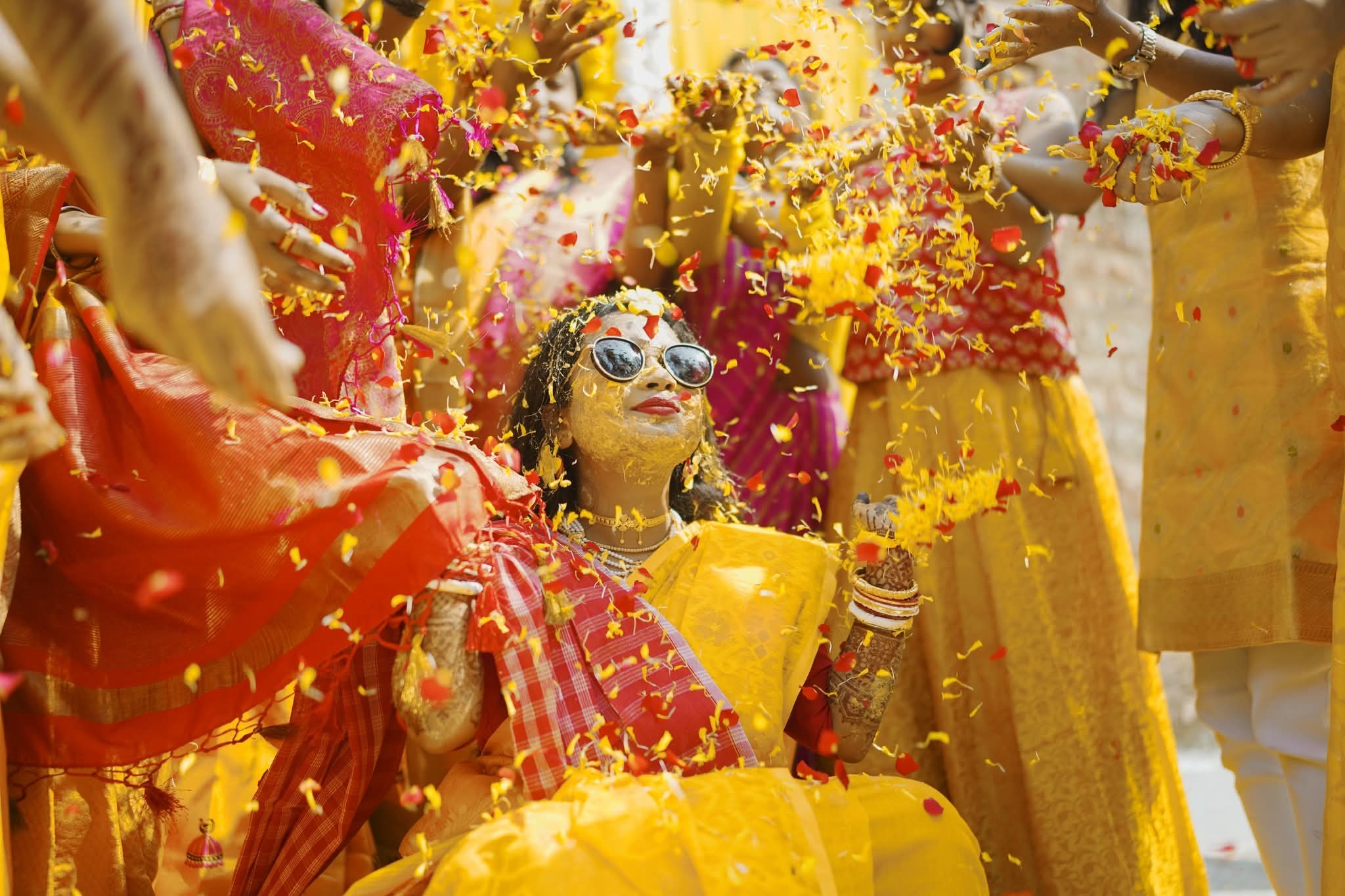
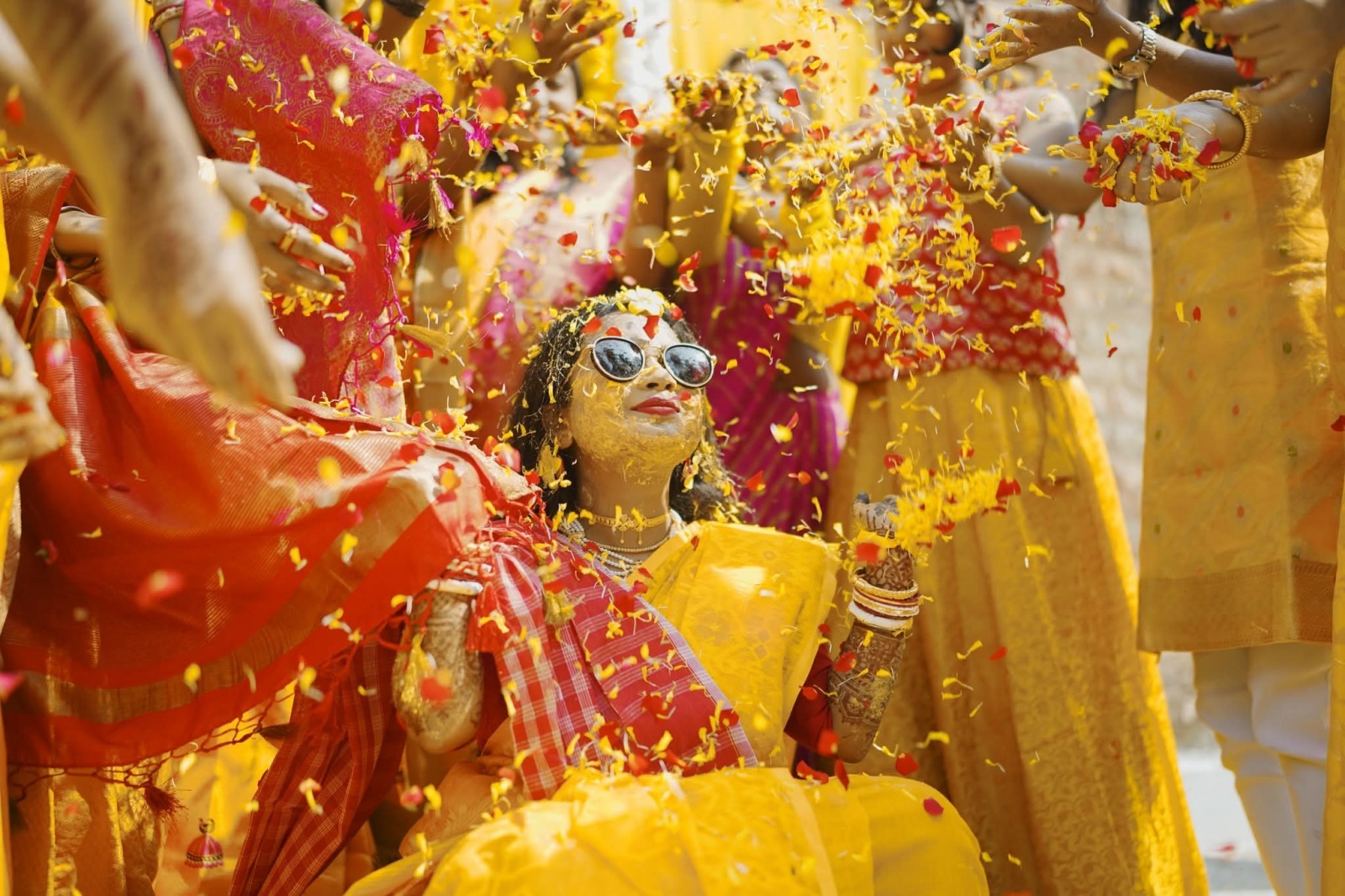
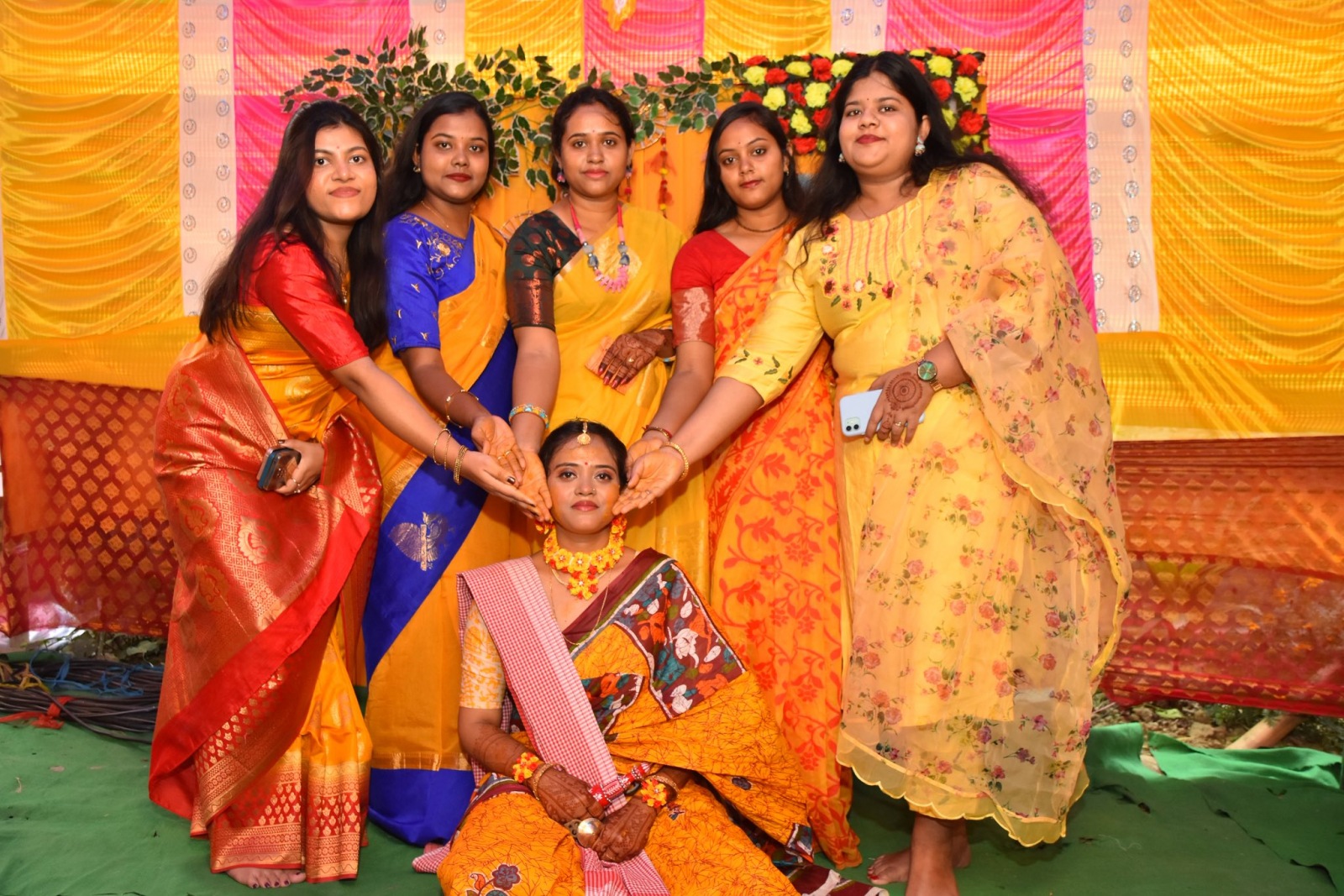
Gaye Holud - a fun ceremony, during which the bride and groom are smeared with turmeric paste. This ritual symbolizes purification and preparation for marriage. Everything is in shades of yellow - decoration, clothing, food. Singing, dancing, and a lot of family - all of this is an integral part. Holud represents a festive pre-wedding event intended for both the bride and groom, as well as their closest friends and relatives. In the past, it was held separately for both sides, but nowadays it is more often organized as a joint, lavish celebration, especially among wealthier families. Writes Travel Weddings.
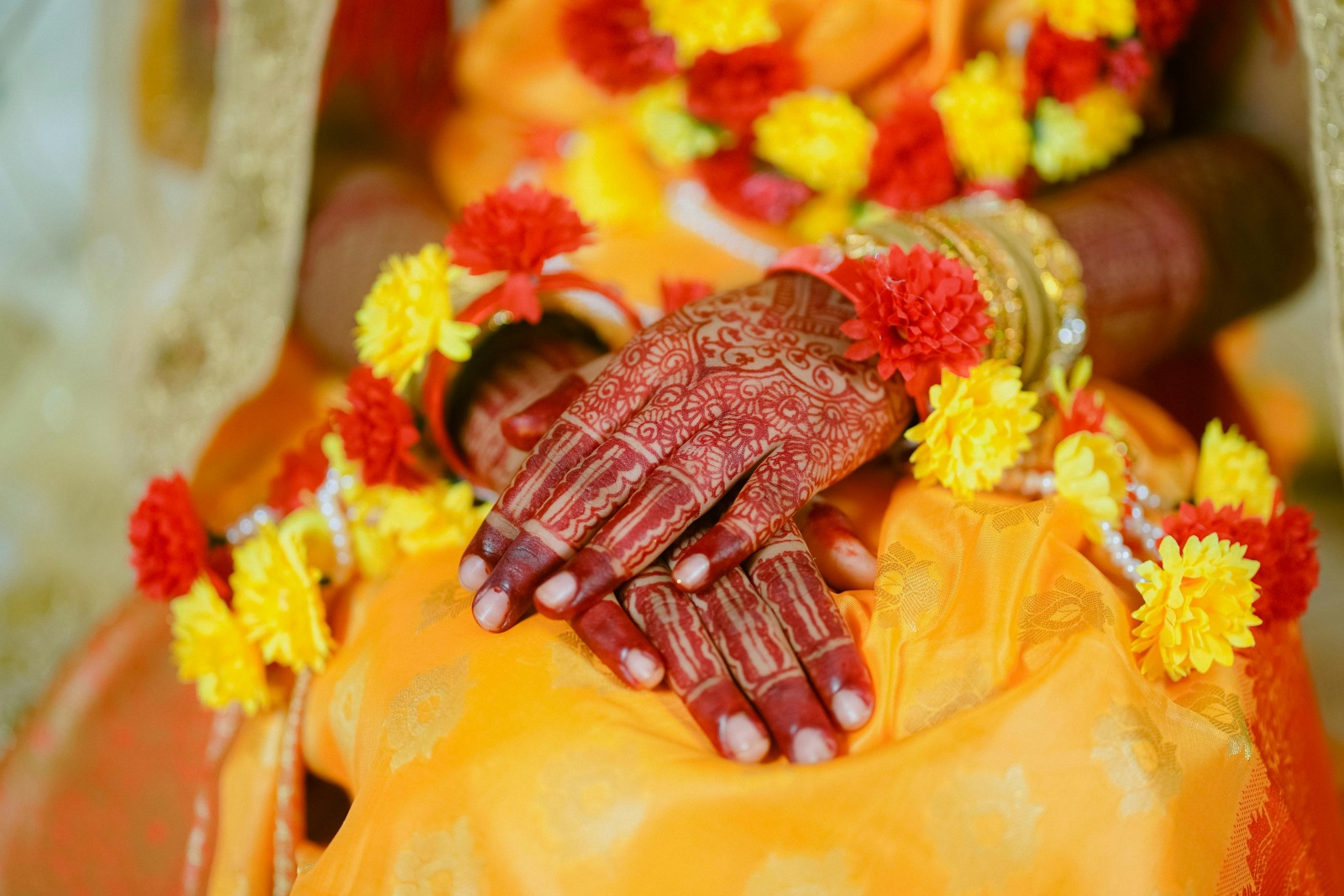
However, in some cases, a separate meeting for women - Mehndi is also organized, where henna is applied (traditional body decoration). Henna is mainly applied to the bride's hands and feet, it has not only aesthetic but also relaxing and healing effects. This process can take up to six hours, during which the bride is entertained by her friends singing, dancing, and delicious food - it resembles a colorful, passionate farewell to freedom.
Holud is comparable to the Indian Haldi ritual.
The word "Holud" translates as "yellow," which is reflected in the décor and the clothing of the newlyweds - they are usually dressed in yellow, and turmeric paste is applied to their body by the guests.
This act symbolizes blessings, protection and prosperity. Guests take turns bringing sweets and decorated gifts, creating a colorful and joyful atmosphere. Personally, for me, Holud is the most favorite part of the whole wedding – it's here that the most singing, dancing and celebrating takes place.
Bor Jatri - the groom's procession
The wedding day begins with an impressive arrival of the groom to the bride, known as Bor Jatri. The groom sets off on his journey with his family and friends in a festive procession, where he is usually seated on a lavishly decorated horse or in a elegantly dressed car. This procession is accompanied by music, singing and dancing, which begins the joyous atmosphere of the entire day.
Bor Boron - welcoming the groom
When the groom and his entourage arrive at the bride's house, the Bor Boron ritual follows, which means a ceremonial welcome. The bride's mother welcomes the groom and his close ones with a traditional ritual - using aarti (a circularly rotating flame of a lamp), symbolically cleansing and blessing them. At the same time, she sprinkles them with flower petals, which represents a blessing and joy from their arrival.
Paka Dekha
Paka Dekha is a ceremony during which the consent of both families to the marriage is officially confirmed. The groom's family gives the bride gifts - most often a wedding sari and other wedding accessories. At the same time, the bride's family also gives gifts to the groom and his relatives, which seals mutual consent and respect between the two parties.
Biye
Biye is the wedding day itself - the main and most formal event, usually organized by the bride's family. This is the day when the religious ceremony takes place (most Bangladeshis are Muslims, but there are also Hindu or Christian weddings). After its completion, the bride and groom are officially considered husband and wife - both before God and before their families. Writes the portal Hubbline.
The rest of the day is usually reserved for the congratulations of guests, who come to the stage after the newlyweds, present their wishes and take a photo together. Then another group comes - and the whole cycle repeats. That's why many people love Holud - it's more spontaneous, cheerful and informal.
Nikah
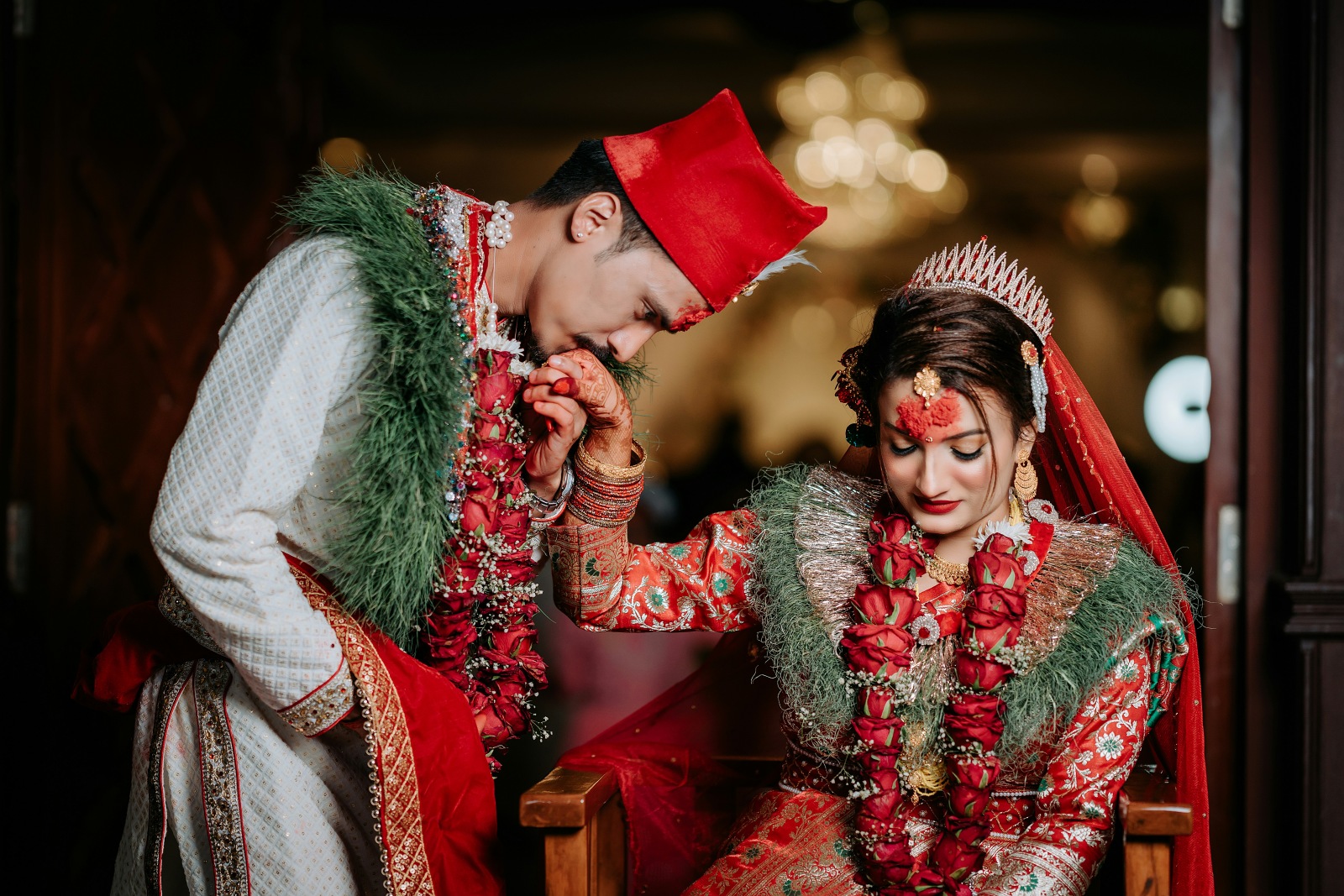
This ceremony usually takes place in the bride's house, mosque or any place chosen by the bride's family. It is a religious ceremony in which the couple says their vows in front of the imam, in the presence of witnesses. It is conducted according to Islamic law and also includes the signing of the marriage contract. During this day, the bride is usually all in red, in a lavishly decorated robe, with gold jewelry and henna on her hands.
At a Bangladeshi wedding, the Nikah is the main religious marriage ceremony. It is the conclusion of a marriage according to Islamic law (Sharia). This ceremony is led by either an imam or a qazi (qazi/kazi) – but their roles may slightly differ:
1. Imam
The Imam is a religious leader who leads prayers in the mosque. At smaller or more traditional weddings, he may also lead the Nikah - especially if it is more of a spiritual than legal act. He is responsible for reciting verses from the Quran and explaining the spiritual significance of marriage. He often blesses the marriage and leads the introductory prayer.
2. Qazi (Qazi/Kazi)
A Qazi is an official religious officer commissioned by the state, who has the authority to formally conclude a marriage. In Bangladesh, he has a legally binding role - he records the marriage, verifies the identity of the fiancés and witnesses, and completes the wedding document called Nikah Nama. If the marriage is to be valid from a legal perspective, a Qazi must be present. At official weddings in Bangladesh, the Nikah ceremony is usually led by a Qazi (qazi) because he has the authority to record marriage. An Imam can lead the ceremony if it is purely a religious ceremony, or in the case, where he is also recognized as a Qazi. However, at most traditional weddings, both are present - the Imam for the spiritual part and the Qazi for the legal part.
In Bangladesh, the wedding does not end with a single event - on the contrary, it is a series of several days and traditions. Two of the most important parts after the ceremony itself are Walima and Bou Bhat, but although they may look similar (large feast, many guests, celebration of marriage), each has its own meaning.
Walima
Walima is an Islamic wedding feast, organized by the groom's family after the wedding - often the day after the bride officially leaves her parents' home. It is a religiously important event, during which the groom officially introduces his new wife to the wider community. It is often larger and more formal, with an emphasis on tradition and public confirmation of marriage.
On the other hand, Bou Bhat (literally "bride's evening") is more of a cultural and social event, although it is also organized by the groom's side. Its main purpose is to welcome the bride's family - so it is a gesture of hospitality towards the new relatives. It often takes place at the groom's house and is more relaxed, focusing more on family gathering than on official ceremony.
Marriages between Bangladeshis and Europeans are becoming increasingly common - migration, globalization and studying abroad connect them. If partners are willing to communicate, seek understanding, and respect each other's culture, it can be a strong and loving relationship. Writes the portal Symphony.
Living together is often a combination of Bengali warmth and European practicality. Children from such marriages grow up bilingual, with the knowledge of two cultures, and often serve as a bridge between two worlds.
And what about poor weddings?
Bangladesh is among the economically weaker countries, especially in rural or less developed areas, but that's exactly what gives local weddings a certain authenticity, simplicity, and depth. Although poverty affects the scale of celebrations, a Bangladeshi wedding plays one of the most important social events in the life of an individual and family. For many, it is a matter of honor – even at the cost of loans, selling property, or the entire family pooling resources.
Unlike the grand weddings in cities like Dhaka or Chittagong, where weddings are held in rented halls with hundreds of guests, rural weddings are much simpler. They often take place in the groom's or bride's homes, or under a makeshift tent made from colorful fabrics and bamboo poles.
Families prepare their own food, which they cook in huge pots over open fire. The table must include rice, dhal (lentil soup), vegetable curry, and if the family can afford it, chicken or fish as the main course. Sweets are made at home - often they are traditional flour balls soaked in syrup or sweet rice pudding.
The bride, even in poorer conditions, tries to look as beautiful as possible. She often borrows a saree from a neighbour or is gifted one festive attire. Red, orange, and gold colors remain dominant. The jewelry is often artificial, but worn with pride. Henna on hands is applied at home, often drawn by one of the women in the family.
The groom usually has simple traditional attire - Panjabi or Kurta - which can also be borrowed or gifted. Decorations are minimal, but the gesture that the wedding represents is powerful.
One of the most touching elements of these weddings is the strong sense of community. Neighbors help with the construction of the tent, cooking, serving guests, and even with gifts. Sometimes someone donates a chicken, another rice, others lend tablecloths or a music player. In a society where every rupee counts, such help is of great importance. The wedding thus becomes not only a family event, but also an expression of belonging to the entire village.
A religious ceremony without opulence
Nikah - that is, the actual marriage, takes place at home or in a mosque, without large decorations. It is a simple act - the imam, witnesses and the signature of the marriage contract. A short prayer and blessing for the newlyweds are indispensable. Although it is a simple ritual, it is very serious and very powerful from a spiritual point of view.
The main celebration - shared eating and singing
After the ceremony, a feast is prepared - not ostentatious, but honest. It's a moment when everyone sits down, eats, somewhere music is played from the radio or a drum is played. Although one is not allowed to dance in more conservative areas, children often have fun, sing and create a spontaneous atmosphere of joy.
What distinguishes these weddings?
Weddings in poorer parts of Bangladesh are not about money, dresses, or pomp. They are about family, tradition, faith, and belonging. The bride may not ride home in a limousine, but she leaves knowing that the whole neighborhood stood behind her. For many Czech women who marry men from these areas, it's shocking, yet touching. They often say that there they found true humanity and sincerity, which is being lost in our regions.
And although the wedding may be modest, the emotions are real - and that's what makes a Bangladeshi wedding unforgettable.
Cuisine
Bangladeshi cuisine is among the lesser known Asian culinary traditions that the average person often cannot immediately imagine. However, it contains a multitude of flavours and aromas that quickly win the hearts of gourmets. Unlike the better-known Indian cuisine, Bangladeshi cuisine is simpler, less complicated and very sincere - it is dominated by the freshness of the ingredients used, emphasis on vegetables, various types of lentils and indispensable rice, which is consumed with practically every meal.
The foundation of local culinary arts are fish, which, due to the country's location by rivers and the Ganges delta, play a primary role in the diet. The national dish is Hilsa Curry - curry with hilsa fish, which is considered a gastronomic treasure and cultural symbol in the country. For fish lovers, Bangladesh is a true paradise - fish are prepared in countless ways: grilled, fried, stewed in curry sauces or as part of various types of meals.
Curry as such here has an immensely rich tradition - it is prepared in various variations, with many types of vegetables, spices and sometimes even eggs. Popular are for example Egg Curry, where boiled eggs float in the sauce, or Bhindi Curry, whose main ingredient is okra vegetable. Another popular dish is Biriyani - a rice dish that can be served with meat or as a vegetarian version. Very traditional is also Bhuna Khichuri - a combination of rice and legumes, often complemented by various side dishes.
Those who prefer meat will also find what they like in Bangladesh. The country offers a wide range of grilled kebabs, characterized by their spicy taste and intense aroma. Another staple dish is Dhál - a lentil dish that can be prepared in several ways and almost never disappoints.
As for beverages, tea plays a major role in Bangladesh. The country grows its own tea in the Srimangal area, in the northeast, and tea is served almost everywhere. Locals most often enjoy it with milk and sugar. Although coffee is also available, it does not play a significant role - it is rather prepared in its basic form and is not a traditional drink. On the other hand, Lassi, a refreshing drink made from yogurt, water, spices and fruit, is a common part of the menu. Other traditional yoghurt drinks include Borhani, which is often served at celebrations and larger family gatherings.
Since Bangladesh is a Muslim country, where strict rules and conservative customs apply, alcohol is not commonly available. Its availability is significantly limited outside the capital city Dhaka. If beer is found somewhere, it is often overpriced and served warm. Non-Muslim visitors can only bring a limited amount of alcohol into the country - a maximum of one liter of hard alcohol per person. Therefore, it is recommended not to count on its availability and rather focus on authentic local drinks, which better reflect the culture and hospitality of Bangladeshis.
Life After Marriage
Bangladesh is not a tourist paradise. It does not offer luxury resorts or renowned landmarks you would see on a postcard. It is a country where nothing happens the way you would expect – and that's why it will captivate you.
The first thing that hits you is chaos. In Dhaka, the capital, more than 20 million people live, but it seems like nobody knows traffic rules. Rickshaws, buses, motorbikes, and pedestrians intertwine without any order. Whoever honks louder has priority. Lights, signals, lanes? Almost redundant.
Well in this apparent chaos, life has found its own rhythm. Everyone watches each other, careful, avoidant. As if everyone knew that if he wants to survive, he must play by the invisible rules of the jungle of tin and horns.
A city that never sleeps
Dhaka never sleeps. Writes Pluska.sk. Everything is open almost continuously - stalls, shops, restaurants. The streets are full of life until late at night. Don't look for trams here, but you can get almost anywhere by boat. Rivers crisscross the country like veins and boat transportation here has a strong tradition - from small boats to old colonial steamers called "rockets".
And when it starts to rain from time to time - and it rains a lot here - the roads turn into rivers. But no one complains. People take it as a part of life. Even if the government perhaps fails in infrastructure, people help each other and arrange things their way.
A country where time is calculated differently
The Western concept of "time" does not have firm contours here. Nothing starts on time, everything happens "inshallah" - if God wills. Even a wedding, which was supposed to start at 18:00, may actually get underway maybe at 22:00. And no one is nervous. Why stress?
Here life is lived at a different pace. Slower, more chaotic, but sincere. People do not live in a hurry, but in the present. And when something goes wrong - for example, they announce at the airport that your flight does not exist - the locals just wave their hand: "This is Bangladesh. Anything is possible."
Beauties outside the city
When you leave Dhaka, you will discover a completely different world. For example, Srimangal - an area known for its tea plantations. Tea is grown here at the lowest altitude in the world and tea pickers work all day for a ridiculous salary. But exactly here a unique "seven-layer tea" was created - a drink where the individual layers of tastes and colors miraculously do not intertwine.
In the south awaits the Sundarbans - the largest mangrove forest in the world. Sailing through its intricate waterways is like entering a jungle where you can see river dolphins, monkeys, crocodiles and monitor lizards. And if you're lucky, you might even see traces of the famous Bengal tiger, a symbol of national pride.
Life without luxury
After getting married I lived with my husband's family in their village house. Western notions of privacy do not apply here. Everything is shared - space, food, decisions. The kitchen is simple, cooking is done on the ground, water is drunk from a well, and instead of a shower there is a bucket.
Life is tough, but people are warm-hearted. Relationships are intense - sometimes beautiful, sometimes exhausting. I had to get used to a different regime, different roles of women, to different expectations. But also to daily surprises - for example, that the electricity goes out in the middle of the evening, or that a meeting with an official turns into two hours of waiting without result.
Falling in love with a Bangladeshi means entering a different world. Not better or worse - just different. And if you decide to live in this country, you need an open mind, patience, and especially the courage to accept a culture where nothing is certain, but everything is possible. Bangladesh has taught me a lot - about humility, adaptability, and also about what I really need in life. It's not air conditioning, comfort, or a precise schedule. It's respect, reciprocity, and the ability to laugh even when nothing is going right.
Source: original work, Pluska.sk, travel-weddings.com, seasons5.com.au, thedailystar.net