Straightforward: Gasoline, diesel, and pump margin. The price of a global commodity isn't set by the guy at the pump.


The discussion about rapidly rising fuel prices is a good example of how our world works, both in good and bad ways. The price of oil skyrocketed, along with the price of gasoline and diesel. We are not witnessing this phenomenon for the first time, and European politicians are trying to solve the problem out of fear of voter anger. However, just looking at the world map reveals that it might not be so easy.
The world is round, and the issue with fuel prices circles back as well. The blocked Hormuz Strait has reduced the amount of oil on world markets by about one-fifth. When we look at the round world map, we see that all of Europe does not cover such an area, and for example, the Czech Republic is barely noticeable on such a map.
Oil accounts for approximately one-third of the globally produced primary energy. For comparison, nuclear energy worldwide is around 4%. A long-term trend in the oil market is the deepening decline in demand. While this may not be the case today, the increasing number of electric vehicles and the rising efficiency of cars (read: decreasing liters per hundred kilometers) with internal combustion engines naturally dampens demand.

We Will Pay for Gas Tax Cuts from Another Pocket
How can the Czech Republic itself change these matters? Essentially, it cannot. However, the state can indeed significantly influence the prices on the totems. This is because fuels are taxed. The excise tax is fixed and amounts to 12.84 CZK per liter of gasoline and 9.95 CZK per liter of diesel. The approximately five-crown difference in price between the two commodities at gas stations suggests that excise tax is not behind the rising prices. Additionally, the state also collects 21% VAT, and with rising fuel prices, it collects more money.
Approximately half of the price of fuel is made up of taxes. The government can easily reduce these taxes. However, it is reluctant to do so, and for a good reason. If it collects less in taxes, it will have to save on something else. The saved money will have to be pulled from another pocket of the taxpayer. Given that motoring brings a number of negative externalities (from occupying public spaces with parking to asthma and lung cancer from air pollution, which costs the Czech healthcare billions), subsidizing this activity is not very worthwhile. This is also why the excise tax exists.
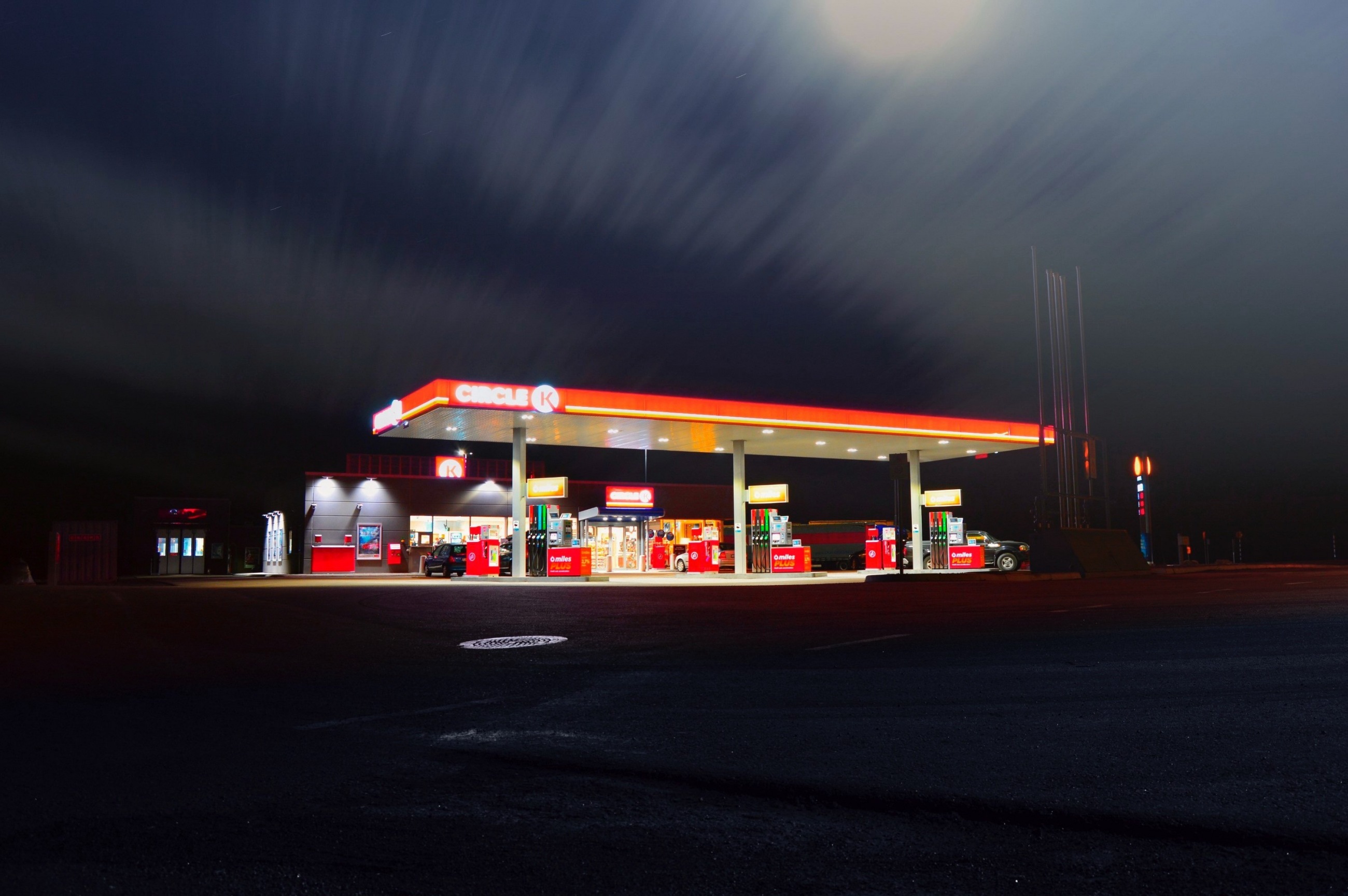
Gas station margins have become quite a myth. It's not much of a secret that gas station operators' margins are in the lower single digits of crowns and are the smallest part of pricing. But not all gas stations are the same.
Can't remember which gas station brand it was during the weekend in Vysočina, but you know you filled up cheaply? That was likely a station run by an independent entrepreneur who buys gasoline from the refinery at market prices. Since they can only compete on price, they offer cheap gasoline and have a low margin. Either 2 or 3 crowns.
Big Players Have Big Margins, There's Nothing That Can Be Done
When you think of a gas station, the red color of Orlen (formerly Benzina), the yellow of Shell, or the green of Mol often comes to mind. This is a different story than the uncle at a pump in the middle of the Highlands. These giant companies not only own hundreds of gas stations and refineries but also, like Mol, oil wells in the Middle East. For these giants, the question of margins at the pump is entirely relative.
At the same time, these companies operate stations with the most expensive gasoline and diesel. They sell higher-quality, additive-enhanced fuels and are also located on more expensive plots, especially along highways. The rent for stations on the D1 highway amounts to tens of millions annually, which is reflected in the price per liter. A simple comparison between a "Shell" station on the highway and one in a district town suggests that considerably more than 3 crowns per liter is gained here.
The margin could be reduced here, and the customer would feel it. In practice, however, a company controlling the entire vertical can change pricing and supply the station with more expensive gasoline.
Through margins, the state can only reduce the price optically. The law of the global market is stronger than the short-term populism of the politicians of this or that government of small countries in Europe. While the market has made gasoline more expensive, in the long term it is responsible for its actually declining price.
As is well known, inflation does not reflect long-term on fuels. The cost of labor (e.g., the margins of fuel station operators) is only a fraction of the final product. Otherwise, it is a commodity of the global market, whose producers would indeed increase the price by reducing sales, but they would lose sales because the market would switch to an alternative energy source.
Currently, we can see this in the almost immediate decline in sales of cars with diesel engines. In 2016, it was celebrated that it was possible to buy 1000 liters of gasoline for the average wage, and even after a sharp price increase, it is significantly more today. The price simply cannot be reduced with the wave of a magic wand, and it's an illusion to think that a greedy uncle at a remote gas station counter is to blame.
Sources: author's text, commentary, Seznamzprávy.cz, dostupnyadvokat.cz, relisticka.cz, Facebook