Straight up: The derby won't just be played out on the field. Football is just a litmus test that glows with the color of money.


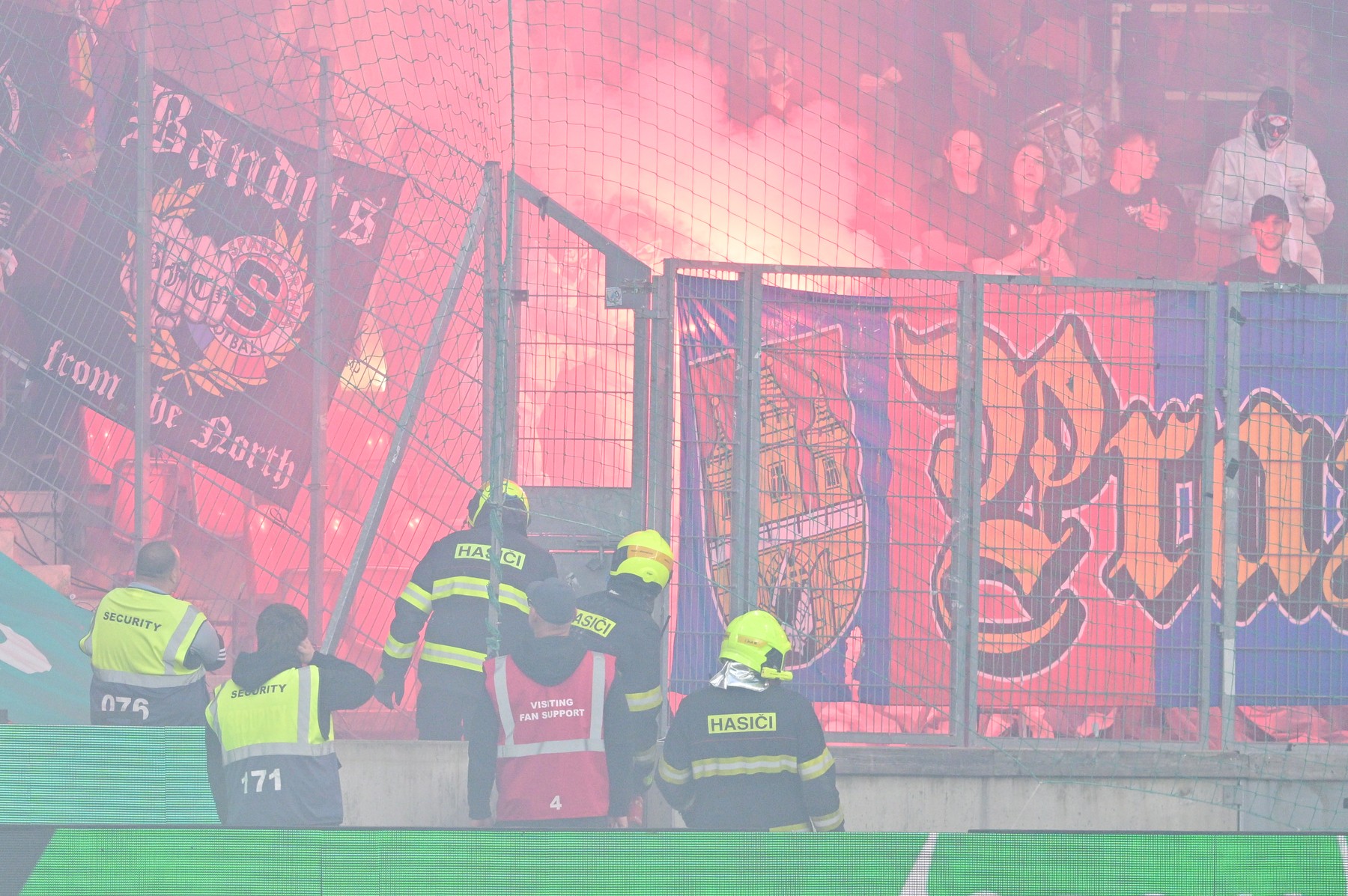
It could almost be said that 2026 is the year of football in the Czech Republic. The national team miraculously qualified for the World Cup after 20 years, and the most popular sport is heavily covered by the media. However, aside from the qualification success, the headlines also focused on old wounds associated with corruption in football and currently violence at stadiums.
If Slavia fans had just lost their emotions and rushed onto the field, it would be a mess, but it would mostly remain at the "football" level. This is despite the fact that in modern professional football, the football dimension is primarily a financial one.
It is absolutely certain that disciplinary fines would follow, and of course, with the almost inevitable forfeiture, Slavia could lose both the title and direct qualification to the Champions League group stage, which means nearly half a billion in revenue for the club's coffers. It is still a long way from that, but even from the flow of funds, you can see how the entire problem overflows beyond the walls of football stadiums.
The Financial Aftermath of the Prague Derby
“The fundamental and long-term most dangerous dimension, however, concerns the sponsorship portfolio. Modern football marketing is not based on a mere logo on a jersey, but on shared values. Partners like eToro or Fortuna, who invest record amounts in Slavia, are keenly aware of the images their brand is associated with. Images of burning pyrotechnics flying into family sectors and masked troublemakers attacking athletes are hardly acceptable for multinational corporations. Sponsorship contracts typically include so-called moral clauses, allowing partners to immediately reduce fulfillment by tens of percent in case of damage to their good name, or, in extreme cases, completely withdraw from the contract without penalties,”
Economist Lukáš Kovanda takes note of the money channels behind the scenes on the network X.
For some, unrestrained violence, especially when broadcast live, is a difficult matter to accept. Even more so if they are supposed to pour money into such a platform. It will be the same for football fans, who might have experienced some scuffle in their youth, but now they want to introduce the sport to their children.
You probably wouldn’t take a young school child to an environment where pyrotechnics are thrown like hand grenades, and players of the opposing team are attacked, stadium equipment is demolished. Yes, their spots in the stands are taken up by drunks and hooligans, that’s exactly who the Slavia management has opened the doors to.
Excuses that it couldn’t have been prevented are unnecessary. Issues with violence in and around stadiums were already faced in the British Isles in the 1980s. Today, it’s like sitting in a theater there. The British chose decency over violence and drunken vulgarity.
However, the question is whether the Czech society is capable of something like this. A lot has already been written about the fish that stinks from the sewn head of Slavia, and one doesn't have to be a perfect connoisseur of the football environment to use this worn-out metaphor.
Football is the litmus test of today
"There is one thing Jaroslav Tvrdík does excellently. He speaks in a way that sounds right and masculine. But that's where it ends. This man never takes responsibility for anything, just like his backer Tykač. We don't need to go over all their scandals here. Regarding football, Tvrdík easily serves the Chinese, whom he brought in for Miloš Zeman and never apologized for the disaster with the foreign policy shift, the embarrassing big promises, and at the same time the introduction of Bolshevik methods. A person who talks about the club's old Masarykian and democratic ideals cannot do this without making themselves sick. By selling the club into the hands of a coal baron, who embodies cynicism and the negation of any democratic ideals, he just sealed it,” journalist Marek Wollner criticized the leadership of Slavia on X.
Yes, Edvard Beneš, one of the founders of Czechoslovakia and a president, also played for Slavia in the past. He preferred to play under a pseudonym, as an ambitious grammar school student in a conservative era, he did not want to be too closely associated with low-brow entertainment. However, as president, he later acknowledged his football "career," though he scorned the "rough behavior" that accompanied the sport. Here, we can already see a glimpse of political hypocrisy.
"Always look at the whole society. Because football is not an isolated group that you could separate from the overall social trends, which parties receive what mandate from voters in elections, how they present themselves with election slogans, what their main motives are in operating on the political scene, and so on. You need to find out what tendencies you have in society, and you will find that football will somehow mirror them to a certain extent,”
pointed out in an interview for SeznamZprávy the shot at own communication director of Sparta Ondřej Kasík.
What is Czech society like? The government targeted the descendants of Sudeten Germans who wanted to turn the other cheek to the brutal end of Czech-German coexistence after World War II in Brno. The foreign minister labels political rivals as inferior, mocks people with obesity, and calls his bratty behavior the end of boredom in politics. His parliamentary colleague then boasts of giving the Nazi salute with relish.
In the Czech Republic, it doesn't seem like a culture of courtesy, which would allow for the defeated opponent to be appreciated with a handshake and the rightful glory for victory to be achieved, is well-established. When this reflects in a reduction of funds from more refined 'sponsors,' there might be a reassessment of the situation.
Sources: author's text, commentary, X, SeznamZprávy, Idnes.cz, MUNI