Private infertility treatment in London and the assets of the Khamenei family are drawing attention

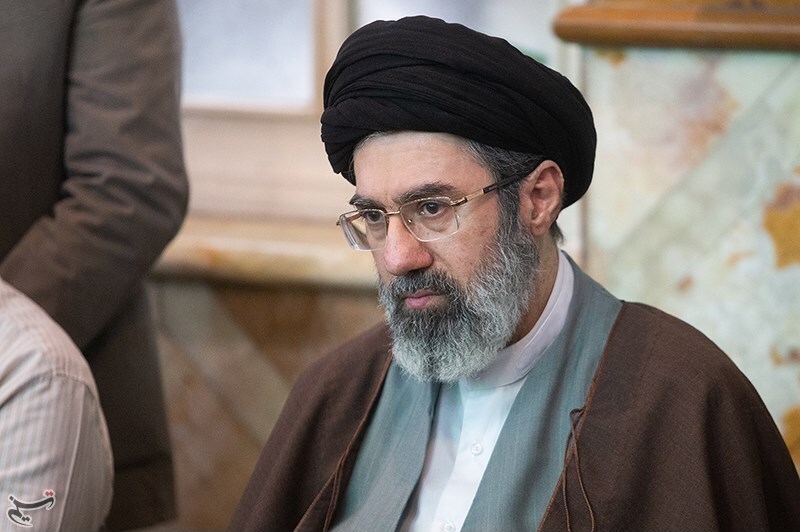
While in Iran he appears as a humble clerical follower of religious principles, abroad the name Mojtaba Khamenei is increasingly associated with information about an extensive network of assets. Official sanction records, corporate registries, and land registry data suggest the existence of a sophisticated financial system that may be closely linked to the supreme leader.
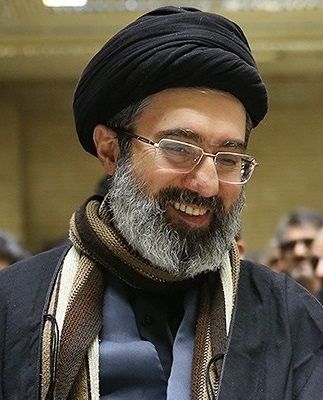
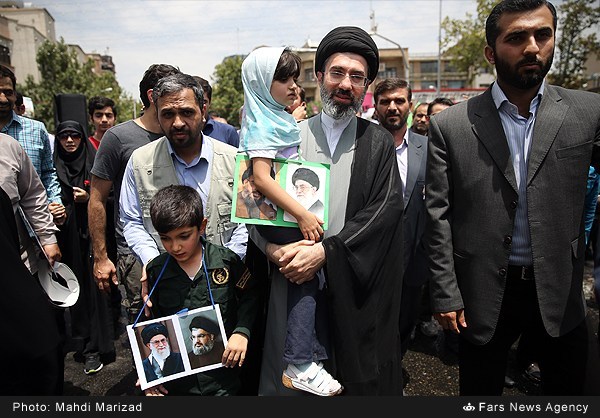

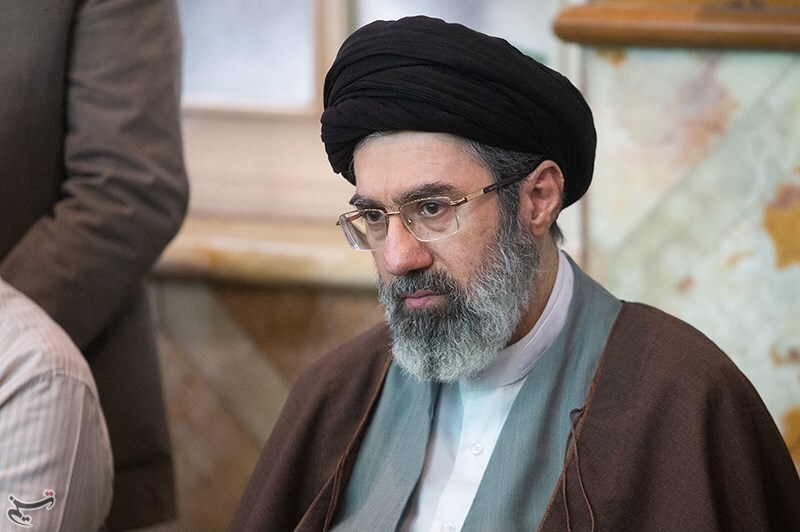
Where does the enormous economic power of the Iranian theocratic regime actually come from? The key to understanding this lies in the so-called bonjads. As highlighted by the Faces of Crime website, these religious foundations were established immediately after the Islamic revolution in 1979.
Over time, they have turned into giant corporations that have their hands in practically every profitable sector from construction and energy to banking, agriculture, and telecommunications. The problem is that no one knows exactly how they manage the money. Their financing is absolutely non-transparent and is not subject to government or parliamentary oversight. According to some sources, they may even account for up to half of the country's total GDP.
The absolute center of this financial spider is the organization Setad. Originally a bureaucratic apparatus for managing confiscated assets, it has evolved into one of the most powerful conglomerates in the country. Today, Setad heavily invests in real estate, insurance, banking, and heavy industry. All of this, of course, comes with immunity from any state audits. According to various investigations, the value of the assets Setad manages is estimated to be in the tens of billions of dollars.

Religious Foundations as Economic Giants
While Setad is massive, it is far from the only one of its kind in Iran. There are numerous similar empires parasitizing the local economy. A prime example is the Astan Quds Razavi foundation. It controls everything around the sacred shrine of Imam Reza, which means a guaranteed business and enormous revenue from the millions of believers who flock there annually on pilgrimage. Similar organizations include the Mostazafan Foundation and Martyrs Foundation. Officially, they are tasked with charity and social assistance, but in practice, they hold vast amounts of shares in various companies.
These foundations hold an absolutely unshakeable position in Iran. Why? They don't pay taxes and answer exclusively to the Supreme Leader. No one else can reach them.
In this power equation, we must also consider the Revolutionary Guards (IRGC). This elite army, loyal directly to the head of state, has long moved beyond merely acquiring weapons. They control a key portion of heavy industry, construction, and energy. Moreover, the Guards are masters at bypassing international sanctions—they actively trade oil through various grey, unofficial channels. The result is a perfectly intertwined system where political influence and billion-dollar business mutually cover and strengthen each other.
Ascetic by Force? The Luxurious Reality of Mojtaba Khamenei
In this web of money and power, the son of the supreme leader, Mojtaba Khamenei, plays a crucial role. Although he long appeared in public as an inconspicuous, quiet man from a religious background who stayed away from the cameras, appearances can be deceiving. When he was announced in March 2026 as the third supreme leader of Iran, he did not just inherit absolute power from his father Ali. He also inherited the official ideology, which sharply condemns Western materialism and demands an ascetic life from its leaders.
The theory of the Islamic Republic is clear: leaders should live modestly, serve Allah, and disdain the "corrupt luxury" of the West.
However, the reality revealed by various documents and investigative investigations shows a completely different world. The story of Mojtaba Khamenei bears a much greater resemblance to the practices of aggressive global corporations, luxury properties, and secret offshore accounts than to the life of a modest cleric. While ordinary Iranians barely survive under crushing sanctions, behind the scenes a gigantic empire has formed under the hands of the younger Khamenei. It has long surpassed the borders of Iran and extended its threads into the wealthiest districts in the heart of Europe, writes Euronews.com.
The Unassuming Man Who Became the Most Powerful
The path to power was not straightforward. After days of behind-the-scenes negotiations among the most influential factions of the regime, including the Islamic Revolutionary Guard Corps, a decision was made that surprised even some of the political elites. The son of longtime leader Ali Khamenei was suddenly elevated to Ayatollah and immediately installed as the head of the country, writes The Jerusalem Post.
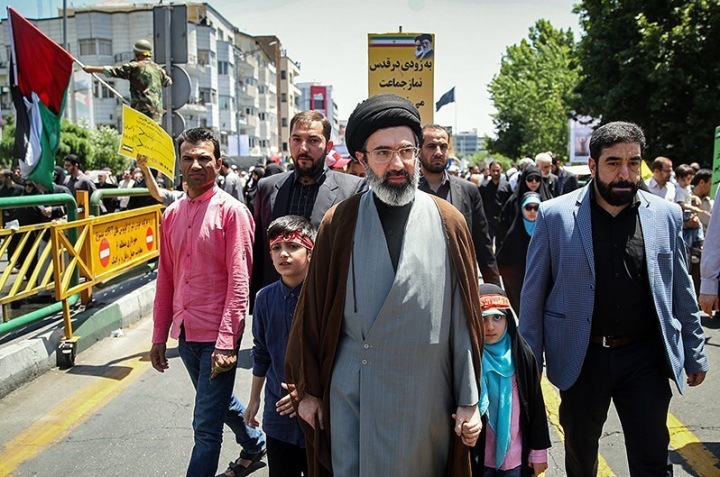
Luxury That Is Nowhere to Be Seen - Yet Exists
Official documents may give the impression that the new leader lives modestly. However, according to available information, the reality is quite different. In the background, there is a network of properties and investments worth billions of dollars - from London through Dubai to several European metropolises. It is estimated that he controls an extensive financial empire worth at least 3 billion dollars (approximately 69 billion CZK).
Interestingly, these assets are not registered in his name. They operate through intermediaries, companies, and complex ownership structures. Nevertheless, they are meant to serve his interests - whether it's funding his entourage or transferring money that would otherwise be subject to strict sanctions. Khamenei uses these properties and assets to facilitate money laundering and to finance institutions he controls.

The Man Who Holds the Keys to Billions
Behind the whole system is a name that may not mean anything at first glance - Ali Ansari. However, behind the scenes, he is one of the most influential players who managed to connect political power with global business.
Their relationship dates back to the 1980s and gradually transformed into a strong alliance. Ansari became not only the manager of the assets but also something of a financial architect of the entire empire. Thanks to contacts with the Islamic Revolutionary Guard Corps, he was able to take advantage of a system that remains inaccessible to ordinary entrepreneurs. Let's take a closer look at it.
Ali Ansari gradually became one of the wealthiest and most influential entrepreneurs connected to the Islamic Revolutionary Guard Corps in Iran. A pivotal change occurred during the period when Mojtaba Khamenei began regularly traveling to London. During these repeated stays, Ansari established himself as his main financial intermediary and confidant, with his wealth and influence starting to grow at an exceptionally rapid pace. Even before that, he had laid the groundwork for international business – he founded the company Ziba Leisure LTD on the Caribbean island of Nevis and penetrated the London financial market.
In collaboration with Mohammad Hossein Shamkhani, the son of a prominent military advisor to the regime, he managed to create a network that played a crucial role in circumventing international sanctions, money laundering, and financing the regime. From London and other global centers, funds were channeled toward allied groups, primarily Hezbollah.
After founding the holding company Ziba Leisure LTD in Nevis, where he reportedly also acquired a passport, Ansari began systematically building his position in London. Through the company A&A Leisure Limited, he acted as a shareholder and owner of several trading and contracting companies. This model was operational until recently when British authorities intervened and froze his assets valued at over 150 million pounds (approximately 4.35 billion CZK) due to suspicions of financing the Iranian Revolutionary Guards. He subsequently expanded his activities through a network of affiliated companies under the Smart Global banner, which continued the original Ziba Leisure, and expanded into several European countries and the Persian Gulf region.
Although Ansari's official legal representation denies that part of this property was made accessible to Mojtaba Khamenei, sources in Tehran speak of a much closer relationship. According to them, it is a connection based on religious devotion, where financial support is directed to the leader through various forms of "religious contributions," such as donations or foundations. In practice, this means that Ansari not only strengthened his position in the regime but also supported ambitions to expand the influence of the Supreme Leader's office to regional allied structures, especially Hezbollah.
When state media announced Mojtaba Khamenei's appointment as the Supreme Leader, they also highlighted his close ties to the Lebanese environment. However, the irony is that even though he had significant influence in the office of his father, Ali Khamenei, until recently, his public presence has gradually diminished.
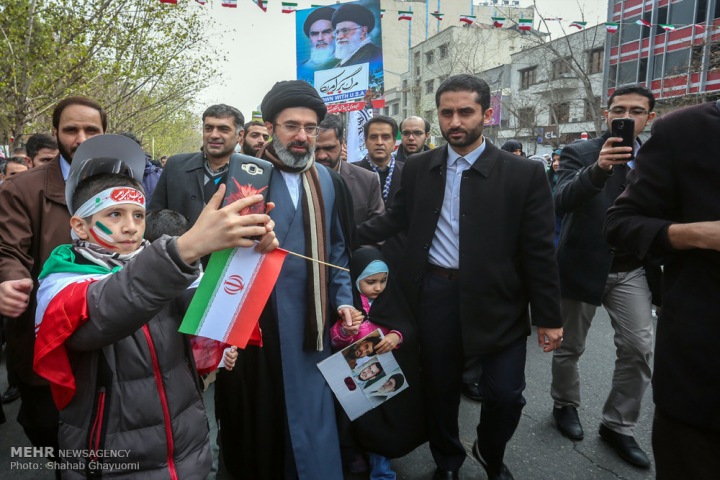
After the cancellation of his online religious courses, he practically disappeared from the domestic scene, leading to an intense, eight-day power struggle over his succession. Doubts primarily concerned his religious qualifications and practical leadership skills. Nevertheless, it became apparent that the regime had no other individual acceptable to all key groups - the clergy, business elites, and the revolutionary guards.
Journalist Tara Kangarlou points out that the Khamenei family and the entire regime have amassed immense wealth - from real estate to modern forms of investment.
Life between London and Tehran
The circumstances of organizing these trips are also interesting. According to leaked testimonies from the files of Saeed Emami's wife, the first London trip was supposed to be arranged by Saeed Emami, who at that time was serving as deputy minister and also as an influential advisor in intelligence services. He is an extraordinarily controversial figure, later associated with organizing serial murders of intellectuals and political opponents of the regime. His role in coordinating such a sensitive foreign trip suggests that it was an operation under strict state supervision. There were even claims that Emami personally accompanied the entire group on the first visit to London and used a diplomatic passport, which would have allowed him to move without the usual checks and restrictions. The whole trip thus gains not only a medical but also a security-political dimension.
These details create a vivid image of the behind-the-scenes life of one of the most influential families in Iran. They show that behind the strictly controlled public image lies a reality where healthcare, luxury, and political connections intertwine across continents.
Ali Khamenei has amassed enormous wealth
The extent to which the official ascetic image of the Iranian elite diverges from reality is also highlighted by older, but still key findings from the opposition website National Council of Resistance of Iran. According to their analyses, the wealth surrounding the family of the Supreme Leader is in astronomical figures. Mojtaba Khamenei himself, according to this data, sits on assets that easily exceed three billion dollars – which is approximately 69 billion Czech crowns.
To ensure that this money wasn't discovered at home, most of it flowed abroad. The financial empire of young Khamenei is cleverly scattered around the world. The ties lead to banking houses in the United Arab Emirates, Syria, Venezuela, and several African states. The goal of this geographical puzzle is clear: to diversify risk and cover tracks as best as possible.
In addition to numbers in secret accounts, Mojtaba also accumulates tangible wealth. Just the value of his private reserves of gold and raw diamonds is estimated at 300 million dollars (almost seven billion Czech crowns).
Where does such money come from? The source in Iran is quite predictable - the black market with oil and an unconventional system of "tithes." Sources state that the young Khamenei received one dollar from a special fund for every barrel of oil exported to China or India. For other types of exports, where it was necessary to bypass sanctions, this personal surcharge climbed up to 5 to 15 dollars per barrel.
Simultaneously, there was massive land acquisition taking place in Iran. Mojtaba systematically privatized and transferred huge plots of land to himself around the strategic city of Mashhad in the northeast of the country, thereby securing enormous influence in the real estate sector as well.
Today he essentially owns an entire state within a state. According to available testimonies, he controls the largest shopping center in Iran, massive construction projects, and has a taste for extreme luxury. He has access to a private plane, a helicopter for quick transfers, garages full of the latest Mercedes-Benz models, and even his own prestigious breeding stables of top horses.
Source: original text, The Jerusalem Post, Ncr-iran.org, Euronews.com, Faces of Crime, Iran Wire