„Pokud Izrael nebude silnou demokracií, co to znamená pro Evropu?“ ptá se Liat z izraelské hranice s Libanonem.
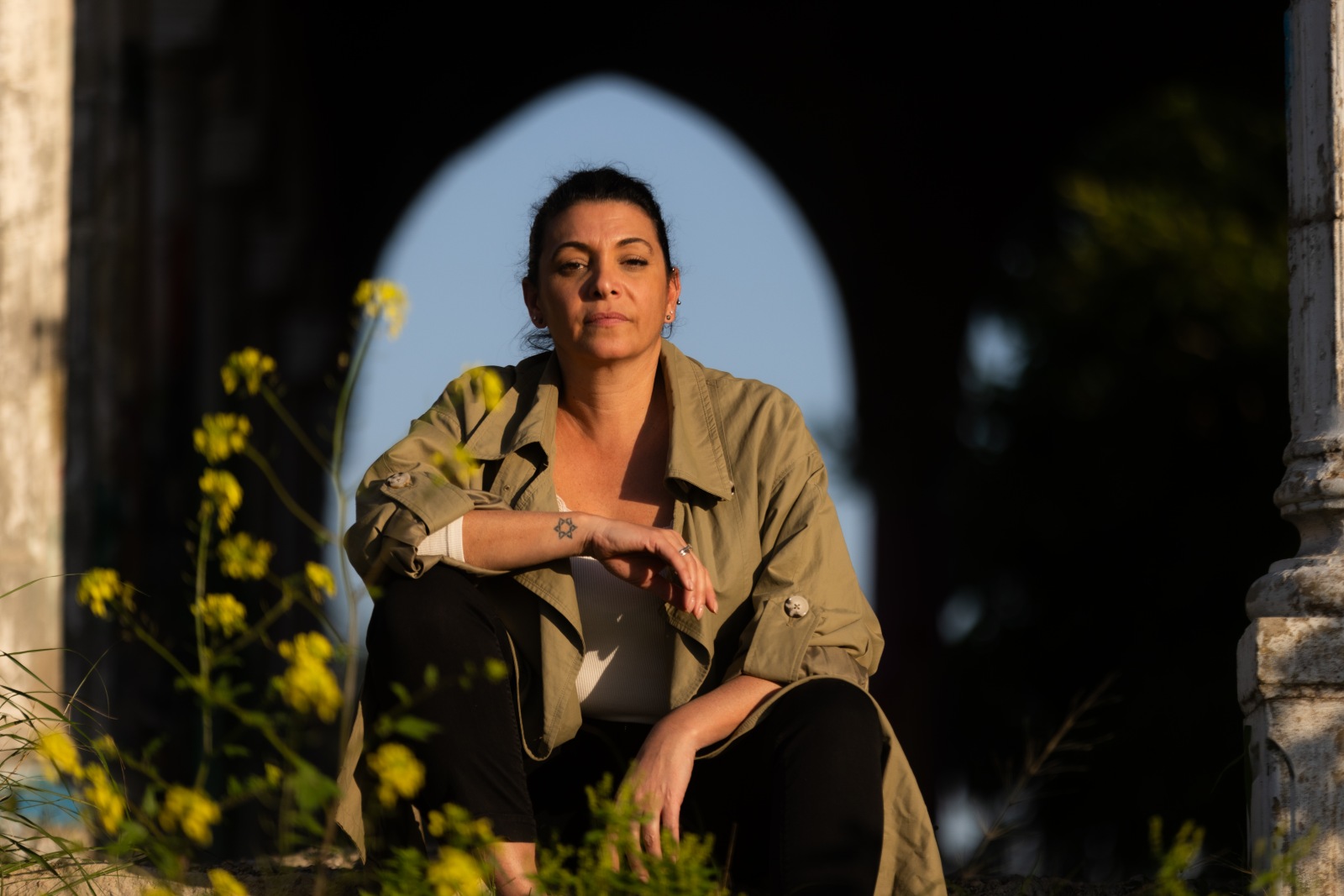
According to her, the war did not start on October 7 and cannot be "managed" long-term. Liat Cohen Raviv from the Israeli border openly speaks about political mistakes, failures in security approaches, and why the north of Israel has, in her opinion, been overlooked for years. She is critical of the government's role and recalls that the true measure of leadership is the ability to ensure people live safely. In the interview, she describes the daily reality under constant threat, explains why some conflicts cannot be kept under control, and warns that Europe, in her view, still underestimates the nature of similar threats.
What from your childhood in Kiryat Shmona, a town in northern Israel near the Lebanese border, shaped you the most?
Growing up on the border quickly teaches you that reality doesn't wait for you to be ready. There is no perfect timing or ideal conditions. You learn to take responsibility, act, and build a life even when the situation is complex. This mindset shaped who I am and what I do.
Is it possible to grow up under constant threat and still maintain trust in the world?
Yes – but it's a different kind of trust. Not naive, not automatic. It is a conscious choice to remain open to people, while fully aware of the risks. It is trust with awareness, not blind trust.
Why do people think the war started on October 7?
Because in many places, war is perceived as a moment – a headline. For us, it is a long-term reality. October 7 was a dramatic escalation.
For years, there was a belief that the situation could be "managed" – that economic incentives, deterrence, and containment would suffice. That it was possible to live next to a hostile force and maintain peace through agreements. At the same time, there was a strong internal focus – political, social, and institutional – that distracted from external threats.
The attack revealed a dangerous gap between assumptions and reality. It showed what happens when intentions are misunderstood and warnings are not turned into actions. For many Israelis, October 7 was not the beginning of the story but a moment when a long-standing problem finally exploded.
The main lesson is: some threats cannot be "managed" in the long term. They need to be addressed clearly and decisively. Ignoring threats does not make them disappear.

My first reaction wasn't paralysis. It was action.
What did you feel in the first hour of October 7th?
I woke up my daughters and told them: people in the south need help. I had close friends inside the attacked communities, sending messages from places that were literally burning.
Within minutes, the conversation at home changed. My eldest daughter, who served as a combat instructor in the army, looked at what was happening and said something very clear: this isn't just the south. This is a model situation for the northern border. In a way, she "woke me up."
From that moment, the question was no longer what is happening, but what are we going to do now.
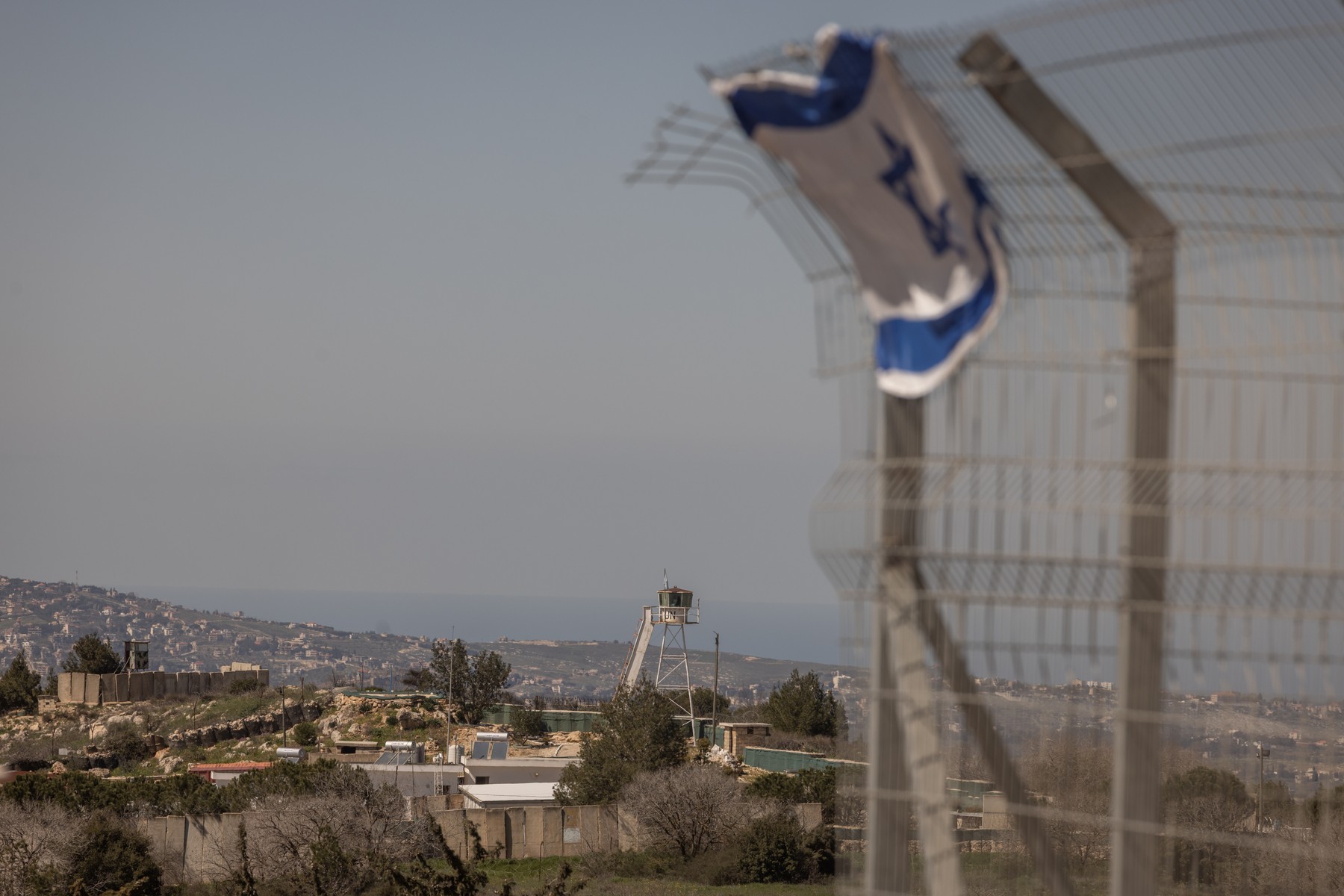
And we acted. By noon, almost no civilians were left in Metula. We left independently, not because anyone ordered us to — but because we understood the reality. Metula is approximately 70% surrounded by the border fence with Lebanon. When you live in such a place, you don't have the luxury of denial.
So yes, there was shock — but no confusion. It very quickly turned into clarity. And that is something people should understand about border communities: we don't wait for instructions. We perceive reality — and act.
What does a "normal day" at the border look like?
You wake up, work, raise a family – but always with a certain level of alertness. You know where the shelter is. You calculate distances. You live fully, but you're never completely "off duty."
What sounds are part of your routine?
Drones, gunfire interceptions, distant explosions. Over time, the brain learns to differentiate them. It's not something people should consider normal – but we do.
Is it true that you no longer hear birds?
No. You still hear them. And that's where the complexity lies — life goes on alongside the threat. That contrast is our everyday reality.
How long did you have to decide to leave?
We didn't leave of our own free will. Metula became a restricted military zone due to its unique geography (as mentioned: about 70% of its territory lies directly along the border fence with Lebanon). Our home was taken for military purposes, and we provided it voluntarily.
My husband remained in Metula the entire time, serving in a command role in the reserves. My children were called into reserve service. I took on a leadership role as part of our local crisis team, helping to provide support for approximately 2,400 residents who evacuated towards the Sea of Galilee.
Metula is 130 years old. It has never been abandoned for such a long time. When we left, we thought it would only be for a short while. We didn't imagine the return would take a year and a half.
And now, in the current phase of the conflict, we have no intention of leaving again. Because we have learned something — the hard way: being displaced from one's home is not just a logistical problem, it's a deeply destabilizing experience.
The real question was never "how many minutes we had." It was about what it means to lose one's place — and what it takes to keep it.
What did you take first?
Documents – identity, basic items. And a few small things, because we thought it would be just for a while.
Do you still have a part of your life packed away?
No.
How many people will not return?
We don't know yet — but even a small percentage is significant. After the previous phase, approximately 75% of the residents returned. This is an important fact — because it reflects something deeper than just logistics. It reflects commitment.

Now, at the current stage, we expect some additional families to decide not to return. And that is understandable. Life on the border is not for everyone.
But here is the broader picture: at the same time when some people are leaving, others are arriving. Because for many of us, living here is not just a personal choice — it's a national mission. We understand one fundamental thing: borders are not just lines on a map. They are places where people live. And if civilians leave these places — over time, the border itself weakens, becomes less present, less anchored in reality.
So the question is not just how many people will not return.
The question is whether the state of Israel understands that a strong civilian presence is part of its security strategy.
Because resilience on the northern border is not a slogan. It is a system — of people, communities, and everyday life. And Israel cannot afford to lose that.
Not strategically.
Not morally.
Not in terms of its future.
Has anything fundamentally changed?
Yes. The belief that it can be "managed" over time is gone. There is growing understanding that some situations require real solutions, not just ongoing control.
How large is the gap between politics and reality?
At the political level, conflicts are perceived in terms of strategies and interests. On the ground, it is about safety, family, and everyday life. Bridging this gap is essential.
Is it an illusion to think that the state will protect you?
It is not an illusion — it is a basic expectation in every functioning state. But expectations must be met. Protection must be tangible, not just theoretical. For Israelis, the army is not an abstract institution. It is not “someone else.” The Israeli army is our children. Literally my children.
The question of trust is not theoretical. Of course, we trust them — because we know who they are, how they were raised, and what they stand for. Yet, this trust brings with it something more: deep and constant concern. Because when you say "the army will protect us," you are also saying: our children are standing there, protecting everyone else.
So, it is not an illusion. It is a reality built on commitment, values, and responsibility. Protection cannot rely solely on the soldiers themselves. It must be supported by clear decisions, strategy, and leadership. Trust for us is not passive. It is active. It is personal. And it comes with a very simple expectation: that the system will be worthy of the people who serve it.
Is the government doing enough for the north?
Not yet. For too long, the north has been seen as a peripheral matter. In reality, it is the front line of sovereignty and should be treated as such.
Do you have confidence in Netanyahu's leadership?
Leadership is ultimately judged by results.
The fundamental question is simple: can citizens live safely in their homes?
That is the actual standard.
Are civilians suffering on both sides?
Yes. Civilians always bear the heavy burden in conflicts. At the same time, it's important to understand the context — who initiates the conflict, who is defending themselves, and what decisions are being made.
Who bears the consequences of political decisions?
Citizens do. Families do. Communities do. It is always the responsibility of leadership to remember that decisions are not abstract — they directly impact people's lives.
What are you most afraid of right now?
Not fear in the classic sense — but erosion. The risk that we get used to a reality that should never be considered normal.
What should people in Europe understand?
That this is not a distant problem. It's about how societies respond to threats, resilience, and the consequences of delaying decisions. It has broader implications.
People in Europe need to understand that what we are facing is not unique to Israel. It's just happening here earlier, more intensely, and more visibly. No European country would accept a reality in which a terrorist organization openly threatens its citizens across the border — or operates inside the country — and continues to do so long-term. History shows that when European states face such threats, they apply a policy of very low tolerance. They do not base their strategies on "managing" the threat — they act to eliminate it.
Israel has been dealing with these threats since its inception. Yet, it often finds itself in a position where it must explain—and even justify—its right to defend its citizens. In many ways, we are the only country repeatedly forced to defend its right to self-defense.
And there is another question that Europe should seriously consider:
If Israel does not remain a strong and stable democracy in the Middle East—what will it mean for Europe in the long term?
Because Israel is not isolated from the broader system. It is part of a shared reality of democratic values, security challenges, and global stability. So it's not just about Israel. It's about how democracies respond to threats.
And the real question is not whether you agree with every decision Israel makes — but whether you understand the nature of the reality it faces. Are you observing it from afar — or are you learning from it before it affects you?
Do you think Donald Trump should receive the Nobel Peace Prize?
I focus less on personalities and more on results. The real question is whether the steps lead to sustainable security and stability for the people on the ground.
If a leader can create real, long-term security — if people can truly live safely in their homes — then they might as well receive five Nobel Prizes. That's not the point.
For me, the real question is: what does it take for someone to deserve recognition that becomes part of global memory — something that is recorded in history? It requires more than statements or temporary solutions. It requires the ability to face reality with clarity, make difficult decisions, and follow through on them — consistently, not selectively.
Exceptional leadership is not about managing crises. It's about resolving them in a way that truly changes the reality on the ground. Because ultimately, people don't remember promises. They remember whether their lives became safer, more stable, and more predictable.
That's the standard. Everything else is just commentary.
Sources: editorial, authored text, interview