People want Petr Pavel as the future president. He increased his lead over Andrej Babiš "by a steamship"

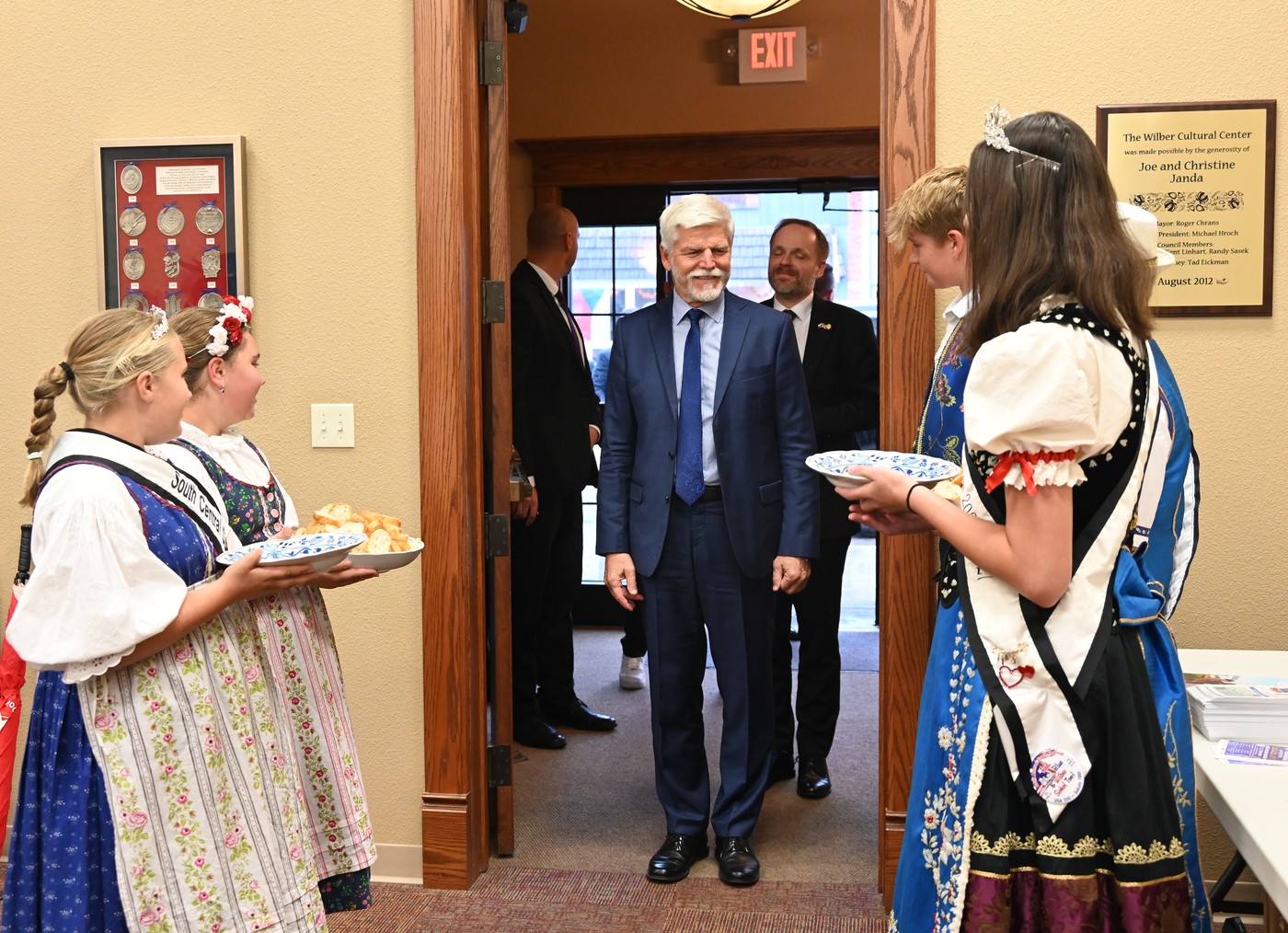
Who should be the future Czech president? People have a clear view. Petr Pavel is currently leading the polls by a fairly large margin ahead of Andrej Babiš and presenter, actor and musician Marek Eben. Why does Pavel remain at the forefront of interest?
The mandate of the current head of state will not end until March 2028. However, 40 percent of potential voters were able to answer with a specific name when spontaneously asked who should be the next president.
"The spectrum of names that appear is quite wide. However, among the most frequently mentioned names, current President Petr Pavel dominated, followed by Andrej Babiš at a significant distance,"
stated the authors of the survey from the STEM/MARK agency.
The results show that Petr Pavel has at least at this moment a decent chance to defend his mandate. In the survey, 36 percent of people said they would vote for him, and another 16 percent are considering it. So it seems he can rely on stable voter support. Four years ago, he received 35.40 percent in the first round of the presidential elections at that time.
Babiš and Eben are close behind
His biggest competitor so far is Babiš, whom 16 percent of respondents would elect as president and 24 percent would possibly vote for him. However, compared to the previous election, this is much less this time. Back then, as many as 35 percent of the country's citizens showed their support for him in the first round of the elections.
The moderator, actor and musician Eben, who however rejects political engagement, would now be voted for by 11 percent of respondents and another 31 percent would consider it.
Why do people want Pavel?
Voters expect that the future president should have experience with practical politics, but should enter the election if possible as an independent not influenced by lobbyists or political parties. People perceive diplomacy, politics or economics as ideal professional preparation.
Compared to previous waves of the presidential survey, however, the perceived importance of the attribute of decency is declining. While previously this quality was spontaneously mentioned by at least 20 percent of people, now it's 15 percent. According to the STEM/MARK agency, the reason may be either that decency is somewhat disappearing from the Czech political scene, or the fact that Petr Pavel has managed to cultivate the office during his tenure and this quality is now taken as automatic from the president.
For a large part of the public, Pavel is a symbol of taking the function of head of state primarily as a service. He himself says that he thought that a number of candidates would crystallize for the next electoral term, whom he would gladly vote for himself. So far, however, there is no indication of this.
"If those who have the greatest chance of winning are ones I wouldn't want to see controlling the entire country, then I consider that a signal to continue that service. The way things are developing now, including some attempts to take control of the state and its institutions, mobilizes me rather than motivating me to step back,"
he told the Seznam Zprávy server recently.
Guarantee of Stability
Moreover, the current president's relations with the prime minister have improved compared to the summer. Babiš has probably understood that in Pavel he has too strong an opponent over whom he can hardly win. The willingness to reach an agreement is, after all, acknowledged by Pavel himself.
"From all the meetings I have had with Andrej Babiš so far, I have gained the feeling that we are capable of pragmatic and correct agreement on a number of things. Usually, after he took the problem or the matter to the coalition council, there was a change in position. And this logically raises the question of who ultimately has the stronger word in that coalition government,"
noted the president in the aforementioned interview.
The current political situation, where Babiš's government is pushing through massive national debt and increasingly inexperienced representatives of the Motorists, as well as pro-Russian representatives of SPD, Pro, Tricolour and Freedom parties are trying to come to the forefront, naturally plays into his hands.
This is why it is so important how strong or popular a personality currently sits in Prague Castle. When people are dissatisfied with the government, they naturally seek a counterbalance in a strong president.
However, the personality of the head of state cannot logically please everyone, as Pavel himself knows. Nevertheless, it is necessary for him to have the trust of society. Let us therefore also recall part of his speech after his first election:
"I also understand that many now feel disappointed because their favorite did not win. At the same time, however, I perceive that in this country I see neither victorious nor defeated voters. I see that values won in this election. Values such as truth, dignity, respect and humility. I am convinced that these values are shared by the vast majority of us. They are definitely worth striving for them to be part of our lives and for them to return to the Castle and to our politics. In conclusion, let me say that I will consider the success of my presidency only and solely as our common success."
Source: author's text, STEM/MARK, Wikipedia, Seznam Zprávy