TRANSLATED TO ENGLISH, CHECKED: I'm Taking an Aché as a Husband: Multiple Men Who Had Sexual Relations with the Mother Could Contribute to Creating a Child


Imagine a wedding where the bride does not promise to belong to one man for her entire life. In fact, among the traditional Aché, you might search in vain for what we are accustomed to at a classic wedding - a white dress, wedding march, exchange of rings, or a grand feast. Their concept of partnership was much less bound by formal rules.
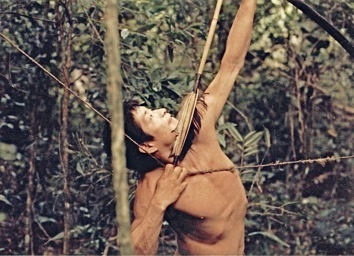

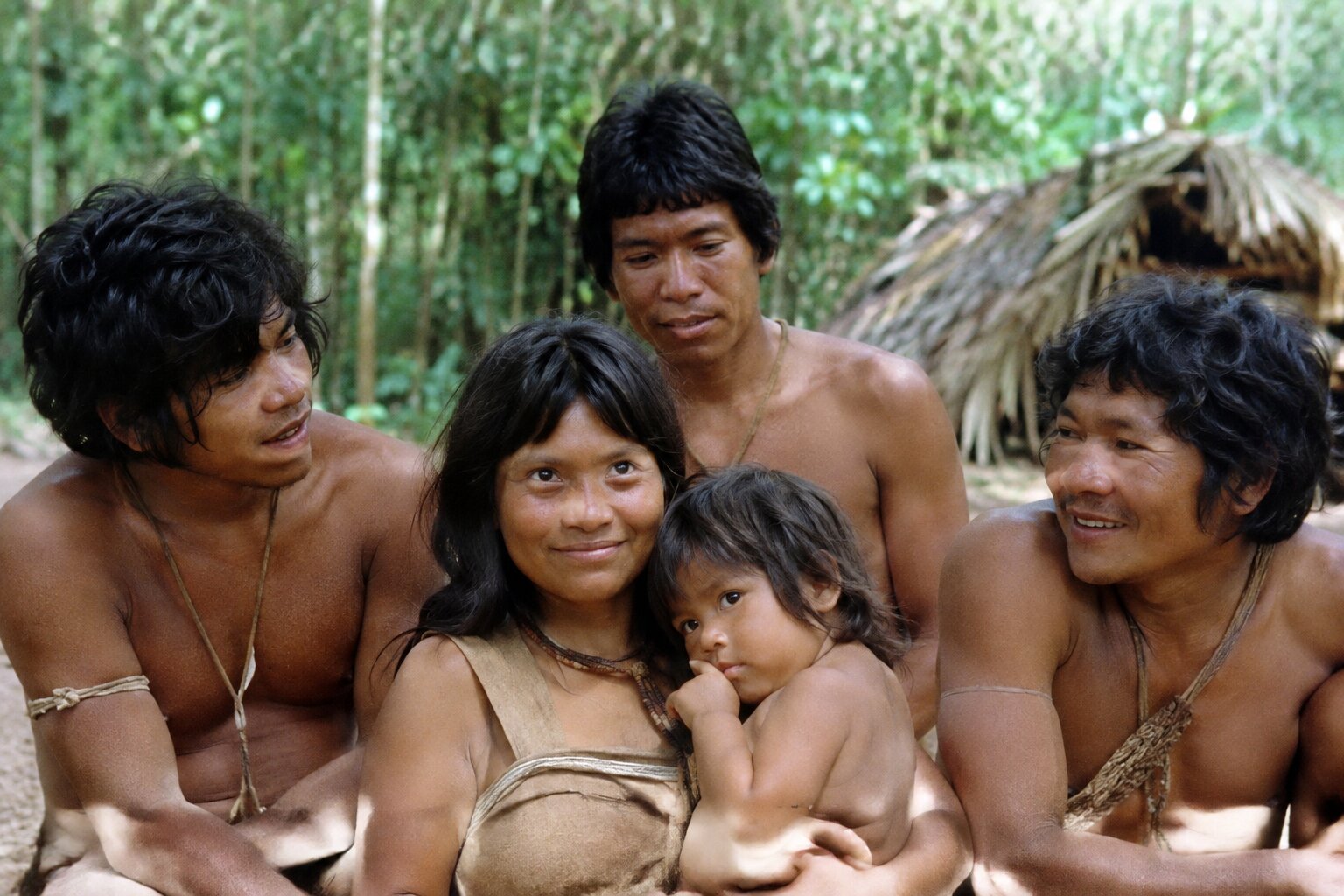
An even greater surprise comes at the moment when a child is born. While in our culture the question of paternity is connected with one specific man, the Aché traditionally recognized so-called shared paternity. One offspring could thus have a main father and additional men whom society considered his co-fathers. This is not a made-up story about an exotic tribe. This unusual social system was documented by anthropologists during research of the indigenous population of Paraguay.
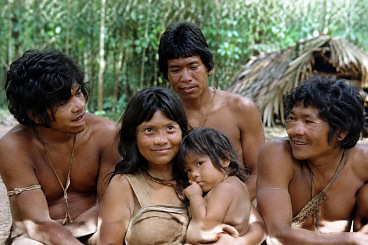
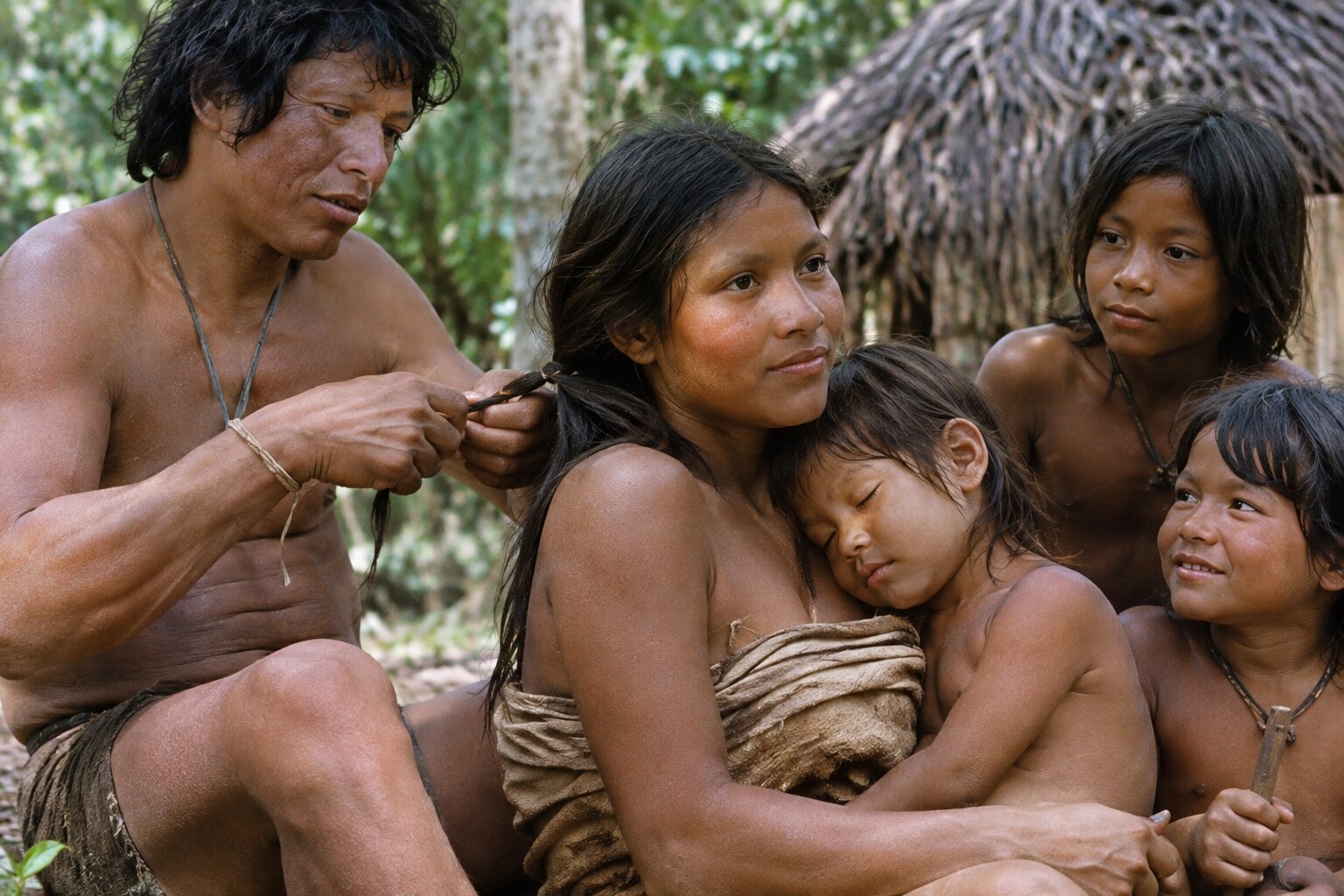
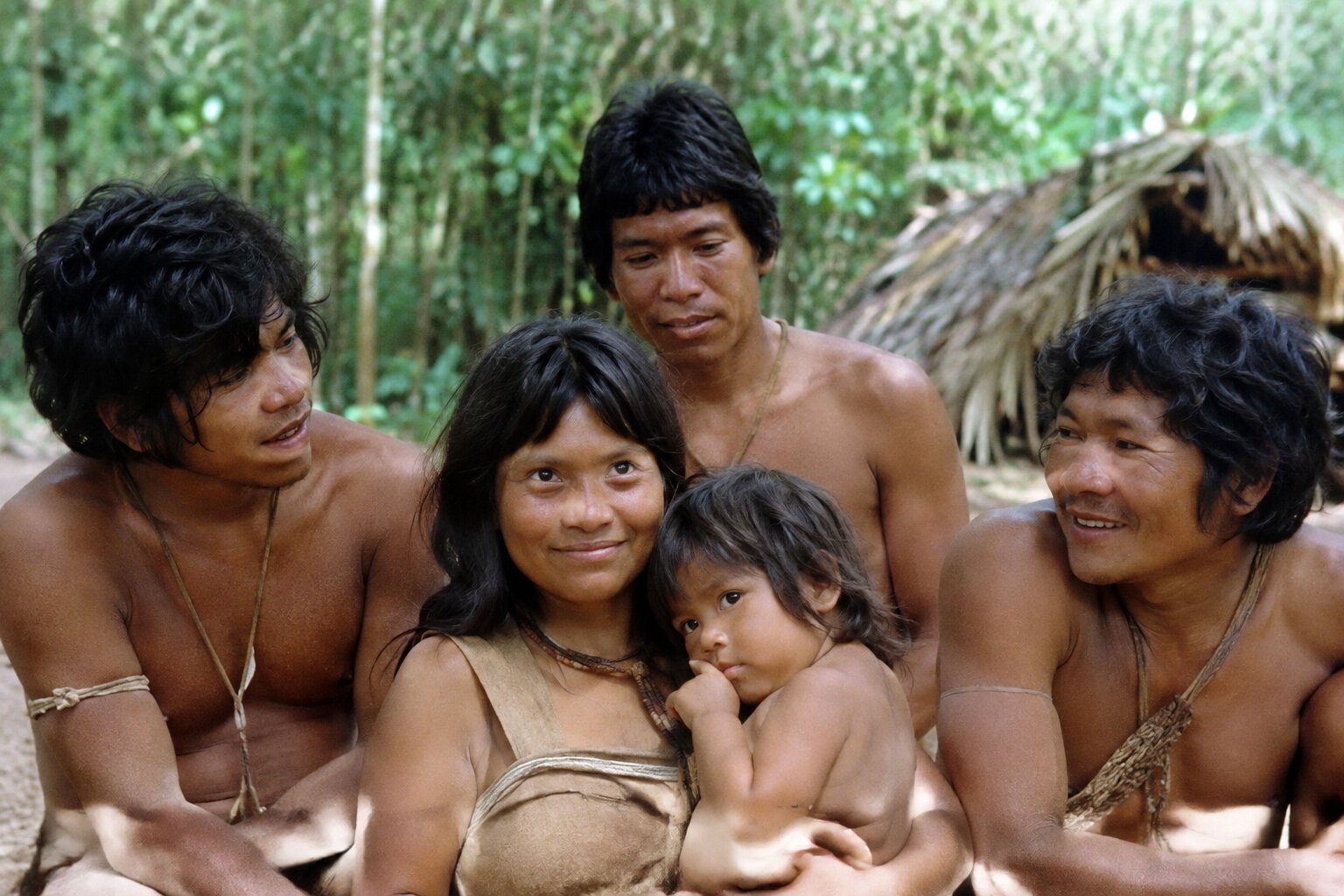
Who exactly are the Aché? They are the indigenous native population of Paraguay, who traditionally lived in the forests of the eastern part of the country. Anthropologists previously referred to them as Guayakí, but today their own name Aché is preferred. For centuries they lived primarily as hunters and gatherers, sustaining themselves by hunting wild game, gathering forest fruits and other natural resources. Their life was closely connected to nature and the functioning of a small community, in which people knew each other and were dependent on one another. It was precisely in this environment that their unusual ideas about marriage, partnership and parenthood arose.
First Courtship, Then Life Together
Among the Aché, a partnership began primarily with courtship. Future spouses therefore did not have to meet only on the day when their parents decided about their union. The choice of partner was significantly influenced by personal affections and the interest of the woman and man themselves.

Gift-giving also played an important role in courtship. Food and its sharing were not merely a practical matter, but could express affection. A man who wanted to impress a woman could also show his interest by sharing food with her.
Interestingly, marriage was not always perceived as an irreversible decision. Relationships could change and people entered into new partnerships. Research also describes cases where marital unions ended relatively quickly. The length of cohabitation could therefore vary significantly.
According to the anthropological study Heritability and Fitness Correlates of Personality in the Ache, published in the journal PLOS ONE, traditional marriages primarily began with courtship. The authors also describe how partner relationships changed after the Aché's contact with Paraguayan society.
Wedding Day? Forget About White Dresses and Ceremonies Before the Altar
And now comes an interesting fact that may be even more surprising for the European reader than the shared paternity itself. The Aché traditionally had no classic wedding or divorce ceremony. No fixed script according to which the bride would have to undergo several tests, put on special clothing, or pronounce marriage vows before the entire community.
So what did the beginning of life together look like?
According to an ethnographic description published on the portal EveryCulture, it also depended on the man's age and social status. A younger man could move to his partner's hearth, while an older or more influential man could bring her to his hearth. It was precisely living together that represented the practical beginning of partnership. It was not a wedding in our conception, but the creation of a shared household within the camp. It was typical for a young couple to live closer to the woman's family. For older couples, the place of living together could change according to circumstances.
And what about the wedding feast? Here too, we cannot speak of a documented universal ceremony that would resemble our wedding celebration. Food had a fundamental place in their daily life, but it would not be correct to claim that there was a special mandatory wedding feast with a precisely defined menu.
After the wedding comes the biggest shock: The husband doesn't have to be the only father
In our society, a woman after the wedding would probably look forward to life together with her husband and plan a family. Among the traditional Aché, however, parenthood functioned according to rules that would thoroughly surprise many Europeans.
Their system was called partible paternity, meaning divided or shared paternity. According to traditional belief, multiple men who had a sexual relationship with the child's mother could contribute to the creation of a child. This did not mean that their genetic makeup actually mixed. It was a cultural concept of conception that had specific social consequences.
The Aché distinguished two types of paternity:
- Primary father – typically the man who was the husband or main partner of the mother.
- Secondary father – another man who had an intimate relationship with the woman and was recognized as a co-father of the child.
Anthropologists Kim Hill and A. Magdalena Hurtado described that a woman could announce which men, according to her belief, participated in creating the child. It was therefore not the rule that everything was decided exclusively by the husband. Imagine that a woman gives birth and besides her partner, other men also claim the child. In our environment, this could trigger a family drama, but in the traditional Aché society it was a recognized way of creating parental bonds.
Other fathers were not meant to be just on paper. They also had obligations
What is particularly remarkable about this custom is that it was not merely about designating several men as fathers. Such recognition could also bring specific obligations. Secondary fathers could help the mother and child with securing food and other resources. If the main father died or abandoned the family, a secondary father could take on a more significant role in caring for the offspring. For the woman, this represented a certain form of security. She did not have to rely solely on one man, whose ability to provide for the family might be limited.
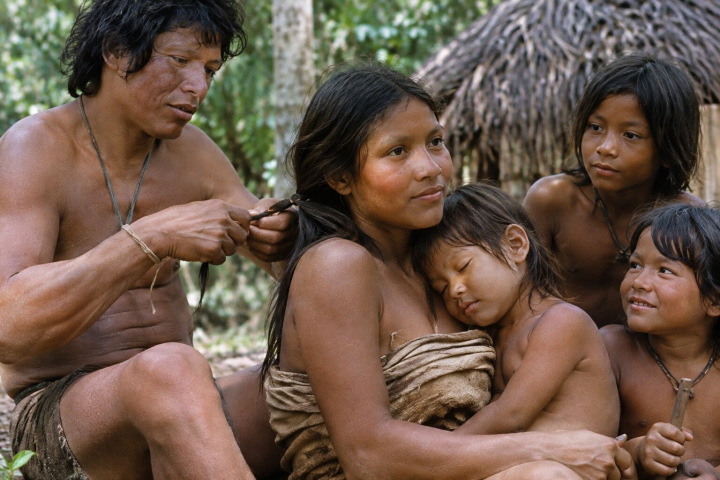

Research on child survival is also interesting. Older demographic analyses of the Aché suggested that children with a primary and one secondary father had higher survival rates than some other groups of children. However, scientists caution that the exact mechanism of this effect is not fully understood.
So while in our society after marriage people often wonder whether the husband will be a good father, among the Aché a child could potentially have multiple men providing support.
Other fathers also had their responsibilities after the child's birth
An interesting detail is the so-called couvade - a set of ritual restrictions that in some cultures were associated with the birth of a child. In the case of the Aché, academic works describe that even some secondary fathers could observe dietary and other activity-restricting rules. In this way, they publicly confirmed their position as a new co-father. Therefore, it was not a given that a man who had an intimate relationship with a woman would simply disappear from the scene after the child's birth. His position could continue even after the birth.
More about this phenomenon is provided in the professional study Relatedness, Co-residence, and Shared Fatherhood among Ache Foragers of Paraguay.
Divorce without great drama? Marriage also had its rules
And what happened when spouses stopped loving each other?
Even the termination of a partnership was not associated with a mandatory divorce ceremony. According to ethnographic descriptions, a man and woman could simply part ways and form new partnerships. Interestingly, among young people, partnerships could change quite frequently. In some cases they lasted only briefly, in other cases they persisted for many years. However, this did not mean that all marriages were unstable. Monogamous unions were the most stable model in traditional Aché society. Polygamous and polyandrous relationships also occurred, but they were not the universal form of marriage.
Interestingly, a breakup did not have to mean a complete severance of ties between people who had been raising children together.
Information about marital and divorce customs is also provided by the portal EveryCulture – Marriage and Family.
A tradition that gradually disappeared
Today, it can no longer be said that all Aché live according to these old rules. Their society underwent a fundamental transformation after contact with the Paraguayan population and Western civilization. Between 1971 and 1977, various Aché groups established their first peaceful contacts with surrounding society. Subsequently, their way of life, partner relationships, and family arrangements changed. According to research published in PLOS ONE, shared paternity ceased to be practiced in the later period. Traditional ceremonies and the way of life in forest communities also changed.
Today, the story of the Aché represents primarily a fascinating testimony to how differently humanity can understand marriage and parenthood. While in our society a woman marries one man and expects that he will be the father of her children, in traditional Aché society one offspring could have multiple recognized fathers. And they didn't have to share only the title, but also the responsibility for his future.