Nuclear war has no winners and a power plant is as risky as a living room, says Štěpán Kochánek from SÚJB
Stepan Kochanek, Director of the Nuclear Safety Section of the SÚJB, is among the leading Czech experts in nuclear legislation and safety regulation. In the interview, he talks about the growing threat in connection with the war in Ukraine and the protection of nuclear facilities from sabotage, cyber attacks and drones. At the same time, he describes what led him to work in the office, which nuclear myths amuse him the most, and what he finds both pleasing and frustrating about his profession.
How do you assess the current level of nuclear threat in Europe as a result of the war in Ukraine and how is the SÚJB preparing for a possible increase in risks (terrorist attacks, cyber attacks, sabotage)?
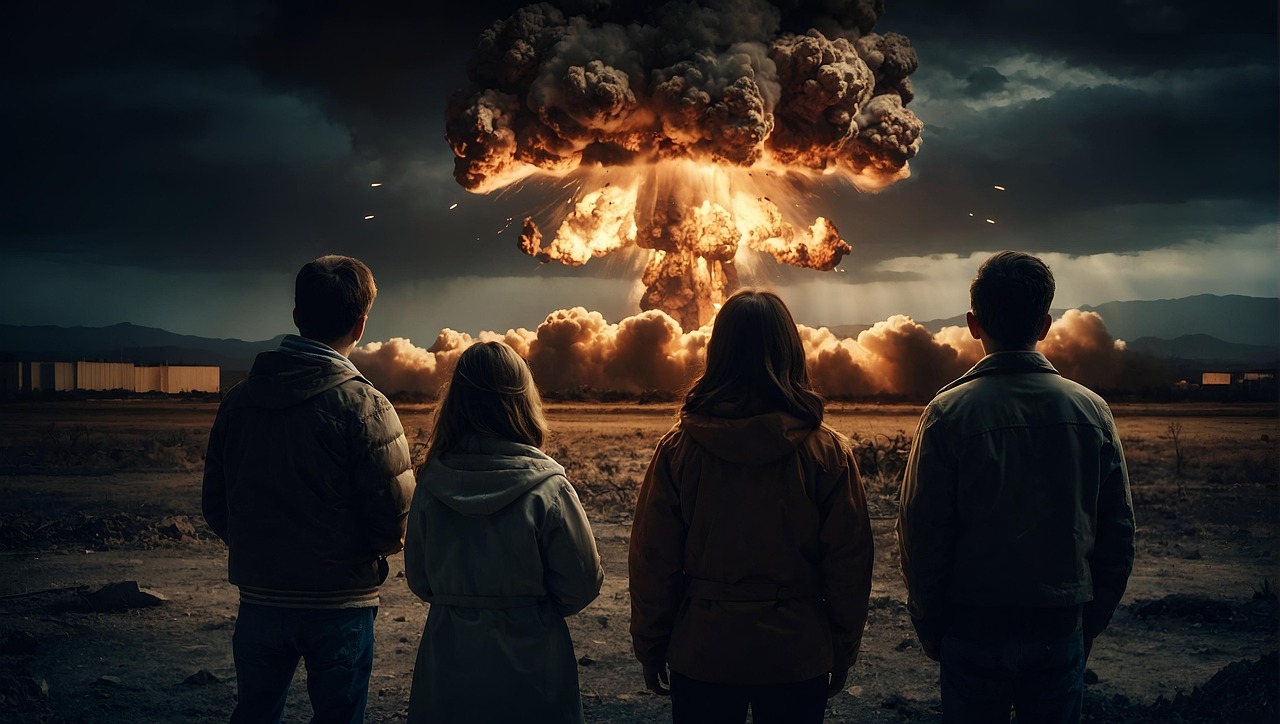
The Russian aggression in Ukraine has undoubtedly led to a significant increase in tension between NATO and the Russian Federation. We can also see a divide in the attitudes towards the Russian war against Ukraine among EU states. Threats of nuclear attacks on European countries, including the Czech Republic, can be heard from Russian media, including from individuals close to the ruling Russian authorities. This situation has been ongoing throughout the war and has been escalating in the recent period. From this point of view, it is clear that the situation is unstable and the threat has increased. Unfortunately, we cannot anticipate how the whole matter will evolve and we need to be prepared for the fact that Russian intentions and actions can be varied. However, I do not think it is necessary to panic. Similar escalations have occurred in the past, during the Soviet era, and it has always been shown that the principle of nuclear deterrence works. Strategically, it was already known during the Cold War that a nuclear war has no winners. Therefore, if the Russian media loudly speaks big words about tactical nuclear strikes, it cannot be taken lightly, but it is also not about proclamations of specific strategic decisions of the Kremlin. Unfortunately, it is possible that with the ongoing war and the growing number of domestic crises in Russia, this rhetoric will continue to strengthen.
The SÚJB is, among other things, responsible for overseeing the security of nuclear facilities. We approve and monitor how they ensure protection against sabotage, theft, attacks and other illegal acts. Every operator must have a robust system of measures to protect the facility against these attacks. As a result of the war in Ukraine, we initiated work on amendments to the relevant ordinances several years ago, which should strengthen this protection. This applies, for example, to measures against drones, but also cyber threats. At present, we are also changing the so-called project basic threat, which is a state-defined definition of possible attackers and their procedures that nuclear plant operators must protect against. Several ministries and security forces, including secret services, are involved in this. The aim is for the project basic threat and, in connection with it, the protection of nuclear facilities to reflect the current escalated situation.
Russia and Belarus are simulating scenarios that include the use of nuclear weapons as part of the West-2025 exercise. To what extent do you think such a demonstration is a real security threat and what could it specifically mean for the Czech Republic?
This is not the first time that Russia and Belarus have conducted this exercise in this way. It fits into the pattern of creating tension with the aim of destabilizing the situation. Certainly the aim is also to frighten public opinion in EU and NATO countries. I believe that the Russian side is still aware of the risks associated with the use of nuclear weapons and does not intend to actually use them, certainly not as part of the ongoing exercise. However, as we know, Russia can exploit these exercises and smoothly transition to a conventional military invasion or attack, as it showed (still under the name USSR) in 1968 against Czechoslovakia and in 2022 against Ukraine. Therefore, we must be prepared and not underestimate it.
Practically, and not just during this exercise, we should focus on fulfilling tasks within the framework of NATO. Our units have already proved their worth in the past and would surely be beneficial in the event of a real conflict with Russia. What may be even more significant is the preparation of infrastructure and society for a possible crisis associated with war, which may not necessarily take place in the Czech Republic, but would have impacts on the entire EU. We can already focus on this and build up necessary reserves. What needs to be primarily addressed is the state of mind of our people. Society is polarized and a large part does not want to bear the impacts of such a crisis. I believe that there is a lot of strength and goodness in all of us, as ultimately shown by floods and other crisis situations that we can manage, but it is necessary to work with people's thinking and create a solid background that will enable us to cope with problems.
After incidents where Russian drones penetrated into Poland and Romania, there is growing nervousness in NATO. Could such "small" provocations escalate into a wider crisis, where the issue of nuclear deterrence would become a reality for Central Europe?
Unfortunately, I don't think that can be ruled out. Russia is clearly escalating these actions in recent days and everything points to it not being a coincidence. It may be an attempt to create a divide among NATO countries or to gain a better negotiating position through intimidation. However, if NATO responds, it can also provoke a counter-reaction from Russia. In the past, it usually retreated in such cases, but it has also not been drawn into an unsuccessful conflict for several years, which can also escalate into its domestic social and political crisis. Even if the provocations lead to a more serious conflict, it does not necessarily mean the deployment of nuclear weapons. I believe that what I mentioned above applies here. However, we cannot definitively rule out that a conflict, possibly only local, will occur. We must wish for Russia to stop these provocations and start standard negotiations leading to the end of the war. Previous attempts at negotiations also looked more like provocations and sizing up the opponent, but through diplomatic means.
If a direct nuclear threat appeared in our vicinity - who would decide on declaring exceptional measures in the Czech Republic and what would it practically mean for ordinary citizens?
Such decisions belong to the central bodies responsible for crisis management, in case of the biggest crises then to the government and Parliament. For this purpose, the Security Council of the State and the Central Crisis Staff, serving as advisory bodies to the government, are used. It would depend on whether there has already been an attack and what its impacts were. According to this, various types of security or crisis states are declared and various measures are attached to them, which are intended to ensure the protection of the population. These measures would be carried out by the regions, the Fire Rescue Service, partly also the army and also the component central authorities. For example, the SÚJB would monitor the radiation situation in these situations, or, depending on possible radiation impacts on the population, recommend the adoption of protective measures, such as sheltering or evacuation.
In the hypothetical situation of a nuclear attack on one of the NATO border states, the impacts on our territory would be monitored. The population affected by radioactivity would be warned and their protection would be ensured through those mentioned protective measures. There could also be restrictions on the consumption of some foods, protective measures for farm animals, etc. In this, the situation would not fundamentally differ from the case of a severe nuclear power plant accident in a nearby foreign country. Direct impact on Czech territory would, of course, require much more massive deployment of the integrated rescue system and probably also more serious protective measures in terms of their scope.
In the context of geostrategic tension: to what extent is the Czech Republic dependent on the import of uranium and other critical materials, and what measures does the SÚJB support for source diversification?
Currently, the operator of our nuclear power plants has been taking steps for several years to avoid having to use nuclear fuel or nuclear technology from Russia. This is also due to the difficulty of obtaining these things. At present, ČEZ, a.s. has sufficient stocks of fuel in stock or under contract and is preparing to switch to new types of fuel from several different Western suppliers. This should happen from 2026. This should lead to complete independence from Russian supplies and to greater diversification. The operator is also required by law to have fuel stocks for several years in advance to ensure energy security. It can be said that the dependence on these supplies is now minimal or perhaps even completely eliminated.
This gradual transition is assessed and approved by the SÚJB. All new fuels are subject to approval by the SÚJB. In the case of other components of nuclear power plants, permission is not always required, but the regulator must be at least informed of the changes, as they may affect nuclear safety. To facilitate the transition as much as possible, the SÚJB has been consulting these issues with the operator for a long time, familiarizing itself with the state of affairs and providing feedback to prevent delays at the moment of introducing new supplies. I can say that the whole process is successful and efficient.
How do you see the perspective of new nuclear reactors in the Czech Republic — for example, new units in Dukovany or Temelín — from the standpoint of safety and cyber resilience?
Optimistically. It is a big and challenging task, that's for sure, but the chosen path promises that we will be able to complete it successfully. In the case of the introduction of new technologies, not only large units, but also small modular reactors (SMR), we have adapted nuclear legislation and requirements to ensure safety. In many cases, we have strengthened them, but also made them technologically neutral so that they can be applied to different types of devices while maintaining the same level of safety. This also involves the field of cyber security, where we have introduced much more accurate and high-quality adjustments since July.
The planned facilities are among the most modern in the world in this respect and build on proven procedures. Although we will of course evaluate them in detail to make sure that nothing was underestimated by the supplier, we expect that they will meet the highest international standards. However, our view will be strict, because there can never be enough caution and conservatism in our field - safety first.
The upcoming elections may bring a change in the political direction of the Czech Republic. To what extent can their results influence the field of nuclear safety — for example, relations with Russia, European sanctions, diversification of fuel supplies or decisions on new nuclear blocks?
Personally, I believe and hope that rather not. Unfortunately, in the past, we have seen in various countries how political influences affect energy, but also the field of nuclear safety. In this case, I think that a significant amount of objective factors are at stake in our country, which could prevent a change for the worse. A number of decisions have already been made and it would be almost impossible to reverse them. This applies to both new blocks and fuel. The field of nuclear safety is also under significant international supervision and even countries like Hungary, which show pro-Russian tendencies, cannot completely break loose.
What personally led you to the field of nuclear safety? Was it more of a coincidence, or a lifelong interest in technology and energy?
Actually a combination of both. From a young age, this part of physics and technology fascinated me and I enthusiastically read old American sci-fi from the 50s, where it was teeming with nuclear-powered cars and personal atomic reactors that astronauts carried at their waists. Then when I chose a different career path and went into law, I chose the topic of nuclear regulation when working on my diploma thesis, because Temelín was just being built and there was some contention and legal scuffles around it. The head of my diploma thesis sent me to the lawyers of the SÚJB for consultations and they offered me a job. And from that, it's a lifelong love.
What is the biggest "nuclear myth" that always amuses you?
There are many, but unfortunately, you don't get much fun out of them. The general idea is widespread that radioactivity is a terribly dangerous thing that only occurs near nuclear power plants and can kill you with long-term exposure. Yet it is a natural part of our world that occurs in various degrees pretty much everywhere. From this point of view, a power plant is just as risky as your living room. The latter may be potentially more dangerous if you have a high level of radon at home and you are not aware of it.
What do you enjoy most about your job and what is the biggest frustration?
I enjoy the diversity and the opportunity to be there when we are moving technologically forward. The most frustrating is probably the fact that it is not possible to meet the expectations of everyone, we must ensure safety first, everything else is of lower priority.
Which book, podcast, or movie would you recommend to people who want to understand more about nuclear energy and safety, but are not experts?
I would recommend watching lectures by our chairwoman Dana Drábová or Vladimír Wagner on YouTube, it is informative and very understandable.
Sources: original text, interview, editorial