The dispute between Babiš and the governor is escalating. The central bank raised the key interest rate after more than a year.

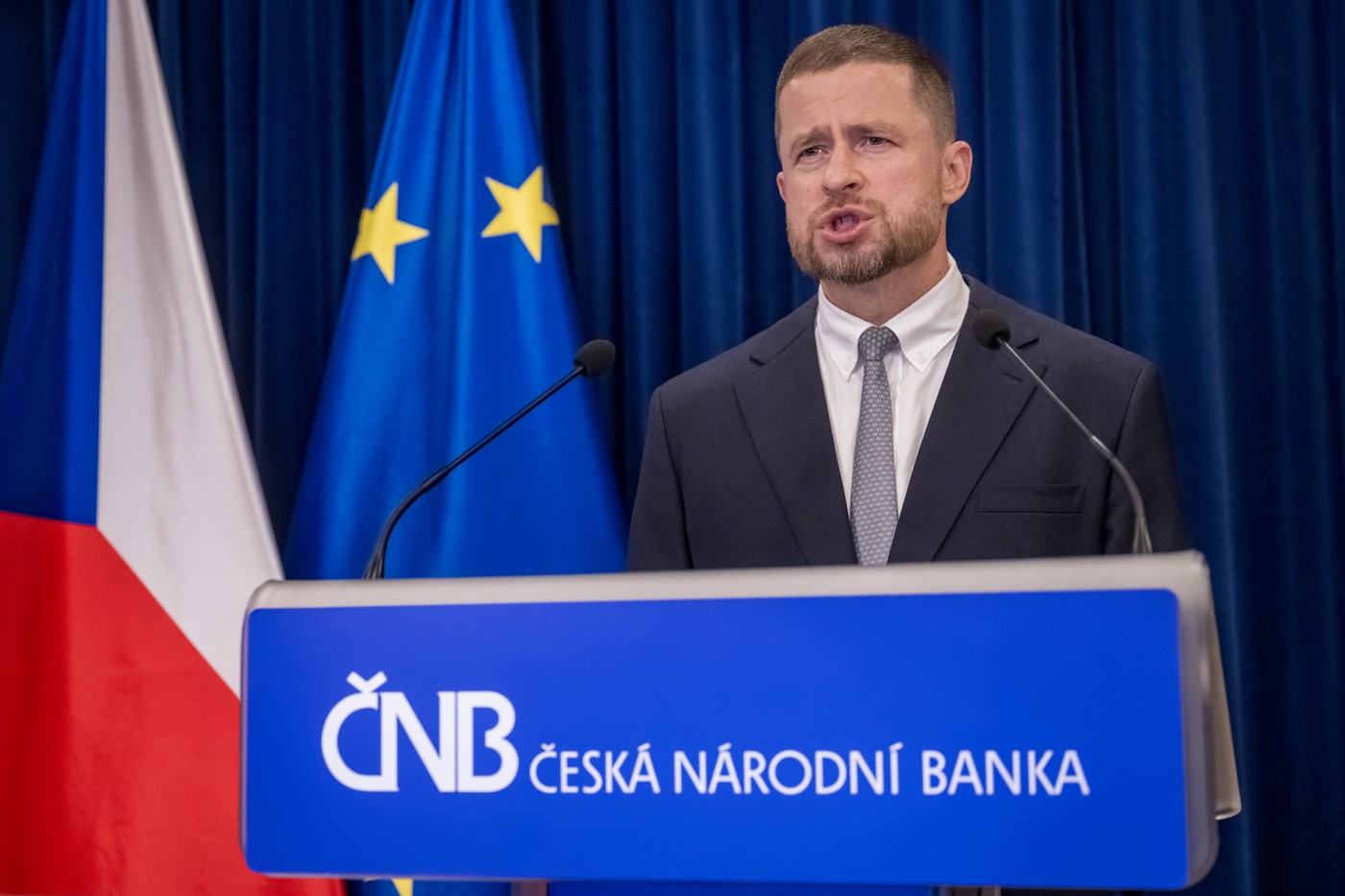
The possibility of changing the base interest rate had been speculated for a long time. It was primarily discussed by the governor of the Czech National Bank, Aleš Michl. On the other hand, Prime Minister Andrej Babiš warned against its increase. The result? For the first time since Michl took the position of governor, experts agreed that this indicator would increase by a quarter of a percentage point to 3.75 percent.
The courage to tighten monetary policy was gathered only slowly by the bank board under the leadership of Governor Aleš Michl. From the board's previous decisions and communications, the view that "less is sometimes more" seemed to prevail. During the inflation wave, the Czech National Bank maintained the key interest rate at seven percent. In December 2023, it began gradually reducing it. Since last May, the rate has been at 3.5 percent.
Voices for Raising Rates
A number of experts held a different opinion. Before the meeting, they included Jan Bureš, the chief economist of the ČSOB group, who considers the ongoing inflationary pressures caused by the conflict in the Middle East and the closure of the Strait of Hormuz as key factors.
“Inflationary risks have already increased in recent weeks to such an extent that an early signaling increase in interest rates makes significant sense from the central bank's perspective. This would certainly not constitute a monetary policy mistake, and an early upward movement of rates can reduce the need to raise rates more significantly later this year."
Bureš stated for ČTK.
Last week, in an interview for Bloomberg, Michl himself mentioned, among other things, that it is necessary to keep an eye on inflation.
"When I became the governor of the Czech National Bank in mid-2022, inflation was nearing 20 percent. We reduced it to about 2 percent. And for more than two years, it has stayed close to our target. We have restored price stability, and we will protect it. Now it's about how restrictive our policy should be. Core inflation is 2.9 percent. We are now fighting this core inflation. I guarantee independence. We will not let anyone interfere in our work."
quoted Michl Czech National Bank.
The Prime Minister attacks the independence of bankers
However, Prime Minister Andrej Babiš opposed such a stance and at the end of May called on Michl for the central bank to lower interest rates instead.
"The Czech Statistical Office announced in May that inflation was 2.1 percent. In April, it was 2.5 percent. So inflation has decreased. Why do we have low inflation? Because we obviously didn't wait for anything and we reduced energy costs and capped the margin on fuel prices. The fact that someone wants to increase the base rates is really not the way to fight high prices,”
The situation was commented on by the prime minister in his regular Sunday video. Before his Thursday departure for the European Union summit in Brussels, he even said that raising rates would significantly harm the lives of residents, entrepreneurs, and the whole economy.
Andrej Babiš's problem with the independence of the central bank was also noted by shadow finance minister Jan Skopeček from the ODS, who says that this is an issue that "personally frightened" him.
"Suggestions that the Czech National Bank should lower interest rates to the level of the ECB are one of the worst statements I have heard from this government. We know well that only independent central banks are and will be the guarantee of independent and stable inflation. Attempts to control monetary policy by the government have always historically ended in economic catastrophe, even hyperinflation,"
stated the opposition politician during the recent ideological conference of the ODS.
Most agreed on a growth of a quarter percentage point

The bank board told the head of the Czech government at its June meeting that it sees prevailing risks in the direction of higher inflation in the Czech economy.
"For this reason, today the board decided to increase the base interest rate by a quarter percentage point to 3.5 percent,
Michl told journalists after the meeting. Six out of seven board members voted to raise rates, while one voted for their stability.
"In future meetings on rate settings, the bank board will rely on newly available data and their impact on the inflation outlook,"
the governor further stated. According to him, all options for further action are open. He emphasized in the same breath that the bankers' actions will be sufficient to maintain price stability.
The interest rates for bank deposits and loans are derived from the central bank's rates. For businesses, higher interest rates mean more expensive loans for investments and operations, while for households, they mean more expensive loans for housing. However, with higher interest rates, the appreciation of deposits in accounts also increases.
Sources: author's article, ČTK, ČNB, ODS