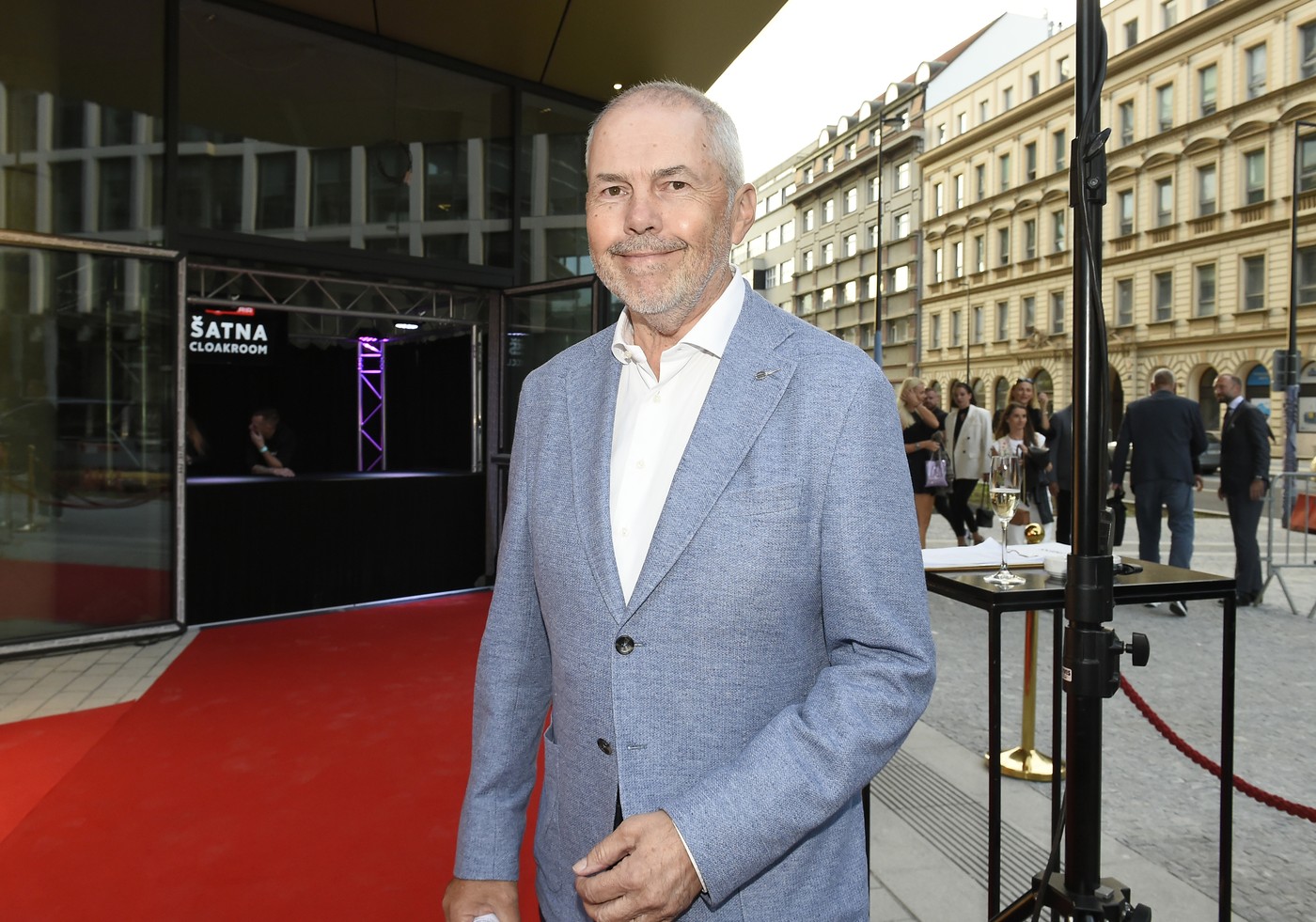
Marek Eben after the experience at the city hall: I lost all illusions that something could be created there


Thanks to generous donors, the Our Lungs foundation fund was able to help where it is needed the most for the fifth time. This time, they solemnly presented a special breathing vest, which was given to seven-year-old Anička, suffering from incurable lung disease called bronchiectasis, personally by Marek Eben. This device will make her daily life easier and will help with coughing. We talked with the popular moderator not only about charity, but also about his retirement plans, marriage, and the obstacles he perceives in the still not completely barrier-free Prague.
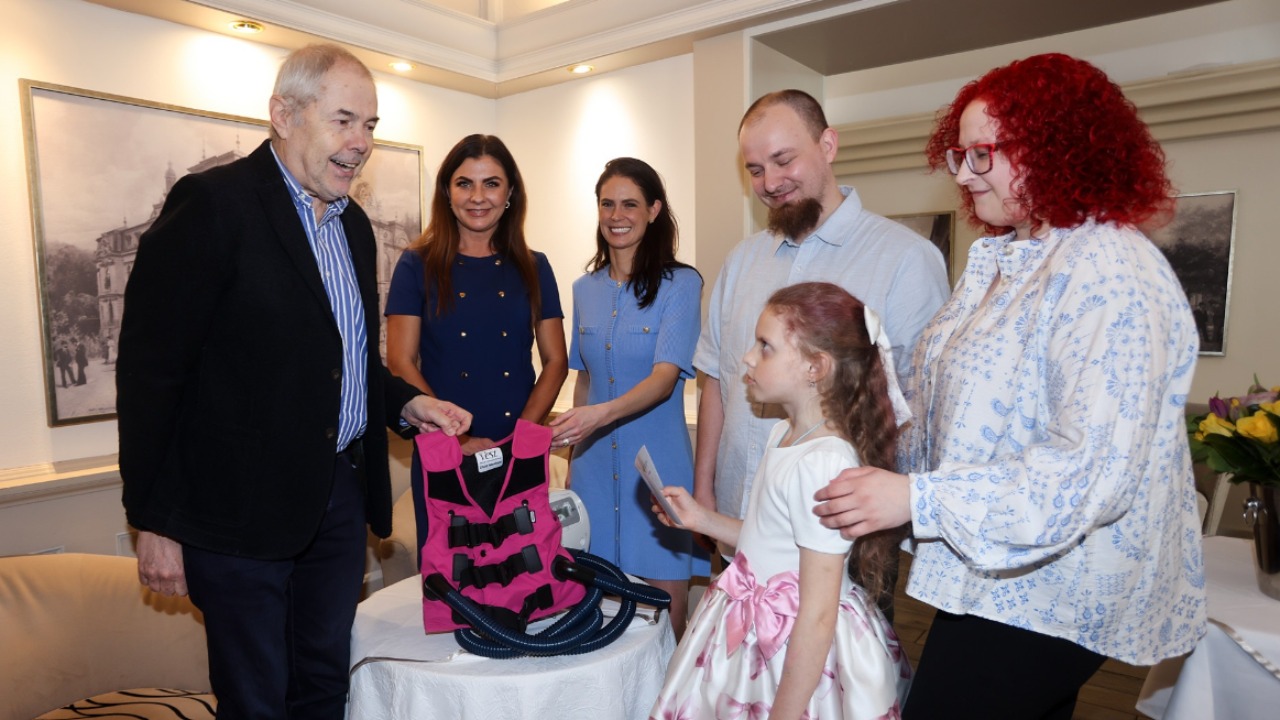


We meet at the ceremonial handover of a breathing vest for seven-year-old Anička, who suffers from the incurable lung disease bronchiectasis. When you heard about this disease, what struck you and touched you?
I had no idea that something like this existed, first of all. Secondly, I didn't know that a seven-year-old child could get it. There are many things that perhaps existed before, but we didn't know how to detect why it was happening. It was said, "well, the child is so skinny, it isn't thriving very much", but the cause may not have been known yet. Today, the advantage is that you can find the cause and do something about it. Of course, it's great when the whole family stands up to it, it's always a big help. The greatest help you have is from your family. It's great that in Anička's case, it spread to her family of supporters.
When you can pass on something like that to improve your life, it's very valuable. I know this from my own experience.
These disabilities are very unfair in the sense that when something like this happens to you, not only does it limit you medically, that you can't do everything others do, but when it happens to you in adulthood, like we've experienced, that person who is affected, loses their job and socially falls completely to the bottom, and life with it is quite complicated. It's nice when people are solidary and help them in some way because the world isn't entirely fair. Very often it's true that you improve according to how much you have, what resources you have. And of course, good health care and the means to cover it definitely help, and when people contribute to it, it's great.
Do you think that lung disease is sufficiently addressed in Czech society?
I think that diseases are globally addressed quite a lot in Czech society, not just lung disease. For example, the awareness that has been raised for colorectal cancer, you can already see the results. It happens because there is talk about it, that the state will build some mechanisms, that you will find it in your mailbox and they will tell you that you are at the age you should go. Then your friends who have already been through this will come and they'll tell me they can recommend it, that I'll feel good. In general, the awareness is getting better. Another thing is that Czech healthcare is seriously in very good condition.
I don't know if people realize what they get for what they pay. The value for money in Czech healthcare is extraordinary. We are really doing very well.
It always upsets me when people complain about Czech healthcare, what it looks like. I would send them all to get treated in Britain or France, and they would run back to the Czech Republic to enjoy a bit of luxury, because what we have given how much people pour into the system, what they get back is impressive. We have great doctors.

Recently, information and huge headlines have been spreading that you're retiring. What's the reality?
No, I'm not retiring, I'm retired already.
I've been retired for a year and didn't even know it.
Not much has changed for me so far. When you say somewhere that you're retiring, the media loves these sentences. Anything that can be taken out of context, I'm looking forward to what will be taken out of context from our conversation, is used with great pleasure. It's called clickbait. It's because the media is doing business and needs for readers to click on the article. The more shocking the headline, the more people will click on it. I'm just a normal retiree like many other people. I work as normal, like most of us who still can.
In your latest book, you wrote that you were already at the employment office in Prague 8 in 2023, and that you were scared there. What happened?
Well, that's a long story for this conversation. However, people can read it in the book. (laughter)
You and your wife have a beautiful relationship, you've been together for many years, and you're an inspiration to many. How do you manage to maintain such a long-lasting marriage? What's your secret?
You need to be lucky, first of all. We are all absolutely unbearable, each and every one of us. I wouldn't want to live with myself. We all have our quirks, and everyone has that. When you find a partner who can endure it, you should learn to tolerate the things he does. If you succeed, it will bear fruit. Of course, you need a huge degree of tolerance, there's no doubt about that. You have to put up with a lot that life brings you.
We were completely unprepared for my wife's handicap and it just happened.
I learned that it's best to live each such day and not worry about what will come. It always turns out differently than you think. So do the best I can in the given moment and not worry too much about what will happen later.
Is Prague wheelchair accessible enough for you?
No, it's not at all. Prague can't be entirely blamed for this, because there's a lot of history and with that always comes a struggle with accessibility. When you have history, you have paving and stairs, narrow staircases, and a lot of complications. Then of course there are places that could easily be adapted and improved, but there's no will to do so, such as ramps at corners. When you have pedestrian crossings, if you go to London, for example, each crossing is standardized. There is a piece where you can go down onto the road with a wheelchair, or pram, and then re-enter on the other side. We can only dream about such a system in Prague.
It's unbelievable that such a mundane issue didn't find its resolution. I attended the city hall because of this.
There was a whole meeting because of this. The meeting ended with them arguing about whose merit was the barrier-free boarding island in Vodickova Street. So there was a long discussion about whether this credit goes to the current coalition or the previous one. Then they made a record of it, and that was the last time I heard anything about it. I lost all illusions that something could be created there. I think I had a quite solid idea that could be implemented, but there was no will to do so.
Didn't it freeze you? Are you planning to try again?
I don't know. I can't do it. I can only tell them what I think would be right, but I no longer have the patience to listen to arguments about who deserves that one barrier-free stop in Vodicova Street.
Tell me your plans for the future. You left the theater, but is there something you'll be doing?
I left the theater, but I still have that contact with the audience, with the live audience. I play two performances in Viola, and we still play with the band. So I have that live contact with the audience. I would miss that. I think that if a person doesn't have it, it's not healthy for him, who is in show business or in music or in theater. You need that viewer, because you get the response right away. Right at that performance you know if you are doing well or not. Also, the projects I'm working on are running. I don't know how long they will last. I don't think it's forever. Now we are waiting for Stardance, which will be in those sports halls, with that we are filming Plovarny. If Czech Television lets me do it, I will make Plovarny as long as possible. This is something that I still really enjoy and look forward to.
Source: author's text, own questioning