On the level: President Pavel celebrated the Czech Republic's NATO accession day with lunch in a military canteen. Okamura returned to his Japanese roots.


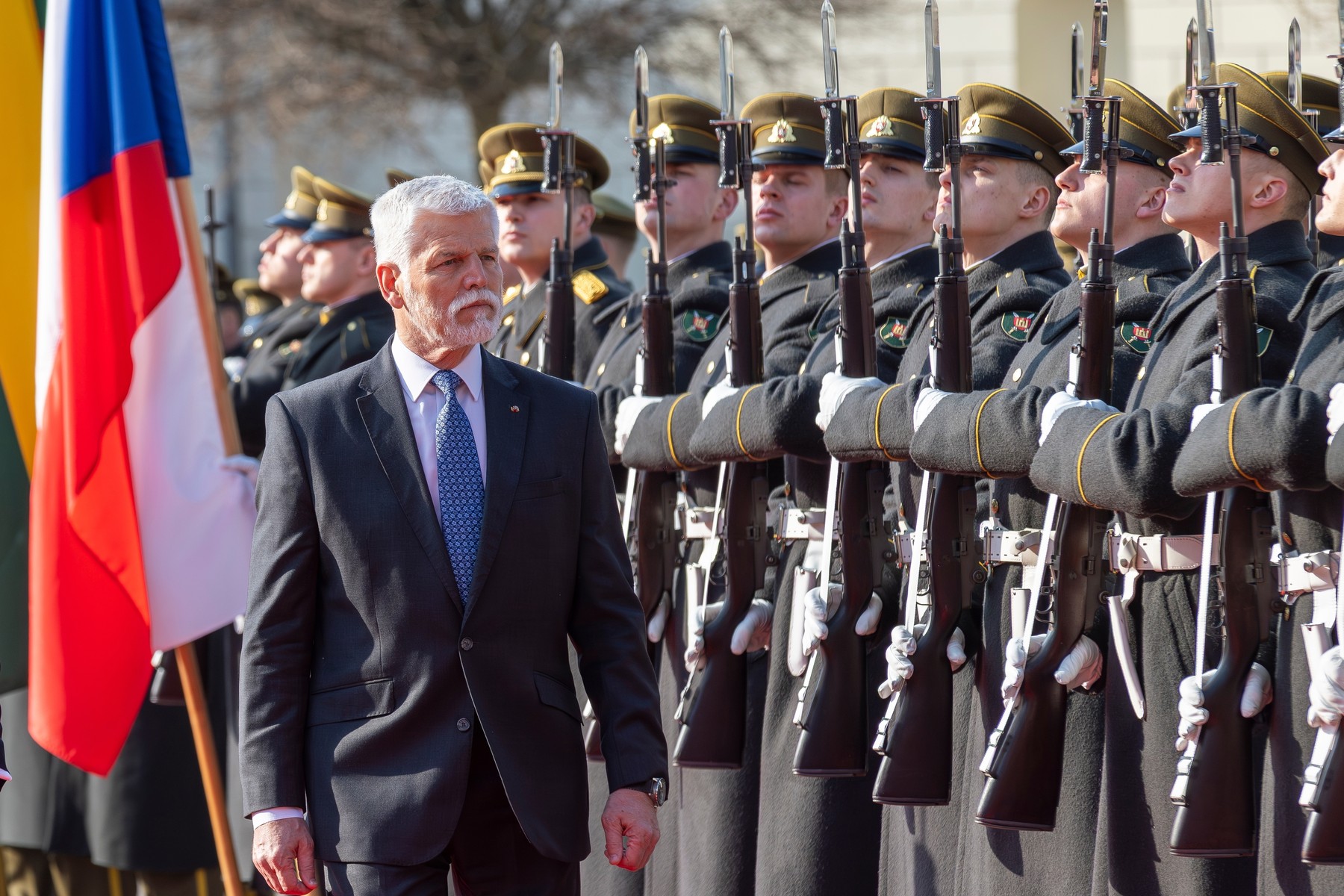
Every year on March 12th, the Czech Republic commemorates its entry into NATO, which occurred in 1999. President/General Petr Pavel enjoyed this significant day in a military canteen with a tray lunch. On the other hand, the government faces international criticism for retreating from commitments to increase defense spending, but abroad, there are examples of even wilder celebrations.
"I haven't had lunch in a military canteen for a long time. Today, I had it at the Ādaži base with soldiers from the 153rd Engineer Battalion from Olomouc. It was a great opportunity to talk about their service here in Latvia. The Czech army is actively participating in the NATO mission here and helping to strengthen the security of all of Europe. Joint defense is the most visible symbol of the partnership between the Czech Republic and Latvia today,"
President Petr Pavel notes in today's post on the X network.
Petr Pavel Celebrated in Military Canteen
It is widely known that before his presidential career, Pavel was a high-ranking official in the central bodies of NATO. Having lunch in a military self-service with plastic trays is mainly known from primary school canteens after the end of mandatory military service. Few people venture into such a rough environment today.
On the other hand, the new government is not planning to celebrate NATO much. On the Government Office's website, at the time of the article's publication, we find plans for a celebration from last year, otherwise, there's silence. In contrast, the website Politico loudly labeled the Czech Republic as a NATO villain because it apparently intends to coast as an ally and not adhere to the agreed-upon plans to increase defense spending in the face of a poor security situation in the world.
Conflict ongoing in Ukraine, in the Middle East, and newly accelerated by the conflict in Iran, is collectively referred to by some as the 3rd World War. Prime Minister Babiš went to explain everything in Germany at a meeting with Chancellor Merz. He excused himself by pointing to the quadruple nominal growth in defense spending since 2014, when he entered top politics.
A common complaint from the government is that it lacks funds to spend. The notion that these phenomena are unique to the Czech Republic as a NATO country is akin to the entrenched idea that it is the only country in Europe where the wind doesn't blow, thus making it impossible to build wind turbines here.
Babiš's emphasis on "social" is more straightforward. It is known that the electoral success of the ANO movement is supported by seniors, which is why the policy of the dominant ruling party is also directed in this way. Moreover, the older generations have completed mandatory military service, so it's true that they also have defensive potential.
The head of the coalition SPD, Tomio Okamura, does not favor NATO. He would prefer to leave the alliance and also reminded that Russia is not a security threat.
"Mr. Okamura may not feel entirely Czech, but for those who feel their historical past and such cases (e.g., the years 1938 and 1968), we see it differently,"
commented security expert Jiří Šedivý for SeznamZprávy, on why the Speaker of the Chamber of Deputies goes against the tide. Let's recall that Šedivý was the Chief of the General Staff of the Czech Armed Forces in 1999 when the Czech Republic joined NATO.
Okamura then describes his party's policy as patriotic, but does not further define which homeland it is directed towards.
Orbán Celebrates NATO with Russian Advisors
However, the most creative celebration of joining NATO was prepared in Hungary. They also joined the alliance on March 12, 1999, and right these days Viktor Orbán welcomed Russian advisors who are supposed to help sway local public opinion before elections that, according to polls, threaten a defeat for the local authoritarian prime minister. Military equipment from the days of the Warsaw Pact is in the arsenals of all countries on NATO's eastern flank, but advisors, like in the days when Eastern Europe served the Soviet Union, that's something special.
“These are not speculations or conspiracy theories, but proven facts: Hungary is Russia's Trojan horse in Europe. In my opinion, if Orbán wins the elections and continues his policies, Hungary's EU membership should be suspended under Article 7 of the Treaty,”
stated former minister Ivan Pilip on network X. If the entire action succeeds, Hungarians could then follow up with another celebratory day, this time celebrating their exit from the evil EU. However, the question remains whether Putin would send Orbán an advisor again, because without the ability to bombard European politics, Hungary's “troublemaker” is a considerably less valuable ally for him.
Sources: author's text, commentary, X, SeznamZprávy, ČRo, ČT 24, Respekt