On the Level: The Ayatollahs' Regime in Iran Resembles European Medieval Times as Much as Communism


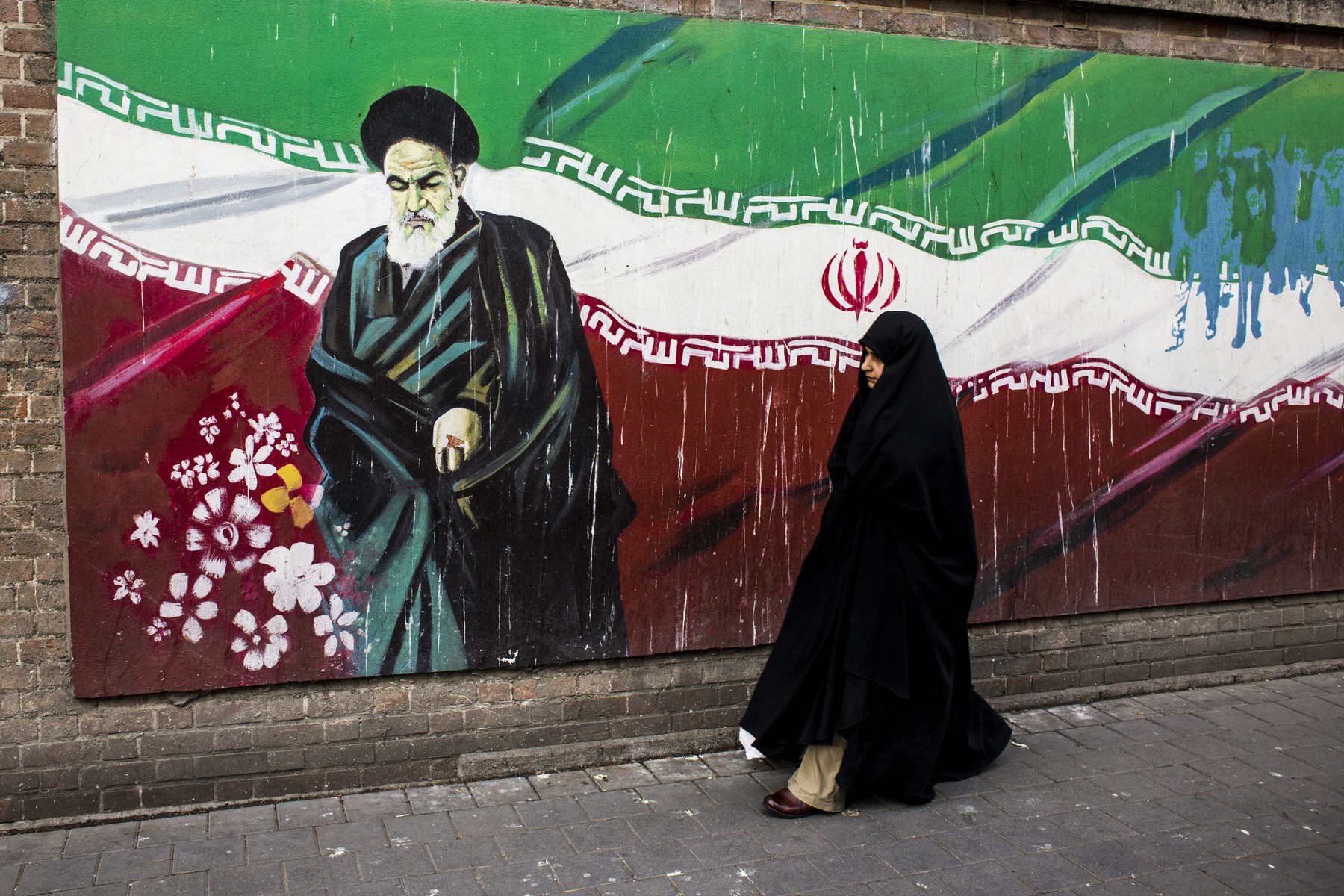
The events of recent months resembled the fall of the religiously oriented regime in Iran, which has long been cited as an example of non-secularized states in modern times. A look inside the regime, led by one of the ayatollahs or titled scholars of Islamic issues, reveals that the corrupt regime resembles the role of communist parties in Eastern Europe.
The European Middle Ages are often associated with religious fundamentalism and the significant role of the church not only in the everyday lives of believers but also in the power structures of states at the time. Today, the idea that the richest person in Moravia is the Archbishop of Olomouc, with his own army to advance his interests, is unimaginable, although this was the situation for the highest church official in the eastern half of the country for many centuries.
Religion has transformed into a community organization and contributes to civic life mostly through church schools, hospices, or the management of historical sites. However, even in the 21st century, Iran remains a theocratic state where the Ayatollah rules by virtue of being the Supreme Leader of Iran.

The Supreme Ayatollah Who Wasn't an Ayatollah
Although it might be tempting to compare it to the medieval role of the church in our country, the Iranian regime is certainly not a relic of the distant Middle Ages that simply "forgot" to reform. Paradoxically, representatives of the Shiite clergy there historically had only a very limited influence on society in the Middle Ages. They could interpret Islamic law, but all political power was held by a despotic ruler. As is well known, at the end of the 1970s, the rule of the Shahs ended and was replaced by the Islamic Republic of Ayatollah Ruhollah Khomeini.
The principle was meant to be the rule of Islamic scholars, known as Velayat-e faqih. These scholars are the ayatollahs, a title that indicates a certain level of knowledge of the Islamic religion. The term itself is telling, as it was reportedly used as early as the 13th century according to historians, but it wasn't widely popular until the second half of the 20th century with Khomeini's revolution, which was massively supported by the Iranian people.
The high level of knowledge of Islam, however, eventually proved to be somewhat incidental. When Khomeini died in 1989, his successor was chosen to be the then-president of Iran, who, in the theocratic system, is subordinate in everything to the Supreme Leader, Ali Khamenei. Yet, he lacked the title of Ayatollah, which was flexibly granted to him only after his appointment to the position.
In the 1990s, Khamenei also failed in his attempt to become a Grand Ayatollah, of whom there are currently only 5 (with ordinary Ayatollahs numbering only in Iran at 5000), and one of whom lives in Iraq.
Corrupt System of Revolutionary Guards Resembles Czechoslovak Communism
This raises questions about whether the Islamic Republic is primarily about power, with radical faith in Islam serving as a secondary cover. The backbone of the entire regime is not only the ayatollahs led by the Supreme Leader, elected from their ranks, but also the Revolutionary Guards.
Members of these armed forces, which are strictly separated from the official Iranian army, lead the real exercise of political and especially economic power in Iran. Their family members occupy privileged positions in government, companies, and other institutions and enjoy economic prosperity.
This corrupt system is then subject to criticism from repeated demonstrations. The bloody suppression of protests from this year has become a prelude to the current conflict, which has agitated oil prices on global markets.
Membership in the Revolutionary Guards, enabling career and social advancement based on entrenched corruption schemes, almost mirrors the functioning of communist parties in Eastern Europe before 1989 and is still practiced in communist China or Vietnam. Around 125,000 members operate as an effective political-business empire.
The state of the ayatollahs is somewhat a mixture of what we know from the dark Middle Ages and the equally dark side of the second half of the 20th century, as well as from our own history.
Sources: original text, commentary, BBC, AP, The Arab Weekly, Wikipedia