The parents of both families test the possibility of marriage in advance and two things play a key role: first and foremost, the girl's wish and then the amount of property that the groom's family has to pay, whether in the form of cattle, small livestock, or even weapons and ammunition. Negotiations can take several months before an agreement is reached.
The Surma primarily live in southwest Ethiopia, in the Omo valley region. A wedding is a ceremonially and socially rich event. It includes the cooking of traditional beer Borde, singing, dancing, and the ceremonial entrance of the bride into her new hut and into the groom's family. For Surmas, marriage is not only the union of two people, but also links kinship groups and creates multi-layered alliances. Divorces are rare, underscoring the importance and durability of this traditional bond.
Hard, but proud life
For young men, an important step into adulthood is combat, in which they prove their courage and strength. However, entering adulthood is even more challenging and painful for girls. When the time comes for them to prepare for marriage, they are faced with a ritual we would consider cruel.
Prodej secesní vily, Praha východ - 609m, Okolí Prahy
Show property
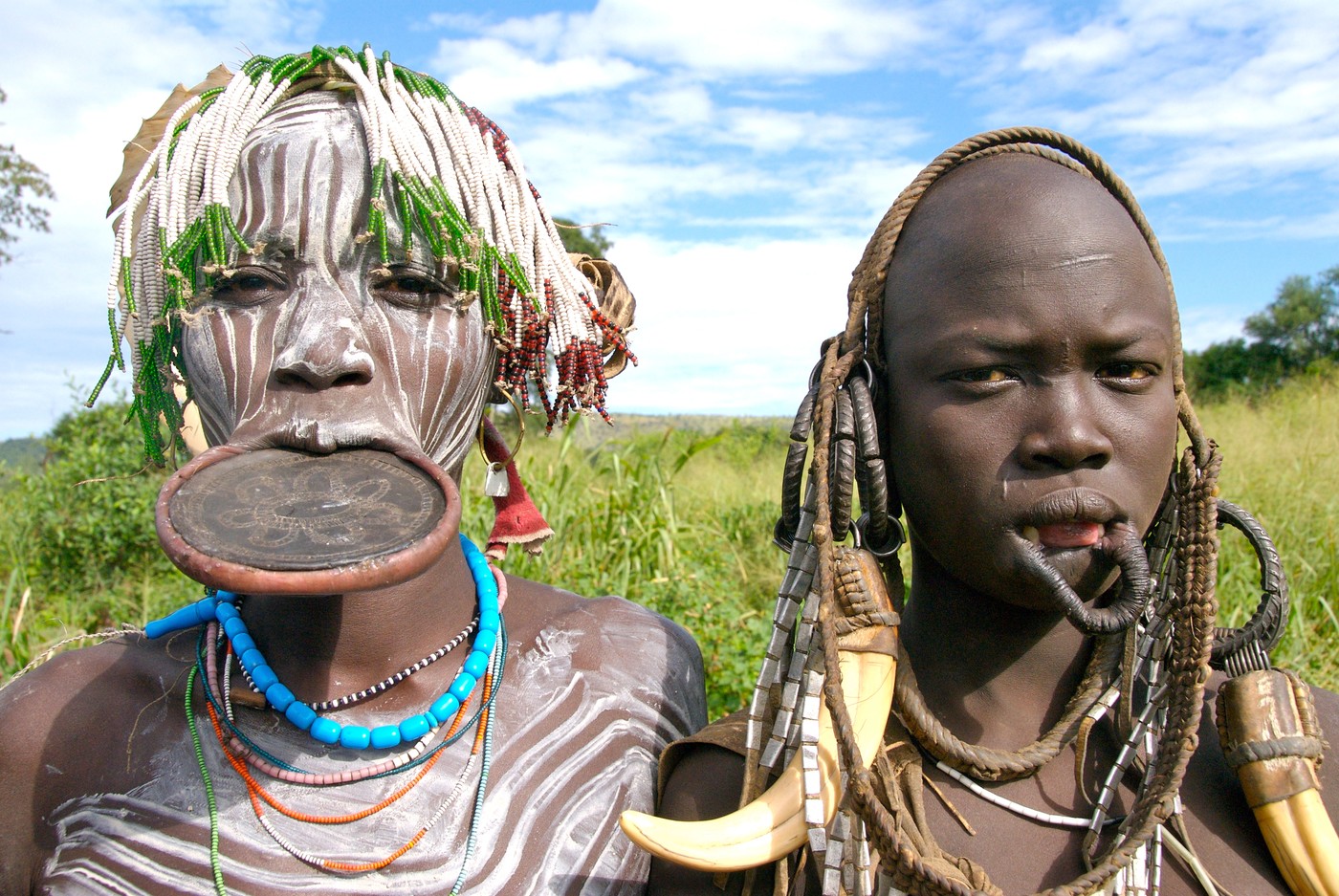
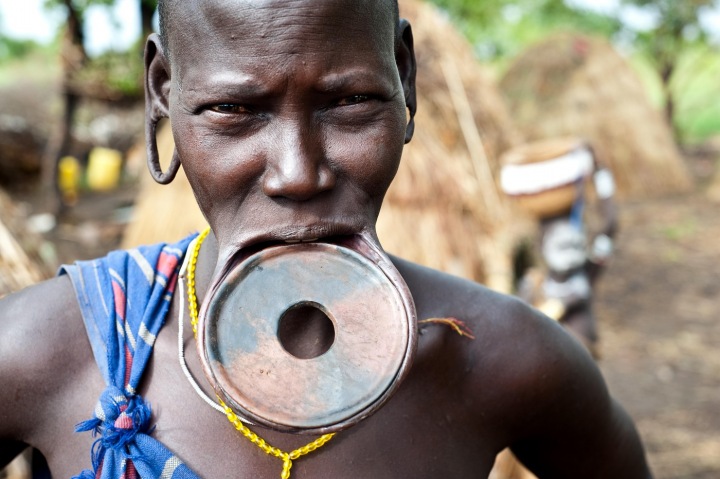
First, their lower teeth are knocked out with a stone, then their lip is cut with a razor and gradually stretched with wooden pegs. After healing, a clay disk known as a labret is inserted into the lip, which is enlarged over time. The size of this "plate" is not just an ornament, but also symbolizes a woman's social status and the value of her dowry. The larger the labret a girl wears, the higher her value in marriage.
It is assumed that they began to be worn during the slave trade era to prevent raiders from abducting women of the Surma tribe. Nowadays, they are maintained as a symbol of pride and beauty, although this tradition is slowly dying out. Lip plates are not permanent and can be removed for eating and drinking. They are not worn most of the day; women choose when to wear them. When wearing them, they stretch their lower lip around the outer edge of the clay disc/plate and can also remove it quickly. Written by Pulse.ug.
The life of women in the Surma tribe is associated with pain and deprivation, but it is not suffering for them, but a source of pride and identity. What seems drastic to us from the outside, they perceive as beauty and part of their culture, which follows them through generations.
The Surma people are proud of their scars and how many they have. Women perform decorative scarification by cutting their skin with a razor after picking with a thorn. After slicing the skin, they eventually let the remaining piece of skin scar over. Men, on the other hand, traditionally left scars on their bodies after killing someone from an enemy group. Along with stick fighting (see below), this tradition, which is quite painful, is a way for some observers for younger Surma to get used to the sight of blood and the feeling of pain.
The winner chooses a partner
Men's combat skills are tested in the ritual fight Saginé or Donga, where they compete with sticks and often get injured. Originally, these were ruthless fights, the aim of which was to prepare young men for conflict with other tribes, today these fights are also demonstrated for tourists in more remote areas as an example of traditional art.
Saginé is a smaller, individual fight, in which a man demonstrates his strength and skills. This fight is often held as a proof of adulthood or before a wedding and serves more as training and a show of personal courage. Men use a stick or staff and only face a few opponents. The purpose is primarily to show their own combat readiness and ability to protect the family.
On the other hand, donga is a large ritual fight between groups of men from different villages. Twenty to thirty men join the battle at once, fighting in a circle with long sticks, sometimes ended with decorative elements
In addition to demonstrating personal power, donga also serves to gain prestige for the whole village.
The tribe as a whole is usually led by men who meet at gatherings and make decisions. Women can express their opinion only before the discussion, not during it. On the other hand, each household is the domain of women, who manage it and take care of the family.
Although many would expect members of the isolated tribe to be suspicious and ward off foreigners, the Suris are surprisingly friendly. They are used to tourists and often welcome them with a smile and open arms. Their culture is unusual and often shocking for Europeans or other visitors, but the Suris are extremely proud of their traditions.
The Suri tribe is a fascinating example of how it is possible to maintain original traditions despite the pressures of the modern world. Their culture is tough and often shocking for foreigners, but also very accommodating to visitors.
The number of cows is important
The Suri tribe, also known as Surma, is a collective name for three groups: Chai, Timanga, and Suri Baale. It's an agricultural and pastoral nation, living in a vast area west of the Omo River, not only in the national park with the same name but also outside of it, extending all the way to South Sudan. Like their Mursi relatives, cattle are of great importance to the Suris. It is the basis of subsistence, a symbol of wealth and social status. When a cow dies, they mourn it just like a member of the family.
The number of cows determines the social hierarchy and is also important in everyday communication. When meeting, men often ask how much cattle the other has. The answer immediately reveals their social status. For this reason, young warriors often go on raiding expeditions to neighboring tribes to increase their herds. However, they do not kill cows for meat, except on notable occasions. Milk and blood are much more important to them. Milk is milked into gourd-made vessels and blood is drawn into similar vessels.
The actual blood collection is a ritual. The selected cow is fixed, a vein is opened on its neck with an arrow, and the blood is collected into a vessel. The amount depends on the size of the animal. It can be half a liter, but also three liters. The wound is then treated with a mixture of clay, dung, and plants, and the animal returns to the herd. The blood must be drunk fresh, often mixed with milk, to be even more nutritious. Especially young warriors, who spend long weeks with cattle in pastures, maintain their strength in this way.
Open in gallery (1)
At first glance, the Surmovians look very similar to the Mursians, but they can be distinguished by their clothing or ornaments.Source: Profimedia
Surma people live in villages which can have from tens to thousands of inhabitants. The largest settlements have more than 2,500 members. The egalitarian way of life prevails. Chiefs, known as komoru, primarily have ceremonial functions and serve as respected elders, but without executive power. In recent decades, education is beginning to spread, some Surma people speak Amharic and even hold political positions. It is even possible to communicate in English with some of them today.
According to tradition, they came to the area about 200 years ago from the Nile region, where the Dinka Bor tribe lives today. Their religion is based on a belief in a force called Tumu, which rules both the heavens and the earth. They have no established religious cult, do not identify with Christianity or Islam, but rather with their own traditions. They make protective amulets and believe in their power when traveling or in relationships. Music and dance are an essential part of their culture - singing and sounds mimicking birds or animals complement simple musical instruments.
Death is perceived as impurity. Only certain clans can bury, and the body is washed with sheep's blood before burial. Fallen warriors are an exception, they remain on the battlefield covered with branches. Mourning lasts five days, after which the house is cleansed with the blood of a bull or cow. The Surmas do not believe in an afterlife, so they consider death to be the end.
Traditional enemies of the Surmas were the Nyangatoms, often associated with the Toposa tribe in Sudan. Their conflicts, accompanied by modern weapons, have claimed many victims in the past. However, today these bloody clashes are receding and trade is appearing instead. They also have strained relationships with neighboring agricultural tribes Dizi, while maintaining good contacts with the Jiye and Shangalla tribes.
Socialization in the tribe
In the Suri tribe, the socialization of children is very specific and focused on promoting independence and assertive behavior from an early age. Boys and girls learn life skills mainly through games and practical activities, which are part of the daily life of the community. Unlike some other tribes, children are not physically punished. Instead of beating, verbal warnings, advice, encouragement, or reprimands are used.
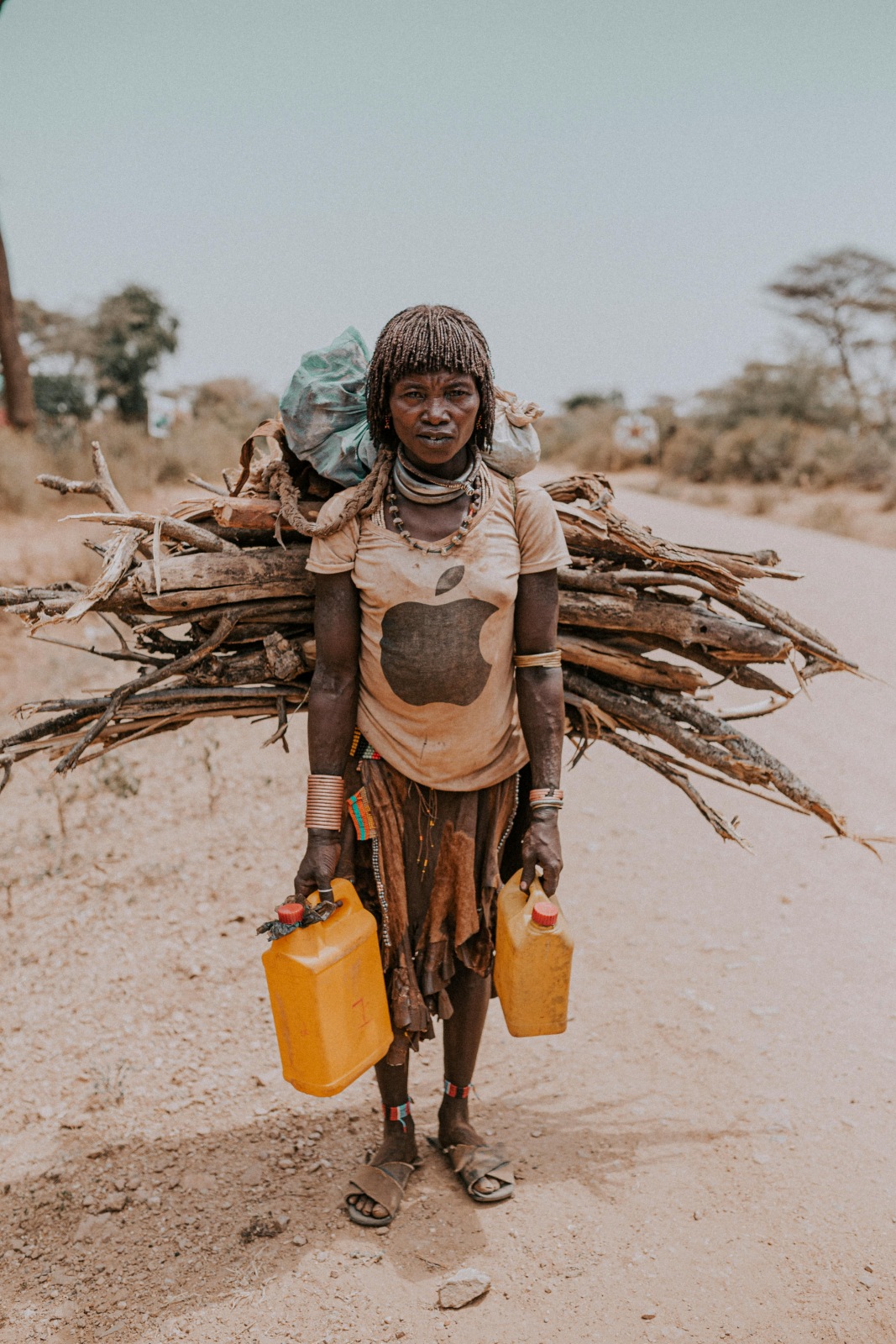
Children gradually imitate their parents, older relatives and peers, learning the tasks typical for their gender. From the age of six or seven, they participate in collective activities, whether it be games, fruit collection, herding cattle, fetching water, searching for wood, or grinding food, always in groups divided by sex.
Adolescent boys participate in ceremonial stick fights, which are an important social event. Older community members form age groups, to which younger ones show great respect, and in the domestic sphere, parents are respected authorities for their children. Intergenerational violence practically does not exist, which is a striking difference compared to surrounding tribes.
Currently, the government provides free education to the Suri children, but contacts with other ethnic communities or communities outside the group are still limited. Thus, children develop a strong sense of group identity and pride in their tribe, which often leads to disdain for all those who are not Suris.