I'm moving to Nusle: In the district with a rich cultural history we can find parks as well as timeless living in a brewery


Nusle is a very old village that over time has become a city district in the center of Prague. Today it is known mainly thanks to the Nusle Bridge, which is one of the highest in Europe. Vineyards were long located here, today in the district we find a number of interesting corners, whether it is a newly renovated brewery, an art garden and typical for the neighborhood is also the famous Na Fidlovačce Theater.

The first mention of Nusle dates back to the 11th century, making it one of the oldest historically documented villages in our territory. In the Middle Ages, its territory was dominated by vineyards, as was typical for Prague and its surroundings. However, times have changed and just as we don't find much left of the Prague vineyards, we also don't find many monuments from the medieval village in Nusle today.
At the end of the 19th century, it even became a separate city, only to join Prague at the inception of the first republic. Already then, the first plans were being made to bridge the Nusle valley to Vyšehrad, whose Vyšehrad chapter originally owned the medieval village.
District with a bridge named after a communist leader and a unique art garden
The architectural dominant of today spanned Nusle until the 1970s and bore a name befitting the era. The Klement Gottwald Bridge had to deal with a shortage of materials during its construction, but the architects managed to complete the megalomaniacal building nonetheless.
Although the "Nusle Bridge" significantly improved traffic access in Prague and allowed the construction of a subway station at Vysehrad, it probably will not be the main attraction why to move to Nusle. A greater attraction is the rich cultural past of the spot.
The district is characterized by a shared history with one of the most famous Czech theatrical plays. It is here that the plot of the play Fidlovačka, or No Anger and No Brawl by Josef Kajetán Tyl takes place. The Theatre Na Fidlovačce, which is one of the most popular theaters in Prague, claims its legacy.
The possibility to relax in a cultural environment is provided here by the unique Artistic Garden. It was founded in the 1920s by Karel Novák, who built his studio here, where he composed figurative statues. These are today the decoration of the mentioned park and it is possible to walk around them. Access to the aesthetic experience-filled space is not a given.
In the times of the previous regime, the place was falling into ruin until it was taken over by the patron Vojtech Haluza, who invested considerable effort into its restoration. Sculptures were buried under a layer of debris and had to be dug up during the reconstruction. The movie "Modrý závoj", which was filmed here in 1941, served to find out the original appearance.
Nursery application and living in a brewery
The Art Garden is not the only park in Nusle and the Folimanka Park is also very popular, being the goal of weekend walks of all Prague residents. But humans don't live by parks alone and for parents with children, the local city hall is planning an interesting communication project in the form of a "nursery" application.
"The application will include not only direct and secure communication between teachers and parents, but also the management of a digital register, an online bulletin board and calendar of events, electronic attendance records of both children and employees, or online transcription of excuses and accident book. The enrolment will be fully electronic,"
commented on the modern communication technology for kindergartens by the deputy mayor of Prague 4 Filip Vácha (TOP 09).
The local brewery, which was created by the conversion of an old mill at the end of the 17th century, is an integral part of Nusle. At that time, it was the largest private brewery in our territory. This beer primacy is long past, however, the brewery still belongs among the landmarks of Nusle.
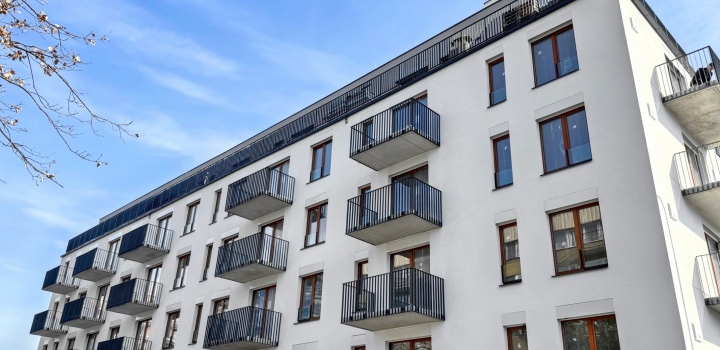
However, the building underwent another reconstruction. The unused production area was converted into a residential complex, the aim of which was to modernize the space with regard to its cultural value. You can move to Nusle directly into an apartment in the former brewery.
Sources: author's text, prahaneznama.cz, prazsky.denik.cz, umeleckazahrada.cz, wikipedia.org, MČ Prague 4