I am moving into an apartment from the 19th century wrapped in the coat of today. On Štěpánská street, it can be found amid a plethora of exceptional architecture.


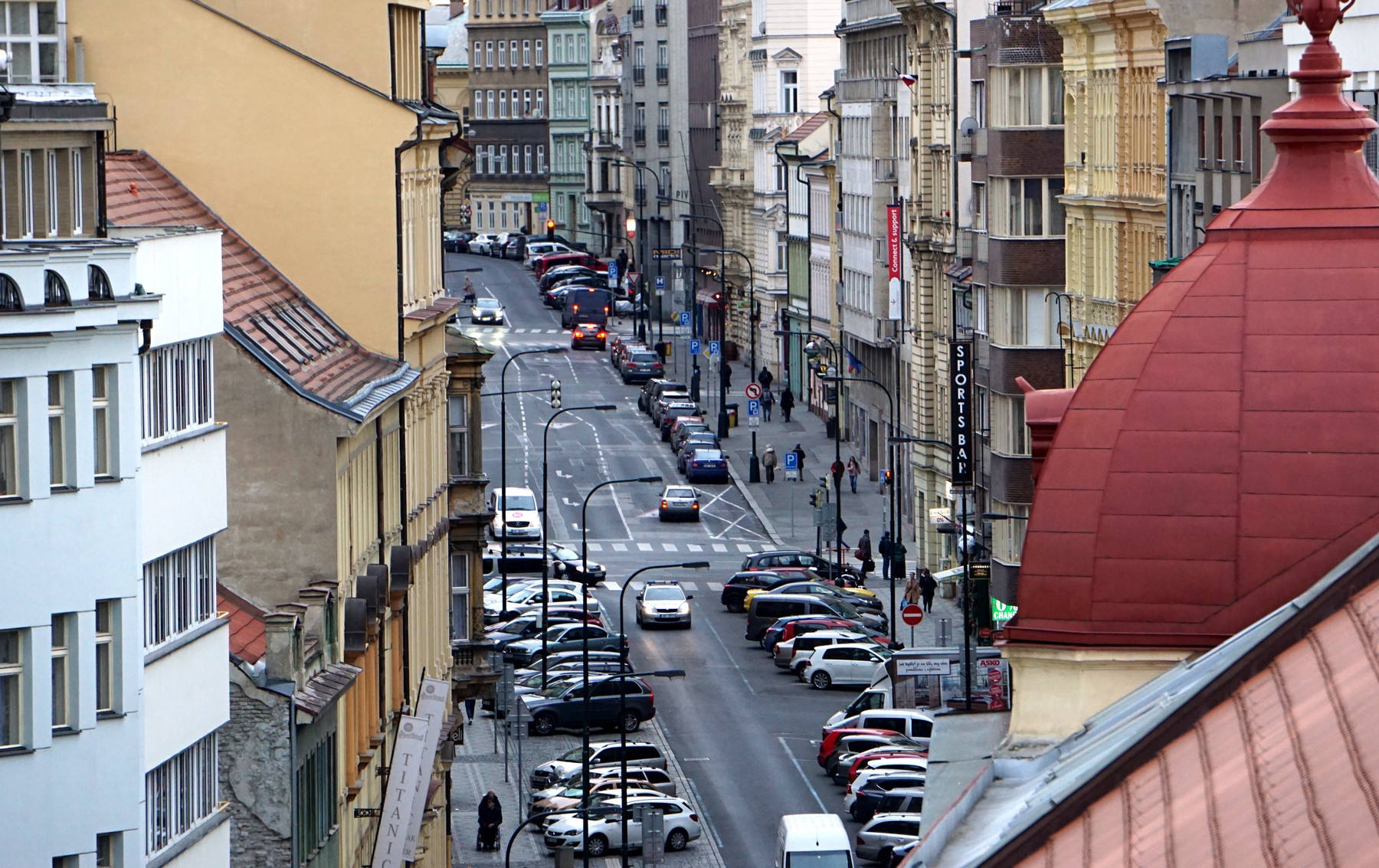
Prague is known for its history and a large amount of preserved historical architecture. Living in historic apartment buildings attracts those who enjoy looking back into the past. From the 19th and early 20th centuries, when classic apartment buildings were constructed, fortunately today we only come across design elements. Modern renovations bring the comfort of living. In the next installment of the series, we will look at such living in Štěpánská Street in Prague.
When we look beyond panel housing estates and newly built apartment buildings, especially in the center of Prague, several-story tenement houses are the standard. Their moment in history came in the 19th century. The catalyst was the abolition of serfdom in 1781 and the subsequent industrial revolution.
Factories needed workers, and they in turn needed housing in the cities. A typical example of this type of worker housing development was Žižkov. There, one would find modest accommodations often utilizing corridor passages to individual apartments. However, Prague residents did not only live in tenement apartments in Žižkov, but the more affluent they were, the more they inhabited the city center.
Bathrooms Were a Luxury in Apartment Buildings
The first rental apartment building, where apartments were rented to tenants for regular fees (i.e., rent), was reportedly Platýz on Národní třída. Typically, in the highest floor, where the most prestigious living space was located, resided the owner, with tenants on the lower floors.
Relatively grand internal staircases became a sign of higher standard living. These staircases are generally not significantly altered in older buildings, and returning home via such a staircase always evokes a walk through history. In many buildings, typical cast iron railings or walls decorated with ornate stucco work have been preserved.
Today, bathrooms with running water are commonplace, but in apartment buildings, they were not always a given. As late as 1920, only 20% of Prague's apartments had this kind of bathroom. Therefore, residents in Prague went to various public facilities for bathing.
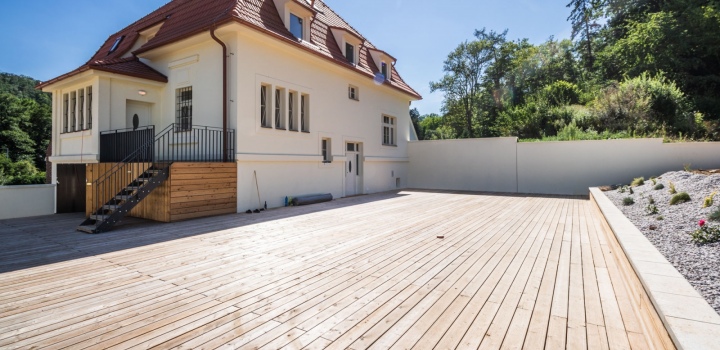
Today we find in the center of Prague several such buildings with carefully renovated interiors that combine historic design with modern apartment furnishings. A typical feature of the interior is the high ceilings, which bring a touch of gilded luxury from times gone by.
An example of such a locality is Štěpánská Street connected to Wenceslas Square and its surroundings. Paradoxically, around its corner, we find the birthplace of Jaroslav Hašek, who is known more for his reflection on the working-class environment of Žižkov than the birthplace district of Prague.
You no longer jump onto trams
The depth of history in this locality is certainly worth attention. On Štěpánská Street, we find the rotunda of St. Longin documented as early as the year 993, making it one of the oldest preserved buildings in all of Prague. It was probably preceded by a pagan sanctuary. Žitná Street, adjacent to Štěpánská, is possibly named after the rye fields that probably existed here in the past. The place thus has a rich history behind it.
Currently, locations in Prague's center can take advantage of extensive transportation options via public transport. Štěpánská Street offers pedestrian access to metro lines A, B, and C (Můstek, Muzeum, Karlovo náměstí). However, a crucial political issue of today is the car traffic of non-residents in downtown Prague.
“Prague 1 is mainly concerned with the delivery of small goods, with 70 to 75 thousand supply vehicles, 85% of which are personal cars, passing through the center every day. Surely, it's possible to deliver sirloin and pizza by bicycle or scooter, as is the custom worldwide!”
declared in the magazine JEDNA Vojtěch Ryvola about the challenges of personal transportation in the center of Prague.
At the turn of the 19th and 20th centuries, when architectural gems were being created, which Štěpánská Street is full of, including the Alcron Hotel, once a symbol of luxury in Prague's hospitality, the major concern in transportation was the popular but dangerous jumping on and off trams while in motion.
Sources: author's text, Encyclopedia of Prague 2, ČRo, Nespěchej, Jedna