Her life has been complicated by an incurable disease since she was little. At first, they didn't even want to admit her to kindergarten.


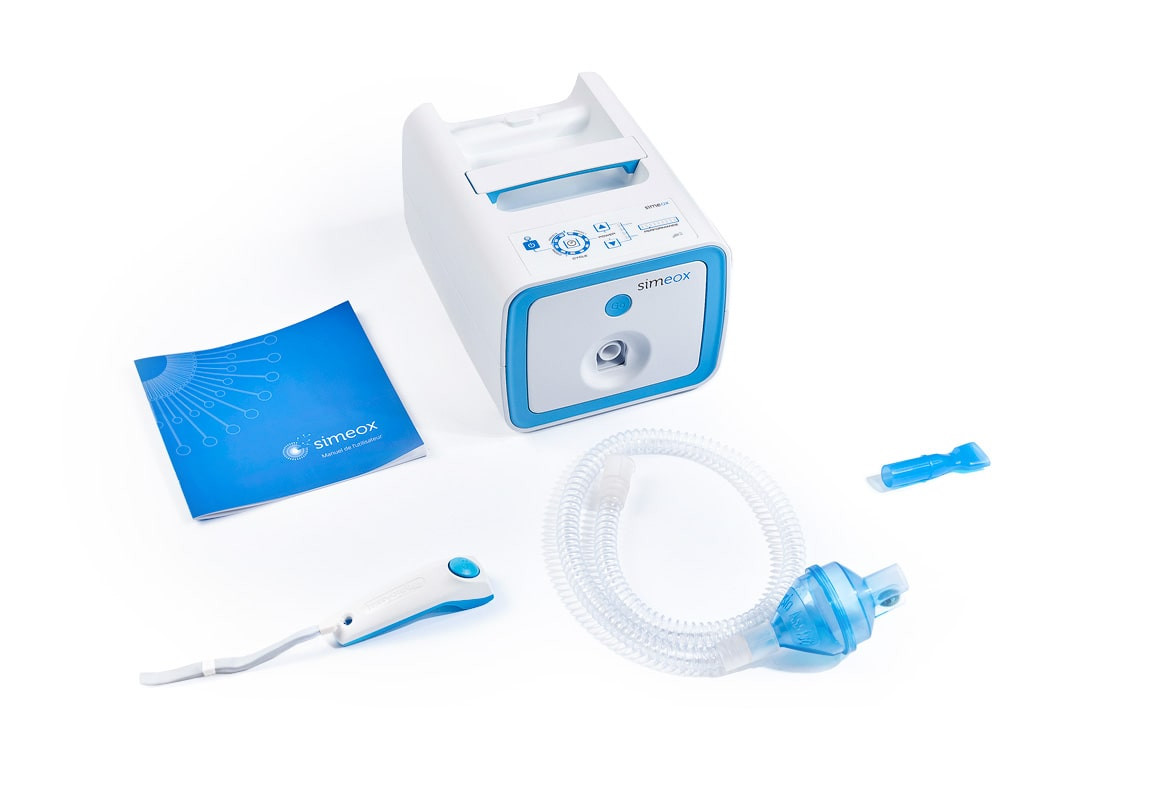
Eighteen-year-old Daniela has been suffering from primary ciliary dyskinesia since she was very young - a genetic disease, which results in constant runny nose, cough, frequent surgeries in anesthesia, and impaired hearing. The family discovered the diagnosis only when she was eleven. Daniela's life could be made easier by a special Simeox device, but the insurance company does not cover it. She revealed in an interview how challenging it is to live with this disease and how the device would help her.

Daniela suffers from a lung disease. Can we briefly describe the symptoms of the disease?
Daniela: It means that I have a cough and a runny nose every day. I constantly have to clear my throat, I always have to carry tissues with me.
It limits me in that I can't do any active sports, I can't handle longer runs.
When did you notice that something was wrong and how did the disease start to manifest?
Mother: Immediately after birth. She was born healthy, but had to go to the ICU, was on oxygen, and had shortness of breath as soon as they took her away from me after delivery.
From birth it meant, after that month when we got out of the hospital, constant suctioning and we didn't know why this was happening.
What do the doctors say? Surely there were a series of examinations.
Mother: Given that Daniela was born in České Budějovice, which is the largest hospital in South Bohemia, she immediately got into the care of babies who have some problems.

But was the diagnosis clear?
Mom: The diagnosis was not clear at all. It was suspected that she had an unventilated lung lobe, that she might have inhaled amniotic fluid, and that it would improve over time. Unfortunately, the symptoms of cold, cough persisted and Danielka underwent a series of examinations, that means, even in the maternity hospital, they were discussing whether she might have cystic fibrosis, which was luckily ruled out in a large percentage, but there was no direction in which we should continue. So we visited different specialists.
The diagnosis came only at 11 years old.
Mother: Danielka was a bit unlucky. When she was four years old, doctor Němečková from the paediatric department in České Budějovice pointed us in the right direction, so at that time we went to Motol for an examination about her cilia, but the diagnosis of this disease was still in its infancy.
Because in addition to that, Danielka has a rare disease where the cilia move, but poorly.
So if they didn't move at all, they could have said, "yes, something is wrong here," but because they're moving differently than they should, they couldn't recognize it back then, and therefore it was said, "there won't be a problem here."
And we waited again for several years before she got back to Motol.
Things were completely different there, because after a few basic examinations, the doctor was saying that it would definitely be eyelashes.
What is the name of the disease and what did the doctors tell you about the diagnosis?
Daniela: The disease is called primary ciliary dyskinesia, abbreviated to PCD.
And how rare is this disease? How many children in the Czech Republic have such a disease?
Mom: When they diagnosed Daniela, there apparently weren't even a hundred of them in the Czech Republic including adults. The big problem is that those adults live with it for many years and don't do anything about it because no one diagnoses them correctly.
Did you have a diagnosis, are there any medications? How has the condition improved after that diagnosis?
Daniela: Before, without that diagnosis, I had pneumonia every year and with knowing what I have, it could be prevented.
I started taking targeted preventive antibiotics, all year round and I avoided bigger diseases.
Antibiotics all year round, are you still taking them?
Daniela: Yeah, yeah. We only stop it during the summer holidays, I don't interact with so many people then.
How often is a doctor's check-up done?
Daniela: I go every quarter. I visit both the pulmonary department, as well as the ENT, because I also have problems with my hearing, it's worse and I have tubes in my ears.
How demanding is the treatment? I'm also asking from a financial point of view. What does the insurance cover and what doesn't it cover?
Mum: Antibiotics are no problem, they are covered.
But it means supplementing the treatment with probiotics, then drugs for expectoration, which the insurance does not cover.
Fortunately, since Dáda has a good immunity, there is no need to worry about vitamins or special supplements, but this primarily means time-consuming work for Dáda to master all the techniques she should do, which a healthy individual's body would do.
How did your school change? How did your day go when you didn't know yet what was wrong and how did that change over time?
Daniela: I used to miss a lot of classes. Even though I don't remember much of how it was from first to fifth grade, I know that I then had to catch up on school, that I missed basic things in school and then I had to catch up all month. Currently, with this diagnosis, it has changed and I don’t have to miss so many.
Mother:
Since the start of preschool, it was a mess because she was there for a week and then home for three weeks. We had to have proof from a doctor that she had a runny nose all year round, that she would never go to preschool without a cough and a cold.
Otherwise, they did not even want to take her there, I had a part-time job and fortunately, my mother went into early retirement, so it could somehow be managed, otherwise I would have had to stay at home with her, otherwise it would not be possible. The sickness rate in preschool was huge. In elementary school, it slightly improved, because she was in a class with few children, but still it meant, every fall, every spring pneumonia, so a stay in the hospital and then convalescence at home and in between basically home schooling, so we were catching up with what was needed.
Did friends distance themselves? Was there any support?
Daniela: They have certainly never distanced themselves, they didn't say they didn't want to talk to me, but I must say that I got a positive feedback from friends, they continued to chat with me. It was sometimes harder when I, let's say, missed a week, then actually a person falls out of the pace and has to return to where they left off before.
What does your typical day look like?
Daniela: I wake up in the morning, I should do the mucus clearance process three times a day, inhale a saline solution, but usually I don't have enough time in the morning, it takes some time. When I have time, I use the inhaler in the morning, I clear my mucus before going to school. Then I go to school, usually by bus. I spend the day at school, currently with graduation it has improved, because I don’t have as many lessons. Then I come home from school, clear my mucus again, then either I study, do my homework or indulge in my hobbies and in the evening before going to bed I use the inhaler again.
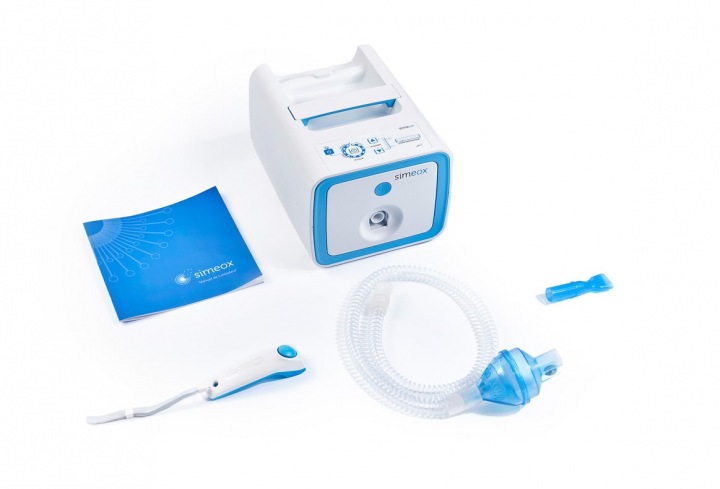
The Naše plíce Foundation has launched a collection for the Simeox device, which could help you, so how and in what will it help you?
Daniela: I already have it borrowed from Motol from the pediatric bed part and it helps with expectoration of the lower parts of the lungs, where mucus normally settles and with regular inhalation, I would not be able to get that mucus properly out of those lungs. So it helps in not having the lower parts of the lungs clogged.

What is the prognosis of the disease?
Mother: It is a genetic disease for which there is no cure yet. Research focuses more on cystic fibrosis, where the progression is usually much worse. Hopefully here, since she has some devices that help her to mucate, it should not be deteriorating significantly, but of course, she has problems with hearing and issues, where she recently had to have mucus suctioned from her lungs at Motol, so these are procedures that can help with this situation.
This device should help in reducing the frequency of the procedures and would help her to clear her lungs.
Is there a risk of hearing damage?
Mother: Theoretically it's possible, because she had eardrum surgeries and has ear tubes, so it's an intervention in the eardrum. The eardrum is already damaged, so it could happen that the hearing worsens in the future.
The disease limits you in physical sports. But you have another hobby and you are successful.
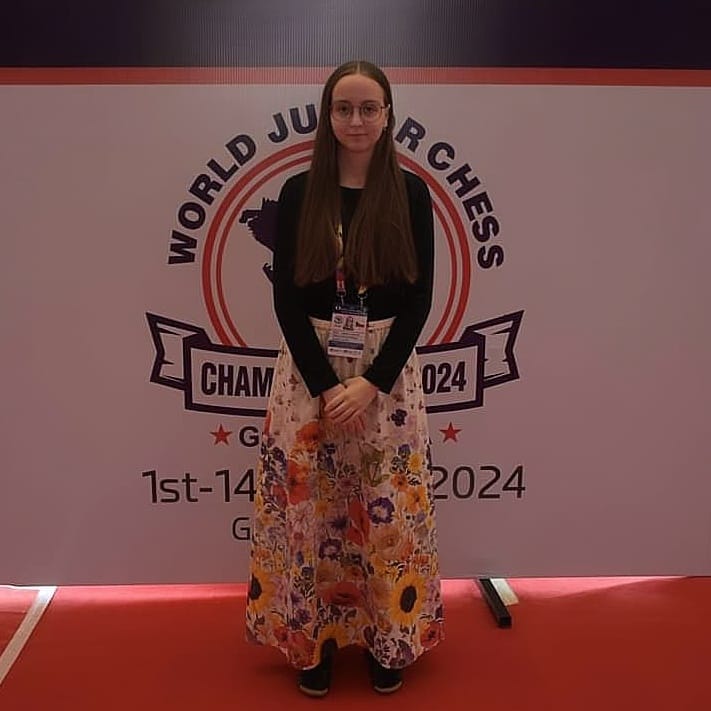
Daniela: I've been playing chess since I started first grade, so since I was six or seven, and I've had successes at several championships in the Czech Republic, in the girls category, but I've also done well in regional competitions among boys. So I was able to break the barrier that girls and boys are separated.
Chess requires concentration, silence. Does your illness limit you in this?
Daniela: Mostly, I try to blow my nose and cough before I have to deal with it during the game, but certainly it has happened to me several times that I suddenly need to blow my nose. Blowing my nose is not such a problem, but usually my cough is more unpleasant, I have to leave the room, go to the toilet, clear my throat there and come back.

What would you wish for in the coming weeks, months? You are about to graduate. And what would you like to achieve in that sports field?
Daniela: I would like to continue to improve, I would like to get a women's title and then it would be nice to get into the women's representation, but that is a long-term goal.
And what would you wish for? Perhaps in connection with your daughter's illness?
Mother: For it not to get worse. Now that she has the diagnosis, we know where we stand. The time when you go to specialists and they all say: "we don't have such a thick file on any other patient here." And you deal with acute problems, it was very hard. So I would wish that Dáda's health holds up in the future.
Was the diagnosis a shock for you or did it relieve you?
Mother: We significantly breathed a sigh of relief. I have to praise all the doctors who have been caring for Dáda since birth, because there was tremendous helpfulness, the approach was great.
It was a relief, we finally knew that the disease is not completely life-threatening, but it is for life.
Source: original article, own questioning