Fair's fair: The European Commission has prepared a Christmas gift for petrol lovers. However, it won't be for free


The automotive revolution began to take a slightly different trajectory than it might seem at first glance. In 2035, a ban on the sale of cars with combustion engines was supposed to start, but the European Commission is now preparing to postpone it and it is hard to find a unified voice among the representatives of the member states that would outshout this idea. Nevertheless, automobilism is undergoing a fundamental transformation. For the Czech Republic, with a record number of passenger cars, this is an even greater challenge than for most other European states.
The comfort of our life is based on energy obtained from fossil fuels, but this causes environmental problems so serious that it might stop paying off. The whole world is looking for an answer to the question, what to do about it. One of the first ideas was to limit car traffic, or rather to limit the burning of fossil fuels in this way.
However, modern man cannot walk everywhere. It's not an exaggeration. Not only would he lose the ability to commute to work and thus a whole series of economic segments that generate money for our society would collapse, but also living only within the radius of where we can walk would not be worth much.

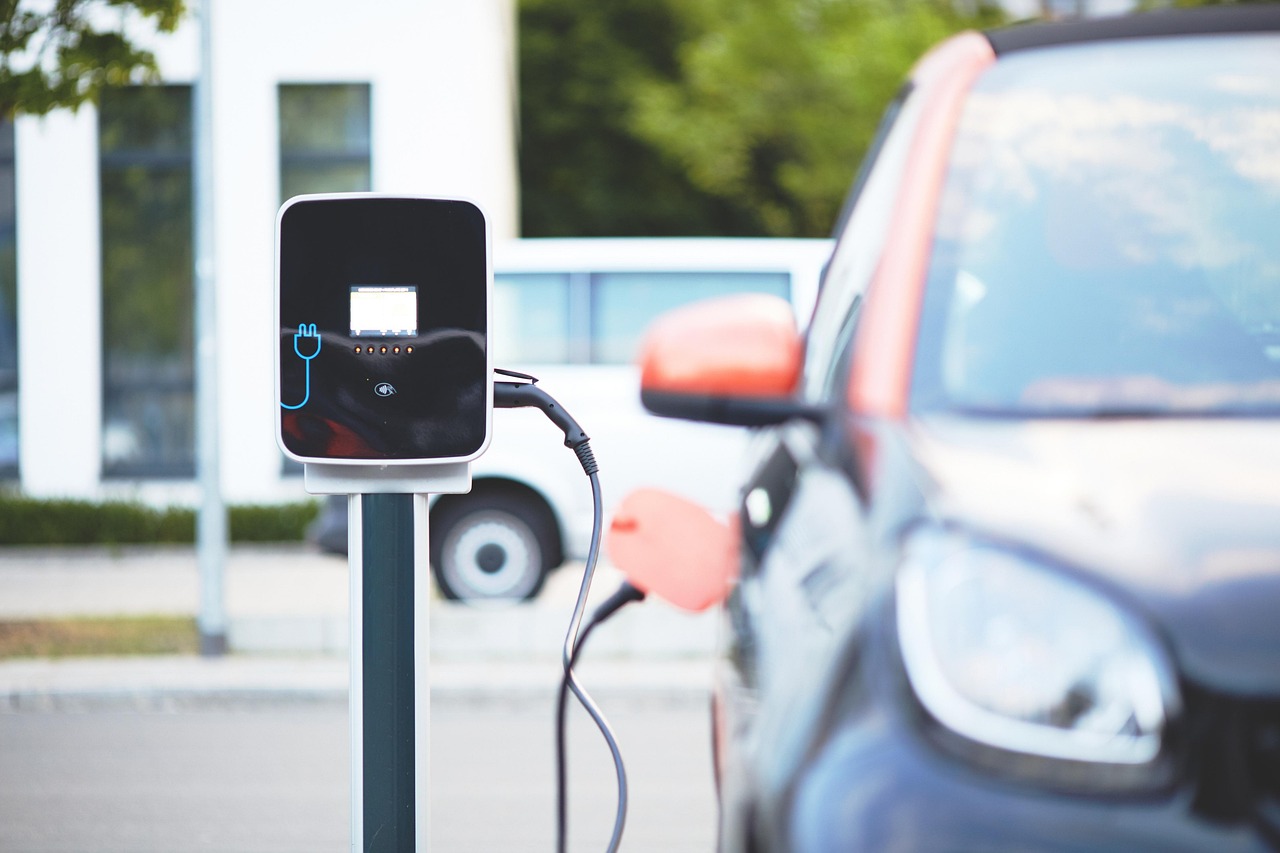
The problem of transport is to be solved by replacing the combustion engine with an electric motor, an old-known technology, which was used in cars as early as the beginning of the 20th century and has one fundamental advantage. An electric car does not have an exhaust, but replacing global automobility with electromobility is not that simple.
Now the European Commission has also realized this, preparing to cancel one of the pillars of its environmental policy in the form of a ban on the sale of combustion engines in cars in 2035. The EU is not the only country with these ambitions and it may surprise that even stricter regulations on car sales are in place in Brexit Britain, where from 2030 carmakers are allowed to sell just 20% of cars without local emissions.
There are, however, calls for easing here and there. But it would be a mistake to assume that everything in the world of cars will remain in the current state, when electric cars are in the minority. This will certainly change in ten years, but it's hard to say how. The European Commission has now shifted into reverse, but is definitely only releasing the clutch very carefully, so as not to scratch the varnish on new cars.
"Proposals to change the ban on combustion engines are finally on the table, but it is, as they say, a big bad. So we have a lot of work ahead of us. One absurdity over all: due to brutal regulations, really do not expect that there will be enough so-called green steel in the EU, which car manufacturers will be able to buy,"
MEP Ondřej Krutílek (ODS) criticized the current EC plans.
Yes, there will be regulation. We don't know what kind yet, because a fight will break out not only in the European Parliament, but mainly in the Council of the EU (a body of ministers of member states). Just look at the price tag of new electric cars, and it's clear around what the chess game with the transition to electromobility is played.
An interesting side note of this game can be observed also in China, who would like to become a leader in electric car production. However, their centrally controlled economy produces so many electric cars that their price drops sharply. According to estimates, up to 3% of the state budget goes to electromobility support in China. A figure difficult to imagine in the wettest European subsidy dream.
For us, the Czech chapter is the main one, even though it cannot go down the main path of world events.
"According to the number of personal cars per inhabitant, the Czech Republic ranks fourth among EU countries. According to the age of the car fleet, we are the second oldest. According to the Ministry of Transportation data, at the end of 2024 there were 9,072,729 motor vehicles registered in the Czech Republic, of which 6,638,172 were personal cars. Compared to 2023, the car fleet increased by 125,398 personal cars and by 175,801 vehicles in total. For every adult inhabitant of the Czech Republic (18+), there is 0.75 personal car, or 1.33 people per car,"
The Czech Statistical Office summarized this in September of this year.
From the perspective of these numbers, it seems that the older the vehicle fleet, the more cars on the road. It can be added that the older the vehicle fleet, the more health-damaging emissions, not to mention the carbon footprint. The central part of Prague is also at the edge of its transport capacity, and it can only be increased by demolishing the Old Town.
Which would technically be possible, but it's an idiocy that even communists didn't commit. After all, they began regulating traffic in the capital already in the 80slast century.
Older cars are also cheaper than new ones. If a person in the market was condemned only to buying new cars, definitely fewer of them would be running and everyone would literally breathe a sigh of relief. Of course, that's not possible. At the same time, old cars are the cheapest and simplest form of transport. But living space, for example in Prague, is not inflatable and lung cancer or asthma from polluted air is not pleasant.
Although we don't know the future, the transition to electromobility, as the inability to sell Chinese electric cars suggests, will not occur without a decrease in the number of cars on the streets, because they will not be that cheap. Society will gain something from this, but it will also cost something.