Czech Republic has an ambassador for AI. Education about artificial intelligence must be across generations, says Jan Kavalírek

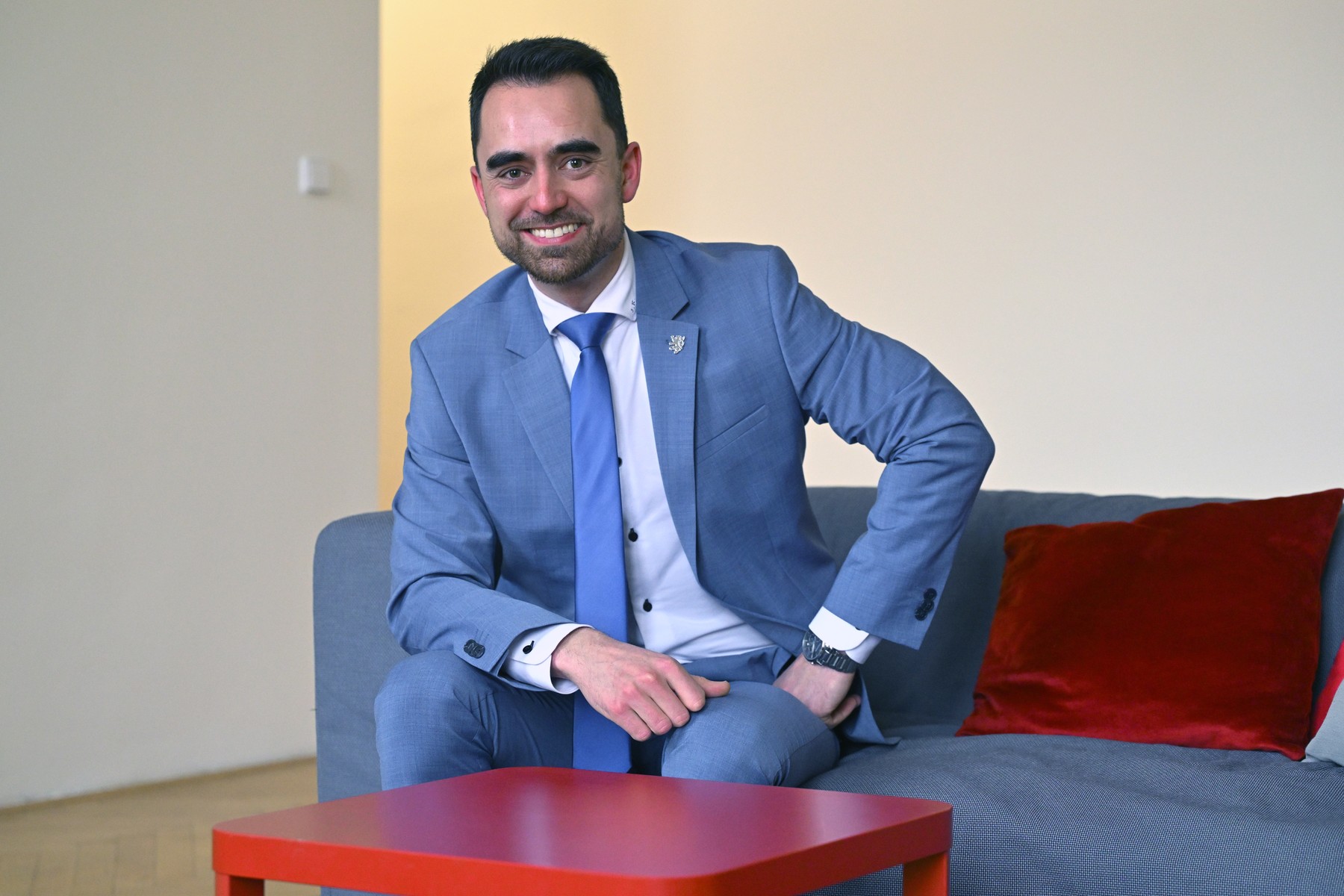
Artificial intelligence technology is developing at a considerable pace worldwide, affecting not only everyday life but also the operations of companies operating on the Czech market. An organization of industrial companies, technology firms, and research institutions in Central and Eastern Europe has created a joint position of ambassador for artificial intelligence and new technologies, which Jan Kavalírek has become. We asked him about the approach of companies to artificial intelligence in the Czech Republic and also about the risks of the technology that experts warn about.
During a phone call to the call center of many companies, we may hear a seemingly human voice, but the line is not operated by a line operator, but by artificial intelligence. This is just one of many examples of how companies use artificial intelligence in their daily operations.
American and Chinese companies are primarily leaders in the development of advanced artificial intelligence models. There is no research at this level in Europe.

"If the European Union is to become a leader in artificial intelligence as a technology, not just in its regulation, it needs to be much more ambitious. There is a need to invest more into research and development and systematically remove unnecessary bureaucracy that hampers the innovative potential of European companies. Moreover, it was us, the Czech Republic, who first proposed to remove unnecessary bureaucracy in AI Act and gained support for it,"
Introduces braking mechanisms in the European space ambassador for artificial intelligence and new technologies Jan Kavalírek.
However, a number of experts warn against techno-optimism in the spread of artificial intelligence. For example, Daniel Kokotajlo, who worked at OpenAI and was at the birth of this technology, warned against rushing development in this field in a report he wrote with a team of experts. We also asked Jan Kavalírek about the risks in using artificial intelligence.
"I obviously support the need to control artificial intelligence systems, as does the Federation of Industry and Transport. The need for control is necessary, we do not want artificial intelligence on the EU market that would deceive, manipulate, determine political views, religious affiliation or do social scoring etc." gave several examples of dangers that come with the tools of artificial intelligence to the LP-Life.cz editorial office.
According to his view, however, not every effort to regulate work with artificial intelligence brings only safety comfort, but also limits the use of technological tools in very useful areas, such as healthcare. Before taking up the position of deputy minister of industry and trade in Fiala's government, Kavalírek also dealt with biomedical engineering.
"What we are talking about, however, is the need to limit unnecessary bureaucracy, which consists of excessive paperwork when documenting by the AI system provider - paperwork that does not lead to increased safety of AI products on the market, but only increases their price, slows down innovation and consequently reduces our competitiveness. Just to give you an idea, introducing, for example, a health care tool with AI in US is more than 2 times faster than in EU,"
He explained to the Kavalírek editorial team.
The so-called AI Act forms the fundamental framework for the use of artificial intelligence in European Union countries. It is the first regulatory measure in the world governing the use of artificial intelligence. However, its implementation in the practical lives of private entities is complicated.
According to a survey by Dors & Venabili from June, only 8% of domestic companies took specific actions according to the AI Act. The survey found that 45% of them use artificial intelligence.
"We, as the Czech Republic, have achieved a great success in this field, when it was us who first proposed on June 6th at the EU Council to postpone some parts of the AI Act to give manufacturers and users enough time to prepare for it, and at the same time to simplify some of the most burdensome sections - such as unnecessarily administrative technical documentation forms or registrations etc.," described the work of Czech representatives on an important document Kavalírek LP-Life.cz.
Uncontrolled use of artificial intelligence brings a number of pitfalls. It's not just about ethical questions, but for example data leakage can damage the reputation of companies. According to the mentioned survey, company representatives, however, stated that they themselves do not know how to proceed.
"We see incidents, what her misuse can lead to (for example, the latest deepfakes Ai tools Grok on the X network etc), so it is necessary for the control of Ai systems and their compliance to work. That's why we have introduced a system of supervisory authorities in the Czech Republic, headed by the professional Czech Telecommunication Office, which is preparing intensively for this role. According to the AI Act, it is the duty of entities using AI in the workplace (for example hospitals), to always have trained personnel who will control Ai systems," Kavalírek explained.
"Another key area is to further increase support for education across all generations so that people can work safely with AI and understand its benefits and risks,"
adds the expert on the issue, emphasizing that the expansion of technology applies to everyone.
Sources: author's text, interview, TZ, MPO, Businessinfo, The Guardian, digitalnicesko.gov